
Boutique Hotel Insurance vs Standard: Which Do You Need?
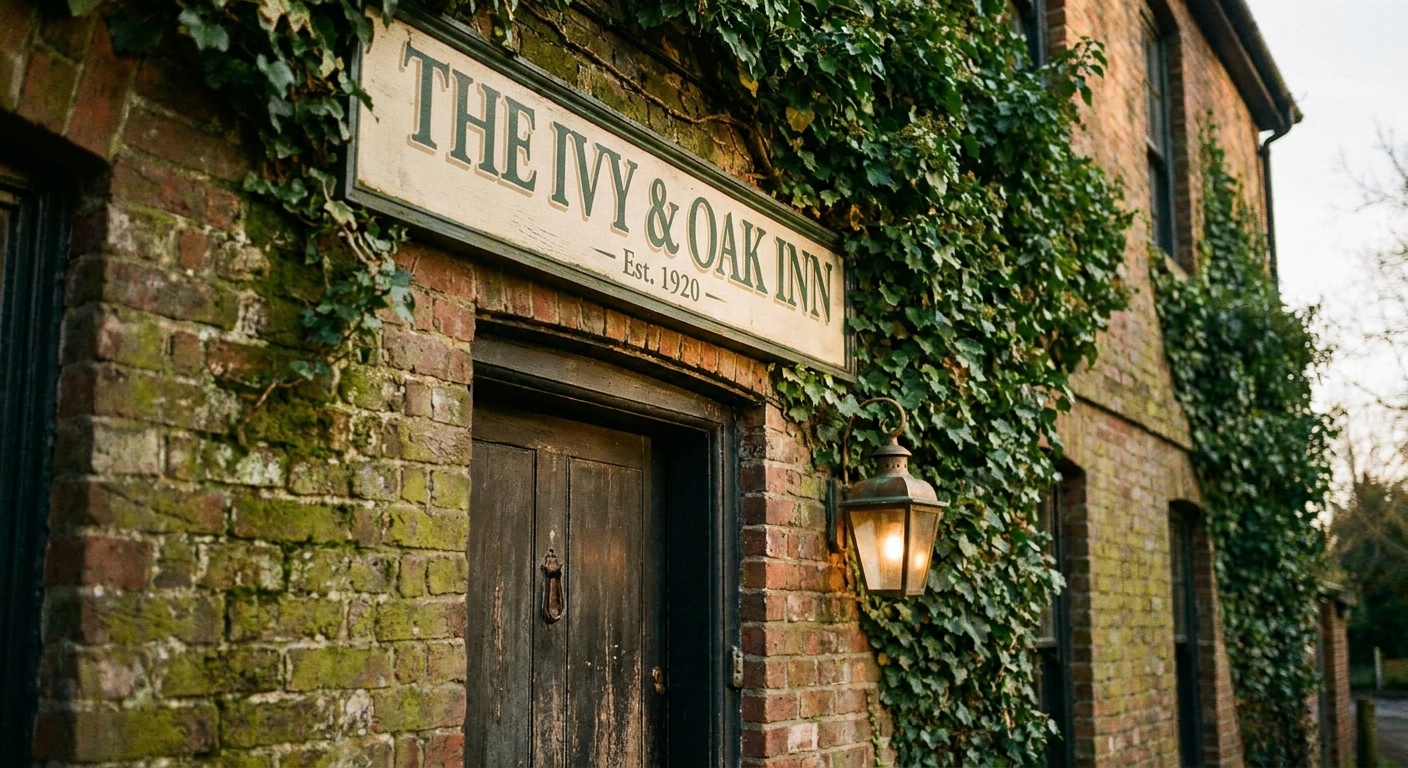
Boutique hotel insurance is a specialty program — not a souped-up BOP. If you run an independently owned property with 4 to 100 rooms, a spa, a chef-driven restaurant, or a historic building, the typical hotel/motel BOP almost certainly leaves gaps that can sink a claim. The right answer is usually a specialty hospitality program from Axon Middle Market, AmWins Destination Resorts, or Chubb Hospitality.
What Exactly Is a Boutique Hotel?
A boutique hotel is an independently owned and operated property — typically 4 to 100 rooms — built around a distinctive service mix and a strong sense of place. Boutique hotels aren't budget motels with a coat of paint; they compete on design, food and beverage, spa and wellness, and personalized service. Most are unflagged (no franchise affiliation), which means the operator controls everything from the linens to the in-room minibar pricing.
From an insurance standpoint, that combination — small unit count, premium average daily rate, multiple revenue lines, and no corporate parent — is exactly what makes boutique hotels hard to underwrite in the standard market. The risk doesn't look like a Holiday Inn Express, and it doesn't look like a corporate office building either. It's something in between, and the policy forms reflect that.
Common Boutique Property Profiles
- Restored historic inns with original timber framing, antique furnishings, and replacement-cost issues a standard appraisal can't capture.
- Coastal and lakefront boutique hotels with seasonal staffing, water exposure, and weddings on the dock.
- Urban design hotels with rooftop bars, valet operations, and a popular ground-floor restaurant the public walks in off the street.
- Wellness boutiques with full spa programs, hot springs, salt rooms, infrared saunas, and licensed estheticians on the payroll.
- Country inns with fine dining where the restaurant generates as much revenue as the rooms.
What Is "Standard" Hotel Insurance?
Standard hotel insurance usually means a hotel/motel Business Owner's Policy (BOP) written by a mainstream carrier — companies that prefer franchised limited-service properties, predictable construction, and Total Insured Values that fit inside a tight ceiling. Berkshire Hathaway GUARD is a good example of a quality preferred-class market in this lane, and it works well for the right risk.
The defining feature of a standard hotel BOP is that it's an off-the-shelf product. The underwriter has a fixed appetite, a rate table, and a finite list of optional endorsements. If your property fits the box, you get a competitive premium and a tidy package. If it doesn't fit, the underwriter either declines or attaches enough exclusions that you end up effectively uninsured for the things that matter most.
Where Standard Hotel BOPs Typically Cap Out
- Total Insured Value: commonly $5M to $10M ceiling for property; many destination boutiques sail past that on the building alone.
- Liquor receipts: caps around 25% of gross sales or a hard dollar limit; fine-dining boutiques regularly break through.
- Number of stories and pool features: any property with a heated commercial pool, hot tub, or rooftop deck triggers extra scrutiny.
- Age of building: pre-1930 structures and unrenovated 1930s-era buildings often get excluded or surcharged out of competitiveness.
Why Standard Hotel Insurance Fails Boutique Operators
Standard hotel BOPs fail boutique operators in four specific ways: TIV ceilings, missing amenity endorsements, generic property valuation, and liquor caps that don't match the revenue mix. Each of these issues is small on its own. Stacked together, they leave a boutique hotel under-protected on the exact exposures that drive the biggest claims.
1. TIV Ceilings That Cut Off Real Property Value
A standard hotel BOP that caps at $10M Total Insured Value (TIV) is a non-starter for any boutique property in a competitive market. By the time you add the building, contents, business income, fine art, antiques, and outdoor improvements (pool decks, gardens, signage, fencing), even a 30-room boutique often pushes $15M to $25M. Specialty programs through Axon Middle Market write property limits up to $50M with excess to $5M — the math just works.
2. No Spa or Salon Professional Liability Endorsement
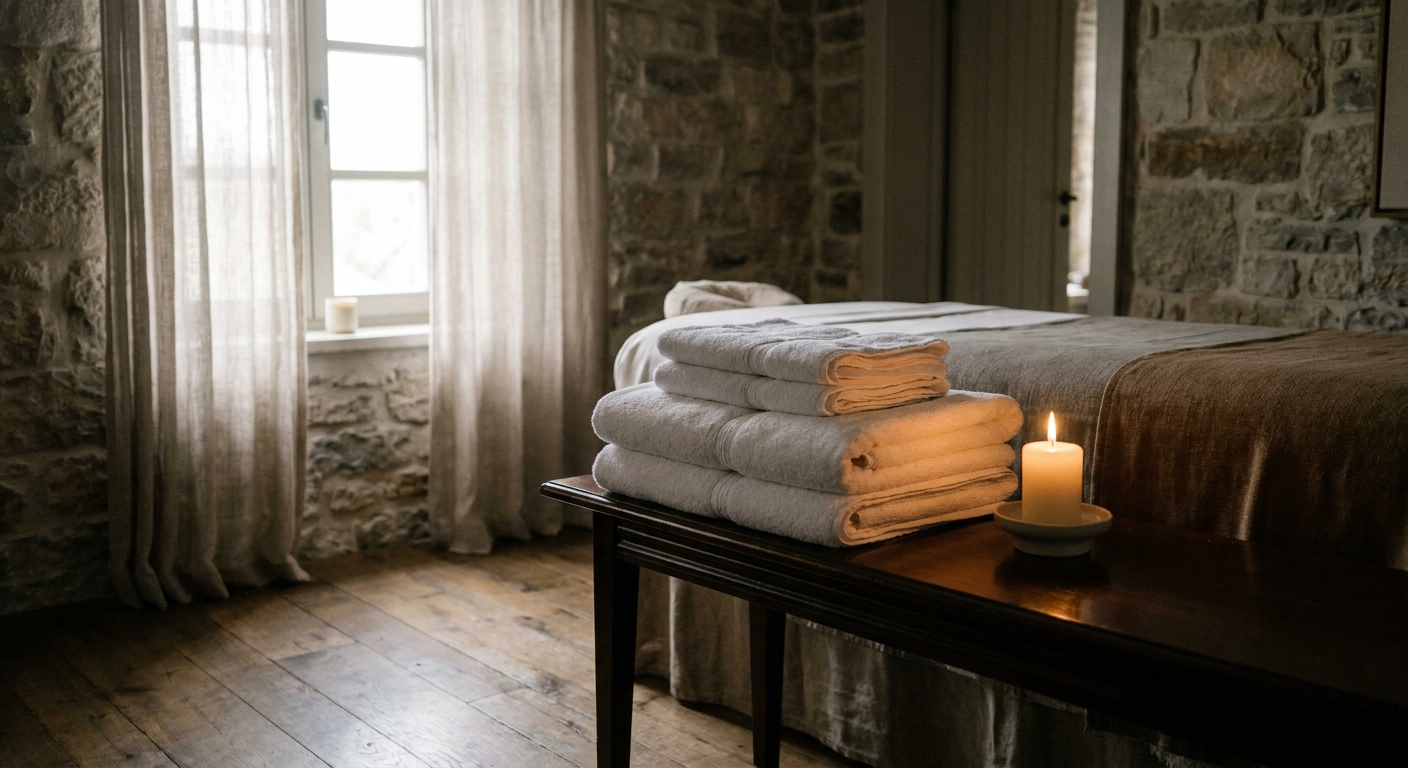
If you offer massage, facials, body wraps, nail services, hot springs soaking, or any treatment performed by a licensed professional, your general liability policy probably excludes the resulting claims. Specialty hospitality programs attach Salon & Spa Professional Liability as a real endorsement with actual limits. Standard BOPs either silence it or attach a token sub-limit that's worse than no coverage at all.
3. No Historic Hotel Building Valuation
Standard property forms value buildings on replacement cost using contemporary construction methods. A 1907 inn with original hand-cut beams, plaster walls, and irreplaceable millwork doesn't rebuild that way. The destination resort programs include Historic Hotel Building Valuation that recognizes architectural significance and adjusts the loss settlement accordingly. Without it, a fire that destroys a historic boutique can leave the owner $1M to $3M short of what it actually costs to rebuild authentically.
4. Generic Liquor Caps That Don't Match Your Revenue Mix
A boutique hotel with a destination restaurant, a craft cocktail bar, and wedding-and-event hospitality can run 40%-plus of total revenue through liquor. Standard hotel BOPs either exclude liquor liability or attach a $500K-$1M sub-limit that gets eaten alive by one over-served-patron claim. Specialty hospitality programs treat liquor liability as a real coverage part with limits matching the GL — $1M/$2M or higher — and most include host liquor and dram shop language properly.
Side-by-Side: Standard Hotel BOP vs. Specialty Hospitality Program
The clearest way to see the difference is to put the two products next to each other across the coverage parts that actually decide claims.
| Coverage Area | Standard Hotel/Motel BOP | Specialty Boutique Program |
|---|---|---|
| Property TIV ceiling | $5M – $10M typical | Up to $50M per location |
| Building valuation | Contemporary replacement cost | Historic Hotel Valuation available |
| Spa / salon professional liability | Excluded or token sub-limit | Full endorsement, real limits |
| Liquor liability | Sub-limit, often excluded | $1M/$2M+, matches GL |
| Pool, hot tub, hot springs | Frequently surcharged or excluded | Included with hospitality enhancements |
| Guest property & lost key | Limited or excluded | Included as standard form |
| Cyber / data compromise | Optional bolt-on, low limit | Built into hospitality package |
| Excess / umbrella capacity | $1M – $5M | Up to $12.5M quota-share excess |
| Abuse & molestation | Typically excluded | Endorsement available |
| Crisis management | Not included | Bundled in destination programs |
When Should You Migrate from a Standard BOP to a Specialty Program?
You should migrate from a standard BOP to a specialty hospitality program the moment any one of the following becomes true. You don't need to wait for renewal — most boutique programs will pre-quote and bind on short notice when a triggering exposure shows up.
Your TIV crosses $7M-$8M. Standard markets begin pushing back hard near $10M. Get ahead of it before a coastal storm or a kitchen fire exposes a co-insurance penalty.
You add a spa, hot tub, or wellness treatment room. This is the single most common trigger we see — a boutique hotel installs a treatment room, hires a contractor esthetician, and discovers the GL policy excludes the entire operation.
You sign a fine-dining chef or a beverage director. When liquor revenue pushes past 20% of gross, a standard BOP's liquor sub-limit becomes the loose floorboard you're going to fall through.
You acquire a historic property or do a heritage renovation. Replacement cost on contemporary forms will undervalue the building by 20%-40% in many cases. Historic valuation has to be elected.
You start hosting weddings or destination events. Weddings add liquor, hired-vehicle exposure, and contracted-vendor liability the standard BOP wasn't priced for.
A lender or franchisor requires higher umbrella limits. If a commercial mortgage requires $5M or $10M umbrella, you've already outgrown the standard market's appetite.
Which Specialty Carriers Write Boutique Hotel Insurance?
Three specialty markets handle the overwhelming majority of independently owned boutique hotel placements in the U.S. Each has a slightly different appetite, and the right choice depends on your property profile, revenue mix, and capacity needs.
Axon Middle Market Top Pick for Boutiques
Axon Middle Market is the workhorse program for independently owned boutique and luxury hotels. Property up to $50M with excess to $5M, A+ rated paper, and a Hospitality Extension Endorsement that pulls in guest property, lost key, food spoilage, and convention cancellation. The program ships with Data Compromise Coverage and Crisis Management built in — which is increasingly non-negotiable for any property running a modern PMS. Available in all 50 states.
AmWins Destination Resorts
AmWins Program Underwriters' Destination Resorts & Hotels Program is the most purpose-built market in the country for true destination resort risk — coastal boutiques, hot springs spas, country inns with fine dining, and sportsmen's lodges. Minimum account premium is $25,000, A-rated carrier paper, and the form ships with hospitality and leisure enhancements, Tee to Green coverage, historic valuation, equipment breakdown, and salon/spa professional liability already attached. Available in all 50 states except Hawaii.
Chubb Hospitality
Chubb Hospitality is direct carrier access — no wholesaler in the middle — and writes both hotels with and without restaurants. Their package brings BOP, GL, WC, Umbrella, Cyber, EPLI, D&O, and Fiduciary onto coordinated paper, which simplifies claims handling when an incident touches multiple coverage parts. Available in 44 states. Strong fit for boutiques with sophisticated risk management programs and clean loss histories.
Where Berkshire Hathaway GUARD Still Fits
Berkshire Hathaway GUARD remains a strong preferred-class market for standard hotels and motels — workers' comp, BOP, umbrella, and resort/country club auto including shuttle service coverage. If you operate a clean limited-service property under $10M TIV with no spa, no chef-driven restaurant, and no liquor revenue, GUARD is often the most competitive home. For everything above that line, the specialty programs are the right answer.
What Does a Boutique Hotel Program Actually Cost?
Boutique hotel program premiums vary widely with TIV, geography, claim history, and amenity mix, but as a working range — destination-grade specialty programs typically start near the $25,000 minimum premium mark for smaller properties and scale from there. A 40-room coastal boutique with a spa and a restaurant commonly lands between $45,000 and $120,000 in total program premium across property, GL, liquor, WC, auto, cyber, and umbrella.
The premium delta between a standard BOP and a specialty program is rarely the right question. The real question is whether the standard BOP will respond when it matters. We've seen boutique operators save $8,000 a year on a standard BOP and then absorb a $400,000 uncovered loss because the spa endorsement wasn't there. The specialty program is insurance that actually shows up.
How Do You Know If Your Current Policy Is Wrong for Your Boutique?
Pull your declarations page and check these five line items. If any one of them is missing, mis-sized, or excluded, your boutique hotel is operating with a coverage gap that a specialty program would close.
- Property limit vs. current TIV: is the building limit at least 100% of an updated replacement cost appraisal — and does it include historic valuation if you have a pre-1940 structure?
- Salon & spa professional liability: is it listed as a real endorsement with a limit, or is it absent?
- Liquor liability limit: does it match your GL ($1M/$2M+), or is it a sub-limit?
- Cyber / data compromise: is there a real coverage part with first-party and third-party limits, or just a token endorsement?
- Excess liability: do you have at least $5M umbrella over a $1M/$2M GL, with the umbrella following form?
Key Takeaways
- A boutique hotel is independently owned, 4 to 100 rooms, and built around a distinct service and amenity mix — and that mix is what standard BOPs aren't built to cover.
- Standard hotel/motel BOPs typically cap at $5M-$10M TIV, exclude spa professional liability, undervalue historic buildings, and short-change liquor liability.
- Specialty programs through Axon Middle Market, AmWins Destination Resorts, and Chubb Hospitality write property up to $50M, attach the right endorsements, and bundle cyber and crisis management.
- Migrate to specialty the moment you add a spa, push past $7M-$8M TIV, sign a fine-dining chef, acquire a historic building, or start hosting weddings.
- Premium isn't the right comparison — coverage response is. The specialty premium pays for itself the first time you actually need the policy to work.
Frequently Asked Questions
What's the difference between a boutique hotel and a luxury hotel for insurance purposes?
In underwriting language, "boutique" usually signals independent ownership and a small footprint (typically under 100 rooms); "luxury" refers to the service tier and average daily rate. They overlap heavily — most luxury boutiques are both — and the same specialty programs (Axon, AmWins, Chubb) cover them. The distinction matters mainly for amenity scope: a 200-room luxury hotel with a casino and a marina is a different submission than a 30-room luxury boutique with a spa.
Can I keep my existing carrier and just add endorsements?
Sometimes — but only if your existing carrier writes the relevant endorsements at appropriate limits and the property still fits their appetite. In practice, when a property crosses the boutique threshold, the standard carrier either non-renews or attaches surcharges that erase the cost advantage. It's almost always cleaner to move the whole program to a specialty market built for the class.
Is the $25,000 minimum premium on AmWins Destination Resorts a hard floor?
Yes — it's the dedicated destination resort program's minimum account premium and it applies even to smaller properties. For a true boutique inn that can't justify a $25K spend, Axon Middle Market and Chubb Hospitality typically write smaller-account programs that still bring the right endorsements without the destination-resort minimum.
Does specialty hotel insurance cover Airbnb-style short-term rentals?
No — short-term rental properties without a hotel license are a separate class with their own specialty markets. The boutique hotel programs require a licensed lodging operation with regular guest services, on-site staff, and standard hospitality controls. If you operate a hybrid (hotel rooms plus owner-rented condos), the underwriter handles the mix property-by-property.
How long does it take to move from a standard BOP to a specialty program?
A complete submission — ACORDs, five years of loss runs, Resort Comprehensive Profile, amenity supplementals — typically returns indications in 5-10 business days and bindable quotes in 10-15 business days. We start the marketing process 60-90 days before renewal to give underwriters review time and to negotiate terms.
Do boutique hotel programs cover business interruption from a pandemic or mandatory evacuation?
Business interruption tied to mandatory evacuation orders is commonly included on destination resort programs, especially for coastal and wildfire-prone properties. Pandemic-related communicable disease BI is excluded post-2020 on virtually every standard hospitality form; some carriers offer separate pandemic endorsements with sub-limits, but coverage is limited and conditional. We walk every client through exactly what their BI form does and doesn't trigger on.
What if my boutique hotel has a 25+ year old building that hasn't been renovated?
Older boutique buildings without recent renovation are written case-by-case. Specialty programs will look at roof age, electrical and plumbing updates, fire protection, and the most recent inspection report. Properties with documented capital improvements typically place without issue; properties with deferred maintenance often need a non-admitted E&S placement or surcharged terms.
If you're running an independent boutique hotel — or you're about to add the spa, the chef, or the historic property that pushes you out of standard appetite — we'd rather have the conversation now than after a claim. Learn more about our Hotels & Destination Resorts Insurance program, request a quote, or call us directly at (860) 970-0977. We place boutique hotel and destination resort risks across all 50 states.