
Connecticut's 30% Film Tax Credit: What Production Studios Actually Get (and What They Need to Cover)
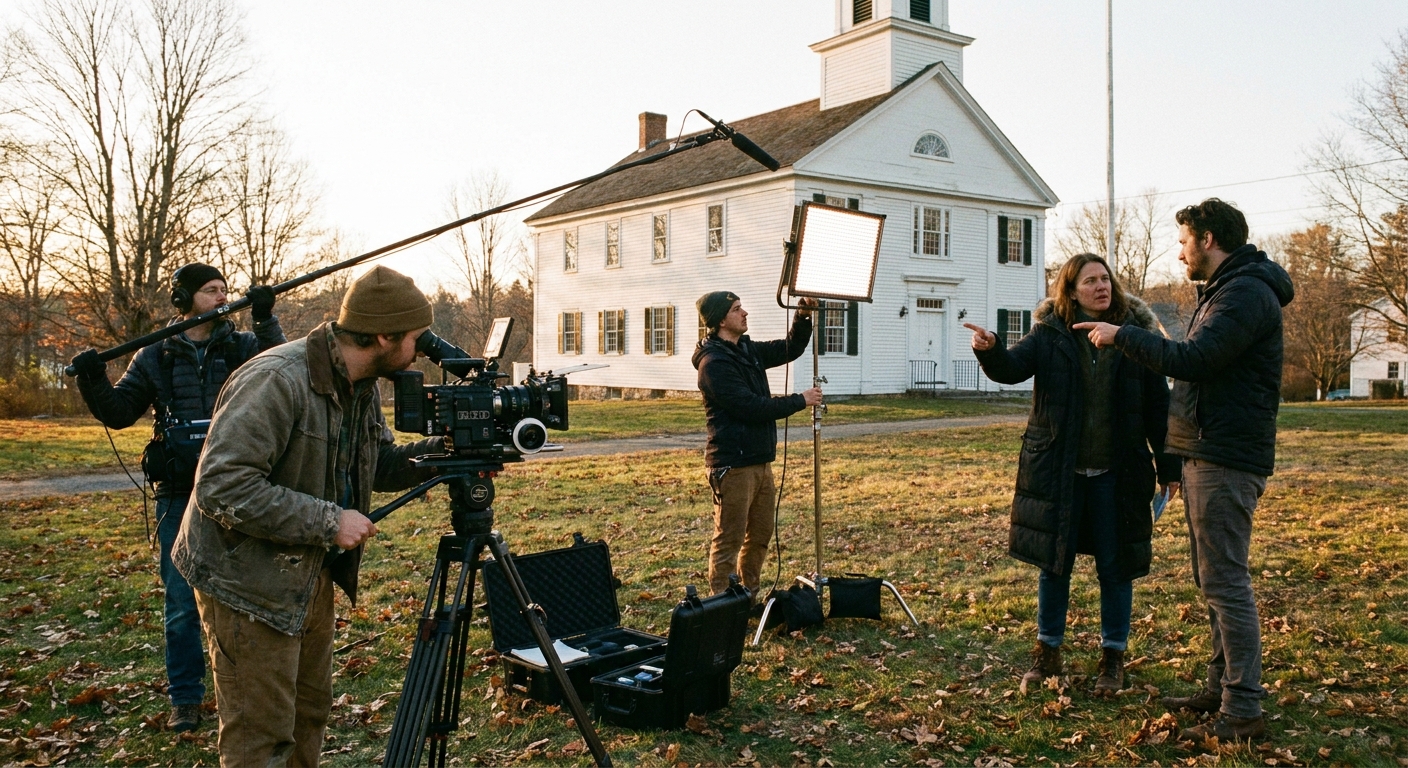
Quick answer: Connecticut offers a transferable film and digital media production tax credit of 10%, 15%, or 30% on qualified in-state spend — starting at $100,000 minimum and topping out at 30% for productions spending more than $1 million in Connecticut. There is no per-project cap and no annual funding cap, the credit is freely transferable, and the program has no sunset date. A production must complete at least 50% of principal photography or postproduction in CT to qualify, and theatrical motion pictures face a separate facility requirement that quietly disqualifies most indie features.
Most producers we talk to in Hartford and Stamford have heard that Connecticut has a film tax credit. Most of them have also heard wildly conflicting numbers about how it actually works — sometimes from accountants, sometimes from their entertainment attorney, and far too often from another producer who half-remembers a project from 2014.
So here is the producer's version, in plain English, with the catches that matter most. This is the same conversation we have at iConn Insurance Solutions when a production company calls us to talk about coverage for a Connecticut shoot — because before any insurance binder gets issued, we want our clients to understand what tax credit they are actually chasing and whether their project structure qualifies in the first place.
If you only have five minutes, skim to the comparison table and the insurance section. If you want the whole picture — including the theatrical motion picture trap that surprised a friend of ours running a feature in Greenwich last fall — read straight through.
How Does Connecticut's Film Tax Credit Actually Work?
Connecticut's program is governed by Connecticut General Statutes § 12-217jj and administered by the Office of Film, Television & Digital Media inside the Department of Economic and Community Development (DECD). It is a transferable tax credit — not a cash rebate — pegged to your qualified Connecticut spend.
The credit comes in three tiers, scaled to how much money your production actually puts into the Connecticut economy:
| In-state spend | Credit percentage | What it means on a $5M production |
|---|---|---|
| $100,000 – $500,000 | 10% | $10K – $50K back |
| $500,001 – $1,000,000 | 15% | $75K – $150K back |
| More than $1,000,000 | 30% | $1.5M back on $5M qualified spend |
Three numbers most producers miss when they're price-shopping states: there is no project cap, there is no annual funding cap, and there is no sunset date. Some states have hard ceilings that make the program a lottery once budget is committed for the year — Connecticut does not. The credit is also freely transferable, meaning if your loan-out structure doesn't generate enough CT tax liability to absorb the full credit, you can sell it to a Connecticut taxpayer that does.
For income years 2024 and 2025, the state also bumped the limit on the value of credits that can be claimed against the sales-and-use tax from 78% to 92% — a quiet but real boost for production companies that structure their CT exposure through that line.
Who Qualifies as a Production Company in Connecticut?
Connecticut's definition of a "qualified production" is broader than most states. The eligible categories include:
- Animation (including stop-motion)
- Commercials
- Direct-to-streaming features and episodic series
- Documentaries
- E-sports broadcasts
- Game shows, reality shows, talk shows
- Interactive media and video games
- Music videos
- Standalone postproduction (with one day of CT principal photography)
- Webisodes and interactive websites
What does not qualify: award shows, infomercials, industry or corporate training, and traditional theatrical stage productions. There is a separate Pre-Broadway and Post-Broadway theatrical credit run out of the same office, but that is a different program with different math.
To claim the credit, you have to clear one of three thresholds:
- Complete at least 50% of principal photography days in Connecticut, OR
- Spend at least 50% of total postproduction costs in Connecticut, OR
- Spend at least $1 million on postproduction in Connecticut
You also have to file the eligibility application with a $200 fee within 90 days of your first qualified expense, and the voucher application carries a 1% fee (capped at $5,000) at the back end after your CPA audit closes out the spend.
What Is the Theatrical Motion Picture Trap?
This is the catch that quietly disqualifies most indie features — and it's the question we get more than any other when a production company calls iConn after their tax counsel has finished talking. The Connecticut film tax credit currently does not issue vouchers for theatrical motion pictures unless 25% or more of principal photography days are completed inside a Connecticut facility that received at least $25 million in private investment and opened for business on or after July 1, 2013.
In practical terms, that means a theatrical-distribution feature is locked to a very small number of qualifying soundstages — principally the Stamford Media Center campus and a handful of adjacent build-outs. If you are shooting a feature for theatrical release in a converted New London warehouse or a Litchfield Hills location package, the credit door is closed regardless of how much you spend. Streaming-distribution features, episodic, commercials, and everything else listed above are not subject to this restriction.
Producer's pro tip: if your project is genuinely theatrical, the cheapest path to the credit is often to restructure as a streaming-first release with a limited theatrical window — that flips your eligibility back to the broader category. Talk to your entertainment attorney before you submit eligibility paperwork.
Connecticut vs. New York, Massachusetts & Georgia — A Side-by-Side
Producers shop incentives across states the same way they shop locations. Here's how Connecticut stacks up against the three states it competes with most often on the East Coast and the Southeast:
| Feature | Connecticut | New York | Massachusetts | Georgia |
|---|---|---|---|---|
| Top credit rate | 30% | 30% (labor) / 10% (capital) | 25% | 30% (with GA logo) |
| Minimum spend | $100K | $1M typical | $50K | $500K |
| Per-project cap | None | None | None | None |
| Annual funding cap | None | Capped (annual allocation) | Sunset uncertainty | None |
| Transferable / saleable | Yes (with limits) | Refundable | Transferable | Transferable |
| Theatrical features | Facility restriction applies | Open | Open | Open |
Where CT wins: no project cap, no funding cap, no sunset, and a relatively low $100K floor that makes mid-budget streaming series, commercials, and standalone post all genuinely competitive. Where it loses: the theatrical motion picture restriction is real, and the 25% transfer cap (unless your production runs through a CT C-corp or a qualified facility) makes credit monetization trickier than in Georgia.
Where Are Films Actually Being Made in Connecticut?
Geography matters in this business. Connecticut's production map is built around four hubs — each with its own crew base, its own location personality, and its own insurance exposure profile:
- Stamford — the Stamford Media Center, NBC Sports Connecticut, WWE world headquarters, and the broader Fairfield County crew base. The only Connecticut footprint with a qualifying theatrical-feature facility on the books.
- Bristol — ESPN's broadcast campus. The single largest sports-production operation in the world, with a deep network of freelance crew, audio, and lighting vendors who service e-sports, doc, and reality shoots throughout the state.
- Greater Hartford — Connecticut Public, CPTV, the Bushnell, and a growing post-production cluster. Strong for documentary, corporate, and commercial work.
- Litchfield Hills, the Gold Coast, and the shoreline — location packages, period exteriors, and the kind of small-town New England look that gets cast in everything from "Knives Out" to mid-budget streamers. Most productions in these areas are location shoots, not soundstage builds.

What Insurance Does a Connecticut Production Actually Need?
Here is the part of the tax credit conversation that gets skipped on most "incentive shopper" blog posts. Every Connecticut production claiming the credit is also signing location agreements, equipment rental contracts, distribution paper, and union agreements — and every one of those documents has insurance language baked into it. You cannot claim the credit if your production never closes because the bond company won't sign off on coverage.
A working CT production typically needs some combination of:
- Producer's Package / Production Package — the umbrella line that bundles negative film and faulty stock, cast insurance, props and wardrobe, third-party property damage, and miscellaneous equipment. Underwritten by specialty entertainment carriers like Chubb, AIG, and Travelers.
- General Liability ($1M/$2M minimum, $5M+ for studio deals) — required by virtually every location agreement and venue.
- Workers' Compensation — Connecticut requires it for every employee, including loan-out personnel structured through a qualifying corporation. CT has no minimum-employee exemption.
- Errors & Omissions (E&O) — required by every major distributor and streaming platform before they will accept delivery of a finished project.
- Inland Marine / Equipment Floater — covers the camera package, lighting, grip truck contents, and rented gear.
- Hired and Non-Owned Auto / Commercial Auto — for picture vehicles, grip trucks, and production rentals.
- Drone / UAV Liability — for aerial cinematography, which most CT location work now includes.
- Umbrella / Excess Liability — sitting on top of the GL and Auto towers to satisfy distributor and bond-company requirements.
If you are bonded by a completion guarantor — and most productions north of $3 million are — the bond company will dictate the policy form, limits, and named carriers. Building the right tower before pre-production is the cheapest insurance you'll ever buy. Rebuilding it mid-shoot because a distributor rejected the E&O wording is the most expensive.
Why an Independent Insurance Broker Matters for Film Productions
Most general commercial brokers can write a commercial general liability policy. Almost none of them have the carrier relationships needed to bind a working production package, place E&O for a streaming-distribution feature, or negotiate the policy form that a completion guarantor will actually accept.
At iConn Insurance Solutions, we work as an independent multi-carrier broker, which means we are not captive to one underwriter and we are not pricing only the carriers we have a sales target on. For a Connecticut production, that matters in two specific ways: we can place the production package with the entertainment-specialty market that actually wants the risk (not the generalist that will overprice it or quietly decline at bind), and we can layer the standard CT commercial lines — workers' comp, commercial auto, umbrella — through the same broker relationship rather than fragmenting across three different agencies.
Together with our sister agency at Insure Connecticut LLC, we cover the full P&C and health stack a production company needs on a Connecticut shoot, with a 12-state reach for productions that travel beyond CT lines mid-project.
How Do You Actually Claim the Connecticut Film Tax Credit?
The mechanics, start to finish:
- Register the production company with the Connecticut Secretary of State and the Department of Revenue Services (DRS).
- File the eligibility application with DECD's Office of Film, Television & Digital Media within 90 days of your first qualified expense. $200 application fee.
- Confirm loan-out registration with DRS for every loan-out company you'll pay through the production. Without REG-1 confirmation, those payments don't count as qualified spend.
- Track every qualified expense through your line producer and production accountant with the documentation DECD will demand at audit — invoices, proof of CT residency for in-state crew, sales tax records.
- Have an independent CPA audit the qualified spend at wrap. This is non-negotiable and a budgetable cost (typically $15,000–$50,000 depending on production scale).
- Submit the voucher application within 90 days of the last qualified expense, with a fee equal to 1% of the anticipated credit (capped at $5,000).
- Claim or transfer the credit against your CT corporate or business entity tax in the income year spending began — or sell it to a CT taxpayer who can absorb it.
Selling Your Connecticut Film Tax Credit — The Transferable Credit Market
Most production companies don't have enough Connecticut tax liability to absorb a 30% credit on a multi-million-dollar spend — the credit is worth more than the tax they actually owe. That's where transferability matters. Connecticut allows a production company to assign the credit to a Connecticut taxpayer for cash, typically at 88–94 cents on the dollar in the secondary market.
There is a structural limit: a production company may not transfer more than 25% of its credit in any year unless one of three conditions is met — the production was created in whole or in part at a qualifying CT production facility, the company is organized as a CT-taxed C-corp, or it owns at least 50% of a CT LLC subject to the Business Entity Tax. Getting this structure right is a tax-planning conversation, not an insurance one — our colleagues at Wealth America work alongside production CFOs on the financial-structuring side of CT incentive monetization, including transferable credit sales and entity choice for multi-state production LLCs.

Explore the rest of this guide series
- Production Insurance 101: What Every Connecticut Film Shoot Needs Before Cameras Roll — the producer's package, GL tower, and bond company forms (June 3 release).
- E&O Insurance for Connecticut Filmmakers: Why You Can't Get Distribution Without It — the clearance work and policy form every streamer demands (June 5 release).
- How to Sell a Connecticut Film Tax Credit: The Transferable Credit Marketplace Explained — the financial-planning deep dive at Wealth America (June 8 release).
Key takeaways
- Connecticut's film and digital media tax credit pays 10%, 15%, or 30% on qualified in-state spend with a $100K minimum and no project or annual cap.
- Productions must clear one of three thresholds: 50% of principal photography days in CT, 50% of postproduction in CT, or $1M+ of postproduction in CT.
- The credit is freely transferable — you can sell it to a CT taxpayer if your own liability can't absorb it.
- Theatrical motion pictures face a separate facility requirement that excludes most indie features — streaming and episodic do not.
- No tax credit gets issued until a CPA audit closes out the qualified spend — budget $15K–$50K for the audit itself.
- Every CT production needs a coordinated insurance stack: producer's package, GL, workers' comp, E&O, equipment, auto, drone, and umbrella.
Frequently Asked Questions About Connecticut's Film Tax Credit
How much is Connecticut's film tax credit?
Connecticut offers a transferable film and digital media production tax credit of 10% on qualified spend between $100,000 and $500,000, 15% on spend between $500,001 and $1 million, and 30% on spend exceeding $1 million. There is no per-project cap and no annual funding cap.
What is the minimum spend to qualify for the Connecticut film tax credit?
The minimum qualifying spend is $100,000 in Connecticut. The production must also complete at least 50% of principal photography in CT, spend at least 50% of postproduction in CT, or spend at least $1 million on postproduction in CT — whichever applies.
Can I get the Connecticut film tax credit for a theatrical motion picture?
Only if at least 25% of principal photography happens inside a qualifying Connecticut facility — one that received at least $25 million in private investment and opened on or after July 1, 2013. In practice, this is the Stamford Media Center and a few adjacent build-outs. Streaming-distribution features face no such restriction.
What insurance do I need to film in Connecticut?
A typical Connecticut production needs a producer's package, $1M–$5M general liability, workers' compensation for all crew, errors & omissions for distribution, equipment floater coverage, hired/non-owned auto, drone liability if shooting aerial, and umbrella excess. Most major distributors and completion guarantors dictate the policy form and minimum limits.
Can I sell my Connecticut film tax credit?
Yes — the credit is transferable. Most production companies sell to Connecticut taxpayers at 88–94 cents on the dollar. A production may not transfer more than 25% of its credit in any year unless it shot at a qualifying CT facility, is organized as a CT C-corp, or owns at least 50% of a CT LLC subject to the Business Entity Tax.
How does Connecticut's film tax credit compare to New York and Georgia?
Connecticut's top rate (30%) ties Georgia and matches New York's labor rate, with a lower $100,000 minimum and no annual funding cap — advantages New York and Georgia don't share. The catch is the theatrical-feature facility restriction; for streaming, episodic, commercials, and post, Connecticut is genuinely competitive.
Filming in Connecticut? Build the insurance stack before pre-production.
Producer's package, GL, workers' comp, E&O, equipment, auto, drone, umbrella — coordinated through a single independent broker that knows the entertainment market and the Connecticut commercial lines. Request a production-coverage quote from iConn Insurance Solutions and we'll have an entertainment-specialty underwriter on the phone within 48 hours.
For Connecticut residents, contractors, and small businesses who don't run productions but need the same independent-broker treatment for commercial and personal lines, our sister agency at Insure Connecticut LLC covers the broader CT market across 12 states. And for production CFOs working through the financial side of CT credit monetization, transferable credit sales, and multi-state entity structuring, Wealth America, Inc. handles the wealth-management and tax-planning side of the conversation. Insure Connecticut LLC, iConn Insurance Solutions, and Wealth America, Inc. are independently operated companies under common ownership.