
Why Cannabis Insurance Claims Get Denied in Connecticut (And the 6 Endorsements That Stop It)

A CT cannabis operator opens an envelope. Inside: a one-page letter from the carrier. "We regret to inform you that the above-referenced claim has been denied. Please refer to Section IV, Exclusion 12 of the policy." The operator stares at it. The policy is forty-three pages long. The exclusion she didn't know existed is one of the reasons cannabis insurance in Connecticut denies claims at a meaningfully higher rate than standard commercial lines — and most of those denials are predictable, preventable, and patternable.
After three years of CT recreational market data and a longer-tail track record from medical-only operators, six denial patterns have emerged. Every operator who places cannabis coverage in CT should know all six — and the specific endorsements that close each one. The difference between a paid claim and a denied claim is almost never about the loss itself. It's about whether the policy was actually built to cover it.
Why Do Cannabis Insurance Claims Get Denied in Connecticut?
Denial #1: The Controlled-Substances Exclusion (Generic Policies)
This is the most common denial — and it's almost always a story of an operator who bought a standard commercial policy thinking the coverage would extend to cannabis operations. It won't. Every standard ISO commercial general liability and property form carries a controlled-substances exclusion (CGL form CG 21 04, property form CP 99 75, or carrier-specific equivalents) that voids coverage for any loss arising from products or operations involving federally-scheduled controlled substances. Cannabis is Schedule I.
The denial reads: "Loss arose from operations involving a federally controlled substance. Coverage is excluded under Exclusion [X]." It doesn't matter that cannabis is legal in CT. The exclusion is federal — and it's in every standard policy.
The endorsement that stops it: A specialty cannabis policy issued by an E&S carrier (Lancer, Continental Heritage, Admiral, Golden Bear, and a handful of others) that affirmatively schedules cannabis operations as covered. The policy form itself is purpose-built for cannabis. There is no "fix" that adds cannabis coverage to a standard policy — the only working approach is placing through a market that writes it natively.
Denial #2: Security-Compliance Failures
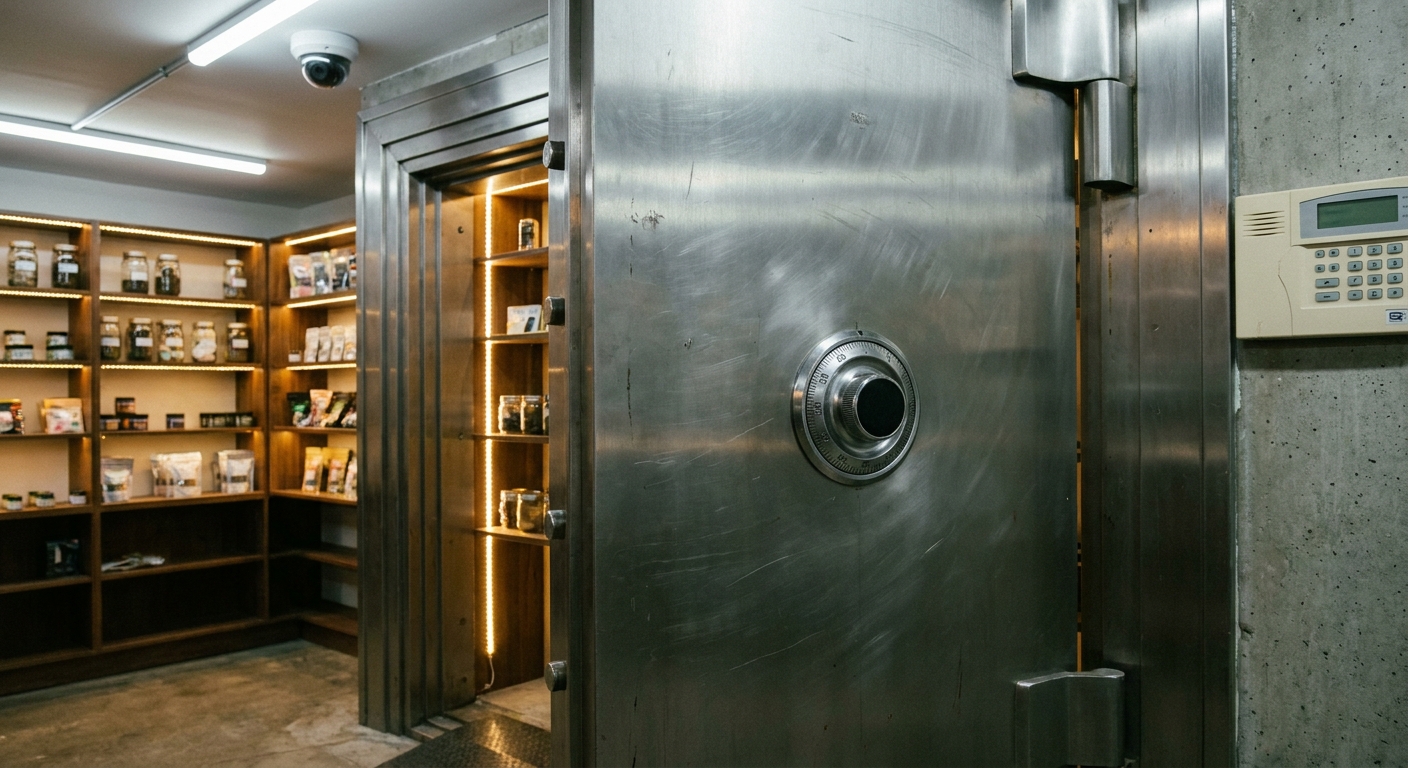
Cannabis policies in CT are written with explicit security warranties — vault construction, alarm with central-station monitoring, camera coverage and retention, employee background screening, transactional limits. If a theft occurs and the carrier's claims investigator finds that the operator had let a security control lapse (camera offline for two weeks, alarm not on the night of loss, vault standing open during operating hours), coverage is denied.
This is not the carrier being adversarial. The application asked specific yes/no questions about security controls and the operator answered yes. The policy is priced on that answer. When the control failed, the warranty was breached, and the policy treats the loss as outside the agreed risk.
Real-world example: A CT retailer reports a $38,000 inventory theft. Claims investigator pulls camera footage — and discovers the rear loading-dock camera has been displaying a "no signal" error for 19 days. Application warranted continuous camera coverage. Claim denied. The fix was a $200 camera replacement that the operator hadn't gotten to.
The endorsement that stops it: A protective-safeguards endorsement reviewed annually with the broker, plus a documented monthly security audit (camera-by-camera signal verification, alarm test logs, vault inspection). The audit isn't theater — it's evidence that the warranty was being maintained at the time of loss.
Denial #3: Employee Dishonesty Outside Crime Coverage Limits
Cannabis retail has a turnover problem. The NAIC has documented industry-wide cannabis retail turnover north of 50% annually, and CT is no exception. High turnover plus cash plus controlled inventory equals predictable employee-theft exposure. The denial pattern: operator's policy has a $25,000 Employee Dishonesty sub-limit. Internal investigation reveals six months of skimming totaling $87,000. The carrier pays $25,000 and denies the remaining $62,000.
Technically this isn't a "denial" — the loss is covered up to the sub-limit. But operators read $25K against $87K as a denial, and they're not wrong about the financial result.
The endorsement that stops it: A Crime policy with Employee Dishonesty sub-limits sized to actual cash-and-inventory exposure, not boilerplate amounts. For a single-location CT retailer with daily cash receipts of $30,000+, the Employee Dishonesty limit should typically be at least $100,000 — and possibly more. The cost increment over boilerplate limits is small relative to the exposure.
Denial #4: Misrepresentation on the Application
Cannabis applications run 25–40 pages with detailed questions about operations, licensing, ownership, security, products, and prior loss history. Operators sometimes leave questions blank, give incomplete answers, or fail to disclose a prior denial or restructure. When a claim is investigated, the carrier reviews the application — and if the loss arose from operations not disclosed (a delivery service quietly added six months in, an additional license type stacked on, an EJV partner not named), the carrier can rescind the policy and deny the claim.
Rescission is the worst possible outcome. The claim is denied AND the policy is treated as if it never existed — meaning the operator was uninsured the whole time. Premium is refunded; coverage is gone.
The endorsement that stops it: There's no endorsement — only a discipline. Treat the application as a sworn statement. If anything material changes mid-term (new license, new location, new product line, new ownership, new claim, new lawsuit), notify the carrier within 30 days in writing. The broker should be doing this with the operator. Mid-term endorsements cost less than rescission.
Denial #5: Product Liability Claims Filed Under General Liability
A consumer reports an adverse reaction to a cannabis edible. The operator files the claim under General Liability. The carrier denies it — and refers them to Product Liability, which is either a separate policy line, a separate sub-limit on the same policy, or (worst case) not on the policy at all.
CGL covers premises and operations liability — slip-and-falls, dispensary injuries, third-party property damage at the location. It does NOT cover bodily injury arising from the consumption of the product. That's a Product Liability claim, and it requires a Product Liability coverage part — typically with its own limit, retention, and exclusions.
The endorsement that stops it: An affirmative Product Liability coverage part with limits sized to the operation. Retailers should carry at least $1M / $2M product. Manufacturers should carry $1M / $2M primary plus excess up to $5M–$10M depending on revenue and product mix. Edible and ingestion-route manufacturers should err high — the III's product-liability research underscores why ingestion-route claims tend to settle higher than topical or smoke-route claims.
Denial #6: Living Plant Losses from Uncovered Perils
For cultivators, Living Plant is the most valuable single coverage on the policy — and the most commonly misunderstood. Living Plant covers loss to growing and harvested plant material from named perils: fire, theft, equipment failure, water damage from a sudden and accidental discharge, named-storm wind. It does NOT cover loss from grower error (overfertilization, mistuned nutrient schedule, light burn), gradual deterioration (mold or mildew that wasn't triggered by a covered cause), or genetic issues with the plant itself.
A cultivator who loses a harvest to nutrient lockout will be denied. A cultivator who loses a harvest to fire — even one caused by a faulty light driver — will typically be paid (because the fire is the covered peril and the electrical failure is the cause behind the covered peril).
The endorsement that stops it: A broadened Living Plant form with: (a) extended perils including extended water damage, (b) higher sub-limits matched to peak harvest crop value, and (c) where available, a Crop Disease endorsement covering mold/mildew loss above a high deductible. Not every carrier offers all three — comparing Living Plant forms across carriers is one of the highest-value exercises a cannabis broker can run.
The Six Denial Patterns at a Glance
| Denial Pattern | The Fix |
|---|---|
| Controlled-substances exclusion (generic policy) | Place through specialty cannabis E&S carrier |
| Security-compliance failure at time of loss | Documented monthly security audit + protective-safeguards endorsement review |
| Employee dishonesty above sub-limit | Employee Dishonesty limit sized to actual cash-and-inventory exposure |
| Misrepresentation / undisclosed change | Mid-term notice to carrier on any material change within 30 days |
| Product liability claim under CGL | Affirmative Product Liability coverage part with adequate limits |
| Living Plant loss from uncovered peril | Broadened Living Plant form + Crop Disease endorsement where available |
Why Independent Brokers Catch These Before Claim Time
Every denial pattern above is preventable — but only if someone reads the policy with the operation in mind. Captive agents who write three cannabis policies a year don't catch the gap between Section IV Exclusion 12 and the operator's actual delivery operation. Direct-to-carrier purchases bind a policy without anyone running a coverage-gap analysis. Independent brokers who write cannabis as a meaningful share of the book actually compare policy forms across carriers — they know which carrier's Living Plant form is broader, which carrier prices Employee Dishonesty more aggressively, which carrier's protective-safeguards warranty is easier to maintain.
At iConn Insurance Solutions, we're independent and we focus on the CT cannabis market specifically. Together with our sister agency at Insure Connecticut LLC, we run the kind of coverage-gap analysis that prevents these denials before they happen — comparing policy forms across the carriers actually writing CT cannabis in 2026 and matching the right form to the operation's specific exposure profile.
If you've had a cannabis claim denied — or if you want a second set of eyes on your current program before your next claim — request a policy review at iconninsurancesolutions.com.
What to Do If Your Cannabis Claim Has Already Been Denied
Denials aren't always final. CT's Department of Insurance maintains a consumer complaint process for disputed claims, and policyholders have recourse when a denial is incorrect on its face. Three steps to take immediately:
- Get the denial in writing with the specific policy language cited. A verbal denial is not a denial. Until the carrier puts the exclusion in writing, you don't actually know why coverage is being declined.
- Have an independent broker review the policy and the denial side by side. Some denials are correct (the loss is genuinely excluded). Some are incorrect (the claims adjuster misread the policy or applied the wrong exclusion). The only way to know is line-by-line review.
- If the denial appears incorrect, file a formal challenge through the broker and, if needed, the CT Department of Insurance complaint process. A meaningful share of cannabis denials get reversed at this step when the policyholder pushes back with documentation.
For a forward-looking view of the coverage architecture every CT cannabis operator needs from day one, see our CT cannabis insurance by license type pillar guide. For the cost side of the equation, the 2026 premium ranges by license type breakdown lays out what each license category actually pays.
Key Takeaways
- Six denial patterns drive almost every CT cannabis claim denial: controlled-substances exclusion, security non-compliance, employee dishonesty above sub-limit, application misrepresentation, product liability under CGL, and uncovered Living Plant perils.
- Each pattern has a specific endorsement, coverage form, or operational discipline that prevents it.
- Rescission for misrepresentation is the worst-case denial — it treats the policy as if it never existed. Mid-term notice on material changes prevents it.
- Cannabis claims that get denied are not necessarily lost — written denials with policy-language citations can be challenged, and a meaningful share are reversed.
- The single highest-value exercise on a cannabis program is comparing Living Plant and Product Liability forms across carriers before binding — they vary materially.
Frequently Asked Questions About Cannabis Insurance Claim Denials
What percentage of cannabis insurance claims get denied in CT?
There's no published CT-specific denial rate, but industry-wide cannabis claim denial rates trend meaningfully higher than standard commercial lines — driven primarily by operators carrying generic policies that exclude cannabis under the controlled-substances exclusion. When policies are placed through specialty cannabis carriers, denial rates drop substantially.
Can a CT cannabis claim be denied for security camera issues?
Yes. CT cannabis policies typically warrant continuous camera coverage as a condition of theft coverage. If a camera was offline at the time of loss, the carrier can deny the claim on warranty breach. The fix is a documented monthly camera-signal audit so the warranty is verifiably maintained.
What is a controlled-substances exclusion?
A clause in standard commercial insurance policies that voids coverage for loss arising from federally controlled substances. Because cannabis is Schedule I federally, the exclusion applies in every state — including CT, where cannabis is legal at the state level. Coverage requires a specialty cannabis policy that affirmatively schedules cannabis as covered.
How long do I have to dispute a cannabis claim denial in CT?
CT policyholders typically have 60–90 days from the written denial to dispute, depending on the policy's appeal provisions. The CT Department of Insurance maintains a formal complaint process at portal.ct.gov/CID. Engage your independent broker immediately — written disputes filed within the first 30 days have materially higher reversal rates.
Will my cannabis claim be denied if I forgot to disclose something on the application?
It depends on materiality. Forgetting a minor operational detail may not affect coverage. Failing to disclose a prior denial, a license change, an additional product line, or a material prior loss can trigger rescission — meaning the policy is treated as if it never existed and the claim is denied. Notify the carrier of any material change within 30 days.
Does general liability cover cannabis product injury claims?
No. General Liability covers premises and operations liability — slip-and-falls, dispensary injuries, third-party property damage. It does NOT cover injury from product consumption. Product Liability is a separate coverage part with its own limit, retention, and exclusions, and it's required for any operator who sells or manufactures cannabis products.
Stop Denials Before They Happen
Every denial pattern above is visible in the policy before a claim is ever filed. The operators who avoid denials are the ones who get the policy reviewed by an independent broker who knows cannabis — not the ones who buy the cheapest policy and hope nothing happens. Request a policy review at iconninsurancesolutions.com and we'll walk through your current coverage gap-by-gap before the next claim is the one that tests it.
Contenido relacionado
AI Payment Fraud Incident Response: What to Do First
The first hour after a fraudulent wire can decide whether funds are frozen or lost. Follow this practical response guide for banks, insurers, evidence, law enforcement, and recovery.
Leer artículo →
Hotel and Commercial Property Insurance: Where Should Renewal Savings Go?
A practical guide for hotel and commercial-property owners deciding whether to keep renewal savings, lower deductibles, increase limits or restore coverage.
Leer artículo →AI Fraud Insurance Exclusions: Where Coverage Can Break
A large cyber limit can hide a small social engineering sublimit. Learn how voluntary-transfer language, verification conditions, and overlapping crime coverage can affect AI fraud claims.
Leer artículo →
Connecticut Builders Risk Insurance: 2026 Buyer’s Guide
Connecticut builders risk buyers should update project values, timelines and controls. Learn what to prepare and compare for a 2026 placement.
Leer artículo →