
When the Cheapest Cannabis Quote Cost a CT Operator $487K: Anatomy of a Coverage-Gap Claim Denial
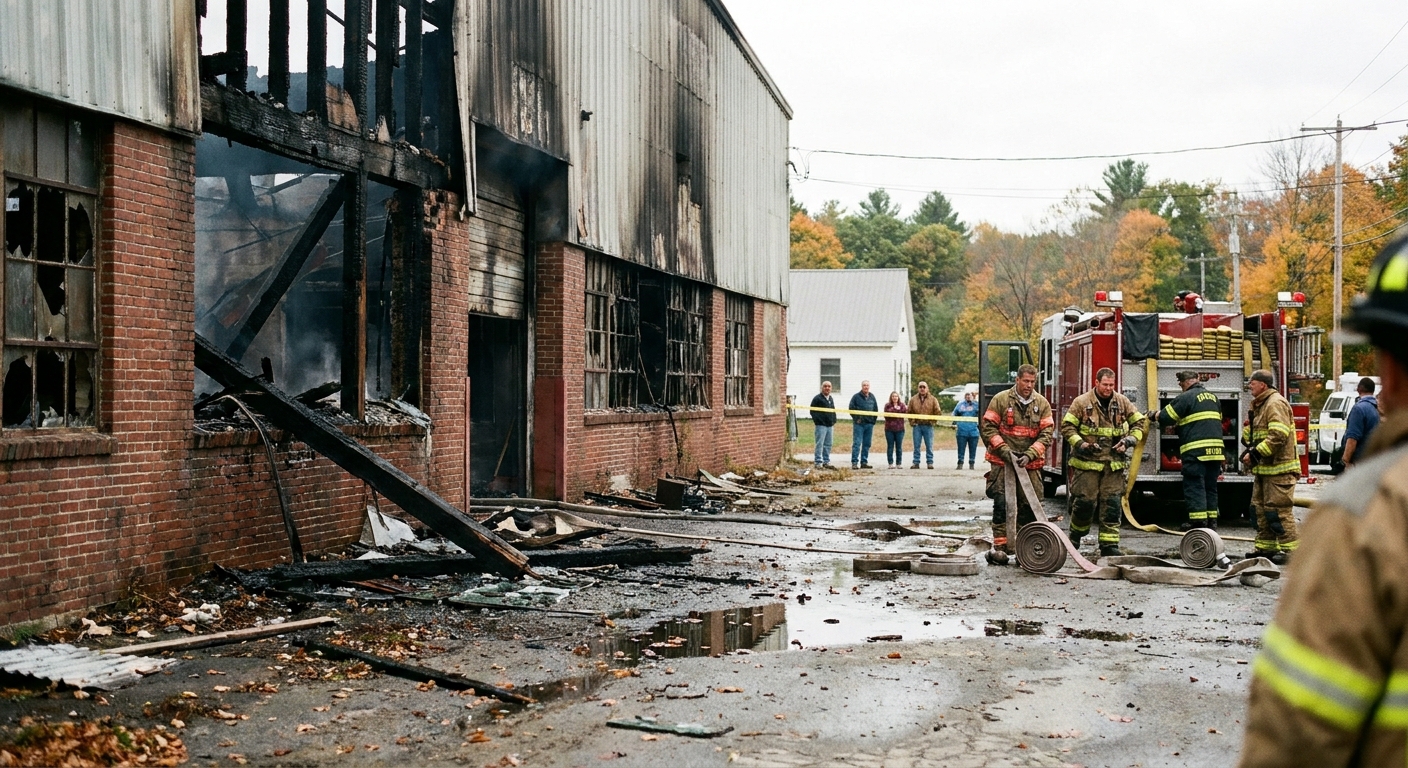
When the Cheapest Cannabis Quote Cost a CT Operator $487K: Anatomy of a Coverage-Gap Claim Denial
Everyone in this industry talks about cannabis insurance in the abstract — premium ranges, carrier appetite, coverage forms. What's harder to find is what actually happens when one of those policies meets a real claim. Most cannabis operators have never seen the inside of a denial letter, and most never want to.
This is the inside of one. It's a composite — every detail is drawn from real CT cannabis placements and real denial patterns we've seen as a specialty broker, but the operator name, exact address, and specific dates have been anonymized to protect the people involved. The numbers are accurate. The policy mechanics are accurate. The mistakes are accurate. The outcome is accurate.
What we've built here is a forensic walk-through: what was bought, what burned, what the carrier paid, what the carrier denied, and — most importantly — what a properly placed specialty cannabis policy would have paid out instead. If you read nothing else this cluster, read this. Numbers on a spreadsheet don't carry the weight of a claim that doesn't pay.
Quick answer: A Connecticut cannabis manufacturer experienced a $487,000 loss from a contained electrical fire in their extraction area. Their standard BOP-style policy — chosen because it was 38% cheaper than the specialty cannabis quote at startup — paid out $87,300 after coverage gaps, exclusions, co-insurance penalties, and a contested business interruption claim. A properly placed specialty cannabis policy at the higher premium would have paid an estimated $441,000 on the same loss. The $11,400 in annual premium savings cost the operator $354,000 in unrecovered losses.
The operator: a 4,800-sq-ft cannabis manufacturer in central CT
We'll call them Crescent Labs. CT DCP-licensed product manufacturer, opened late 2024, doing ethanol extraction and edibles production in a 4,800-sq-ft leased industrial unit in a multi-tenant building near Hartford. Three principals, eight employees, projected first-year revenue $3.2M. The lease required $2M general liability with the landlord as additional insured. They had a buildout investment of roughly $940K — extraction equipment, packaging line, vault, fire suppression, security.
The principals were experienced operators (two had run cannabis businesses in Massachusetts) but new to navigating the CT insurance market. They got three quotes during licensure:
| Quote source | Type of policy | Annual premium | What got chosen |
|---|---|---|---|
| Specialty cannabis broker (national MGA) | Cannabis-specific E&S package | $48,200 | No — "too expensive" |
| CT-based specialty broker | Cannabis-specific E&S package + WC | $51,800 | No — declined to interview |
| Local generalist agency | Standard commercial BOP + cannabis endorsement | $36,800 | Yes — chosen |
The choice was made on price. The generalist agency told them the policy "covered the cannabis operation" and added a "cannabis endorsement" to a standard commercial package. The endorsement looked legitimate. The principals signed. They saved $11,400 a year on premium. They felt smart.
This is the recurring pattern. We covered it in detail in the specialty cannabis E&S vs. standard commercial insurance piece — the cost difference looks attractive at startup and then bites at claim time. Crescent Labs is the case study that piece warned about.
The incident
Fire ignition in the extraction area
An ethanol-recovery solvent pump failed catastrophically. The pump's motor seized; the seal failed; warm ethanol vapor was released into the immediate workspace. A nearby control panel — wired by the original general contractor without arc-fault protection on that specific branch — sparked. Ignition. The fire was contained by the wet-pipe sprinkler system in 22 minutes. Hartford Fire arrived at 3:09 AM and overhauled the scene for another six hours.
The immediate damage
The extraction room — completely lost. Equipment, ducting, ventilation, electrical. Adjacent packaging area — heavy water damage from sprinkler discharge. Finished goods vault (separate room, fire-rated walls) — intact but contents quarantined by DCP pending lab retesting for combustion residue. Two neighboring tenants in the building (a tool-and-die shop and a small printing operation) sustained water damage migrating through shared walls. The building itself — landlord-owned — sustained roughly $180K in structural damage that the landlord's lessor's risk policy would handle.
The 90-day shutdown
CT DCP issued a temporary cease-operations order pending environmental sampling, equipment inspection, fire-marshal sign-off, and DCP re-inspection. Crescent Labs would not be allowed to manufacture or release product for an estimated 90 days minimum.
The losses, line by line
Total economic loss to Crescent Labs: $487,000
| Loss category | Amount | Notes |
|---|---|---|
| Extraction equipment (destroyed) | $142,000 | Pump, recovery still, vacuum oven, control panels, ducting, ventilation |
| Buildout damage | $78,000 | Walls, electrical, fire-rated doors, finishes |
| Finished goods quarantined / destroyed | $94,000 | $36K destroyed in fire/water; $58K quarantined, later released after testing |
| Work-in-process inventory | $23,000 | Mid-batch product loss |
| Business interruption (90 days lost revenue, net of expenses) | $118,000 | Projected sales × gross margin × 90 days |
| Third-party tenant damage | $24,000 | Water damage to two neighboring tenants — claims filed against Crescent |
| Code-upgrade costs | $8,000 | Re-permitting and bringing rebuild to current CT building code (post-2025 updates) |
| Total | $487,000 |
What the policy actually paid — and didn't
Crescent Labs filed the claim on March 8. The carrier acknowledged receipt, assigned an adjuster on March 11, and issued the reservation-of-rights letter on March 14. The full denial letter on the contested portions came on April 22. Here is what played out, line by line.
Line 1: Extraction equipment ($142,000)
What the policy was supposed to cover: Business personal property up to $500K. The equipment was scheduled.
What was actually paid: $38,000.
Why: The "cannabis endorsement" the generalist agency attached contained a sub-limit clause that capped equipment used in "extraction, processing, or refining of cannabis products" at $50,000 per occurrence, less the $5,000 deductible, less a 25% co-insurance penalty for under-reported values (the original schedule listed equipment at $115K; actual replacement cost was $142K, triggering co-insurance). Net: $38,000.
The specialty cannabis policy quoted by both specialty brokers had no extraction sub-limit — extraction equipment would have been covered at full scheduled replacement cost, no co-insurance applied because both specialty brokers required updated schedules at every renewal.
Line 2: Buildout damage ($78,000)
What the policy was supposed to cover: Tenant improvements and betterments coverage of $200,000.
What was actually paid: $49,300.
Why: Standard form actual-cash-value (ACV) settlement basis — depreciation of $28,700 was deducted for the 14-month-old buildout. The specialty cannabis policy quoted replacement-cost (RC) settlement on TI&B, which would have paid the full $78,000.
Line 3: Finished goods and inventory ($94,000)
What the policy was supposed to cover: Stock at selling price, $250K limit.
What was actually paid: $0 — denied entirely.
Why: The "cannabis endorsement" contained a stock valuation clause that valued cannabis product at "cost basis only, exclusive of THC content or finished product markup." The carrier valued the destroyed product at the raw biomass cost basis ($14,200) — but then denied the claim entirely because the endorsement also excluded coverage for "stock subject to federal Schedule I controlled substance designation." The carrier argued the stock could not be covered as "property" under federal law because it could not legally be sold across state lines. The denial letter cited the federal scheduling exclusion as the controlling provision.
This is the single most common cannabis claim denial pattern in the country. Standard policies inherit federal-scheduling exclusions from their base forms even when "cannabis endorsements" are attached. The specialty cannabis policy quoted by the specialty brokers was issued on cannabis-specific E&S paper that explicitly schedules cannabis-related stock as covered property — no federal exclusion. Loss would have paid out at $94,000.
Line 4: Work-in-process inventory ($23,000)
What was actually paid: $0.
Why: Same federal exclusion. Mid-batch cannabis-derived product is the same legal asset class as finished product under the policy's controlling clause.
Line 5: Business interruption ($118,000)
What the policy was supposed to cover: Business interruption coverage of $250K with a 72-hour waiting period and 12-month period of restoration.
What was actually paid: $0 — denied.
Why: The carrier asserted that "business interruption loss flowing from regulatory shutdown by a state cannabis authority" was excluded under a "regulatory/government action" exclusion in the base form. Crescent argued the trigger was a physical-damage event (the fire), not a regulatory action — the DCP order was a downstream consequence. The carrier maintained the proximate cause of the 90-day lost revenue was the DCP order, not the fire. Coverage denied.
The specialty cannabis policy quoted by both specialty brokers contained a cannabis-specific BI form that explicitly covers loss of income from regulatory shutdown caused by a covered property loss. BI would have paid the $118,000.
Line 6: Third-party tenant damage ($24,000)
What the policy was supposed to cover: General liability $1M/$2M, with neighboring tenants as potential claimants.
What was actually paid: The carrier accepted defense and paid the $24,000 to settle the neighbors' water-damage claims — but reserved rights to deny coverage if the loss event was found to be subject to a "cannabis operations" exclusion in the GL coverage part. The settlement was paid; the reservation hung over the file for six months.
The specialty cannabis policies would have paid without reservation. Cannabis-specific GL forms don't carry the "subject to reservation" overhang.
Line 7: Code-upgrade costs ($8,000)
What was actually paid: $0.
Why: No Ordinance & Law coverage on the base form. The standard BOP didn't include O&L; the specialty quotes did.
The forensic comparison
Total paid by the standard BOP policy: $87,300 on a $487,000 loss.
Estimated payout under the specialty cannabis E&S policy: $441,000 on the same loss.
The annual premium difference: $11,400.
The unrecovered-loss difference: $353,700.
| Loss category | Standard BOP paid | Specialty E&S would have paid | Gap |
|---|---|---|---|
| Extraction equipment | $38,000 | $142,000 | $104,000 |
| Buildout damage | $49,300 | $78,000 | $28,700 |
| Finished goods | $0 | $94,000 | $94,000 |
| Work-in-process | $0 | $23,000 | $23,000 |
| Business interruption | $0 | $118,000 | $118,000 |
| Third-party damage | $24,000 | $24,000 | $0 |
| Code-upgrade | $0 | $8,000 | $8,000 |
| O&L sub-loss (code rebuild) | $0 | — | — |
| Total | $111,300 gross / $87,300 net after deductibles & co-ins | $487,000 gross / $441,000 net | $353,700 |
The five-year cumulative premium savings under the standard BOP — if no claim had ever occurred — would have been $57,000. The single claim cost Crescent Labs $353,700 in unrecovered loss. Net economic cost of the cheaper policy: $296,700 over a single 18-month operating window.

The dispute attempt — and what actually got recovered
Crescent Labs hired a coverage attorney 11 days after the denial letter. The attorney spent eight weeks reviewing the policy form, the endorsement, the carrier's claims file, and the denial reasoning. The conclusion: the carrier's coverage positions were aggressive but legally defensible given the policy as written. The federal-scheduling exclusion and the regulatory-action exclusion were both clear in the form. The endorsement that the agency had described as "covering the cannabis operation" had not, in fact, removed those base-form exclusions.
The attorney negotiated an additional $9,400 ex gratia payment on the BI claim — the carrier agreed to acknowledge a portion of the loss flowed directly from the physical damage rather than the regulatory order. Total settlement after legal: $96,700.
Attorney fees: $17,200. Net to Crescent: $79,500. Against a $487,000 economic loss.
Crescent Labs survived the event — the principals contributed $230K of additional personal capital, the landlord offered three months of rent abatement, and the company restarted operations in July 2026. They are still operating today. The principals will tell you privately that the experience cost them more than money. It cost them growth, talent (two key employees left during the shutdown), and the trust of a third partner who has since exited the venture.
What a properly structured specialty cannabis program would have done
Both specialty quotes — the national MGA at $48,200 and the CT-based specialty broker at $51,800 — would have placed Crescent Labs on cannabis-specific E&S paper with:
- No sub-limit on extraction equipment — full scheduled replacement cost coverage on the $142K equipment loss
- Replacement-cost settlement on TI&B — full $78K paid instead of $49,300 ACV
- Cannabis-specific stock coverage — no federal-scheduling exclusion, valued at selling price, $94K paid
- Work-in-process explicitly covered — $23K paid
- Cannabis BI form — explicitly contemplating regulatory shutdown as a covered consequence of physical damage; $118K paid
- Cannabis GL form — no reservation overhang; $24K paid cleanly
- Ordinance & Law coverage included — $8K code upgrade paid
- Cannabis-specific recall expense extension — relevant if DCP had required recall of any released product (it didn't, but the coverage was there)
- Equipment breakdown coverage — relevant for the pump failure root cause; standard BOP carrier denied this separately
The annual premium difference — $11,400 — represented roughly 24% of the standard-BOP premium. The structural difference in coverage was 5× the payout magnitude on the same loss event.
The 7 lessons (each one ties to a sibling spoke in this cluster)
Cheapest is not the price you actually pay
The premium difference between specialty and standard policies looks large at startup. At claim time, it is dwarfed by the coverage gap. The right comparison is not "what do these policies cost?" but "what does each one pay on a $400K loss?" — a question the generalist agency was never asked. The cost guide covers the premium-vs-coverage math in detail.
A "cannabis endorsement" on a standard policy is not a specialty cannabis policy
Crescent Labs' endorsement added language that looked relevant. It did not remove the base-form exclusions that destroyed the claim. A specialty cannabis policy is written on cannabis-specific E&S paper from the ground up. The structural difference is covered exhaustively in the E&S vs. standard commercial comparison.
The federal-scheduling exclusion is the silent killer
Cannabis stock is unenforceable as a federal Schedule I asset class. Standard policies inherit federal exclusions from their base forms even when "cannabis" appears in an endorsement. Only cannabis-specific specialty paper removes the federal exclusion at the form level. If you can read your policy and identify the federal-scheduling exclusion language — and you should be able to — you'll find it in nearly every standard form on the market.
Co-insurance and undervaluation will compound every other gap
Crescent's equipment claim was reduced 25% for under-reported property values. Most operators undervalue equipment, buildout, and inventory at submission — and never update the schedules at renewal. A specialty broker forces a schedule update annually. Standard agencies often do not. We unpacked this dynamic in the 7 biggest cannabis insurance mistakes piece — schedule maintenance is mistake #2.
Regulatory-shutdown BI is the most overlooked endorsement in cannabis
Every cannabis loss event has the potential to trigger DCP intervention. Standard BI forms treat regulatory orders as excluded "civil authority" events even when the trigger was clearly physical damage. Cannabis-specific BI forms contemplate the DCP intervention as part of the covered loss chain. The carrier-by-carrier difference on this single form provision can swing a claim by six figures.
The broker you choose is the policy you'll get
Crescent Labs' generalist agency was not malicious — they were not equipped to underwrite cannabis. They didn't understand the federal exclusion. They didn't understand cannabis-specific BI forms. They placed coverage from the standard markets available to them because that was the market they had access to. A specialty broker would never have shown them that standard BOP as a viable option. Broker selection is upstream of every coverage decision; we covered this in the best cannabis insurance brokers piece.
The underwriting process forces clarity that prevents claim disputes
The specialty cannabis underwriting process — the 6-phase walk-through covered in the underwriting process spoke — produces a clean, comprehensive submission. Underwriters validate values, security, and operations. The cleaner the submission, the cleaner the claim. Crescent's standard policy was bound in 6 days off a 4-page application. That speed was a warning sign in retrospect.
What Crescent Labs did after the loss
The company moved their coverage at the first opportunity — the standard-BOP carrier non-renewed the account citing the loss anyway, and Crescent rebound onto a specialty cannabis E&S program in August 2026 at $59,400 annual premium (slightly higher than the $51,800 they had originally been quoted at startup, reflecting the loss). They have since had no further claim events. They re-engaged with a specialty broker who:
- Rebuilt the property schedule from invoices and contractor records — true replacement cost
- Added Ordinance & Law coverage
- Added equipment breakdown coverage
- Added recall expense extension
- Structured a $5M umbrella over the $2M GL primary
- Set up a quarterly check-in cadence for any operational changes (new equipment, new products, expansion)
Their total annual P&C premium across the full stack is now $74,200 — meaningfully higher than the $36,800 they paid at startup. They consider it the cost of having a real insurance program.
Frequently asked questions
Was the federal-scheduling exclusion in Crescent's policy unique or unusual?
Not at all. Nearly every standard commercial property and BOP form on the market contains a federal-scheduling exclusion that applies to controlled substances under the CSA. Adding a "cannabis endorsement" to a standard policy typically does not remove this exclusion — it merely adds limited coverage language that interacts with the base form in often-unpredictable ways. The only reliable way to avoid this exclusion is to be placed on cannabis-specific E&S paper from the start.
Could the dispute have gone better with a public adjuster instead of a coverage attorney?
Possibly more recovery on the property line, but the larger denials (federal exclusion on stock, regulatory shutdown on BI) were form-based legal denials that a public adjuster couldn't move. Public adjusters are extremely effective on valuation disputes (was the equipment worth $115K or $142K) and on settlement maximization within covered lines. They cannot rewrite excluded coverage. For form-based denials, a coverage attorney is the right tool.
What would have happened if the fire had been larger?
The proportional gap would have been even worse. The federal-scheduling exclusion is total — it doesn't matter if the cannabis stock loss was $94K or $940K, the standard policy would have paid zero on it. The BI exclusion would have applied to a 9-month shutdown as readily as to a 90-day shutdown. The specialty cannabis policy would have paid larger amounts in proportion. A bigger fire on a standard policy doesn't mean a bigger payout — it just means a bigger uncovered loss.
Is this case typical or atypical?
The structural pattern — startup operator chooses cheapest quote, has a covered-feeling claim that is mostly denied at form level — is depressingly typical. The specific loss amounts vary, but the gap percentage (recovery of 15–25% of total economic loss on a standard policy versus 85–95% on a specialty policy) is consistent across the cannabis claims we've reviewed. The smaller the claim, the less the gap matters. The larger the claim, the worse the difference. Crescent's $487K loss sits in the middle of the range we see; the worst we've reviewed was a $2.1M loss recovered at $164K under a standard policy.
Does Connecticut law provide any protection against this kind of denial?
Limited. Connecticut's Unfair Insurance Practices Act (Conn. Gen. Stat. § 38a-815 et seq.) governs claims handling conduct but does not require carriers to provide coverage that isn't in the policy. The CT Insurance Department handles complaints about claims-handling conduct (delay, misrepresentation, failure to investigate) but cannot order coverage where the form clearly excludes the loss. The protection has to come at placement — through the policy form chosen — not at claim time.
How do I review my own cannabis policy to see if I have these gaps?
Ask your broker for the full policy form, not just the declarations page. Look specifically for: (1) federal-scheduling or controlled-substance exclusions in the base property form, (2) sub-limits on equipment, extraction operations, or cannabis-related property in any endorsement, (3) "civil authority" or "government action" exclusions on the BI form, (4) actual-cash-value vs. replacement-cost settlement basis on TI&B and equipment, (5) Ordinance & Law and equipment breakdown — are they on the form or not. If your broker can't walk you through these provisions, that itself is a signal. A specialty cannabis broker should be able to read your policy with you in 30 minutes.
Key takeaways
- A Connecticut cannabis manufacturer experienced a $487K loss on a standard BOP-style policy and recovered $87,300. The specialty cannabis policy quoted at startup would have paid an estimated $441,000.
- The $11,400 annual premium savings at startup cost the operator $353,700 in unrecovered loss on a single claim event.
- The largest single coverage gap was the federal-scheduling exclusion on cannabis stock — $117K denied entirely under the base form's controlled-substance exclusion that the "cannabis endorsement" did not remove.
- The second-largest gap was the business interruption denial — $118K denied under a "regulatory action" exclusion that didn't appear in the cannabis specialty BI form.
- Co-insurance penalties for under-reported values stripped another 25% off the equipment claim — a maintenance failure that specialty brokers force annually at renewal.
- The dispute recovered an additional $9,400 ex gratia after $17,200 in legal fees — net additional recovery of ($7,800) negative.
- Specialty cannabis E&S policies cost meaningfully more in premium and pay multiples of the difference at claim time. The structural argument for specialty paper is settled by every claim like this one.
Where to go next
This is the case study spoke of the cluster. To complete your understanding of CT cannabis insurance, the complete CT cannabis insurance guide is the pillar — read it first if you haven't. From there: the cost guide for premium math, the specialty vs. standard comparison to understand the structural difference, the 7 biggest mistakes piece for the patterns to avoid, the broker selection piece for who can place this correctly, the carrier markets review for the specific E&S programs writing CT, the underwriting process walkthrough for the placement mechanics, and the workers comp and employee coverage stack for the employee-side build-out.
If you're a Connecticut cannabis operator currently insured on a standard BOP with a "cannabis endorsement," request a policy review with our team at iConn Insurance Solutions. We'll walk through your current form with you in plain English and quantify the gap before you have a claim that quantifies it for you. For Connecticut commercial insurance outside the cannabis industry, our sister site MyInsureCT covers the broader CT commercial market.
Contenido relacionado
AI Payment Fraud Incident Response: What to Do First
The first hour after a fraudulent wire can decide whether funds are frozen or lost. Follow this practical response guide for banks, insurers, evidence, law enforcement, and recovery.
Leer artículo →
Hotel and Commercial Property Insurance: Where Should Renewal Savings Go?
A practical guide for hotel and commercial-property owners deciding whether to keep renewal savings, lower deductibles, increase limits or restore coverage.
Leer artículo →AI Fraud Insurance Exclusions: Where Coverage Can Break
A large cyber limit can hide a small social engineering sublimit. Learn how voluntary-transfer language, verification conditions, and overlapping crime coverage can affect AI fraud claims.
Leer artículo →
Connecticut Builders Risk Insurance: 2026 Buyer’s Guide
Connecticut builders risk buyers should update project values, timelines and controls. Learn what to prepare and compare for a 2026 placement.
Leer artículo →