
My Car Was Totaled and the Payout Is Less Than I Owe — What Gap Insurance Actually Covers
My Car Was Totaled and the Payout Is Less Than I Owe — What Gap Insurance Actually Covers
Total-loss payouts are based on Actual Cash Value — not your loan balance. Here is how the math really works in Connecticut, when gap insurance pays for itself, how to fight an ACV valuation you disagree with, and why the dealer version of gap costs ten times what your auto insurer charges.
If your Connecticut auto loan balance is higher than your vehicle's current market value, you have a gap. In a total loss, your insurance company pays Actual Cash Value (ACV) — not your loan balance. Gap insurance bridges the difference. Added to your auto policy, it typically costs $20 to $60 per year. Sold by a dealer, the same coverage is often $500 to $900 bundled into financing.
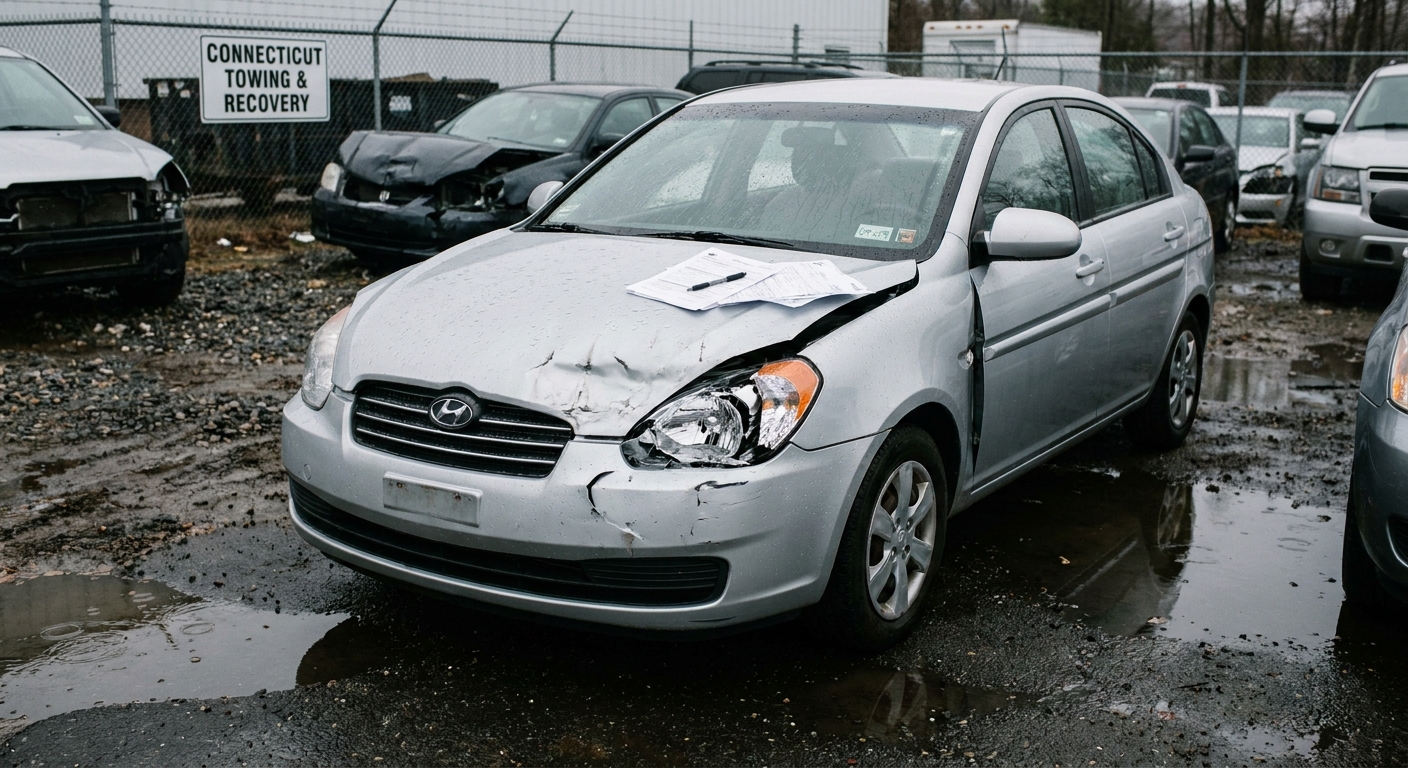
A client called us in March after a serious collision on I-95. His 2023 SUV was a total loss. He owed $38,400 on the loan. The insurance check was $29,800. He walked away with no vehicle, no more payments on a car he did not own, and an $8,600 loan balance still in his name. He called asking the same question every Connecticut driver in that situation calls asking: "How is this legal, and what can I do?"
At Insure Connecticut LLC, we believe the total-loss settlement process is the least-understood moment in all of auto insurance. This article walks through exactly how a total loss is valued in Connecticut, how gap insurance works, who needs it, who can skip it, and how to push back on an ACV valuation that does not match reality.
How a Total Loss Is Valued in Connecticut
When your vehicle is declared a total loss — usually when repair costs plus expected salvage value exceed the vehicle's pre-loss value — your insurer owes you the Actual Cash Value. ACV is calculated using:
- Local comparable vehicle sales within typically 75 miles
- Year, make, model, trim, and mileage
- Vehicle condition at time of loss (photos, CARFAX, maintenance records)
- Regional market adjustments (Fairfield County pricing is often higher than inland CT)
- Options and equipment documented on the original purchase
What ACV is not: it is not Kelley Blue Book retail. It is not what you paid. It is not what the dealer would sell the same car for today. It is the average transaction value of comparable vehicles in your market.
Why the Gap Exists in 2026
Several forces in the current market make the loan-to-ACV gap wider than it has been in decades:
- Long loan terms. 72- and 84-month auto loans are now standard. The longer the loan, the longer you are underwater on the vehicle.
- Low down payments. Many CT buyers put 10% or less down — or nothing, if trading in a vehicle.
- Rolled-in negative equity. Trading a vehicle you still owe $5,000 on into a new loan starts you $5,000 underwater on day one.
- First-year depreciation. New vehicles lose 15% to 25% of value in the first year. EVs and luxury vehicles can lose more.
- Post-pandemic pricing normalization. Vehicles that retained abnormally high values during the shortage years are now correcting downward faster than loan balances are amortizing.
How Gap Insurance Actually Works
Gap insurance — also called Loan/Lease Gap Coverage or Guaranteed Asset Protection — pays the difference between:
- What your auto insurance pays for the total loss (ACV minus deductible), and
- What you still owe on the loan or lease
It does not cover your deductible, late payments, extended warranties rolled into the loan, or any non-vehicle amounts (tax, title, fees) depending on the policy form. Read the specifics of your endorsement.
Why the Dealer Version Is a Trap
Dealers sell gap coverage as a one-time purchase bundled into the loan, typically $500 to $900. That cost is then financed over the life of the loan, meaning you pay interest on it for the next six years. The auto-insurer version — added to your existing policy as an endorsement — is typically $20 to $60 per year. Over a 6-year loan, that is $120 to $360 total versus $500 to $900 plus interest.
Real Example: Our March Client
The client with the 2023 SUV financed through the dealer had been sold a $795 gap product at signing. He thought he had gap coverage — he did. The claim paid exactly as designed, and the $8,600 shortfall was covered by the dealer-provided gap. The lesson was not that gap failed him — it was that he paid roughly $600 more than he needed to for the same protection.
Who Needs Gap Coverage in Connecticut
Almost certainly yes:
- Anyone who financed with less than 20% down
- Anyone with a 72-month or longer loan
- Anyone who rolled negative equity from a trade-in into the new loan
- Anyone leasing (unless the lease contract explicitly includes gap)
- Anyone driving a vehicle that depreciates faster than average — most EVs, high-end luxury models, and specialty vehicles
Probably not needed:
- Paid-off vehicles (you have no loan to be underwater on)
- Financed vehicles where the loan balance is already below the current ACV
- Vehicles inside the last 18 months of the loan with a small remaining balance
How to Fight an ACV Valuation You Disagree With
If the ACV offer seems low, you have negotiation leverage — but only if you use it properly. The playbook we walk CT clients through:
- Request the valuation report in writing. You are entitled to see the comparables the adjuster used.
- Review each comparable carefully. Check mileage, trim level, options, and geographic proximity. Comparables from 200 miles away in a different market are often challengeable.
- Submit your own comparables. Pull listings from CarGurus, Autotrader, and local CT dealerships. Higher-priced comparables matter.
- Document condition with receipts. Recent tires, brakes, maintenance, and any aftermarket options not included in the original valuation.
- Invoke the Connecticut Appraisal Clause. Most CT auto policies include an appraisal clause that lets you and the insurer each hire an independent appraiser, with a neutral umpire if they disagree. This is underutilized and often recovers $1,500 to $4,000.
Key Takeaways
- Total-loss payouts are based on ACV, not what you owe or what you paid.
- Gap insurance bridges the shortfall — typically $20–$60 per year on an auto policy.
- Dealer gap is almost always 5–10x more expensive than insurer gap — and financed.
- If you are financing a new vehicle in 2026 with less than 20% down, you almost certainly need gap.
- The CT auto policy Appraisal Clause is a powerful tool for disputing a low total-loss valuation.
New Car in the Driveway?
Send us your auto policy and your loan or lease document. We will tell you — in plain English — whether you need gap, how much it costs to add, and whether you are already paying for it somewhere you did not realize.
Schedule a Free Coverage ReviewContenido relacionado
AI Payment Fraud Incident Response: What to Do First
The first hour after a fraudulent wire can decide whether funds are frozen or lost. Follow this practical response guide for banks, insurers, evidence, law enforcement, and recovery.
Leer artículo →
Hotel and Commercial Property Insurance: Where Should Renewal Savings Go?
A practical guide for hotel and commercial-property owners deciding whether to keep renewal savings, lower deductibles, increase limits or restore coverage.
Leer artículo →AI Fraud Insurance Exclusions: Where Coverage Can Break
A large cyber limit can hide a small social engineering sublimit. Learn how voluntary-transfer language, verification conditions, and overlapping crime coverage can affect AI fraud claims.
Leer artículo →
Connecticut Builders Risk Insurance: 2026 Buyer’s Guide
Connecticut builders risk buyers should update project values, timelines and controls. Learn what to prepare and compare for a 2026 placement.
Leer artículo →