
Does General Liability Cover Damage to a Customer's Boat?

A customer boat damage claim is the scenario many ship detailers worry about most. A slip-and-fall claim is serious, but a damaged yacht finish, stained cushion set, scratched glass, or ruined teak section can threaten the customer relationship and the business reputation at the same time.
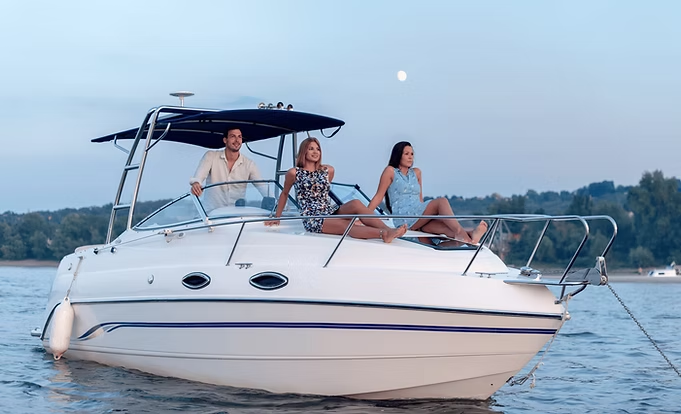
Does general liability cover damage to a customer's boat?
General liability may cover some customer boat damage claims, but ship detailers must review care, custody, or control exclusions before assuming vessel damage is covered. Damage to the exact property being worked on is one of the most important policy questions for marine detailers.
This supporting post connects to the pillar guide, Ship Detailing Business Insurance, and goes deeper on the claim every detailer should discuss before the busy season.
What is care, custody, or control?
Care, custody, or control is insurance language that can limit coverage for property your business possesses, controls, or is actively working on. The phrase matters because a yacht detailer is often touching, moving around, cleaning, polishing, and protecting customer property directly.
Imagine a crew in Fairfield County polishing a large vessel. A buffer catches an edge and burns the finish. The customer says the business damaged the boat during the job. The question is not only whether the business has general liability. The question is whether the policy covers that kind of property damage.
Examples of customer vessel damage claims
- Gelcoat scratches or buffer burns during correction work.
- Chemical stains on upholstery, canvas, or flooring.
- Broken electronics, trim, or hardware while cleaning.
- Overspray affecting nearby vessels at a marina.
- Lost keys, misplaced customer property, or damage during access.
What should detailers ask before renewal?
Ask the advisor to walk through a real claim scenario. Use the most expensive vessel you service as the example. Ask what policy section responds, what deductible applies, what limit applies, and what exclusion could create a problem.
At iConn Insurance Solutions, we would rather have that conversation before a claim. It is easier to adjust coverage before a job than to explain a gap after a customer is angry.
How much can a customer boat damage claim cost?
The honest answer is that it depends on the vessel, the surface, the damage, and the customer's expectations. A small scratch on an older runabout is one thing. Damage to a yacht's finish, glass, electronics, upholstery, or custom brightwork on the Connecticut coast or Rhode Island coast can become expensive quickly. The insurance question is not only the repair bill. It is also whether the claim interrupts work, damages a marina relationship, or makes a referral source hesitate.
What is the biggest misconception about general liability?
The biggest misconception is that general liability means "anything my business damages is covered." That is not how policies work. General liability can be very valuable, but exclusions, definitions, endorsements, and care-control wording matter. This is exactly the kind of uncomfortable detail TAYA content is supposed to answer before a buyer has to ask twice.
Customer vessel coverage versus workmanship issues: what is the difference?
A property damage claim and a workmanship dispute are not always the same thing. If a crew damages a surface, that may be a property damage question. If a customer says the wax job did not last or the finish does not look as promised, that may be a quality or contract dispute. Detailers should understand that insurance is not a warranty for poor workmanship.
When might insurance not be the right solution?
Insurance is not a substitute for process. Detailers still need intake photos, written service descriptions, customer approvals, product documentation, crew training, and realistic promises. If a business repeatedly takes jobs beyond its skill level, no policy can turn that into a good operating model.
How does coastal work change the conversation?
Detailers serving Stamford, New Haven, Mystic, Newport, Warwick, or Narragansett may work around high-value vessels and tight marina spaces where one mistake can affect neighboring boats. Overspray, runoff, dock access, and contract requirements make coastal operations different from a driveway detail job inland.
What should be documented before touching the vessel?
Documentation is not glamorous, but it is one of the strongest habits a detailer can build. Before work begins, take photos of existing scratches, oxidation, worn canvas, cracked vinyl, stained cushions, damaged hardware, and electronics. Confirm the service scope in writing. If a customer asks for aggressive correction, explain the limits and risks before a buffer touches the surface.
This protects both sides. The customer sees that you are careful. The business has a record if a pre-existing condition becomes a dispute. The insurance advisor also gets a clearer picture of your operations, which can matter during underwriting and claim review.
What are the real-world claim scenarios?
- A crew uses the wrong product on vinyl seating and causes discoloration.
- A machine polisher burns through a finish during oxidation removal.
- A ladder shifts and damages a neighboring vessel at a crowded marina.
- A cleaner runs into a cabin electronic control panel and causes a short.
- A customer claims scratches were caused during detailing, but the crew has no intake photos.
What is the comparison buyers actually need?
The comparison is not "insured versus uninsured." Most serious business owners know they need insurance. The real comparison is between a policy that generally covers cleaning operations and a policy reviewed for marine service operations. The second option may cost more, but it is more likely to match the risk that keeps the owner up at night.
When should a detailer pay for a small claim directly?
That depends on the claim size, deductible, customer relationship, policy terms, and whether there may be hidden damage. A small goodwill repair may make sense in some cases. But if there is any chance of larger damage, injury, pollution, or a formal demand, the business should contact its advisor before making promises.
What should Connecticut and Rhode Island coast detailers ask?
Ask whether the policy covers damage to vessels being worked on, how neighboring vessels are treated, whether marina contracts change the analysis, and whether work across Connecticut and Rhode Island needs to be disclosed. Cross-border coastal work is common, but it should not be invisible on the insurance application.
Best next step before peak season
Build a vessel intake checklist. Include customer name, vessel location, existing condition photos, approved services, products used, crew assigned, and any marina rules. It will improve service quality and make insurance conversations more concrete.
Example: the scratch that becomes a business problem
Imagine a detailer is hired to correct oxidation on a customer's boat in a Rhode Island marina. The customer later points to several visible scratches and says they were caused during the job. The detailer believes the scratches were already there, but nobody took intake photos. Now the disagreement is not only about repair cost. It is about trust, reputation, future referrals, and whether the policy will treat the complaint as covered property damage.
That scenario is common because detailing work improves the surface enough that old flaws become more visible. A customer may notice damage after the job even if the crew did not cause it. Good documentation helps separate old conditions from new damage.
What should a customer agreement say?
A customer agreement should describe the services, known pre-existing conditions, products or methods being used, limitations of the service, and what the customer should expect. For aggressive correction work, the agreement should explain that older surfaces may reveal prior defects. For interior work, it should note sensitive materials, electronics, and personal property.
This is not about hiding from responsibility. It is about making responsibility clear. TAYA means answering what can go wrong before the buyer has to learn it through conflict.
How should detailers compare policy options?
- Ask whether damage to the vessel being worked on is covered, limited, or excluded.
- Ask whether neighboring vessel damage is treated differently.
- Ask whether high-value vessels require special underwriting information.
- Ask whether subcontractor work changes the answer.
- Ask whether written contracts can create uninsured obligations.
Bottom line for customer vessel damage
A ship detailer should never rely on the phrase "I have liability" as the whole answer. The better answer is specific: here is how the policy treats customer property, here is how we document the vessel, here is what our agreement says, and here is what we do when a customer raises a concern. That level of clarity protects the business and the customer.
A claim prevention checklist for vessel damage
- Photograph the vessel before work begins, including existing scratches, stains, cracks, oxidation, and worn surfaces.
- Confirm the customer's approved services in writing.
- Test unfamiliar products on a small area when appropriate.
- Train employees on surfaces they should not treat without approval.
- Document products used, crew members assigned, and job date.
- Report customer concerns quickly instead of letting frustration build.
What should the quote conversation include?
When requesting insurance, tell the advisor the largest vessels you service, the most expensive surfaces you touch, whether you work inside cabins, whether you use subcontractors, and whether you operate in tight marina settings. A vague description like "boat cleaning" does not tell the full story. A better description helps the carrier evaluate the real exposure.
How should owners think about deductibles?
A higher deductible may reduce premium, but it also means the business absorbs more of each claim. For a detailer with strong cash reserves, that may be acceptable. For a newer business, a high deductible can create stress after a single mistake. The right deductible should match cash flow, job size, and customer vessel values.
How this supports coastal SEO and actual buyers
People searching from coastal Connecticut and Rhode Island are often not asking academic insurance questions. They are asking because a customer complained, a marina asked for proof, or they are about to work on a more expensive vessel than usual. This article targets those practical searches while giving the owner a useful process.
What is the final buying advice?
If customer vessel damage would threaten the business, do not wait for a claim to understand the policy. Ask the hard questions now, document every job, and make sure the coverage matches the kind of vessels and marinas you want to serve.
What should not be promised to customers?
Do not promise that every mark will disappear, every surface will respond the same way, or every older finish can be restored without risk. Honest expectations reduce disputes. A trusted advisor approach applies to detailing as much as insurance: explain the trade-offs before the customer buys, not after they complain.
For coastal work, this matters because customers may own seasonal vessels, travel from out of state, or keep boats in marinas where reputation moves quickly. A clear scope, careful documentation, and realistic language can protect the account even when the job reveals imperfections.
The best operators do not hide risk. They explain it clearly, price the work accordingly, and carry coverage that reflects the value of the property in front of them.
That is also what searchers want from this topic. They are not looking for a vague reassurance. They want to know whether the policy will respond when a real customer's boat is damaged.
What should be reviewed after the first complaint?
After a complaint, review the photos, service scope, products used, crew notes, and customer communication. Then call the advisor before admitting fault or promising a repair. A calm process protects the customer relationship and keeps the claim facts clean.
Why independent brokers matter
Different carriers treat marine service work differently. An independent broker can compare options and help explain the trade-offs. Together with Insure Connecticut LLC, iConn helps Connecticut business owners review customer property risk in plain language.
Frequently Asked Questions About Boat Damage Claims
Is customer boat damage automatically covered?
No. Coverage depends on policy wording, exclusions, endorsements, limits, and the facts of the claim. Detailers should ask specifically about damage to vessels being worked on.
What if another boat is damaged by overspray?
Overspray may be treated differently than damage to the vessel being detailed. The claim still depends on policy wording and whether pollution, property damage, or care-control limitations apply.
Should detailers photograph vessels before work?
Yes. Before-and-after photos can help document existing damage, job condition, and completed work. Documentation will not create coverage, but it can support claim handling.
Can a contract make me responsible for vessel damage?
Yes. Customer and marina agreements can shift responsibility to the business. Review contract language with your advisor before signing high-value jobs.
Request a policy review through iConn Insurance Solutions before assuming customer vessel damage is handled.
Contenido relacionado
AI Payment Fraud Incident Response: What to Do First
The first hour after a fraudulent wire can decide whether funds are frozen or lost. Follow this practical response guide for banks, insurers, evidence, law enforcement, and recovery.
Leer artículo →
Hotel and Commercial Property Insurance: Where Should Renewal Savings Go?
A practical guide for hotel and commercial-property owners deciding whether to keep renewal savings, lower deductibles, increase limits or restore coverage.
Leer artículo →AI Fraud Insurance Exclusions: Where Coverage Can Break
A large cyber limit can hide a small social engineering sublimit. Learn how voluntary-transfer language, verification conditions, and overlapping crime coverage can affect AI fraud claims.
Leer artículo →
Connecticut Builders Risk Insurance: 2026 Buyer’s Guide
Connecticut builders risk buyers should update project values, timelines and controls. Learn what to prepare and compare for a 2026 placement.
Leer artículo →