Food & Beverage Business Insurance Guide for Connecticut Companies
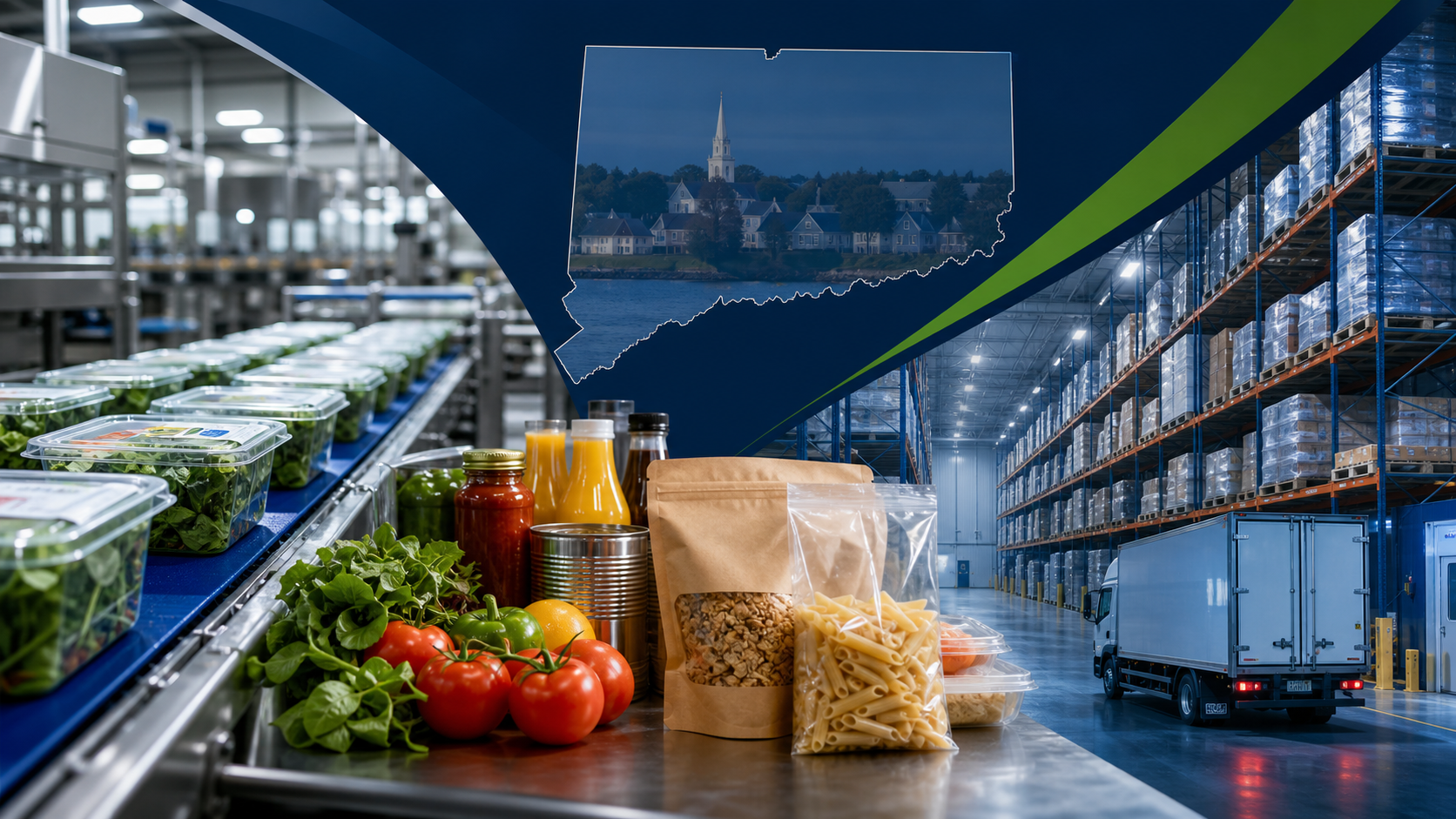
Food and beverage business insurance should protect more than buildings and vehicles. The right program connects product liability, recalls, cargo, spoilage, business income, receivables, fleet safety, cyber risk, and contract requirements so growth does not create hidden exposure.
Food and beverage companies live in a world of thin margins, fast-moving inventory, demanding buyers, tight delivery windows, and changing consumer preferences. A bakery in Hartford, a beverage startup in New Haven, a specialty distributor serving Fairfield County, and a refrigerated fleet moving product across the shoreline may all be in the same industry, but their risk profiles can look very different.
That is why a generic commercial policy review is not enough. A useful food and beverage insurance review asks how the business earns revenue, how product moves, where inventory sits, who controls quality, how customers pay, what contracts require, and what would happen if one part of the operation failed for a week.
This pillar guide brings together the key themes from the current food and beverage series: revenue recognition, trade credit, fleet telematics, and non-alcoholic beverage growth. It is built for Connecticut business owners and leaders who want practical insurance guidance, not vague risk-management language.
What insurance do food and beverage companies need?
Most food and beverage companies should review general liability, product liability, commercial property, equipment breakdown, spoilage, stock coverage, product recall, business income, commercial auto, cargo or inland marine, workers compensation, cyber liability, umbrella liability, and trade credit insurance. The right mix depends on the company's products, sales channels, contracts, and delivery model.
A company that sells packaged snacks through local retailers has different exposure than a refrigerated distributor. A non-alcoholic beverage brand using a co-packer has different contract and recall questions than a restaurant group producing everything in-house. A business that extends large customer terms has receivables risk that a cash-based operation may not carry.
| Coverage area | What it helps address | Common food and beverage question |
|---|---|---|
| Product liability | Injury or damage tied to a product | What happens if a customer claims illness or contamination? |
| Product recall | Recall expenses, notification, replacement, and crisis costs | Who pays if a mislabeled batch must be pulled? |
| Spoilage and stock | Inventory loss from temperature change, equipment failure, or covered events | Are finished goods valued correctly? |
| Commercial auto and cargo | Fleet crashes, delivery liability, and product in transit | Who controls the product during delivery? |
| Trade credit | Covered buyer nonpayment | What happens if a major buyer delays or defaults? |
| Cyber liability | Systems, customer data, payment disruption, and vendor access | Could a system outage stop orders or production? |
Series map: This guide is the pillar article. The supporting articles cover inventory insurance, revenue recognition, trade credit, fleet telematics, non-alcoholic beverage growth, AI for distributors, policy consolidation, and employee benefits.
Why are food and beverage margins so vulnerable?
Food and beverage margins are vulnerable because small errors can compound quickly. A promotional rebate reduces net revenue. A returned shipment lowers margin. A refrigeration issue damages inventory. A buyer stretches payment terms. A truck accident delays delivery and creates a customer dispute. None of these events needs to be catastrophic alone to create a serious cash-flow problem.
The U.S. Census Bureau reported that food services and drinking places were up 2.7 percent from May 2025 in its May 2026 retail sales release. Growth is welcome, but it also creates pressure. More customers, more routes, more inventory, and more contractual requirements can reveal weaknesses that were invisible at a smaller scale.
The USDA Food Price Outlook tracks food price changes and forecasts because food costs remain a live business issue. When inputs, labor, packaging, freight, and buyer expectations move at the same time, insurance should be reviewed as part of the operating strategy.
Related article: Start with the supporting post on inventory insurance and replacement cost for food and beverage companies.
How should revenue data shape insurance decisions?
Revenue data affects business income limits, receivables coverage, lender questions, insurance audits, and underwriting assumptions. If a company records gross sales before accounting for rebates, promotional credits, returns, and allowances, the insurance program may be built around numbers that do not match economic reality.
Food and beverage companies should review how customer incentives, loyalty programs, refunds, and returns affect net revenue. The accounting standard commonly known as ASC 606 is not an insurance rule, but the business questions it raises are useful for insurance planning: when is revenue truly earned, what does the company expect to collect, and what obligations remain?
Related article: Read the supporting post on revenue recognition and insurance for food and beverage companies.
How can trade credit insurance protect food and beverage growth?
Many food and beverage companies grow by extending credit to buyers. That can be normal and necessary, but it creates exposure when a major customer delays payment, disputes invoices, or fails financially. Tariffs, input-cost changes, and tighter consumer spending can all pressure buyer cash flow.
Trade credit insurance can protect covered receivables, but it is most useful when combined with disciplined credit limits and buyer monitoring. It should help leadership make better decisions before a default, not simply file a claim after the damage is done.
Related article: See the supporting post on trade credit insurance for food and beverage companies facing tariff risk.
Why do fleets change the insurance picture?
Fleet risk is central for distributors, wholesalers, bakeries, breweries, meal-prep companies, catering operations, and beverage brands with owned delivery vehicles. A food and beverage vehicle is often carrying product value, brand reputation, refrigeration dependency, delivery deadlines, and driver safety in the same trip.
Telematics can help companies monitor speeding, harsh braking, cornering, seatbelt use, idle time, route pressure, and refrigerated cargo conditions. The Federal Motor Carrier Safety Administration publishes large truck and bus crash facts because commercial vehicle crashes remain a major safety concern. Insurers pay attention when companies can show clear safety controls.
Related article: Review the supporting post on telematics for food and beverage fleet insurance.
What new risks come with non-alcoholic beverage growth?
Non-alcoholic beverage growth is creating opportunities for startups, restaurants, retailers, co-packers, and established beverage companies. But the risk does not disappear because the product has no alcohol. Product liability, contamination, labeling, functional ingredient claims, packaging failures, cargo, recall planning, and contract requirements still matter.
The key question is control. Who controls production? Who approves the label? Who owns inventory in storage? Who pays if a retailer requires a recall? Who covers product in transit? Who is responsible if a distributor mishandles the product? These questions should be answered before the first major retail or distribution agreement is signed.
Related article: Read the supporting post on non-alcoholic beverage insurance risks.
How do technology, policy structure, and people strategy fit into the risk plan?
A food and beverage insurance strategy also needs to account for technology, policy administration, and workforce stability. AI can improve forecasting and service reliability, but it increases dependence on data and software vendors. Policy consolidation can reduce confusion, but only when it is paired with better loss control. Employee benefits can support retention, but they must stay affordable and understandable.
Related article: See the supporting post on AI risk and insurance questions for food and beverage distributors.
Related article: Review the supporting post on policy consolidation for food distributors.
Related article: Read the supporting post on employee benefits strategy for food and beverage companies.
What should leaders review before renewal?
- Contracts: Review customer, distributor, co-packer, carrier, warehouse, and lender requirements.
- Inventory values: Confirm raw materials, work in progress, finished goods, seasonal stock, and refrigerated goods are valued accurately.
- Business income: Model how long it would take to restart after a fire, equipment breakdown, recall, or key supplier interruption.
- Receivables: Identify top buyers, payment terms, credit limits, disputes, and uninsured concentration.
- Fleet controls: Review driver screening, telematics, vehicle maintenance, cargo procedures, and incident documentation.
- Recall readiness: Confirm lot tracking, communication responsibilities, recall expense coverage, and decision authority.
Practical advisor test: If your leadership team cannot explain what happens after the top buyer delays payment, a refrigerated truck loses temperature, or a product batch is recalled, your insurance review is not finished.
Why independent brokers matter for food and beverage companies
Food and beverage insurance is rarely one-policy work. A strong program may involve several carriers, specialty coverage forms, contract reviews, loss-control conversations, and annual updates as operations change. An independent broker can compare options across markets and help explain trade-offs clearly.
iConn Insurance Solutions helps Connecticut food and beverage companies review coverage with that practical lens. Together with our sister agency Insure Connecticut LLC, we help business owners connect coverage decisions to the way their operations actually work.
Key takeaways
- Food and beverage insurance should connect product, people, vehicles, contracts, cash flow, and inventory.
- Revenue recognition, trade credit, telematics, and product growth all influence coverage decisions.
- The best renewal reviews include finance, operations, sales, safety, and leadership.
- Independent brokers matter because food and beverage risks often require multiple coverage markets and practical coordination.
Frequently Asked Questions About Food and Beverage Business Insurance
How much does food and beverage business insurance cost?
Cost depends on revenue, payroll, property values, vehicle use, product type, claims history, contracts, limits, and whether specialty coverages like recall, spoilage, cargo, or trade credit are included.
What is the most important insurance for a food company?
Product liability is often essential, but no single policy covers everything. Food companies should also review property, spoilage, recall, business income, workers compensation, cyber, auto, cargo, and umbrella coverage.
Do Connecticut food businesses need special coverage?
Many do, depending on operations. Connecticut companies with refrigerated inventory, delivery fleets, retail contracts, co-packers, or multi-state sales may need coverage beyond a basic business policy.
When should a food or beverage company review insurance?
Review coverage before renewal, before signing major contracts, before entering retail, before expanding delivery, before adding co-packers, and whenever revenue, inventory, locations, or products change materially.
Does product recall coverage come with general liability?
Not necessarily. General liability may respond to certain injury or damage claims, but recall expenses often require separate or endorsed coverage. Businesses should confirm policy wording before assuming recall costs are covered.
Can insurance help with buyer nonpayment?
Trade credit insurance may help protect covered receivables when approved buyers fail to pay. It should be paired with buyer monitoring, credit limits, and clear payment-term controls.
If your food or beverage company is growing, changing distribution, adding products, or preparing for renewal, contact iConn Insurance Solutions for a practical business insurance review.
Sources and Further Reading
Contenido relacionado
AI Payment Fraud Incident Response: What to Do First
The first hour after a fraudulent wire can decide whether funds are frozen or lost. Follow this practical response guide for banks, insurers, evidence, law enforcement, and recovery.
Leer artículo →
Hotel and Commercial Property Insurance: Where Should Renewal Savings Go?
A practical guide for hotel and commercial-property owners deciding whether to keep renewal savings, lower deductibles, increase limits or restore coverage.
Leer artículo →AI Fraud Insurance Exclusions: Where Coverage Can Break
A large cyber limit can hide a small social engineering sublimit. Learn how voluntary-transfer language, verification conditions, and overlapping crime coverage can affect AI fraud claims.
Leer artículo →
Connecticut Builders Risk Insurance: 2026 Buyer’s Guide
Connecticut builders risk buyers should update project values, timelines and controls. Learn what to prepare and compare for a 2026 placement.
Leer artículo →