Telematics for Food & Beverage Fleets: Lower Claims, Better Insurance Outcomes
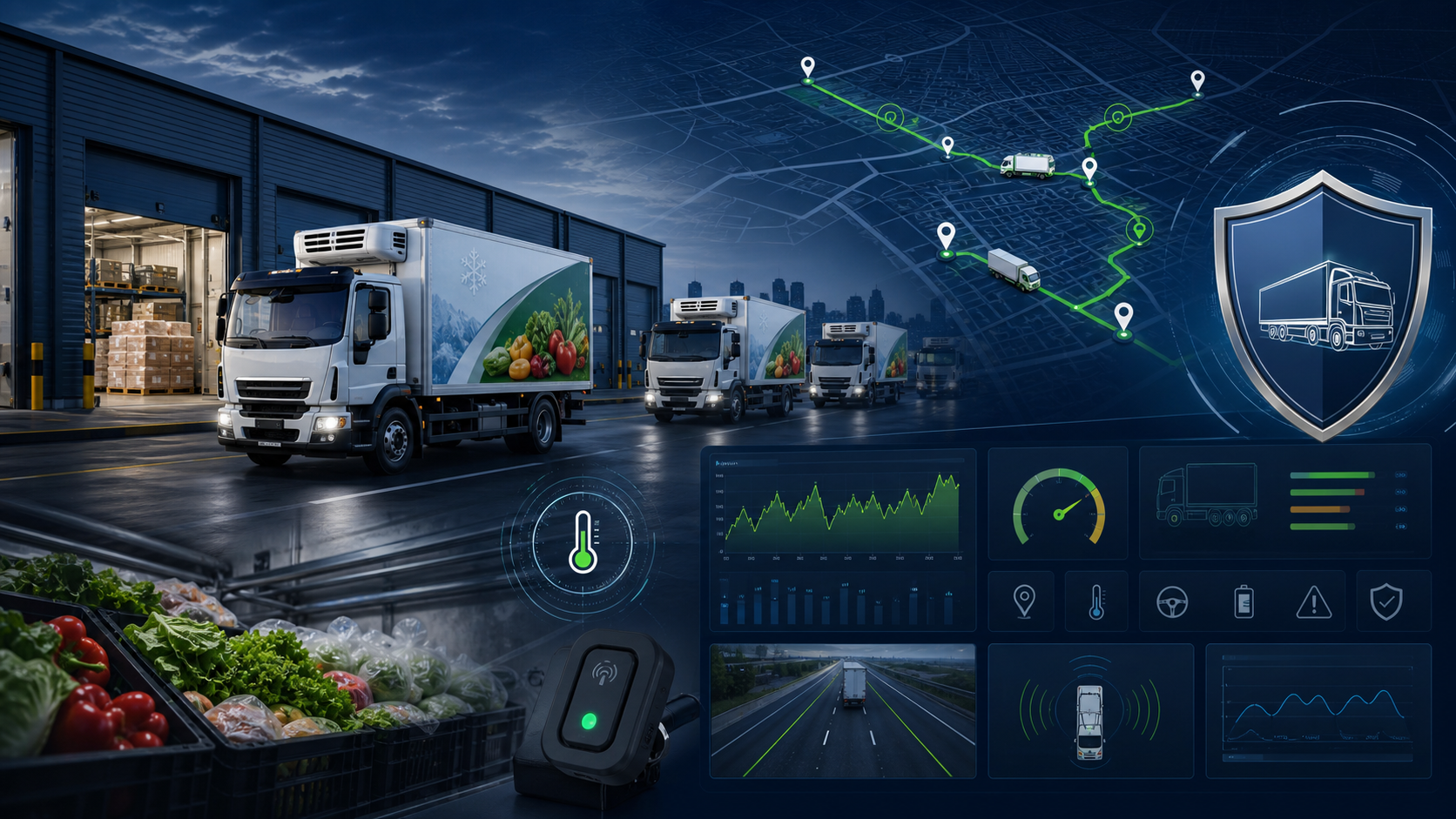
Telematics can help food and beverage fleets lower claims by turning driver behavior, route conditions, vehicle use, and cargo conditions into actionable risk data. Insurers value fleets that can prove they coach drivers, control unsafe behavior, and document incidents clearly.
For a food and beverage fleet, a vehicle is more than transportation. It is a moving warehouse, a customer promise, and sometimes a refrigerated quality-control system. One hard brake can damage cargo. One late route can compromise temperature-sensitive product. One serious crash can affect drivers, customers, insurance premiums, umbrella limits, and the company's reputation.
CBIZ recently highlighted the role of telematics in reducing accidents, limiting claims, coaching drivers, and supporting better insurance outcomes for food and beverage fleets. The idea is not to collect data for its own sake. The value comes from choosing the right data, reviewing it consistently, and proving that leadership uses it to reduce risk.
How does telematics help food and beverage fleet insurance?
Telematics helps fleet insurance by giving underwriters and claims teams evidence. Instead of saying "we care about safety," a company can show speeding trends, harsh braking reduction, seatbelt compliance, idle time improvements, route coaching, temperature monitoring, and incident reports. That evidence can support better conversations about pricing, deductibles, limits, and loss control.
The Federal Motor Carrier Safety Administration publishes recurring large truck and bus crash facts because commercial vehicle crashes remain a major safety and economic issue. For food distributors, bakeries, breweries, wholesalers, and refrigerated transport operations, the lesson is direct: fewer crashes usually means fewer claims, less downtime, and a cleaner renewal story.
Which telematics metrics matter most?
Not every metric deserves equal attention. A dashboard with 50 alerts can become background noise. A focused program starts with behaviors that connect directly to crashes, cargo damage, fuel use, and liability.
| Metric | Why it matters | Leadership response |
|---|---|---|
| Speeding | Raises crash severity and liability exposure | Coach by route, driver, and time of day |
| Harsh braking | Signals following distance, distraction, or route pressure | Review route design and delivery expectations |
| Sharp cornering | Can damage cargo and signal aggressive driving | Train around cargo stability and urban routes |
| Reefer temperature | Protects product quality and claim documentation | Set alerts and review deviations immediately |
| Idle time | Affects fuel, maintenance, and route efficiency | Tie data to dispatch planning and driver coaching |
Why driver coaching beats driver surveillance
A telematics program can fail if drivers see it only as punishment. The better approach is coaching. Show drivers the patterns. Explain what the company is trying to prevent. Reward improvement. Use peer benchmarks carefully. Make safety a measurable part of the culture, not a surprise meeting after a bad week.
For example, a Hartford-area distributor might discover that harsh braking spikes on one route during the afternoon delivery window. The solution may not be blaming a driver. It may be changing the route, adjusting delivery promises, or improving loading practices so drivers are not racing a schedule that operations created.
Practical next step: Review your top three driver behavior alerts every month. For each one, document whether the cause was driver habit, route design, dispatch pressure, equipment condition, or customer timing.
How can telematics help with cargo and spoilage claims?
Food and beverage claims are not limited to collisions. Temperature deviations, door openings, delayed deliveries, and equipment failures can create expensive product loss. Telematics and telemetry can help document what happened, when it happened, and whether the company responded appropriately.
That documentation matters. If a refrigerated unit fails, the timeline can determine whether product is salvageable, whether a claim is covered, and whether a customer dispute becomes a long argument. Data does not prevent every loss, but it can shorten the distance between a problem and a decision.
Why independent brokers matter for fleet-heavy food businesses
Commercial auto insurance has been a difficult line for many businesses. Food and beverage fleets need a broker who can help translate safety investments into an underwriting story. That includes telematics reports, driver training logs, maintenance records, claims notes, and management accountability.
iConn Insurance Solutions helps Connecticut businesses approach fleet coverage with this evidence-based view. Together with our sister agency Insure Connecticut LLC, we help business owners compare coverage options and prepare stronger renewal conversations.
Key takeaways
- Telematics works best when leadership acts on the data consistently.
- Food and beverage fleets should monitor driver behavior, cargo conditions, and route pressures.
- Claims documentation can improve when video, timestamps, location, and temperature data are available.
- A broker can help convert safety performance into a clearer insurance renewal story.
Frequently Asked Questions About Telematics and Fleet Insurance
Does telematics automatically lower insurance premiums?
Not automatically. Telematics can support better underwriting conversations when the data shows fewer risky behaviors, consistent coaching, and improved claims controls. Results depend on loss history, fleet size, market conditions, and carrier appetite.
What telematics data do insurers care about?
Insurers often care about speeding, harsh braking, acceleration, cornering, seatbelt use, mileage, route exposure, claims documentation, and management response. For food fleets, temperature and cargo-condition data can also be important.
Is telematics worth it for a small Connecticut fleet?
It can be, especially if vehicles carry high-value product, make frequent deliveries, or operate in congested areas. Smaller fleets may benefit from simpler tools, but the key is using the data regularly.
How should companies introduce telematics to drivers?
Introduce it as a safety and coaching tool, not only a monitoring tool. Explain what is measured, how reviews work, what improvement looks like, and how the company will recognize safer performance.
If your food or beverage fleet is preparing for renewal, contact iConn Insurance Solutions to review how your safety data can support better insurance outcomes.
Sources and Further Reading
Contenido relacionado
AI Payment Fraud Incident Response: What to Do First
The first hour after a fraudulent wire can decide whether funds are frozen or lost. Follow this practical response guide for banks, insurers, evidence, law enforcement, and recovery.
Leer artículo →
Hotel and Commercial Property Insurance: Where Should Renewal Savings Go?
A practical guide for hotel and commercial-property owners deciding whether to keep renewal savings, lower deductibles, increase limits or restore coverage.
Leer artículo →AI Fraud Insurance Exclusions: Where Coverage Can Break
A large cyber limit can hide a small social engineering sublimit. Learn how voluntary-transfer language, verification conditions, and overlapping crime coverage can affect AI fraud claims.
Leer artículo →
Connecticut Builders Risk Insurance: 2026 Buyer’s Guide
Connecticut builders risk buyers should update project values, timelines and controls. Learn what to prepare and compare for a 2026 placement.
Leer artículo →