
Film Production Insurance in Connecticut: Complete 2026 Guide for Indie, Commercial & Documentary
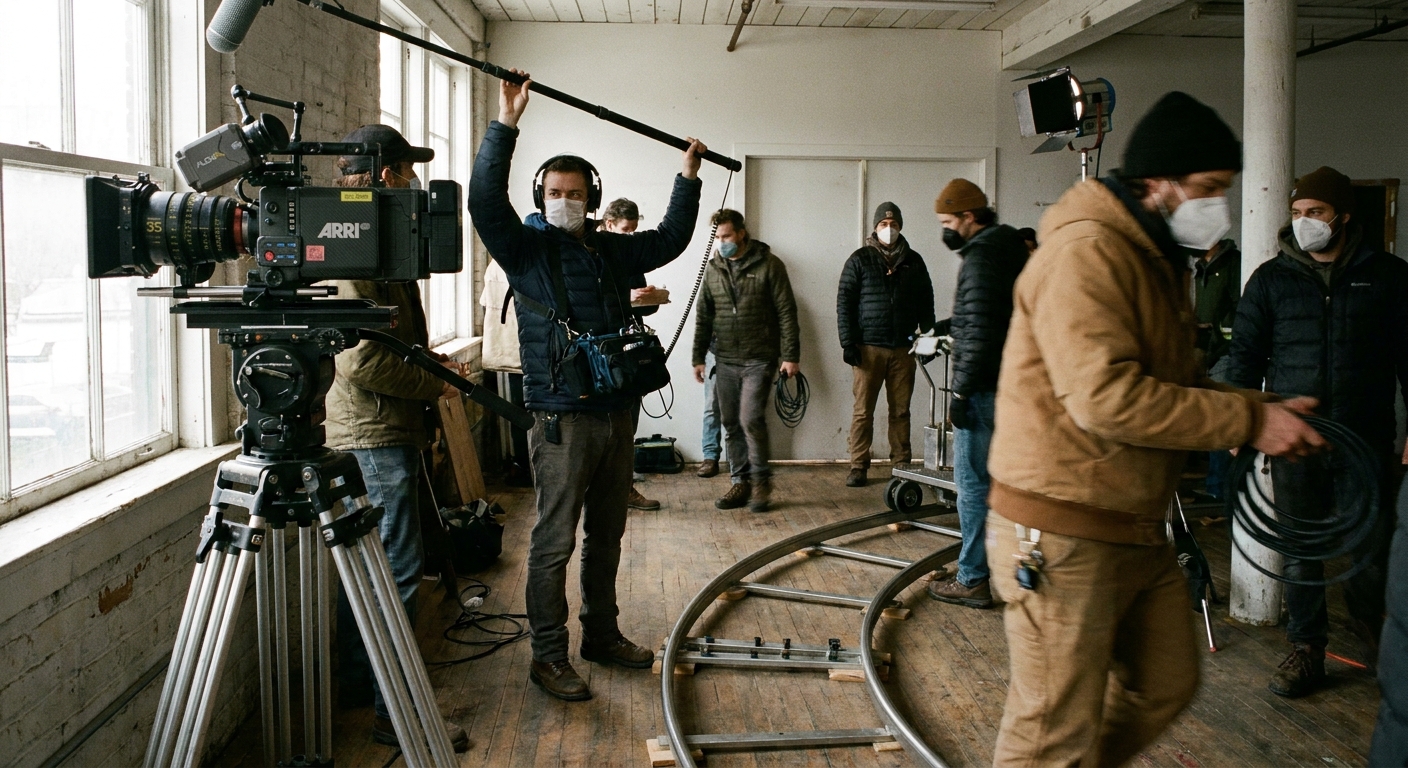
In 2024, Connecticut paid out $95 million in film and digital media tax credits to productions shooting in the state — a record year for a program that has been quietly building since 2006. Stamford, Bridgeport, and Hartford have hosted Marvel reshoots, Apple TV+ episodics, indie features, national commercial spots, and roughly six hundred smaller documentary, branded-content, and music-video productions in the last twenty-four months. The infrastructure is real, the tax incentive is competitive, and the production calendar is full.
What almost no first-time Connecticut producer knows is that the tax credit application requires proof of insurance, the location agreement requires proof of insurance, the equipment rental house requires proof of insurance, and SAG-AFTRA requires proof of insurance — and these four pieces of paper are not the same document. Film production insurance is one of the most fragmented, sublimit-heavy, claims-sensitive specialty lines in the industry. Get it wrong and the entire production stops cold the day before camera rolls.
The short answer: A standard CT film production insurance package includes General Liability ($1M/$2M), Hired and Non-Owned Auto, Workers' Compensation (state mandatory), Equipment Coverage (owned + rented), Cast Insurance, Errors & Omissions (E&O), and Third-Party Property Damage. For an indie feature with a $500K–$2M budget shooting over 14–30 days in CT, expect $8,500–$28,000 in total premium, depending on stunts, locations, and equipment value. Short-term policies (3–30 days) start around $1,800.
This is the pillar guide. At iConn Insurance Solutions we write film production policies for CT-based indie producers, commercial production companies, documentary crews shooting in Litchfield Hills and along the shoreline, and branded-content shops working out of Stamford. Together with our sister agency Insure Connecticut LLC, we cover productions in 12 states across the Northeast and Mid-Atlantic — same independent multi-carrier markets. This guide walks through every required coverage piece, what each one costs in 2026 CT, the tax-credit insurance hooks specific to the state, and where short-term and long-term policies diverge.
What insurance do I actually need to make a film in CT?
Seven coverages form the standard package. They are not all required by law — but they are functionally required by the location agreements, equipment houses, unions, and tax credit administrators you will encounter on any production above the smallest YouTube level.
| Coverage | Required By | Typical Limit | What It Covers |
|---|---|---|---|
| General Liability (CGL) | Every location agreement | $1M / $2M aggregate | Third-party bodily injury / property damage on set or at locations. |
| Hired & Non-Owned Auto | Location agreements; CT statute for vehicle use | $1M CSL | Production vehicles you rent (camera car) + crew personal cars on production business. |
| Workers' Compensation | CT statute (any W-2 employee) | CT statutory | Crew injury on set. Cost driven by payroll and craft classifications. |
| Equipment Coverage | Rental houses (Panavision, Keslow, AbelCine) | Match equipment value | Owned and rented camera, lighting, grip, and audio gear. |
| Cast Insurance | Bond company; SAG-AFTRA for union talent | Cast member essentials cost | Production losses if a key cast member is sick/injured/dies. |
| Errors & Omissions (E&O) | Distributor / streamer / network at delivery | $1M / $3M | Defamation, copyright, music clearance, name/likeness suits. |
| Third-Party Property Damage | Location & equipment-house contracts | $1M | Damage to the building, set dressing, or vehicles you are filming on/in. |
Short-term vs. annual film insurance — which do I buy?
CT productions break into two distinct buyer profiles, and the product they should buy is genuinely different:
Short-Term Production Insurance (3–30 days)
For a one-off shoot — a commercial, a music video, a 14-day indie feature, a corporate branded content piece — buy a short-term production policy with start and end dates tied to your shoot window plus a 7-day pre-production wrap. Pricing starts around $1,800 for a 3-day commercial shoot at $1M CGL and climbs from there.
Short-term policies are usually written through specialty markets: Amwins, F.H. Brown, Tokio Marine HCC, and a handful of Lloyd's-backed MGAs specializing in entertainment. Chubb and Hiscox also write production policies for productions above $1M budget.
Annual Producer's Policy (DICE)
If you produce three or more projects a year, a DICE policy (Documentary, Industrial, Commercial, Educational) annualizes your coverage across all productions in the year. CT commercial production companies and branded-content shops typically run on annual DICE. Pricing starts around $9,500/year for a small CT shop doing 5–10 commercial spots annually with no stunts.
2026 CT film insurance cost ranges
| Production Type | Budget Range | Total Insurance Premium |
|---|---|---|
| 1-day commercial / branded content | $25K–$100K | $1,800–$3,400 |
| 5-day commercial campaign (multi-location) | $150K–$400K | $3,800–$7,500 |
| 14-day indie feature, no stunts | $500K–$1.5M | $8,500–$16,000 |
| 30-day indie feature with minor stunts/vehicle action | $1.5M–$4M | $18,000–$38,000 |
| Documentary crew, 12-month annual | varies | $4,200–$8,800 |
| Commercial production house, annual DICE | varies | $9,500–$22,000 |
The two biggest cost drivers across all of these: stunts and international travel. A simple indie feature with no fight scenes, no vehicle chases, and no firearms (real or replica) gets the lowest tier. Add any of those and the CGL portion alone can jump 60–120%.
How CT's film tax credit interacts with insurance
Connecticut's film production tax credit, administered through the CT Department of Economic & Community Development (DECD), requires a minimum $100,000 in CT-qualified production expenditures and pays back 10%–30% of qualified spend depending on production type. Insurance is treated as a qualified expense when:
- The policy is purchased through a CT-licensed broker (we qualify);
- The coverage specifically applies to the CT-shoot period;
- The premium can be allocated to CT production days versus other-state shooting on a documentable basis.
Practical implication: buy your production insurance through a CT broker if you want the premium to count toward your CT qualified spend. We see producers regularly default to their NY or LA broker out of habit, only to discover at audit that their $14,000 insurance premium did not count toward the tax credit — meaning they left $1,400–$4,200 on the table.
Mid-article note: If you have a CT production starting in the next 90 days, request a quote from iConn Insurance Solutions — we are CT-licensed, run the entertainment markets directly, and we structure the policy with the DECD tax-credit allocation already mapped.
The 7 production coverages deep-dive (linked spokes)
Every coverage in the seven-piece package deserves its own deep-dive. We are publishing one spoke per day across this week — each one walks through claims, exclusions, sublimits, and CT-specific pricing for that specific coverage:
- Short-Term Production Insurance — the 3-day vs. 30-day vs. annual decision matrix.
- General Liability for Film Shoots — the location-agreement hook, the additional-insured drill, and the seven CT location managers who reject under-$2M policies.
- Camera/Grip/Lighting Equipment Coverage — owned vs. rented, in-transit, sublimits.
- Cast Insurance & Errors & Omissions — the two coverages your bond company will fight you on.
- Workers' Compensation for Film Crews — CT statutory rates, craft classifications, and W-2 vs. 1099 reality.
- Drone Coverage for Productions — FAA Part 107, hull, and third-party liability stacking.
- Cost Breakdown: What CT Productions Actually Pay in 2026 — line-by-line with three real budget worksheets.
Why an independent broker matters in entertainment insurance
Entertainment is a true specialty market. Three or four MGAs and a half-dozen Lloyd's syndicates write the bulk of production policies — and the form differences between them are substantial. A captive agent shows you their company's product; an independent broker maps your specific production to the carrier whose form actually covers it.
At iConn Insurance Solutions we are independent, CT-licensed, multi-carrier, and entertainment-focused. We hold appointments with the specialty MGAs that write production business and we structure policies that satisfy the DECD tax-credit allocation, the location managers' demands, and the equipment houses' certificate requirements in one document. Our sister agency Insure Connecticut LLC serves the same role across our 12-state Northeast and Mid-Atlantic footprint.
Key Takeaways
- A standard CT film production policy is a 7-piece package: CGL, H&NO Auto, Workers' Comp, Equipment, Cast, E&O, Third-Party Property Damage.
- Short-term shoots (3–30 days) pay $1,800–$28,000 in total premium depending on budget, stunts, and equipment value. Annual DICE policies start around $9,500.
- CT's DECD tax credit treats production insurance as a qualified expense — but only when purchased through a CT-licensed broker. Buying through an out-of-state broker forfeits 10–30% credit reimbursement on that premium.
- The two cost drivers that move premiums the most: stunts/vehicle action and international travel.
- Location agreements, equipment houses, and unions all require certificates — but the underlying limits and forms vary widely. Independent brokerage matters for matching policy to production.
Frequently Asked Questions About Film Production Insurance in CT
Do I need film production insurance for a small CT indie shoot?
Yes, almost certainly. Even a $25K commercial or single-day branded content shoot needs General Liability and Hired & Non-Owned Auto — most CT location owners now require certificates before they will sign location agreements. A 3-day commercial production policy at $1M CGL starts around $1,800.
What does film production insurance cost for an indie feature shooting in CT?
For a 14-day CT indie feature with a $500K-$1.5M budget and no stunts, total insurance premium across all seven coverages runs $8,500-$16,000. Add minor stunts or vehicle action and the range climbs to $18,000-$38,000 on the same shooting schedule.
Does CT's film tax credit reimburse my insurance premium?
Yes, partially — at the 10%-30% credit rate, depending on production type. But only when the policy is purchased through a CT-licensed broker and the premium is documented against the CT shoot window. Out-of-state-broker premiums are typically excluded from the qualified spend calculation.
What's the difference between a short-term production policy and a DICE policy?
Short-term policies cover a single production with a defined start/end date — best for one-off features, commercials, or music videos. DICE (Documentary, Industrial, Commercial, Educational) policies annualize coverage across all productions in a 12-month period — best for commercial production companies and branded-content shops doing 3+ projects/year.
Do I need Errors & Omissions insurance if I'm not selling to a streamer?
If you intend to ever sell or distribute the project — yes. Streamers, networks, theatrical distributors, and even most film festivals require E&O at delivery. Buying E&O at the end of production is far more expensive than buying it up front; budget $4,500-$12,000 for E&O on a CT indie feature.
Can I just add my film shoot to my homeowner's or business policy?
No. Homeowner's policies exclude commercial activity entirely; standard business policies exclude entertainment production. Production insurance is a specialty line written by a small number of MGAs and Lloyd's markets, separate from general business insurance.
Producing in Connecticut? Get a film insurance quote.
If you have a CT production starting in the next 90 days — feature, commercial, documentary, music video, or branded content — get the insurance structured before you lock locations and equipment. Request a CT film production insurance quote from iConn Insurance Solutions. We will map your production to the right specialty market, structure the policy for DECD tax-credit allocation, and turn certificates in 24 hours.
For productions outside CT but still in the Northeast/Mid-Atlantic footprint, Insure Connecticut LLC covers the same 12-state region with the same independent multi-carrier markets.