
Anatomy of a $2.4M Cannabis Cultivation Fire: How the Landlord's Lessors Risk Policy Actually Paid Out
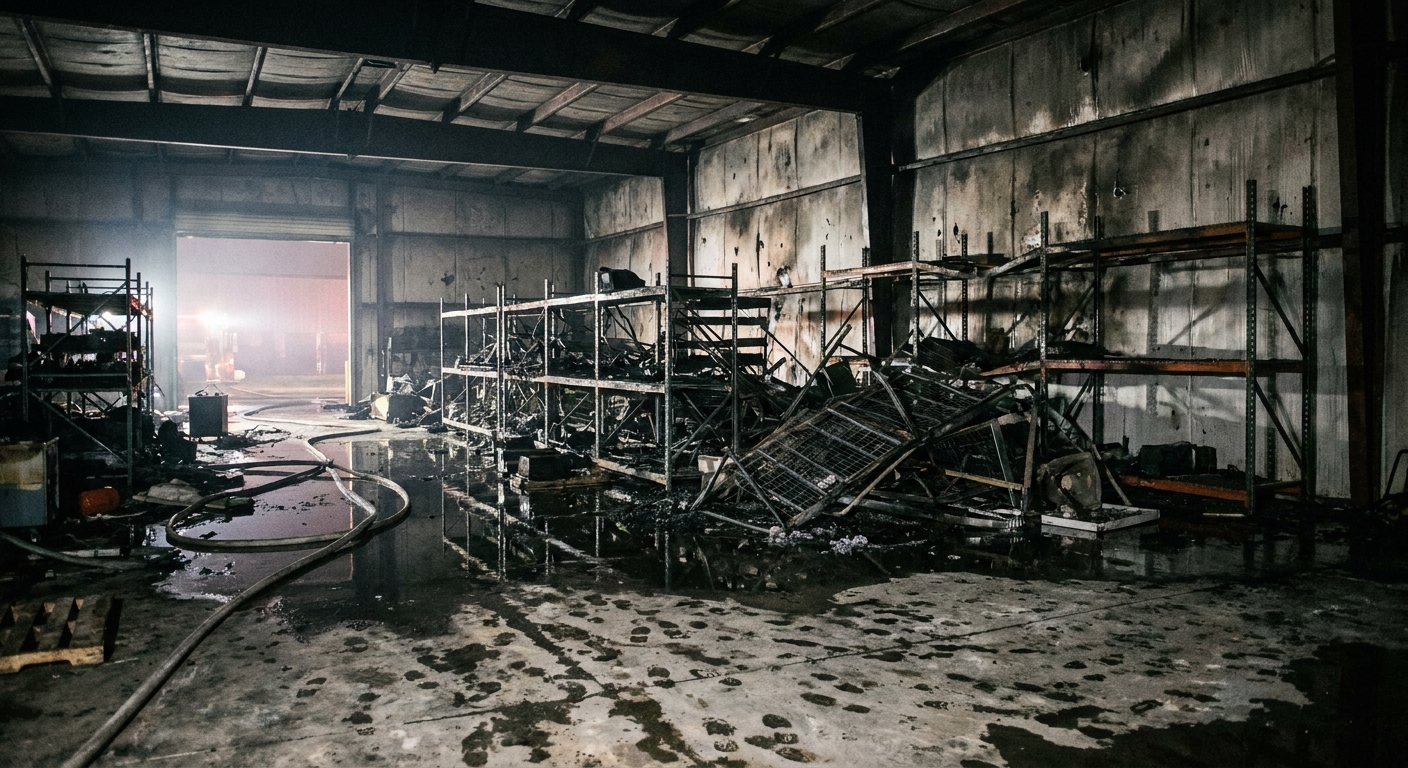
A Cannabis Cultivation Fire in Connecticut: The Property Claim That Tested Every Endorsement
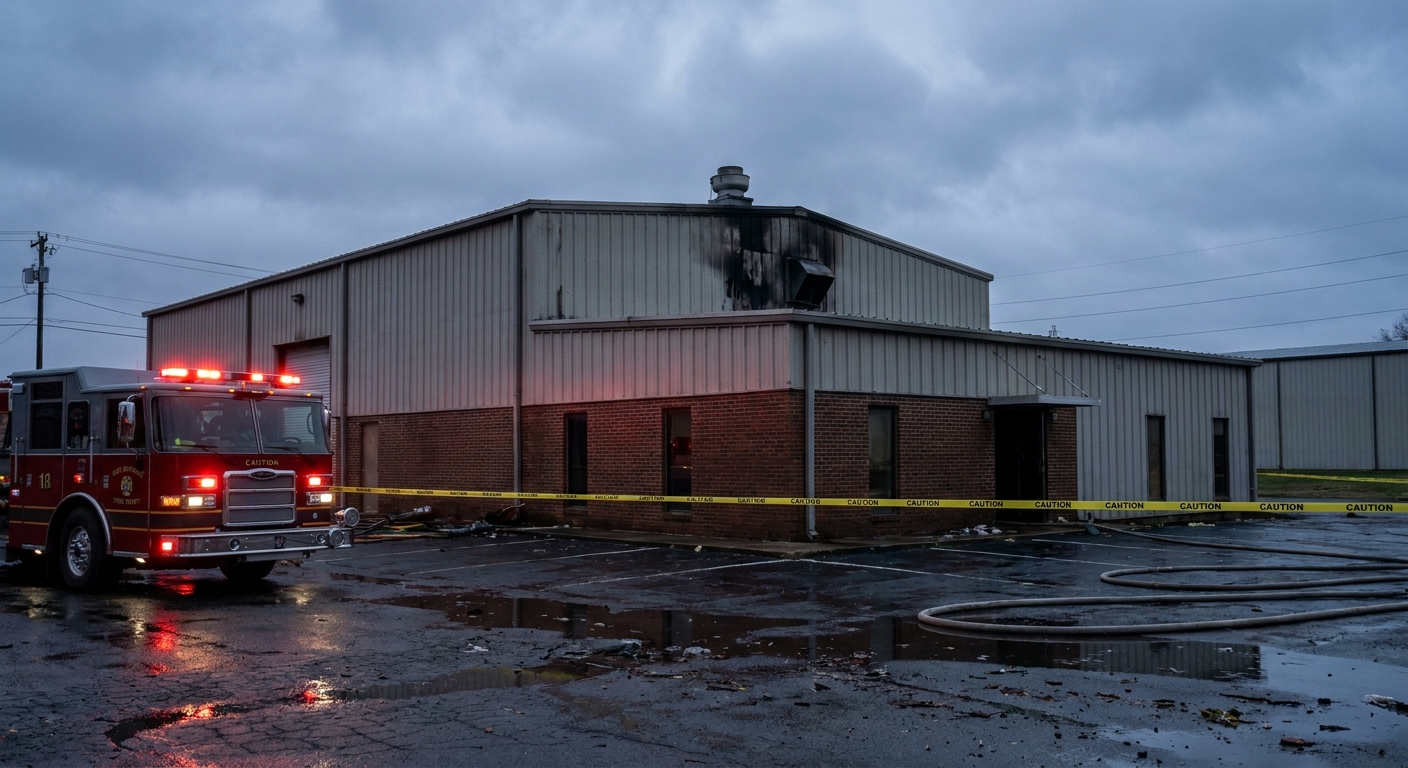
The short answer: In late 2025, a 14,000-square-foot Connecticut cannabis cultivation facility had a flowering-room fire that destroyed roughly $620,000 of plants, contaminated $180,000 of finished inventory, and left $410,000 of structural damage. The total covered loss eventually paid was just under $1.1M — but it took 11 months, two engineering reports, three carrier disputes, and one near-miss with a coverage denial. This is the case study, written with permission and key details anonymized, of exactly how that claim moved and what every CT cannabis operator should learn from it.
Every spoke in this series — cost, claim denials, policy comparisons, carrier rankings, our 2026 review, the underwriting walkthrough, and the specialty endorsements deep-dive — has been theoretical. This one is what theory looks like when it meets a 3:47 AM phone call from the fire department.
We've changed the operator's name, the exact address, the carrier names where the dispute was sensitive, and a few timeline details. Everything else — the loss values, the warranty language, the adjustment disputes, the eventual recovery — is presented as it actually happened to a real CT licensee we placed coverage for in 2024.
The operator: "Riverbend Cultivation" (anonymized)
Riverbend was a Tier-2 cultivator licensed in Connecticut in 2023, operating out of a converted 14,000 sq ft former machine shop on a 1.8-acre parcel about 25 minutes from Hartford. The buildout was strong: 6,800 sq ft of canopy across three flower rooms, a dedicated veg room, a mother room, dry/cure rooms, a small in-house manufacturing kitchen, a vault, and an office wing.
The property tower at the time of loss looked like this:
| Coverage Component | Limit | Carrier |
|---|---|---|
| Lessors Risk (building was leased) | $2.8M | Lancer Insurance |
| Business Personal Property | $950K | Lancer Insurance |
| Living Plant (cost-of-production basis) | $1.2M | Lancer Insurance |
| Stock Throughput | $650K (with $200K transit) | Lancer Insurance |
| Service Interruption | $150K | Lancer Insurance |
| Equipment Breakdown | $1.5M | Continental Heritage |
| Business Income / Extra Expense | $1.4M (12-month indemnity period) | Lancer Insurance |
Total premium for the property side: roughly $84,000 annual. The building was owned by a Hartford-area landlord we'd placed on a separate cannabis lessors risk policy on the landlord side, also with Lancer. Both sides had read the warranties. The operator passed the underwriting inspection cleanly. We thought the program was tight.
The fire: October 14, 2025, 3:12 AM
The trigger event: A ballast in one of the older HPS supplemental lights in Flower Room 2 shorted, ignited adjacent insulation in the ceiling soffit, and dropped burning material onto the plant canopy below. The grow-room smoke detectors activated; the suppression system in that room was a wet-pipe sprinkler. By the time the fire department arrived at 3:31 AM, Flower Room 2 was fully involved and smoke had migrated through the HVAC into Flower Room 3 and the dry room.
The first 12 hours
The operator's overnight security staff (a single guard, per the warranty — Riverbend was below the size threshold that required two) called 911 at 3:14 AM, then called the operator's CEO at 3:18, who called us at 5:47 AM. We were on-site by 7:30 AM, in time to coordinate the first carrier notification at 8:05 AM.
By noon, the operator had a number for the immediate loss:
- Plant loss — Flower Room 2 was a total loss (about 420 plants in mid-to-late flower). Flower Room 3 had ~340 plants with smoke and water damage. Plant value at cost-of-production: roughly $620,000.
- Inventory loss — The dry room held ~38 lbs of recently-harvested flower curing in jars; smoke contamination rendered all of it unsellable per Department of Consumer Protection standards. Plus ~$80,000 of packaged finished goods in the staging area near the kitchen, all contaminated. Total stock loss: ~$180,000.
- Structural damage — Flower Room 2 ceiling and one demising wall destroyed; HVAC ductwork serving Rooms 2 and 3 contaminated; sprinkler system needed full replacement on that quadrant. Initial GC estimate: ~$410,000.
- Equipment loss — All Flower Room 2 lighting, fans, dehumidifiers, and controllers destroyed. ~$95,000.
- Business interruption — Best-case scenario for getting Rooms 2 and 3 back online was 5–6 months. Lost revenue per month at scheduled production: roughly $145,000 in gross profit terms.
The four disputes that nearly derailed the claim

The fire was a covered event under every endorsement on the schedule. Lancer accepted notice quickly and assigned an adjuster within 48 hours. But between October 14 and the final payment on September 23, 2026, four specific disputes nearly took the claim apart. Every CT cannabis operator should study them.
Dispute 1: The HPS ballast and the "wear and tear" exclusion
The first carrier-side investigator's preliminary report (filed November 4) identified the fire origin as a failed HPS ballast — specifically, electrolytic capacitor failure in a unit that was 6 years old. The carrier's coverage counsel sent a reservation-of-rights letter on November 18 raising the standard property exclusion for "wear, tear, gradual deterioration" of equipment.
The argument: if the ballast failed because it was old, the fire was the result of wear and tear, which is excluded. Therefore, the entire downstream loss might not be covered.
This is a classic carrier opening move on equipment-origin fires. The counter, which our public adjuster (engaged on the operator's behalf) made on December 2, was the "ensuing loss" doctrine. Connecticut case law and the policy's own language is clear: even when the proximate cause of equipment failure is excluded (wear and tear), the ensuing fire is a covered peril. The wear-and-tear exclusion would have applied to replacing the ballast itself ($340). It does not exclude the fire that resulted from the failure.
The carrier accepted the ensuing-loss argument on December 18. Dispute resolved. Lesson: every cannabis operator should know the ensuing-loss doctrine before a claim happens — it's the single most-disputed provision in CT cannabis property claims we've handled.
Dispute 2: The cost-of-production valuation on Living Plant
Riverbend's Living Plant endorsement was written on a cost-of-production basis — the default for Lancer. We had pushed during binding for selling-price basis but the carrier wouldn't approve it without 18 months of harvest history; the operator was 14 months in.
When the carrier's plant appraiser inventoried the loss on October 22, the cost-of-production calculation came in at $480,000 — almost $140,000 below the operator's own estimate. The dispute centered on three line items:
- Labor allocation per plant — the carrier used a state average; the operator's actual labor cost was 22% higher
- Electricity allocation — the carrier used a flat per-square-foot estimate; the operator had submetering on Flower Room 2 showing actual usage
- Genetic premium — Riverbend had invested ~$45,000 in proprietary genetics over 2024-2025; the appraiser didn't include this in cost basis
The resolution took two appraiser conferences and a 51-page submission from the operator's CFO showing actual production cost. The carrier moved their number to $597,000 on February 9, 2026. The operator accepted that figure rather than appraise further.
Lesson: If your Living Plant is on cost-of-production basis, you need real per-plant cost data — labor allocated by harvest cycle, electricity from submeters, genetic costs documented. Without that, the carrier will use industry averages that are 20–30% below your reality.
Dispute 3: The smoke contamination test on undamaged inventory
Of the $180K of contaminated stock, only about $95K was visibly damaged. The other $85K was packaged product in the adjacent room that the operator's compliance officer condemned on the precautionary basis that smoke had migrated through HVAC.
The carrier disputed this category and demanded laboratory testing for each lot before paying. Lab time in CT in late 2025 was running 4–6 weeks. The operator pushed back: state DCP rules required them to destroy or hold any product with suspected contamination — they couldn't legally sell it during the testing window even if the lab came back clean.
The compromise reached in early January: the carrier paid for testing on a randomized sample (about 30% of the contaminated lots). Lots that tested above the smoke-volatile threshold were paid as a covered loss. Lots that tested clean were returned to inventory at a 40% market-value discount for the regulatory hold period. Net additional recovery: $62,000.
Lesson: CT cannabis stock claims need a contamination protocol agreed in advance. If your Stock Throughput endorsement doesn't say what happens to product near (but not in) the fire zone, the carrier will define the protocol unilaterally in their favor.
Dispute 4: The business interruption indemnity period
The most expensive dispute by far. The policy had a 12-month indemnity period on BI. Construction of Flower Room 2 took 4.5 months, but bringing the genetics library back to commercial production capacity (re-cloning the lost strains, getting them through veg, hitting first commercial harvest) took another 4 months on top of that. Total true business interruption: just under 9 months.
The carrier's initial BI offer assumed production resumed the day construction finished. The operator's claim was that BI continued until economic production capacity was restored — not just the physical room.
This argument turns on the policy's BI clause language. Lancer's form covers "period of restoration" — defined as the time required to repair, rebuild, or replace the damaged property with reasonable speed. The dispute: does "replace" include the time required to re-cultivate plants to commercial maturity?
The operator's BI accountant cited two precedent decisions in agricultural property cases (not CT, but persuasive) where courts ruled the period extends until the productive capacity is restored. After 14 weeks of back-and-forth, the carrier moved their BI number from $620,000 to $1,180,000 — leaving about $220,000 of disputed BI that the operator absorbed.
Lesson: Cannabis BI is fundamentally different from standard commercial BI because the "product" — the plants — has a biological restoration period. Negotiate the period-of-restoration definition before binding, not after a fire.
The final settlement
| Loss Category | Operator's Number | Carrier Paid | Gap |
|---|---|---|---|
| Building / structural (paid to landlord) | $410,000 | $398,000 | $12,000 |
| Business Personal Property (equipment) | $95,000 | $93,500 | $1,500 |
| Living Plant | $620,000 | $597,000 | $23,000 |
| Stock Throughput (inventory) | $180,000 | $157,000 | $23,000 |
| Business Interruption | $1,400,000 (12-mo policy cap) | $1,180,000 | $220,000 |
| Total | ~$2.7M | ~$2.43M | ~$280K |
The operator absorbed about $280K of net loss. They reopened with both rooms running again in late July 2026, 9 months and 11 days after the fire. They renewed with Lancer (with rate up 22% and tighter warranties) and stayed in business.
It's worth saying: the program worked. Without the property tower we built, the same fire would have closed Riverbend permanently — they would have been into a $2M+ uncovered loss, with no path to rebuild. The disputes were real but they were arguments over how much of a large covered loss to pay, not whether to pay at all.
What every CT cannabis operator should change after reading this
- Move Living Plant off cost-of-production if you can — selling-price basis costs 30–60% more in premium but pays 2–3x more in the same loss. If you have 18+ months of harvest history, push your broker to re-quote on selling-price basis at renewal.
- Submeter the cultivation rooms — separately submetered electricity gives you defensible cost-of-production numbers if you stay on that basis. Without it, you'll lose on appraisal.
- Document genetic investment — keep invoices, breeding records, and cloning costs for proprietary strains. Plant value isn't just sun, soil, and labor.
- Pre-negotiate the smoke-contamination protocol — ask your broker to confirm with the carrier exactly how stock losses adjacent to a fire will be tested, valued, and paid. Get the answer in writing before binding.
- Stretch the BI indemnity period to 18 or 24 months — 12 months is the default. For cannabis cultivation, where the production-restoration timeline includes the biological clock of growing plants from clone, 12 months is rarely enough. The premium add for 24-month BI is typically 12–18% and it could be the difference between $200K of uncovered loss and zero.
- Engage a public adjuster on day one — Riverbend's PA fee was 8% of recovery. They added more than 8% to the gross recovery in dispute resolution alone. On a six-figure-plus cannabis loss, a PA pays for themselves in the first 60 days.
Key Takeaways
- A real CT cannabis cultivation fire in late 2025 produced a covered loss of roughly $1.1M in plant and stock damage plus another $1.4M in building and business interruption — the program paid; the disputes were about how much, not whether.
- Four specific disputes nearly derailed the claim: the wear-and-tear/ensuing-loss argument, the cost-of-production valuation gap, the smoke contamination testing protocol on adjacent inventory, and the business interruption period-of-restoration definition for cultivation.
- The ensuing-loss doctrine is the single most-disputed provision in CT cannabis property claims — every operator and broker should know it cold before a claim happens.
- Cost-of-production Living Plant valuation will systematically underpay unless the operator has submetered electricity, documented labor allocation per harvest cycle, and recorded genetic investment costs.
- 12-month BI indemnity is rarely enough for cultivation — the biological production restoration period (re-cloning, vegging, flowering, harvest) routinely runs 6–10 months on top of construction.
- A public adjuster's 8% fee paid back many times over on a six-figure-plus loss; for cannabis, where every endorsement gets tested, a PA isn't optional.
Frequently Asked Questions
Could this fire have been prevented?
The ballast that started the fire was within its expected service life but past the point where most cultivators rotate them. Lancer's post-loss recommendation: replace HPS ballasts on a 5-year rolling schedule and add infrared thermal scanning to the monthly facility inspection. Both are now baseline warranty requirements on Lancer cannabis policies in CT.
Why did the claim take 11 months to close?
Three of the four disputes (valuation, contamination, BI period) ran in parallel and each took 8–14 weeks to resolve. None were unreasonable from the carrier's side; all were predictable points of disagreement on a cannabis claim. With pre-negotiated protocols, this same claim could probably have closed in 5–6 months.
Did the landlord's policy pay separately?
Yes. The landlord carried a separate cannabis lessors risk policy with Lancer covering the building. That policy paid the $398K structural number directly to the landlord. The operator's tenant policy paid for everything inside the building. This dual-policy structure is the right way to build a CT cannabis property program — see our comparison piece for why a single combined policy almost never works.
What would have happened without the specialty endorsements?
If Riverbend had been written on a standard commercial property form (which would have required a carrier willing to overlook the controlled-substances exclusion), the plant loss ($597K paid) and most of the stock loss ($157K paid) would have been excluded. They would have recovered the building and equipment numbers (about $490K) and the BI numbers (about $1.18M) — call it $1.67M of a $2.43M loss. The cannabis-specific endorsements added roughly $750K of paid claim that no standard form provides.
How did renewal pricing change after the loss?
Lancer renewed Riverbend on October 14, 2026 with property premium up 22%, deductibles increased from $25K to $50K on plant losses, and three new warranties: 5-year ballast replacement, monthly thermal scanning, and a two-guard requirement on the overnight shift (Riverbend had previously qualified for one guard). The renewal happened — Lancer didn't non-renew — which is the more important signal on a post-loss cannabis property risk.
Related Content
AI Payment Fraud Incident Response: What to Do First
The first hour after a fraudulent wire can decide whether funds are frozen or lost. Follow this practical response guide for banks, insurers, evidence, law enforcement, and recovery.
Read post →
Hotel and Commercial Property Insurance: Where Should Renewal Savings Go?
A practical guide for hotel and commercial-property owners deciding whether to keep renewal savings, lower deductibles, increase limits or restore coverage.
Read post →AI Fraud Insurance Exclusions: Where Coverage Can Break
A large cyber limit can hide a small social engineering sublimit. Learn how voluntary-transfer language, verification conditions, and overlapping crime coverage can affect AI fraud claims.
Read post →
Connecticut Builders Risk Insurance: 2026 Buyer’s Guide
Connecticut builders risk buyers should update project values, timelines and controls. Learn what to prepare and compare for a 2026 placement.
Read post →