
Commercial Trucking Insurance in Connecticut: The Complete Owner-Operator Guide for 2026
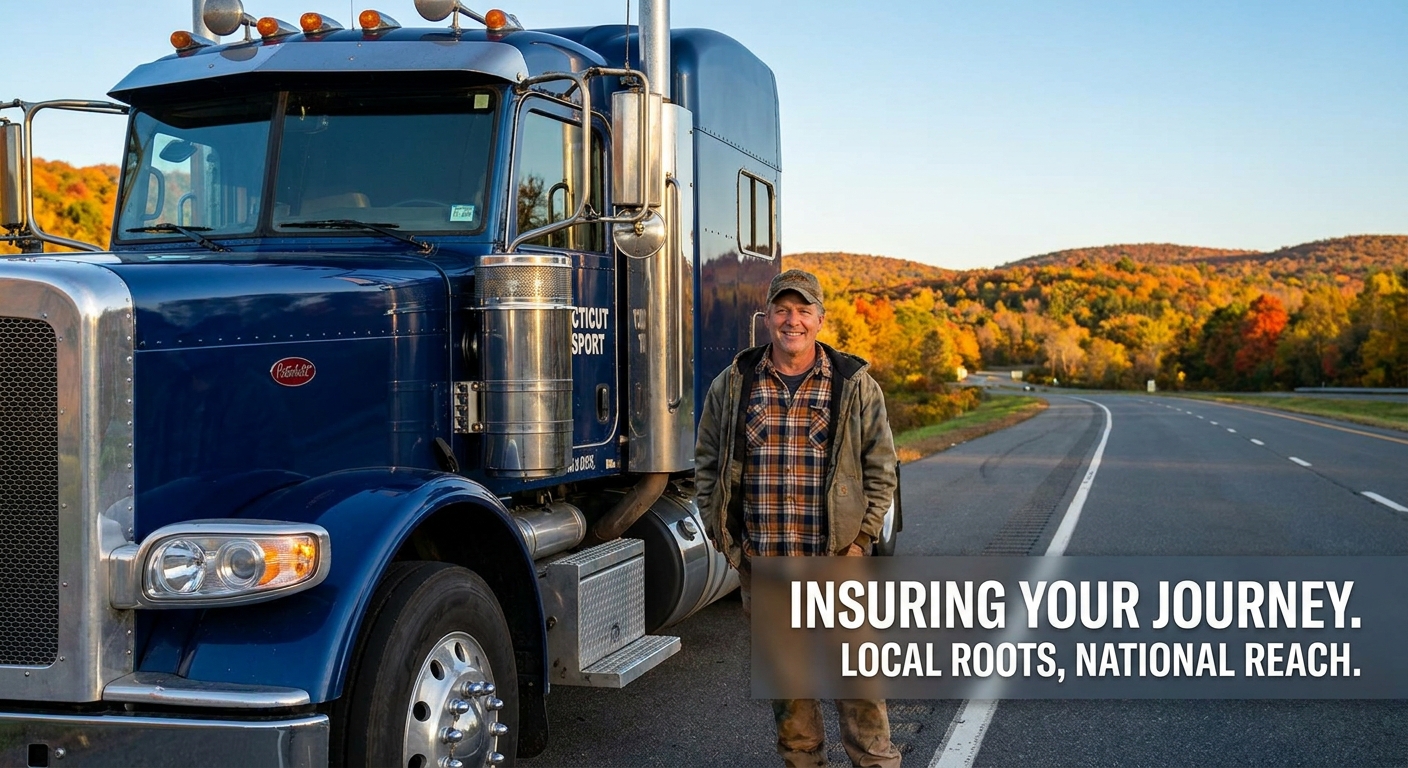
Connecticut sole owner-operators need a minimum of $750,000 in federal liability insurance to haul general freight, but cargo type changes everything — hazmat carriers must carry up to $5 million. This guide breaks down exactly what coverage you need, what it costs, and how your cargo type determines your insurance requirements in the Constitution State.
Starting a trucking business as a sole owner-operator in Connecticut is one of the most rewarding — and demanding — entrepreneurial paths you can take. You're your own boss, you set your schedule, and you control your income. But before you turn that key and hit I-95, there's one critical piece of the puzzle that can make or break your operation: commercial trucking insurance.
Unlike a personal auto policy, commercial trucking insurance is a complex web of federal mandates, state-specific requirements, and cargo-driven variables. Get it wrong and you're looking at fines, suspended authority, or — worst case — personal financial ruin after a major accident. Get it right and you've got a safety net that lets you focus on what you do best: moving freight.
The Numbers You Need to Know
Let's start with the hard numbers. As a Connecticut-based owner-operator, you're subject to both federal FMCSA requirements and Connecticut state minimums — and federal requirements almost always override state minimums for commercial trucks.
Connecticut's state minimum for commercial auto is only 25/50/25 ($25,000 bodily injury per person / $50,000 per accident / $25,000 property damage) — but that's for lighter commercial vehicles. The moment you're hauling freight interstate with a vehicle over 10,001 lbs GVWR, FMCSA's $750,000 Combined Single Limit (CSL) kicks in and completely supersedes those state minimums.
Reality check: While $750,000 is the legal minimum for general freight, most freight brokers and shippers won't work with you unless you carry $1,000,000 in liability coverage. If you want access to the best-paying loads, plan for the higher limit from day one.
How Your Cargo Type Changes Everything
This is where most new owner-operators get caught off guard. The type of freight you haul isn't just a business decision — it fundamentally determines your insurance requirements, your premiums, and your risk profile.
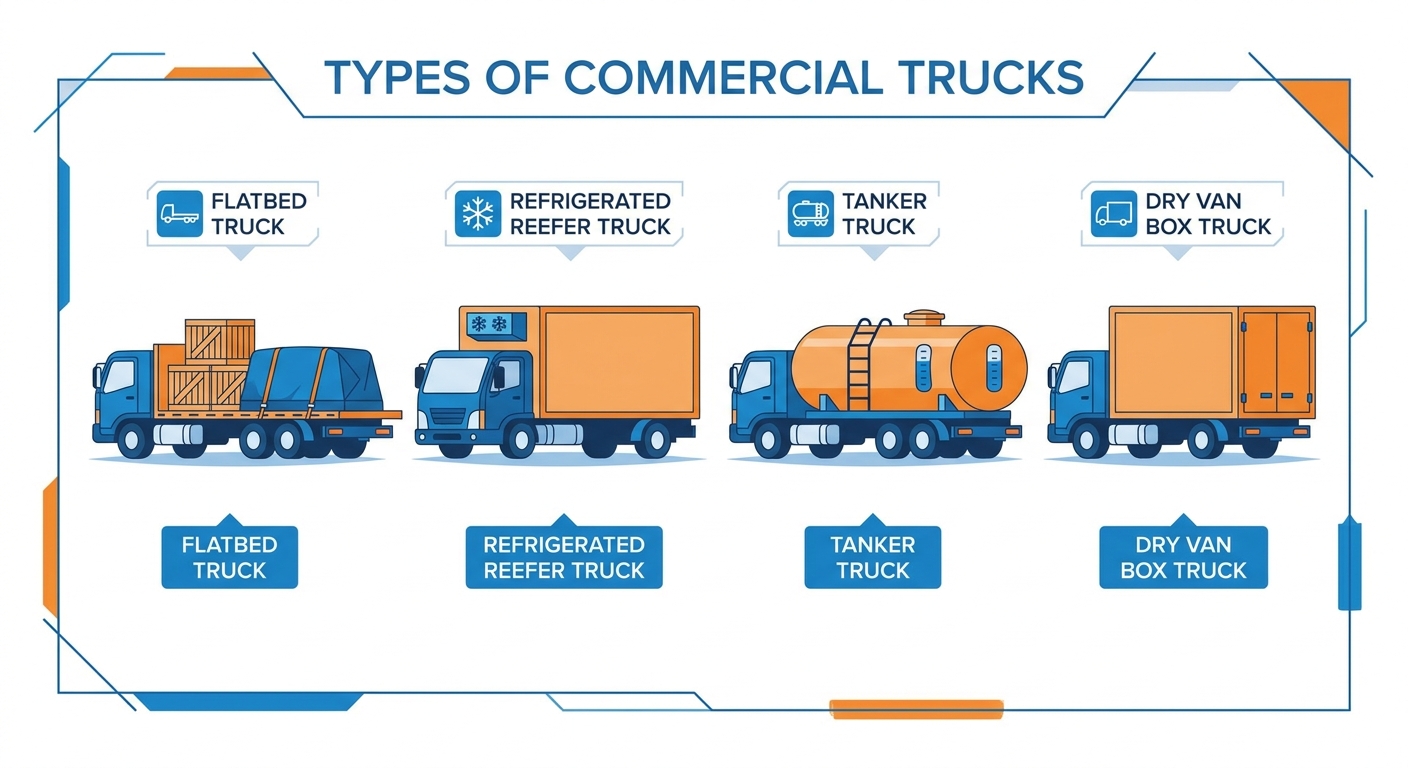
| Cargo Type | Min. Liability | Cargo Coverage | Avg. Premium Impact |
|---|---|---|---|
| General Freight (Dry Van) | $750,000 | $100,000 | Baseline |
| Refrigerated (Reefer) | $750,000 | $100,000–$250,000 | +15–25% |
| Flatbed / Heavy Haul | $750,000 | $100,000–$500,000 | +10–20% |
| Oil / Petroleum | $1,000,000 | $100,000–$500,000 | +30–50% |
| Hazardous Materials | $5,000,000 | $250,000+ | +50–100% |
| Auto Hauler | $750,000 | $250,000–$1,000,000 | +20–35% |
General Freight (Dry Van)
The most common starting point for new owner-operators. You're hauling non-perishable, non-hazardous goods in an enclosed trailer. Your federal liability minimum is $750,000 CSL and cargo insurance typically starts at $100,000 per occurrence. This is your baseline — the most affordable entry into trucking.
Refrigerated (Reefer) Loads
Hauling temperature-sensitive freight — food, pharmaceuticals, chemicals — adds a spoilage and contamination risk that general freight doesn't have. If your reefer unit fails and a $200,000 load of frozen seafood thaws on I-84, your cargo insurance is the only thing standing between you and financial disaster. Expect to carry higher cargo limits ($100,000–$250,000) and pay 15–25% more in premiums.
Flatbed and Heavy Haul
Flatbed work means your cargo is exposed to the elements and road hazards. Steel coils, lumber, construction equipment — these loads shift, fall, and cause catastrophic accidents if not secured properly. Insurers know this, and your premiums reflect the elevated risk. You'll also need to consider higher cargo limits for high-value machinery or oversized loads.
Hazardous Materials — The Big Leagues
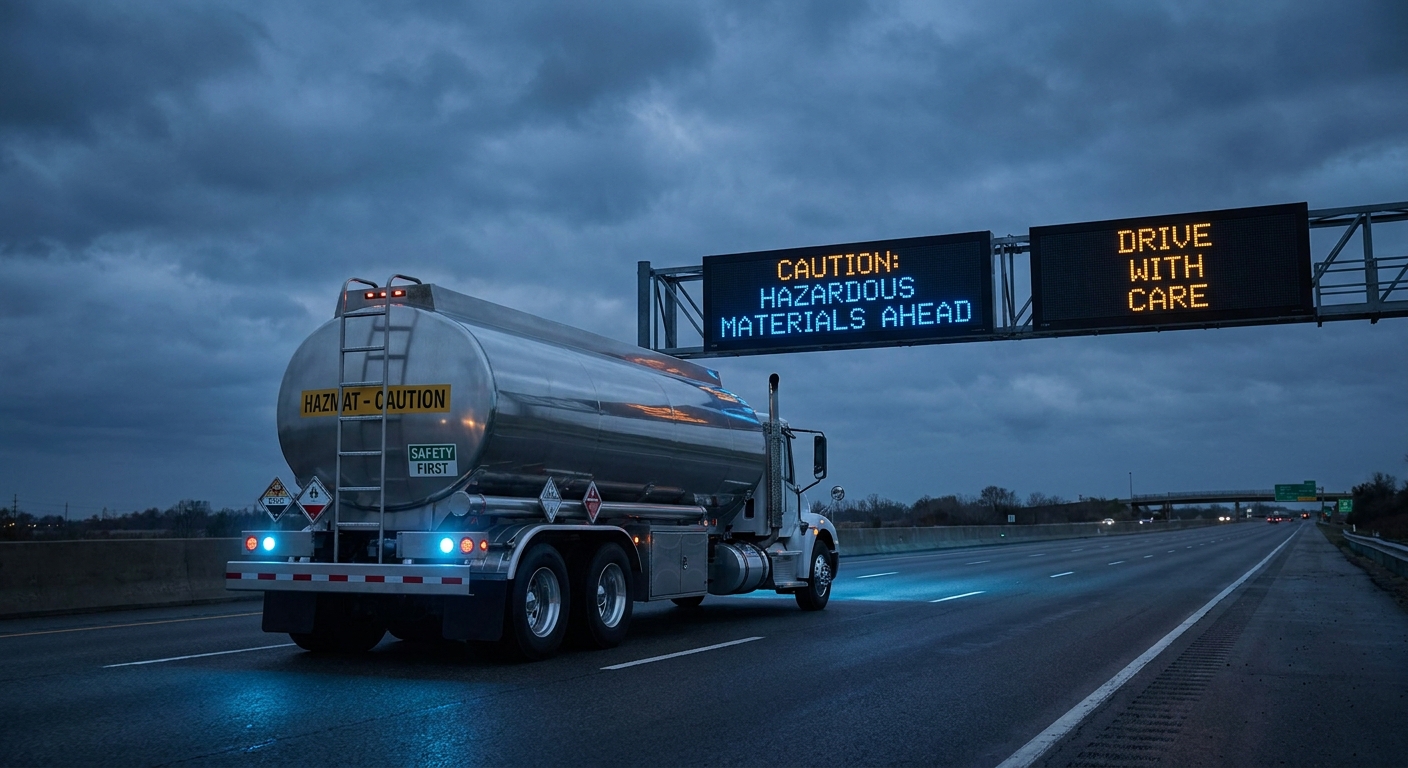
Hauling hazmat in Connecticut is a completely different ballgame. Your liability minimum jumps to $5,000,000 — and Connecticut enforces this regardless of vehicle size. That means even if you're running a straight truck under 10,001 lbs GVWR with hazmat placards, you still need the full $5 million. The premiums are steep, but the earning potential is significantly higher.
The Six Coverages Every CT Owner-Operator Needs
Liability is just the starting line. Here's the full coverage stack you need to protect your business:
- Primary Liability (Auto Liability) — Covers bodily injury and property damage you cause to others. This is your FMCSA-mandated coverage. Minimum $750,000 CSL for general freight, up to $5M for hazmat.
- Motor Truck Cargo Insurance — Protects the goods you're hauling. FMCSA minimum is technically $5,000 per vehicle / $10,000 per occurrence, but no shipper will touch you with less than $100,000. Many contracts require $250,000+.
- Physical Damage Coverage — Covers your truck and trailer for collision, fire, theft, and natural disasters. Not federally required, but if you're financing your rig, your lender will mandate it. For a $150,000 truck, expect to pay $3,000–$6,000/year for physical damage alone.
- Bobtail / Non-Trucking Liability — Covers you when you're driving your truck without a trailer or off-dispatch. If you're leased to a carrier, their insurance covers you under dispatch — but the moment you unhook, you're uncovered without bobtail.
- Occupational Accident Insurance — As a sole owner-operator, you likely don't have workers' comp. Occupational accident coverage protects your income if you're injured on the job. Connecticut doesn't require it for sole proprietors, but one injury without it could end your career.
- General Liability (Non-Trucking) — Covers slip-and-fall injuries at your business location, advertising injury, and other non-auto liabilities. Essential if you have a yard, office, or interact with customers off the truck.

Connecticut-Specific Requirements You Can't Ignore
Beyond federal mandates, Connecticut has its own rules that trip up new owner-operators:
DMV Insurance Reporting
If your vehicle has a GVWR over 18,000 lbs and operates intrastate only, or over 10,000 lbs and operates interstate, you must file proof of insurance with the Connecticut DMV annually. Failure to report can result in registration suspension — meaning your truck sits idle while you sort it out.
MCS-90 Endorsement
The MCS-90 endorsement is a federal requirement for any carrier with operating authority. It's not additional coverage — it's a guarantee that your insurer will pay out minimum liability limits even if a claim falls outside your policy terms. Think of it as a backstop for the public. Every CT owner-operator with their own authority needs this on their policy.
BOC-3 Process Agent Filing
You must designate a process agent in every state where you operate (BOC-3 filing). This isn't insurance per se, but it's part of your compliance package. Without it, the FMCSA won't grant or maintain your operating authority.
The NY/NJ Metro Factor
Here's something Connecticut owner-operators learn the hard way: your lanes matter as much as your garage address. If you're running freight into the New York/New Jersey metro area — and most CT operators do — insurers price your policy based on that exposure. Port work, city deliveries, and high-congestion corridors drive premiums up significantly, even though you're garaged in Connecticut.
Find Your Coverage Level: Quick Assessment
What Insurance Coverage Do You Need?
Answer these four questions to get a general idea of the coverage level your trucking operation requires. This is for guidance only — always consult with a licensed insurance professional for your specific situation.
Mostly A's — Standard Coverage Tier: $750K–$1M liability, $100K cargo, and physical damage if financed. Budget $10,000–$14,000/year.
Mostly B's — Enhanced Coverage Tier: $1M liability, $150K–$250K cargo, reefer breakdown coverage, and possibly inland marine. Budget $14,000–$20,000/year.
Mostly C's — Comprehensive Coverage Tier: $1M+ liability, $250K–$500K cargo, trailer interchange, and excess/umbrella. Budget $18,000–$25,000/year.
Mostly D's — Maximum Coverage Tier: $5M liability (hazmat), $500K+ cargo, pollution liability, environmental cleanup. Budget $25,000–$40,000+/year. Talk to a specialist immediately.
What New Authority Really Costs in Connecticut
Let's talk dollars. New owner-operators with fresh FMCSA authority are the highest-risk category insurers write. You have no safety record, no claims history, and statistically, new carriers have more accidents in their first two years. Here's what that means for your wallet:
- Primary liability alone can run $900–$1,800+/month for a single truck with new authority
- Cargo insurance adds $400–$1,800/year depending on commodity and limits
- Physical damage on a $120,000–$180,000 truck adds $3,000–$6,000/year
- Bobtail/non-trucking liability runs $400–$800/year
- Total first-year cost: $13,000–$19,000+ for a single-truck general freight operation in Connecticut
Pro tip: Your premiums drop significantly after two years of clean operation. Many CT owner-operators see 20–40% reductions once they establish a safe driving record. That first two years is an investment — don't cut corners on coverage to save money upfront.
5 Costly Mistakes Connecticut Owner-Operators Make
- Buying minimum limits only. $750K sounds like a lot until a multi-vehicle accident on I-95 generates $2 million in medical bills. The gap comes out of your pocket — your house, your savings, your business.
- Forgetting bobtail coverage. Your carrier's insurance covers you under dispatch. The moment you're off-duty, deadheading, or running personal errands in your truck, you're completely uninsured without bobtail.
- Skipping cargo insurance upgrades. FMCSA's $5,000 per vehicle minimum is laughably low. One rejected load due to insufficient cargo coverage and you've lost more than the annual premium difference.
- Not disclosing NY/NJ routes. Underreporting your operating radius to get cheaper premiums is fraud. If you have an accident in Manhattan and your policy says "New England only," your claim gets denied and your policy gets cancelled.
- No umbrella or excess liability. An umbrella policy that adds $1–$2 million on top of your primary liability costs surprisingly little — often $2,000–$4,000/year — and it's the difference between surviving a catastrophic claim and losing everything.
Key Takeaways
- Federal FMCSA requirements override Connecticut state minimums for commercial trucks — plan for $750K minimum liability for general freight, $1M for oil, and $5M for hazmat
- Your cargo type is the single biggest factor in determining your insurance requirements and premiums — know your category before you shop for coverage
- Most brokers require $1M liability even though the legal minimum is $750K — budget for the higher limit from the start
- Connecticut requires annual DMV insurance reporting for vehicles over 18,000 lbs (intrastate) or 10,000 lbs (interstate)
- First-year premiums for a single-truck CT operation average $13,000–$19,000, but drop 20–40% after two clean years
- NY/NJ metro exposure significantly increases premiums — be honest about your lanes to avoid claim denials
- Six essential coverages: primary liability, cargo, physical damage, bobtail, occupational accident, and general liability
Frequently Asked Questions
How much does commercial truck insurance cost for a new owner-operator in Connecticut?
New owner-operators in Connecticut typically pay between $13,000 and $19,000 per year for a single-truck general freight operation. This includes primary liability, cargo insurance, and physical damage coverage. Premiums are highest in the first two years due to lack of a safety record, and can decrease by 20–40% after establishing clean operations. Factors like cargo type, operating lanes (especially NY/NJ exposure), and driving record all impact your rate.
What is the minimum insurance required to start a trucking company in Connecticut?
For interstate general freight carriers, the FMCSA requires a minimum of $750,000 in Combined Single Limit (CSL) liability coverage. If you haul oil or petroleum products, the minimum rises to $1,000,000. Hazardous materials carriers must carry $5,000,000. Additionally, you need an MCS-90 endorsement, BOC-3 filing, and must report your insurance to the Connecticut DMV annually if your vehicle exceeds the applicable weight thresholds.
Do I need cargo insurance as a sole owner-operator in Connecticut?
While the FMCSA's technical minimum for cargo insurance is only $5,000 per vehicle and $10,000 per occurrence, this is practically useless in the real world. Most shippers and freight brokers require proof of $100,000 in cargo coverage at minimum, and many contracts demand $250,000 or more. Without adequate cargo insurance, you'll be locked out of the best-paying freight.
What's the difference between bobtail insurance and non-trucking liability?
Both cover you when you're not under dispatch, but they're technically different. Bobtail insurance covers your truck specifically when driving without a trailer. Non-trucking liability is broader and covers personal use of your truck when you're not hauling freight. If you're leased to a carrier, non-trucking liability is typically what you need. If you operate under your own authority, bobtail is more common. Your insurer can help determine which fits your operation.
Does Connecticut require hazmat carriers to have higher insurance limits?
Yes. Connecticut enforces the federal $5,000,000 liability requirement for hazardous materials carriers — and applies it regardless of vehicle size. Even if your vehicle is under 10,001 lbs GVWR, if you're hauling placarded hazmat loads, you need the full $5 million in liability coverage. This is one of the strictest applications of hazmat insurance requirements in the country.
Why do trucking insurance premiums cost more in Connecticut than other states?
Connecticut's proximity to the New York and New Jersey metropolitan area is the primary factor. Insurers price based on where you drive, not just where you're garaged. The dense population, congested highways, and higher accident frequency in the NY/NJ corridor drive up premiums. Additionally, Connecticut's litigation environment and higher-than-average medical costs contribute to elevated insurance pricing for commercial trucking operations in the state.
How can I lower my commercial trucking insurance premiums in Connecticut?
The most effective strategies include: maintaining a clean driving record and CSA score for at least two years, installing ELDs and dash cameras (many insurers offer 5–15% discounts), completing defensive driving courses, increasing your deductibles to lower premium costs, bundling coverages with a single insurer, and working with a trucking insurance specialist who can shop multiple carriers. Joining a trucking association may also give you access to group rates.
Related Content
AI Payment Fraud Incident Response: What to Do First
The first hour after a fraudulent wire can decide whether funds are frozen or lost. Follow this practical response guide for banks, insurers, evidence, law enforcement, and recovery.
Read post →
Hotel and Commercial Property Insurance: Where Should Renewal Savings Go?
A practical guide for hotel and commercial-property owners deciding whether to keep renewal savings, lower deductibles, increase limits or restore coverage.
Read post →AI Fraud Insurance Exclusions: Where Coverage Can Break
A large cyber limit can hide a small social engineering sublimit. Learn how voluntary-transfer language, verification conditions, and overlapping crime coverage can affect AI fraud claims.
Read post →
Connecticut Builders Risk Insurance: 2026 Buyer’s Guide
Connecticut builders risk buyers should update project values, timelines and controls. Learn what to prepare and compare for a 2026 placement.
Read post →