
Do Marine Detailers Need Pollution Insurance?
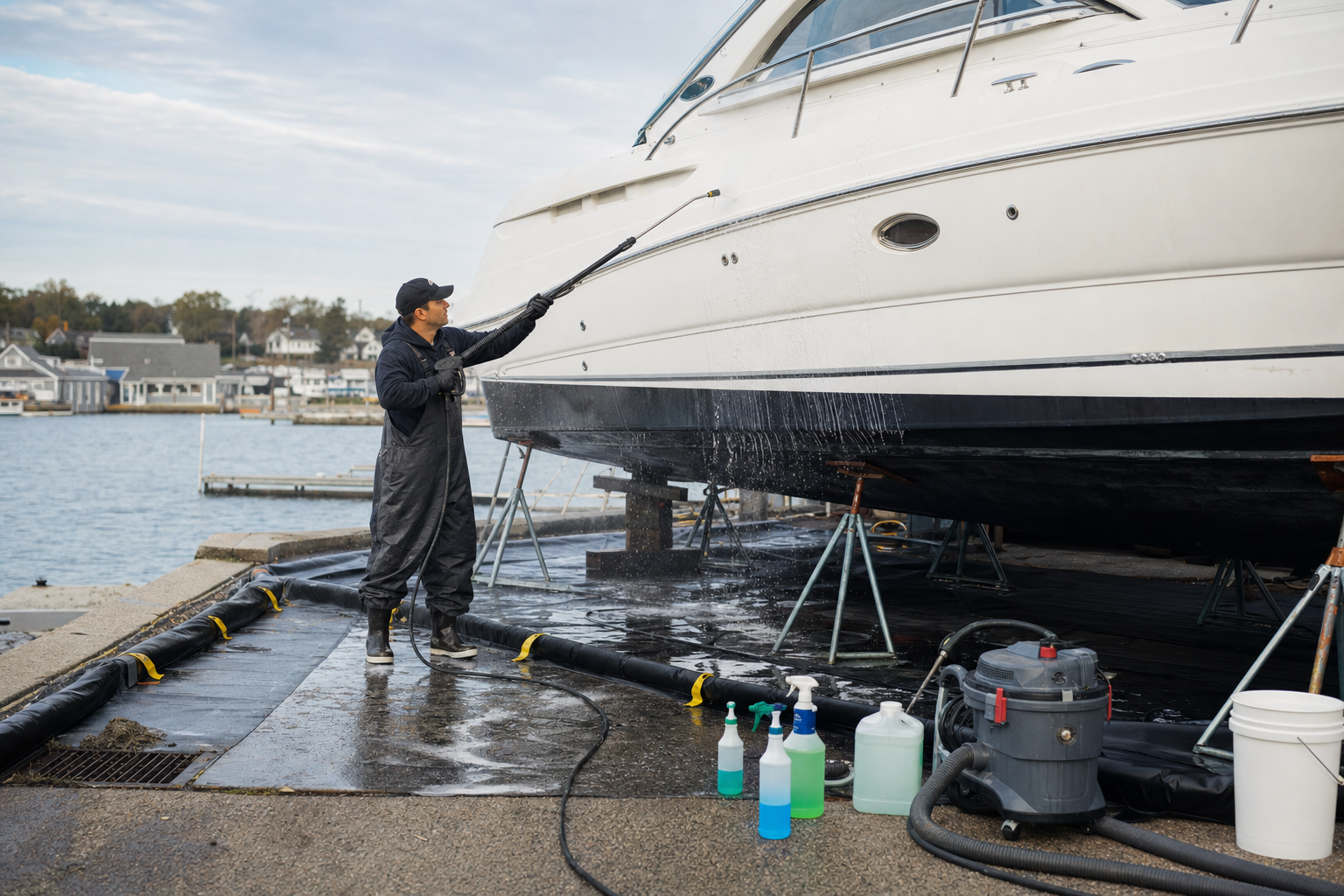
Marine detailing happens close to water, which means cleaning work can become an environmental conversation fast. Soaps, acids, solvents, pressure washing, fuel residue, wastewater, and runoff all deserve attention before a marina, regulator, or customer asks questions.

Do marine detailing businesses need pollution insurance?
Marine detailing businesses should review pollution coverage if they use chemicals, wash vessels near water, pressure wash, handle wastewater, or work under marina environmental rules. Standard liability policies can contain pollution exclusions that limit cleanup, runoff, or spill claims.
This is the environmental-risk article in the ship detailing business insurance series. It is especially relevant for shoreline towns, boatyards, and marinas where runoff rules are part of daily operations.
Why pollution exclusions matter
Many business owners assume a small spill is just a cleanup problem. In insurance, pollution language can be much broader. A carrier may treat chemical runoff, fuel residue, wastewater discharge, or a cleanup demand differently from ordinary property damage.
The U.S. Environmental Protection Agency publishes information about Clean Water Act compliance and enforcement at EPA.gov. Detailers do not need to become environmental lawyers, but they should know that water-adjacent work is not the same as cleaning a storefront floor.
What practices can reduce environmental risk?
- Use marina-approved products and follow written site rules.
- Avoid uncontrolled runoff into storm drains or waterways.
- Train employees on chemical labels, storage, and spill response.
- Document wastewater handling and disposal procedures.
- Review contracts for environmental responsibility language.
What should you ask your insurance advisor?
Ask whether the policy excludes pollution events, whether limited pollution coverage is available, and whether marina contracts require environmental coverage. Also ask how the policy handles overspray, chemical damage, wastewater, and cleanup demands.
How much does pollution coverage cost?
Cost depends on the services offered, chemicals used, revenue, locations, loss history, limits, and whether pressure washing or wastewater-producing work is part of the operation. A light interior cleaning business may have a different exposure than a crew doing hull cleaning, degreasing, oxidation removal, or pressure washing at marinas along the Connecticut coast or Rhode Island coast.
What is the uncomfortable truth about eco-friendly products?
Eco-friendly products are helpful, but they do not eliminate runoff risk, contract responsibility, or insurance exclusions. A marina may still require containment, approved wash areas, or proof of coverage. A customer may still allege damage. A regulator may still care where the wastewater went.
Pollution coverage versus general liability: what is the difference?
General liability may respond to many covered injury or property damage claims, but pollution exclusions can remove or limit environmental events. Pollution coverage is designed to address certain spill, cleanup, or contamination exposures. The exact answer depends on policy wording, so this is a review item, not a guess.
When should a detailer avoid a job?
A detailer should pause before accepting a job that requires chemical handling, washdown, or wastewater procedures they cannot perform safely. If the marina rules are unclear, the contract shifts broad environmental responsibility, or the business lacks proper equipment, walking away may be smarter than hoping nothing happens.
Why does Rhode Island and Connecticut coastal targeting matter?
Coastal marinas in Connecticut and Rhode Island operate in water-sensitive environments. Connecticut DEEP's marina guidance focuses on reducing pollutants near marina basins, while Rhode Island coastal management emphasizes protecting coastal resources. For ship detailers, that regional reality should show up in operating procedures and insurance conversations.
What are the real claim scenarios?
A pressure washing job sends residue toward a storm drain. A chemical container spills in a marina parking lot. A cleaner damages a customer's finish and the claim includes cleanup concerns. A marina says the vendor violated washdown rules. None of these scenarios require a major environmental disaster to become expensive or disruptive.
What does a good operating procedure include?
- Approved product lists and safety sheets.
- Marina-specific washdown and containment rules.
- Spill response steps and employee training.
- Wastewater handling and disposal procedures.
- Customer communication when aggressive products are used.
- Incident documentation and advisor contact instructions.
What is the comparison between avoiding risk and insuring risk?
Avoiding risk means declining services or locations that your crew cannot handle safely. Insuring risk means using coverage to help finance certain losses that remain after reasonable controls. The best marine detailing businesses do both. They prevent what they can, insure what they cannot fully prevent, and avoid work that does not fit their capabilities.
What can buyers ask to compare policies?
Ask whether the policy has a total pollution exclusion, whether limited pollution coverage is included, whether cleanup costs are covered, whether third-party claims are treated differently than first-party cleanup, and whether work at marinas is contemplated. These questions make the quote conversation more useful than simply asking for the cheapest option.
When is pollution coverage most important?
Pollution coverage becomes more important when the business uses stronger chemicals, works close to water, performs pressure washing, handles wastewater, operates in regulated marina spaces, or signs contracts that transfer environmental responsibility. That describes many coastal ship detailing operations in Connecticut and Rhode Island.
Best next step before adding services
Before adding hull cleaning, pressure washing, oxidation removal, acid-based cleaning, or other chemical-heavy services, review the process and policy together. The time to ask about runoff is before a marina manager points to the contract.
Example: the washdown that drifts into a storm drain
A crew finishes a job near a marina lot and rinses residue toward a drain. The crew sees it as cleanup. The marina sees a possible environmental issue. The customer sees delay. The owner sees a phone call that could involve the marina, carrier, and possibly a cleanup vendor. The event may be small, but it is no longer just a cleaning complaint.
That is the point of pollution planning. Most businesses are not expecting a dramatic environmental event. They need procedures for the ordinary moments where water, chemicals, residue, and coastal property intersect.
How should buyers compare pollution options?
Compare whether coverage is built into the package or added by endorsement, whether cleanup costs are included, whether transportation of chemicals is addressed, whether sudden and accidental events are treated differently from gradual conditions, and whether marina contract requirements are satisfied. Ask for plain-English examples, not just policy labels.
What work creates the most concern?
- Pressure washing near drains, ramps, or marina basins.
- Use of acidic cleaners, degreasers, solvents, or strong restoration products.
- Jobs involving fuel residue, bilge areas, or heavily soiled vessels.
- Work where wastewater cannot be contained or directed properly.
- Contracts that make the vendor responsible for cleanup costs.
Bottom line for runoff and chemicals
Pollution coverage is not only for large industrial operations. Coastal service businesses can create environmental exposure in smaller, practical ways. If a detailer works near water, uses chemicals, or signs marina contracts, pollution should be part of the insurance conversation.
A pollution-risk scorecard for marine detailers
Green means products are documented, employees are trained, marina rules are followed, and wastewater procedures are clear. Yellow means the business uses stronger products or pressure washing but has partial controls. Red means runoff is uncontrolled, employees are not trained, or the contract makes the business responsible for cleanup without clear coverage.
What should a quote request disclose?
- Types of chemicals, cleaners, compounds, and solvents used.
- Whether pressure washing or washdown services are offered.
- Where work is performed, including Connecticut and Rhode Island coastal marinas.
- How wastewater and runoff are handled.
- Whether employees receive chemical handling training.
- Whether contracts require pollution or environmental coverage.
What are the trade-offs?
Pollution coverage can add cost, but skipping it may leave the business exposed to cleanup demands or contract gaps. Avoiding certain services may reduce risk but limit revenue. Adding controls may take time but can make the business more acceptable to marinas and insurers. The right answer depends on the services the owner wants to sell.

How does this connect to the rest of the series?
Pollution risk touches marina contracts, mobile equipment, employees, and customer vessel damage. A spill may involve a van, a worker, a customer boat, and a marina rule at the same time. That is why the insurance plan should be coordinated instead of built one policy at a time.
What is the final buying advice?
If the business uses chemicals near water, make pollution part of the annual review. Do not wait until a marina asks for it or a runoff complaint occurs. The question is not whether you expect a problem. The question is whether the business is prepared if one happens.
What should not be assumed about small amounts?
Do not assume a small amount of chemical or residue cannot matter. The issue is not always volume. It can be location, product type, customer complaint, marina rules, or where the water flows. A small event in the wrong place can become a serious conversation.
That is especially true in coastal Connecticut and Rhode Island, where marinas, boatyards, storm drains, wetlands, and harbor areas can sit close together. Detailers should think about path of travel: where does rinse water go, who controls the area, and what does the contract say?
How does pollution planning help sales?
A detailer who can explain product handling, containment, and insurance looks more professional to marinas. Environmental care can become a selling point. It tells the marina manager that the vendor understands the property, not just the boat.
What should be reviewed after a near miss?
If a spill, runoff complaint, product reaction, or marina warning occurs, review the procedure immediately. Update training, change products if needed, document what happened, and ask whether the policy still fits the exposure. A near miss is a warning light, not an inconvenience to forget.
How can detailers reduce pollution risk before insurance gets involved?
Use the least aggressive effective product, follow marina washdown rules, keep safety sheets accessible, train crews on containment, and stop work when runoff cannot be controlled. These steps do not replace insurance, but they reduce the chance that insurance becomes the only line of defense.
What is the buyer takeaway?
The buyer takeaway is straightforward: if your detailing work touches water, chemicals, wastewater, or marina rules, pollution is not a fringe topic. It belongs in the same conversation as liability, auto, tools, and workers' compensation.
What should happen after a spill or runoff complaint?
After a spill or runoff complaint, stop the source if it is safe, follow marina procedures, document what happened, preserve product information, and contact the advisor before making coverage assumptions. If cleanup is required, keep invoices, photos, and communication records.
The business should also decide whether the service should continue in the same way. A near miss may reveal that a product, location, employee training step, or containment method needs to change before the next job.
For coastal operators, the safest answer is rarely "we have always done it this way." The better answer is to review the product, runoff path, marina rules, and coverage before repeating the same process. That is how a detailer turns a warning sign into a stronger operating system.
It also gives the business a better story to tell customers, marinas, and insurers: we know the environmental risk, and we manage it deliberately.
That kind of discipline is what separates a casual cleaner from a trusted coastal marine vendor.
It is also the kind of detail marina managers remember when deciding who gets invited back next season.
That trust has real business value.
Why independent brokers matter
At iConn Insurance Solutions, we help business owners separate normal cleaning risk from environmental risk. Together with Insure Connecticut LLC, we can compare carrier options and explain pollution limitations before a marina contract or claim forces the issue.
Frequently Asked Questions About Pollution Insurance for Marine Detailers
Does general liability cover chemical runoff?
Not always. Many liability policies include pollution exclusions. Detailers should ask specifically about runoff, wastewater, spills, overspray, and cleanup costs.
Can a marina require pollution coverage?
Yes. Some marina contracts may require pollution or environmental coverage, especially when vendors use chemicals, pressure washing, or wastewater-producing services on-site.
Are eco-friendly products enough?
Eco-friendly products can reduce risk, but they do not replace insurance review or compliance with marina rules. Disposal, runoff, and site procedures still matter.
What records should detailers keep?
Keep product lists, safety sheets, employee training notes, marina rules, wastewater procedures, and incident reports. Good documentation helps show how the business manages risk.
Before adding pressure washing or stronger chemical services, ask iConn Insurance Solutions to review pollution and runoff exposure.
Related Content
AI Payment Fraud Incident Response: What to Do First
The first hour after a fraudulent wire can decide whether funds are frozen or lost. Follow this practical response guide for banks, insurers, evidence, law enforcement, and recovery.
Read post →
Hotel and Commercial Property Insurance: Where Should Renewal Savings Go?
A practical guide for hotel and commercial-property owners deciding whether to keep renewal savings, lower deductibles, increase limits or restore coverage.
Read post →AI Fraud Insurance Exclusions: Where Coverage Can Break
A large cyber limit can hide a small social engineering sublimit. Learn how voluntary-transfer language, verification conditions, and overlapping crime coverage can affect AI fraud claims.
Read post →
Connecticut Builders Risk Insurance: 2026 Buyer’s Guide
Connecticut builders risk buyers should update project values, timelines and controls. Learn what to prepare and compare for a 2026 placement.
Read post →