
Workers' Comp for CT Trucking: Class Codes, E-Mods, and the 6 Habits That Lower Premium
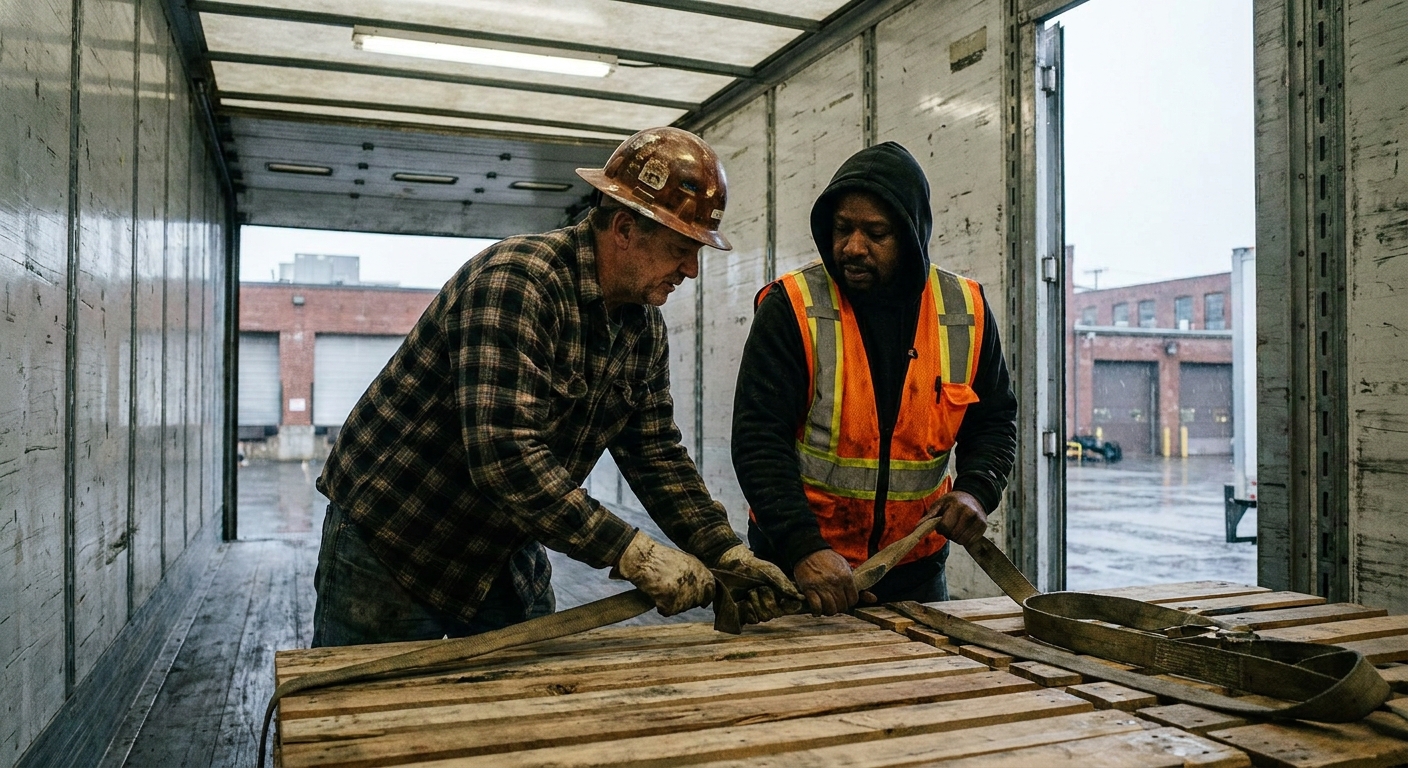
What CT trucking owners learn after their first claim: trucking is one of the highest-rated workers' compensation classes in Connecticut — class code 7228 (general trucking) runs $7-$12 per $100 of payroll, roughly 3-4x the rate for office staff. A single back injury on a loading dock can cost $80,000-$250,000, and the experience modification (e-mod) that follows can inflate your workers' comp premium for the next 3 years. The fleets that pay the least aren't the fleets with the lowest exposure — they're the fleets with the strongest safety programs and the lowest e-mods.
Workers' comp is the line of insurance most CT trucking owners think about least until a driver gets hurt — and then it becomes the dominant cost on the income statement for the next three years. Connecticut law (Conn. Gen. Stat. §31-275 through §31-355) requires every employer with one or more employees to carry workers' compensation insurance. There are no exceptions for small fleets, no carve-outs for owner-operators driving for other carriers, and no minimum payroll threshold. The CT Workers' Compensation Commission enforces this aggressively, and uninsured employers face fines, lien attachments, and personal liability for medical and indemnity costs.
At iConn Insurance Solutions, we write workers' comp on CT motor carrier accounts every week and walk owners through the e-mod math, the class code structure, and the return-to-work protocols that turn the most expensive line of coverage into something manageable. This guide covers what CT trucking owners need to know about workers' comp in 2026 — and where the leverage actually is. For a deeper dive on the WC mechanics themselves, see our pillar guide on Connecticut workers' compensation insurance.
What Class Codes Apply to CT Trucking Operations?
Connecticut uses the NCCI class code system. The dominant trucking codes are 7228 (Trucking - Local Hauling Only), 7229 (Trucking - Long Distance Hauling), and 7219 (Trucking NOC - Not Otherwise Classified). Rates vary by code: 7228 runs $7-$12 per $100 of payroll in 2026, 7229 runs $8-$14, and 7219 runs higher because it captures specialty hauls (hazmat, heavy haul, oilfield). Office staff at the same trucking company are classified separately under 8810 (Clerical) at $0.20-$0.50 per $100, dramatically lower.
The first audit question CT trucking owners get from their workers' comp carrier at renewal: "did you classify everyone correctly?" Putting a dispatcher who spends 40% of their time loading and unloading into 8810 (Clerical) instead of 7228 (Trucking) is one of the most common audit findings, and it triggers retroactive premium adjustments going back to policy inception. Classify correctly from day one; it costs more upfront but eliminates surprise bills.
| NCCI Class Code | Description | 2026 CT Rate Range (per $100 payroll) |
|---|---|---|
| 7228 | Trucking - Local Hauling Only | $7.00 - $12.00 |
| 7229 | Trucking - Long Distance Hauling | $8.00 - $14.00 |
| 7219 | Trucking NOC (specialty hauls, hazmat, heavy haul) | $10.00 - $18.00 |
| 8232 | Building Materials Dealer - Wholesale (truck drivers) | $6.00 - $10.00 |
| 8810 | Clerical Office Employees (dispatchers in pure office role) | $0.20 - $0.50 |
| 8742 | Salespersons - Outside | $0.50 - $1.20 |
The E-Mod: The Single Biggest Lever on CT Trucking Workers' Comp Premium
The Experience Modification Factor (e-mod) compares your fleet's loss history to the average for fleets of similar size in the same class codes. An e-mod of 1.00 is "average." A 0.85 e-mod multiplies your premium by 0.85 (saving 15%). A 1.35 e-mod multiplies by 1.35 (adding 35%). On a $90,000 workers' comp premium, that's the difference between $76,500 and $121,500 — $45,000 of annual swing on the same fleet, same payroll, same class codes. The e-mod is calculated by the NCCI from the trailing 3 years of loss data (excluding the most recent year, which is too immature).
The e-mod math most CT trucking owners don't realize: frequency hurts more than severity. The NCCI formula weights the number of claims more heavily than the total dollar amount, especially for claims under $5,000. Three $4,000 claims will damage your e-mod more than one $15,000 claim. This is why "let's just pay this one out of pocket" is sometimes the right answer for small claims — keeping them off the e-mod can save more in future premium than the claim cost itself.
The 6 Workers' Comp Habits That Pull CT Trucking Premium Down
1. Pre-Hire Physical and Functional Capacity Evaluation
49 CFR §391.41 already requires a DOT physical. Layer on a job-specific Functional Capacity Evaluation (FCE) for any role involving manual cargo handling — confirms the candidate can physically perform tasks like 50-lb lifts, climbing in/out of cabs, and securing tarps and chains. Documented FCEs significantly reduce "this injury existed before hire" disputes when claims are filed.
2. Same-Day Injury Reporting and Same-Day Medical
The single biggest factor in CT workers' comp claim cost is the time between injury and first medical visit. Claims with same-day medical close 40% faster and cost 30-50% less than claims where the worker waits 3+ days to seek treatment. Build the protocol: any injury, no matter how minor, gets reported to the supervisor immediately and the supervisor schedules a same-day occupational medicine appointment.
3. Network Occupational Medicine Provider (Not the ER)
ER visits for work injuries cost 5-10x what occupational medicine clinics cost for identical care. Concentra, US HealthWorks, and several CT-based occupational medicine groups specialize in work injury triage. Identify one within 15 minutes of every terminal, communicate the address and hours to every driver, and use it as the default first stop for any non-life-threatening work injury.
4. Return-to-Work Program With Modified Duty
The single most expensive workers' comp claims aren't catastrophic ones — they're the back, knee, and shoulder strains where the worker stays out for 6+ weeks at full disability. A return-to-work program puts injured workers back on modified duty (paperwork, dispatch ride-along, training shadowing) within 5-7 days of injury. Indemnity costs drop dramatically, the worker stays connected to the company, and the e-mod impact is materially lower.
5. Quarterly Claims Review With Adjuster
Every quarter, sit down with your workers' comp adjuster and review every open claim. Identify settlement opportunities, dispute medical bills that appear unrelated to the injury, and push back on continued treatment plans that lack documented progress. Most CT trucking accounts overpay on workers' comp because no one inside the company is actively managing the claims tail.
6. Audit Your Class Codes Annually
Misclassification — dispatchers in 7228 instead of 8810, drivers in 7219 NOC instead of 7228 Local, sales staff in 7228 instead of 8742 — is one of the highest-frequency e-mod and premium errors. An annual class code audit by your broker catches the issues before the carrier's auditor does and adjusts the policy mid-term.
Why Independent Brokers Matter for CT Trucking Workers' Comp
Workers' comp pricing varies dramatically by carrier for trucking accounts. The Connecticut Workers' Compensation Commission publishes loss cost rates, but each insurance carrier multiplies that loss cost by their own loss cost multiplier — typically ranging from 1.05 to 1.85. On a CT trucking account, that's a 70%+ swing on premium for identical risk.
At iConn Insurance Solutions, we shop CT trucking workers' comp across The Hartford, Travelers, Liberty Mutual, AmTrust, Berkshire Hathaway Homestate, and the CT Assigned Risk Pool when no admitted carrier will write the account. Together with our sister agency Insure Connecticut LLC, we cover CT motor carriers from clean-e-mod preferred-market placements to assigned-risk accounts working their way back to standard markets.
Key Takeaways
- CT law requires workers' comp for every employer with 1+ employees — no exceptions for small CT trucking fleets.
- Trucking class codes 7228, 7229, and 7219 carry the highest rates ($7-$18 per $100 payroll). Office staff in 8810 are 30x cheaper.
- E-mod is the single biggest premium lever. A 0.85 e-mod vs. 1.35 e-mod is a 60% premium swing on the same fleet.
- Frequency hurts e-mod more than severity. Three $4K claims damage more than one $15K claim.
- Same-day injury reporting + same-day occupational medicine + return-to-work program is the trifecta that drops both claim costs and e-mod simultaneously.
Frequently Asked Questions About Workers' Comp for CT Trucking
Do I need workers' comp if I'm a single-truck owner-operator with no employees?
If you are a sole proprietor with no employees and no W-2 payroll, CT does not require you to carry workers' comp on yourself — though most motor carriers you lease to will require an occupational accident policy as a contractual substitute. The moment you hire one employee or 1099-classify a worker who CT later reclassifies as an employee, workers' comp becomes mandatory.
How is my workers' comp premium calculated in CT?
Premium = (Annual Payroll ÷ 100) × Class Code Rate × Loss Cost Multiplier × E-mod ± Schedule Credits/Debits ± Premium Discounts. Example: $500,000 driver payroll × $9.50/100 (class 7228) × 1.35 LCM × 0.92 e-mod = $58,963 modified premium, before discounts. The same payroll at e-mod 1.25 = $80,156. E-mod is the lever.
What if I'm classified incorrectly — can I get a refund?
Yes. If you've been classified incorrectly (e.g., dispatcher in 7228 instead of 8810), you can request a class code review from your carrier or directly from the NCCI. Successful reclassification typically generates a refund back to policy inception. The NCCI also publishes Inspection of Records reports if you suspect a carrier audit mis-classified roles.
How long does it take to lower a CT trucking e-mod?
3-5 years for a meaningful reduction, because the e-mod is calculated from a 3-year trailing window (excluding most recent year). Claims drop off the calculation after they age out. Active claims management can lower premium within the e-mod window via subrogation, settlement, and disputed medical billing — partial dollar recovery on existing claims reduces their e-mod weight.
Are independent contractors / 1099 drivers covered by my CT workers' comp?
Generally no — true 1099 contractors carry their own coverage (or occupational accident in lieu of WC). But the CT Workers' Compensation Commission applies a multi-factor test to determine whether a "1099 contractor" is actually an employee for WC purposes. Misclassification triggers retroactive premium and uninsured liability. Have your accountant and broker review every 1099 trucking relationship annually.
What's the deadline to file a workers' comp claim in CT?
CT employers must file a First Report of Injury within 7 days of notice of the injury. Employees must file a Form 30C (Notice of Claim) within 1 year of injury or 3 years of first manifestation for occupational diseases. Late filings can result in penalties and complicate claim adjudication — same-day reporting protocols eliminate this risk entirely.
Worried your CT trucking workers' comp e-mod is silently inflating premium? A 20-minute e-mod review — class codes, claim history, return-to-work practices, and market alternatives — identifies the changes that can drop your CT trucking workers' comp premium by 15-30% at next renewal. Request a free CT trucking workers' comp review from iConn Insurance Solutions, or visit our sister agency Insure Connecticut LLC for Northeast motor carrier coverage.
Related Content
AI Payment Fraud Incident Response: What to Do First
The first hour after a fraudulent wire can decide whether funds are frozen or lost. Follow this practical response guide for banks, insurers, evidence, law enforcement, and recovery.
Read post →
Hotel and Commercial Property Insurance: Where Should Renewal Savings Go?
A practical guide for hotel and commercial-property owners deciding whether to keep renewal savings, lower deductibles, increase limits or restore coverage.
Read post →AI Fraud Insurance Exclusions: Where Coverage Can Break
A large cyber limit can hide a small social engineering sublimit. Learn how voluntary-transfer language, verification conditions, and overlapping crime coverage can affect AI fraud claims.
Read post →
Connecticut Builders Risk Insurance: 2026 Buyer’s Guide
Connecticut builders risk buyers should update project values, timelines and controls. Learn what to prepare and compare for a 2026 placement.
Read post →