Hotel Liquor Liability: Why Standard GL Won't Cover It
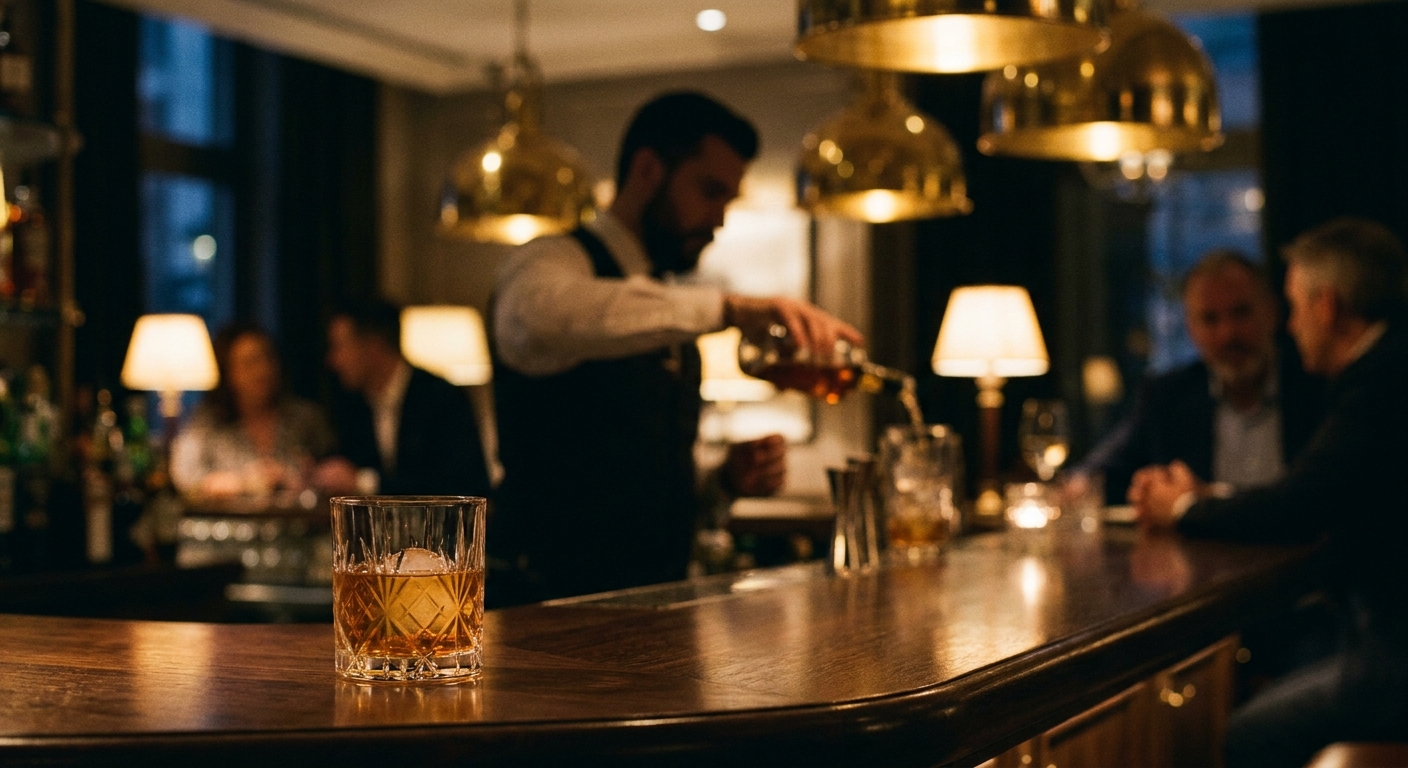
If your hotel serves, sells, or even gives away alcohol — at the bar, in a banquet hall, through room service, or at a complimentary wine reception — you have liquor liability exposure that your standard general liability policy almost certainly does not cover. Hotel liquor liability insurance (sometimes called dram shop coverage) is the policy that fills that gap. This guide explains how the coverage works, when you need it, what it costs, and how state dram shop laws change the picture.
For hotels and destination resorts, hotel liquor liability insurance is one of the most frequently misunderstood line items in the policy stack. Operators assume it's bundled into general liability because GL is the catch-all liability product. It isn't. The standard GL form contains a specific alcohol exclusion that strips coverage out the moment liquor enters the picture — and that exclusion is the reason a $1.2M dram shop judgment can land on an uninsured hotel after a single bartender pour.
Insure Connecticut LLC places hotel liquor liability every week as part of our Hotels & Destination Resorts Insurance program, alongside the property, GL, umbrella, and other specialty lines hotels need. This blog walks through exactly how the coverage works and why every hospitality operator that touches alcohol needs it.
What Is Hotel Liquor Liability Insurance?
Hotel liquor liability insurance is a specialty commercial liability policy that protects a hotel, resort, restaurant, or hospitality business from third-party bodily injury and property damage lawsuits arising out of alcohol service. It responds when an intoxicated patron causes harm — to themselves, to another guest, or to a third party (typically a car accident victim) — and the injured party sues the establishment that served the alcohol.
It exists because most U.S. states have dram shop laws that hold the alcohol-serving establishment legally responsible (in whole or in part) for the foreseeable consequences of serving an intoxicated patron. "Dram shop" is an old term — a "dram" was a small unit of liquor — but the legal concept is very current: if you served them, you can be sued.
Dram Shop vs. Host Liquor — What's the Difference?
Two terms get used interchangeably but mean slightly different things:
- Dram shop liability applies when the establishment sells alcohol. This is the standard hotel bar, banquet bar with cash sales, restaurant wine list, lobby lounge, or room service alcohol charge.
- Host liquor liability applies when the establishment furnishes alcohol without a direct sale — complimentary wine receptions, hospitality suites at conferences, manager's reception hour, open bars at weddings billed to the host rather than per drink, or alcohol included in an all-inclusive room rate.
Both exposures look identical from a courtroom perspective: an intoxicated guest, foreseeable harm, and a defendant with a duty of care. A real hotel liquor liability policy is written broadly enough to respond to either trigger.
Why Doesn't My Standard General Liability Policy Cover Alcohol Claims?
Because the ISO Commercial General Liability form contains a specific Liquor Liability Exclusion (Exclusion c.) that strips coverage for any claim arising out of any insured causing or contributing to the intoxication of any person — when the insured is in the business of manufacturing, distributing, selling, serving, or furnishing alcoholic beverages. Every hotel, resort, banquet hall, or restaurant fits that description.
The exclusion exists because alcohol-related claims are a distinct risk class with their own loss patterns. Carriers underwrite them separately — and price them separately. Bundling them into a standard GL would distort the math for every non-alcohol-serving business buying the same policy form.
The Host Liquor Carve-Back That Trips Hotels Up
There's a partial exception in the standard GL form: a host liquor liability carve-back that provides limited coverage if the insured is not in the business of selling or furnishing alcohol. The carve-back is intended for a manufacturing company holding a holiday party, not for a hotel with a banquet operation. The minute alcohol is a regular part of operations — even a complimentary wine reception in the lobby on Fridays — most carriers will argue the hotel is "in the business of furnishing" alcohol and the carve-back does not apply.
Result: hotels that assume their GL covers them through the host-liquor carve-back are almost always wrong, and they find out at claim time.
When Does a Hotel Need Liquor Liability Coverage?
Any hotel that serves, sells, or furnishes alcoholic beverages in any form needs liquor liability coverage. If any of the following are true at your property, dedicated liquor liability belongs on your policy stack:
- You operate a lobby bar, lounge, or hotel restaurant with a wine list or beer & wine license
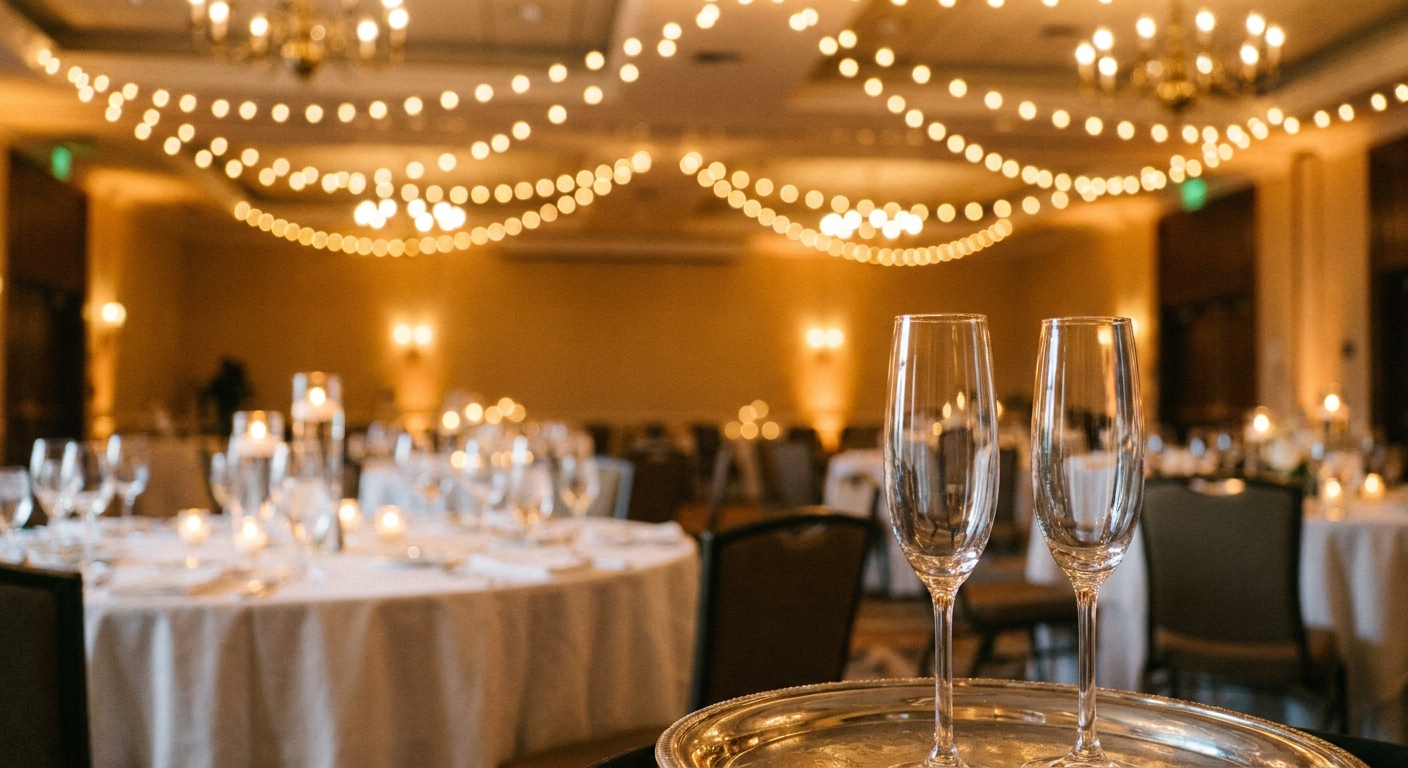
- You host weddings, banquets, conferences, or special events with open or cash bars
- Room service offers alcohol (mini-bar, in-room cocktails, champagne service)
- Your all-inclusive rate includes alcohol as part of the package
- You hold a complimentary wine, beer, or cocktail reception (manager's reception, welcome event)
- You operate a pool bar, beach bar, spa cafe, or any auxiliary food-and-beverage outlet that serves alcohol
- You operate hospitality suites or conference rooms where alcohol is served
- You allow third-party caterers to serve alcohol on premises under your liquor license
If two or more of these apply to your operation, the appropriate question is not "do I need liquor liability" but "what limit do I need."
How Much Liquor Liability Coverage Does a Hotel Need?
A $1 million per occurrence / $2 million aggregate limit is the standard starting point for hotels with food-and-beverage operations, written in parallel with the general liability tower. Properties with significant banquet, wedding, or nightclub-style operations frequently push the limit to $2M/$4M before excess, with umbrella or specialty liquor excess layers stacked on top. Higher capacity is available through specialty markets for larger resorts and properties with concentrated alcohol revenue.
Typical Limit Structures by Property Type
| Property Type | Primary Liquor Liability | Excess Capacity Available |
|---|---|---|
| Country inn with restaurant, low banquet volume | $1M / $2M | Up to $5M total |
| Boutique hotel with lobby bar & event space | $1M / $2M | Up to $10M total |
| Destination resort with multiple F&B outlets | $1M / $2M to $2M / $4M | Up to $12.5M total (AmWins Excess Casualty) |
| Hotel with nightclub or high-volume bar | $2M / $4M (often required) | Specialty stacking through USLI / E&S markets |
| Luxury resort with banquet, wedding, & event ops | $2M / $4M | Up to $12.5M total |
How Limits Get Pushed Up
Three forces push hotel liquor limits above the $1M starting point:
- Contract requirements. Group sales contracts, wedding vendor agreements, and corporate event contracts increasingly specify $2M or higher liquor limits with named-insured language.
- Lender / franchise requirements. Hotel mortgages and franchise agreements often specify minimum liquor capacity.
- Severity exposure. A drunk-driving death judgment in a serious dram shop case can exceed $10M. A $1M primary leaves a real gap once you account for legal defense costs and joint-and-several liability.
Real Claim Scenarios: How Hotel Liquor Liability Actually Plays Out
Three composite scenarios — based on real claim patterns we see in the hospitality space — that illustrate why dedicated coverage matters.
Scenario 1: The Wedding Reception
A country inn hosts a 150-person wedding with an open bar. A guest who's been at the reception for four hours leaves and is involved in a serious single-car accident on the way home. The guest's family sues the inn under the state's dram shop statute, alleging the bartenders continued serving after visible signs of intoxication. The claim seeks $4.2M in damages. The inn's GL policy is denied under the liquor exclusion. Only a dedicated liquor liability policy responds — and it responds for the defense costs from day one, regardless of who ultimately wins.
Scenario 2: The Manager's Reception
A boutique hotel hosts a complimentary wine-and-cheese reception for guests every Friday at 5 PM. A guest consumes several glasses, falls down the hotel's exterior stairs, and sustains a traumatic brain injury. The lawsuit alleges both premises liability (the stairs) and host liquor liability (over-service of complimentary wine). The hotel's GL responds to the premises claim but the alcohol-related theory of the case is excluded. Without separate host liquor coverage, the hotel is paying alcohol-related defense and indemnity costs out of pocket.
Scenario 3: The Banquet & Third-Party Caterer
A resort hosts a corporate banquet using a third-party caterer who serves alcohol under the resort's liquor license. A guest involved in a post-event altercation in the parking lot suffers a fractured skull. Both the resort and the caterer are sued. The resort discovers that its liquor liability policy must respond because alcohol was served under its license — even though the caterer poured the drinks. The takeaway: licensee responsibility follows the license, not the labor.
How Do State Dram Shop Laws Change the Picture?
State dram shop laws vary widely — from broad civil liability for any over-service to near-immunity for licensed establishments — and that variation directly affects how a hotel liquor liability policy needs to be structured. The same chain of events that produces a $5M judgment in one state can produce a dismissed complaint in another.
Three Categories of State Treatment
- Broad dram shop liability states — including Connecticut, New York, New Jersey, Pennsylvania, Texas, Illinois, and many others — impose meaningful civil liability on alcohol-serving establishments for foreseeable harm caused by intoxicated patrons. These are the states where dedicated liquor liability is non-negotiable.
- Limited dram shop states impose liability only in specific circumstances (typically obvious intoxication or service to a minor), with statutory caps on damages. Coverage is still essential, but limits can be calibrated to statutory ceilings.
- No-dram-shop or near-immunity states — including Delaware, Kansas, Maryland, Nebraska, Nevada, South Dakota, and Virginia — provide significant protection for licensed establishments. Coverage is still warranted because civil-rights theories, premises liability theories, and out-of-state torts can still reach the hotel.
Connecticut has a specific dram shop statute (Conn. Gen. Stat. § 30-102) that imposes liability on licensed establishments for sales to intoxicated persons resulting in foreseeable injury. Damages are capped statutorily but recovery is real and regularly awarded. Hotels operating in Connecticut should treat liquor liability as a core line, not an optional rider.
Multi-State Operators
For hotel groups operating across state lines, liquor liability policies need to be written on a basis that responds to the law of the loss state — not just the home state. Specialty hospitality programs, including USLI and the carriers behind the AmWins destination resort program, write liquor on a broad form that contemplates multi-state exposure.
Which Carriers Write Hotel Liquor Liability?
Hotel liquor is a specialty class — not every carrier wants the exposure, and the ones that do are the ones to know.
USLI (Berkshire Hathaway) Key Liquor Market
USLI — a Berkshire Hathaway subsidiary — is one of the most active markets in the country for hospitality and liquor risks. They write restaurants, nightclubs, bars, and hotel F&B operations on A++ rated paper. Available in Connecticut. Fast bind capability through wholesale channels. USLI is frequently our first call for standalone hotel liquor placements and for accounts that need a separate liquor program sitting alongside the primary hotel package.
AmWins Program Underwriters
Liquor liability is included in the AmWins Destination Resorts program, alongside property, GL, umbrella, and the rest of the package. This is the cleanest structure for true destination resort accounts because everything sits on coordinated forms with no coverage gaps between policies. $25,000 minimum account premium for the full program.
AmWins Excess Casualty
When primary liquor capacity isn't enough, AmWins Excess Casualty writes up to $12.5M quota-share excess with a $5M ground-up attachment on A+ XV rated paper. This is how hotel liquor towers get built for properties with heavy banquet and event volume.
Joseph Krar & Associates (CT Wholesale)
Connecticut-based E&S wholesale broker with access to six E&S GL carriers with hotel and hospitality appetite — Nautilus, IFG, Crum & Forster, Great American, MESA, and Atlantic Casualty. Krar is the right route for non-standard liquor placements — hotels with nightclubs, high-volume bars, claim history, or unusual operations the standard market won't price.
How Much Does Hotel Liquor Liability Cost?
Hotel liquor liability premiums in 2026 typically range from $2,500 to $25,000+ per year for an independently owned hotel, depending on liquor sales volume, operation type, claim history, limit, and state. Three variables move the number more than anything else:
- Gross liquor sales as a percentage of total revenue. Above 30% triggers nightclub-style rating.
- Operation type. A hotel restaurant rates lower than a freestanding nightclub even at the same revenue, because patron mix and consumption patterns differ.
- Claim history. Any prior dram shop claim — even one — significantly affects pricing for years.
Liquor liability is typically priced per $1,000 of liquor sales, with rates running anywhere from $4 per $1,000 for clean low-volume operations up to $30+ per $1,000 for high-risk operations or accounts with adverse loss runs.
How Do I Add Liquor Liability to My Hotel Insurance Program?
The path looks the same whether you're starting from scratch or repairing a gap discovered mid-year:
Audit your operation. Inventory every point of alcohol service: bar, restaurant, banquet, room service, mini-bar, complimentary receptions, pool bar, hospitality suites. Document them. This is the foundation of the submission.
Pull liquor sales numbers. Three years of liquor sales as a separate line item — both dollar volume and percentage of total revenue. This is the underwriting math.
Document risk controls. TIPS / ServSafe Alcohol certifications for staff, ID-check protocols, last-call procedures, courtesy transportation, incident logs. Underwriters reward documented training.
Choose the placement structure. Liquor as an endorsement on the package program (cleanest for destination resorts) vs. a standalone liquor liability policy (often the right call for hotels with concentrated F&B exposure). We map your operation to the right structure.
Bind primary, build excess. Place the primary $1M or $2M layer, then stack umbrella/excess capacity to the limit your contracts and risk tolerance require.
What Are the Most Common Hotel Liquor Liability Coverage Gaps?
When we audit incoming hotel programs from other agents, the same three gaps come up:
- No coverage for furnished (non-sold) alcohol. A "sold-only" liquor policy excludes complimentary wine receptions, manager's hours, and all-inclusive package alcohol. Hotels need a broad form that covers both sold and furnished.
- No assault & battery coverage. Some liquor forms exclude A&B losses (the bar fight scenario). For hotels with banquet, event, or pool-bar operations, A&B coverage needs to be specifically endorsed.
- Insufficient excess. A $1M primary against a $10M plaintiff verdict is a real problem. Building proper excess capacity (up to $12.5M via AmWins Excess Casualty) is essential for hotels with significant banquet volume.
Key Takeaways
- Standard general liability excludes alcohol claims via the Liquor Liability Exclusion. Hotels that serve alcohol need a dedicated policy.
- Both dram shop (sold) and host liquor (furnished) exposures apply — including complimentary receptions, all-inclusive rates, and hospitality suites.
- $1M / $2M is the standard limit, with $2M / $4M common for properties with banquet operations. Up to $12.5M total via AmWins Excess Casualty.
- USLI (A++ rated, Berkshire Hathaway) is a key liquor market; AmWins includes liquor in its destination resort program; Krar wholesale routes E&S placements.
- State dram shop laws vary widely — Connecticut imposes meaningful civil liability and coverage is non-negotiable for CT-based hotels.
Frequently Asked Questions
Is liquor liability the same thing as dram shop insurance?
Effectively yes, with a nuance. "Liquor liability" is the broad insurance industry term that covers any third-party claim arising out of alcohol service. "Dram shop liability" is the specific legal theory used when alcohol is sold to a visibly intoxicated person who then causes harm. A real liquor liability policy responds to both dram shop claims and host liquor claims (where alcohol is furnished rather than sold).
My hotel doesn't have a bar — just a complimentary wine reception. Do I still need this?
Yes. A complimentary wine reception is host liquor exposure, and courts in dram shop states will hold the hotel to the same standard of care as a paid bar. Standard GL host-liquor carve-backs typically don't apply once alcohol service is a regular, scheduled part of operations. Hotels with manager's receptions, welcome events, or any recurring complimentary alcohol service should have dedicated host liquor coverage in place.
If a third-party caterer serves alcohol at my banquet, am I still liable?
Often, yes. If the alcohol is served under your hotel's liquor license, dram shop liability typically follows the licensee — meaning the hotel can be named even when the caterer poured the drinks. The caterer should also carry its own liquor liability and name the hotel as additional insured, but that doesn't replace the hotel's primary coverage. This is a standard underwriting question; documenting your caterer requirements is part of a clean submission.
Does liquor liability cover assault & battery claims at the hotel bar?
Only if the form is written to include it. Some liquor liability forms exclude assault & battery (A&B) losses, which is a significant gap for any hotel with a bar, lounge, or banquet operation where patron-on-patron incidents are foreseeable. We always check the A&B treatment on the form and, where it's excluded, add a sublimited buy-back or place A&B coverage on a parallel form.
Can I get liquor liability if I've had a prior dram shop claim?
Yes, but you'll be in the specialty E&S market and pricing will reflect the loss. We route accounts with prior dram shop claims through CT-based wholesaler Joseph Krar & Associates, which has six E&S GL carriers with hotel appetite. Disclosure is non-negotiable — undisclosed prior claims can void the policy at the moment you actually need it.
How long does it take to bind hotel liquor liability coverage?
For straightforward accounts placed through USLI or the AmWins program, bindable quotes typically follow 5-10 business days after a complete submission. USLI in particular has fast bind capability through its wholesale channels. For non-standard placements (nightclub operations, adverse loss runs, unusual operations) expect 10-15 business days through the E&S market.
Does my umbrella policy extend over liquor liability?
Sometimes, but not always — and the answer is in the umbrella form itself. Some commercial umbrellas follow form over scheduled liquor liability, providing true excess capacity. Others exclude liquor entirely, leaving a hard cap at the primary $1M layer. The cleanest structure for hotels with significant alcohol exposure is to schedule liquor on the umbrella and confirm follow-form treatment in writing. AmWins Excess Casualty is the most common structure we use for true liquor excess capacity up to $12.5M.
Hotel liquor liability is one piece of the larger hospitality risk picture. Visit our Hotels & Destination Resorts Insurance overview page to see how liquor coordinates with property, GL, umbrella, cyber, and the rest of the program — or jump straight to a free, no-obligation quote. To talk through your operation directly, call our hospitality desk at (860) 970-0977.