
How Much Does Trucking Insurance Cost in Connecticut in 2026?
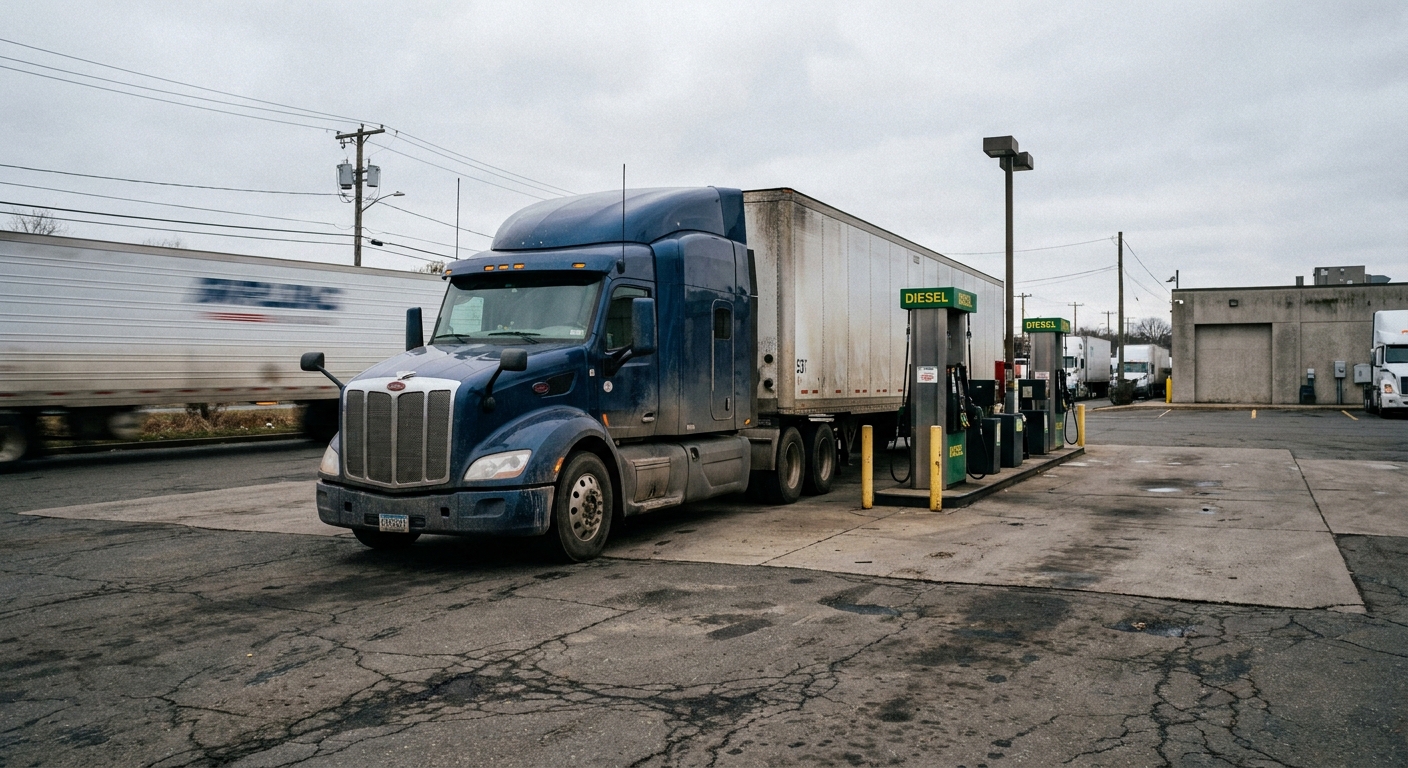
Trucking insurance in Connecticut in 2026 typically runs $6,000 to $14,000 per power unit per year for standard freight operations. Owner-operators with own authority pay $8K-$14K per unit, small fleets pay $7.5K-$12K per unit, and hot-shot operators pay $6K-$10K per unit. Reefer adds 15-25%, hazmat adds 30-60%, and auto-haulers add 40-80%. Final pricing is driven by radius, commodity, MVRs, CSA score, years in business, deductible, and physical damage limits.
If you're an owner-operator with your own authority, leased on to a motor carrier, or running a growing fleet out of Connecticut, the first question any underwriter and any honest broker can answer is the same one: what is this going to cost me per truck per year? The trucking internet is full of "it depends" non-answers and bait-and-switch quote pages. This guide gives you real 2026 per-unit pricing by trucker class, the factors that actually move premium up or down, and a worked example so you can ballpark your own renewal before you spend ninety minutes filling out an ACORD.
Insure Connecticut LLC places trucking insurance every week through specialty markets including Progressive Commercial, Great West Casualty, Sentry, Northland, Berkshire Hathaway GUARD, Carolina Casualty, Hudson Insurance Group, Acuity, and Canal Insurance. The numbers below come from the programs we actually quote — not internet averages.
How Much Does Trucking Insurance Cost in Connecticut in 2026?
In 2026, trucking insurance in Connecticut typically ranges from $6,000 to $14,000 per power unit per year for standard freight operations, with specialty classes (reefer, hazmat, auto-haulers) running 15% to 80% higher. The single biggest variable isn't location — it's the type of operation, the radius, and the freight you haul. Here's where each class lands:
| Trucker Class | Typical Operation | Annual Premium / Power Unit |
|---|---|---|
| Owner-Operator (Own Authority) | Long-haul, 1 unit, $1M liability | $8,000 - $14,000 |
| Small Fleet (2-10 units) | Regional or long-haul, $1M liability | $7,500 - $12,000 |
| Hot-Shot Operator | Class 3-5 truck w/ gooseneck, expedited | $6,000 - $10,000 |
| Reefer / Refrigerated | Any of the above + reefer breakdown | +15-25% over dry-van rate |
| Hazmat Hauler | $5M liability, MCS-90B, BMC-91 | +30-60% over standard rate |
| Auto-Hauler / Car Carrier | 3-9 unit transporter | +40-80% over standard rate |
These figures assume a complete program — primary auto liability, motor truck cargo, physical damage, general liability, non-trucking liability (bobtail), and the required FMCSA filings (MCS-90, BMC-91, and BMC-32 where applicable). A monoline liability-only policy will quote cheaper but won't actually keep your authority active or your shipper contracts happy.
Why Does Owner-Operator Insurance Cost More Per Truck Than Fleet Insurance?
Because a single-truck account has no risk diversification. One driver, one VIN, one MVR — if that driver has a bad year, the entire loss ratio belongs to that one truck. A small-fleet underwriter spreads risk across five, ten, or thirty drivers; the composite rate stays competitive even when one truck files a claim. Owner-ops also have less leverage. You're shopping three or four carriers; a 10-unit fleet might attract competitive bids from eight, which forces underwriters to sharpen their pencils.
That said, owner-ops aren't trapped. The same levers that work for fleets — clean MVRs, three-plus years in business, sensible deductibles, bundled coverage — work for single-truck accounts. The difference is that each lever moves the per-unit number by a measurable percentage, and there's only one unit to apply it to. We've seen owner-ops drop from $13,800 to $9,600 in a single renewal cycle by cleaning up two driver violations and raising the physical damage deductible from $1,000 to $2,500.
Owner-Op With Own Authority vs. Leased-On
| Coverage | Own Authority | Leased-On to a Motor Carrier |
|---|---|---|
| Primary Auto Liability | Required ($1M typical) | Provided by motor carrier while under dispatch |
| Non-Trucking Liability (Bobtail) | Optional but standard | Required by virtually every motor carrier |
| Motor Truck Cargo | Required ($100K+ typical) | Provided by motor carrier (verify in lease) |
| Physical Damage | Required if financed | Required if financed (driver's responsibility) |
| Typical Annual Premium | $8,000 - $14,000 | $2,500 - $5,500 (NTL + phys dam only) |
What Actually Drives Trucking Insurance Premium?
Trucking underwriters price against a defined set of variables. If you know them in advance, you can predict where your account lands and you can negotiate the levers that matter most.
1. Radius of Operation
Radius is the single largest non-MVR variable. A local hauler running 50-mile radius pays roughly 30-40% less per truck than the same operator running 48-state long-haul. Why? Highway miles produce highway accidents — higher severity, higher claim cost. Carriers tier their rates by radius: 0-50 miles (local), 51-200 miles (intermediate), 201-500 miles (regional), and 500+ miles (long-haul). Moving from long-haul to regional, or regional to local, is sometimes a permanent rate cut.
2. Commodity Hauled
What you haul matters as much as how far. Standard dry freight, building materials, and general commodities sit at the base rate. Refrigerated freight adds 15-25%. Hazardous materials add 30-60% and trigger increased liability minimums ($1M-$5M depending on hazmat class). Auto-haulers run 40-80% above standard because of stacked-load cargo values and the public-road visibility of a stuck or shifted load. Logging, sand and gravel, hot tar, and explosives each have their own load. Household goods movers (BMC-32 filing) sit in their own underwriting box entirely.
3. Driver MVRs and Years of Experience
Three years of clean motor vehicle records is the most powerful underwriting tool an operator controls. A single major violation (DUI, reckless driving, suspended CDL) within five years can disqualify a driver from preferred markets entirely. Minor violations (speeding tickets, log book errors) compound: two or more in 36 months pushes the account into surplus-lines pricing. Carriers also score on years of CDL experience — drivers under 23 or with fewer than 3 years CDL experience are surcharged or declined.
4. CSA Scores and BASIC Alerts
The FMCSA's Compliance, Safety, Accountability program tracks seven BASIC categories: Unsafe Driving, Hours-of-Service, Driver Fitness, Controlled Substances, Vehicle Maintenance, Hazmat, and Crash Indicator. Carriers with active BASIC alerts get surcharged 15-40%, and several preferred markets decline accounts with multiple alerts outright. The FMCSA Safer system is public — every underwriter pulls your snapshot before quoting.
5. Years in Business / Operating Authority Age
New-venture truckers (under 2 years of MC authority) pay a 20-40% new-venture surcharge across most preferred markets. The surcharge typically falls off after year 3 if loss runs are clean. Some specialty programs require a minimum of 12 months in business before they'll consider a submission at all. This is the single biggest reason new authorities pay $13K+ per unit while a 5-year-old single-truck operator with identical equipment pays $9K.
6. Physical Damage Deductible
Standard deductibles run $1,000, $2,500, $5,000, or $10,000. Moving from $1,000 to $2,500 typically saves 8-12% on physical damage premium; moving to $5,000 saves 15-22%. Physical damage runs roughly 4-7% of stated value per year, so the deductible lever materially affects total premium when you're insuring a $180,000 sleeper-cab tractor.
7. Physical Damage Limit / Stated Value
Stated value drives physical damage premium directly. A $90,000 day-cab is roughly half the physical damage premium of a $180,000 new sleeper. Trailer stated values, reefer unit values, and APU values all add to the schedule. Trucks over 10 years old or with high mileage often need to be valued as Actual Cash Value (ACV) rather than Agreed Value, which changes claim economics at total loss.
8. Claim History (Loss Runs)
Three to five years of currently valued loss runs is a hard submission requirement. Two or more claims over $25,000 in three years debits the account; three or more often triggers non-renewal at preferred carriers. A single at-fault accident with a fatality can move an account into excess and surplus lines for a full five-year cycle. Clean loss runs are the single largest premium-saving lever an operator controls.

A Real Worked Example: $93,500 Becomes $74,200
Here's how the math actually plays out. A real Connecticut owner-operator account we re-marketed in early 2026 — names and details anonymized:
- Operation: Single-truck owner-operator, own MC authority, 2.5 years in business
- Equipment: 2022 Freightliner Cascadia, stated value $165,000; one 53' dry van trailer, stated value $35,000
- Radius: 48-state long-haul, ~115,000 miles/year
- Commodity: General freight, no hazmat, no reefer
- Driver: Owner-driver, 8 years CDL, one speeding violation 18 months ago
- CSA: No BASIC alerts, Unsafe Driving at 42nd percentile
- Loss runs: One $8,400 cargo claim 14 months ago, paid
Expiring premium (placed last year with a non-specialty broker): $13,800/year, all-in. Here's what changed at renewal:
Moved physical damage deductible from $1,000 to $2,500 — saved approximately $640 on physical damage premium.
Re-marketed to three specialty carriers (Progressive Commercial, Northland, and Canal Insurance) instead of one standard market — winning quote came in $1,950 below expiring.
Year-3 anniversary on MC authority hit at renewal — new-venture surcharge fell off, worth an additional ~$1,400 across primary liability and cargo.
Bundled NTL and occupational accident with primary auto rather than buying NTL standalone — saved $310.
New bound premium: $9,500/year. Net savings: $4,300, or 31% — without changing equipment, lanes, or driver.
How Do I Lower My Trucking Insurance Premium?
The five highest-leverage moves an operator can make are the same five every preferred underwriter rewards. They aren't complicated, but they require documentation and patience. Most operators leave 15-30% on the table because they didn't know which lever moved which dollar.
- Run clean MVRs. Three years of clean motor vehicle records is the single largest premium-saving variable. If you have minor violations on file, wait them out before re-marketing; one ticket aging off can shift you from surplus to admitted markets.
- Raise the physical damage deductible. $1,000 to $2,500 typically saves 8-12% on physical damage premium; $5,000 saves 15-22%. For a well-capitalized owner-op, the math almost always works.
- Bundle through one carrier. Primary auto, motor truck cargo, physical damage, and general liability priced as a single package consistently beats the same coverages priced monoline through three different markets.
- Build years in business. The new-venture surcharge typically falls off at year 3 of MC authority, worth 15-25% of premium for an account with otherwise clean loss runs. Don't switch authority numbers without a hard business reason.
- Fix CSA BASIC alerts. Pull your Safer snapshot quarterly. Document maintenance, driver training, and pre-trip inspections. An account that clears a Vehicle Maintenance or Unsafe Driving alert before renewal can re-enter preferred markets at a 15-30% discount.
Which Carriers Write Trucking Insurance — And Who Prices Best?
Pricing varies dramatically by program because each carrier has a different sweet spot. Here are the markets we use most often and the account profile each one prices best.
Progressive Commercial Top Carrier
Largest commercial trucking insurer in the U.S., A+ AM Best rated, all 50 states. Strong on owner-operators and small fleets up to 10 units. Full FMCSA filing support included. Their direct-quote technology lets us get a bindable price in hours rather than days for clean accounts, and their snapshot-based pricing rewards new safety tech and ELD adoption.
Great West Casualty
100% trucking-focused since 1956, A+ rated. Long-haul fleet specialist. Strong claim handling reputation and loss-control services included with the policy. Best on mid-size fleets (10-50 units) running over-the-road, where their underwriters know the lanes and reward documented safety programs.
Northland Insurance
Travelers Companies subsidiary, A++ AM Best rated. Strong on 1-10 unit fleets, especially owner-ops leased on to motor carriers. Bobtail and physical damage strength makes them a go-to for leased-on owner-operator packages. Available in CT and across the Northeast.
Sentry Insurance
Fortune 500 mutual carrier, A+ AM Best rated. Mid-size and large fleet markets (25+ units). Fleet safety programs included; workers' compensation and auto liability written through one carrier when bundled, which is rare and useful.
Berkshire Hathaway GUARD
A+ rated paper, workers' comp specialist. Local and regional truckers, small business class. Multi-line discounts when paired with workers' comp. Strong on construction haulers, dump trucks, and short-radius operators.
Canal Insurance
Hot-shot trucking specialist, A- rated, available in Connecticut. Owner-op and small fleet focus. Where standard markets won't quote a Class 3-5 hot-shot operator with a gooseneck trailer, Canal will. Their underwriting box is built around expedited, on-demand freight.
Hudson Insurance Group
Fairfax subsidiary, A rated. Specialty cargo programs, hazmat capability, and high-limit excess available. Good fit for hazmat haulers and large-fleet excess towers where standard markets cap out.
What Does a Real Trucking Insurance Submission Cost to Quote?
Nothing. Quotes are free. What you're paying for — in time — is assembling the submission package that lets specialty markets price your account accurately. For an owner-op or small fleet, a complete submission includes:
- Completed trucking application — operations description, radius, commodities, gross revenue, mileage, drivers
- Equipment list — VINs, year/make/model, GVWR, stated values for every power unit and trailer
- MVRs for all drivers, pulled within the last 30 days
- Current CSA snapshot from FMCSA Safer with all seven BASIC scores
- Three to five years of currently-valued loss runs with detail on any claim over $10,000
- Copies of MC and USDOT certificates showing active authority
- Sample customer or broker contracts showing required liability and cargo limits
- Expiring policy declarations and target premium if available
We assemble this package on your behalf. You provide the underlying details once; we structure them for five-to-nine specialty markets in parallel.
How Long Does It Take to Get a Trucking Insurance Quote?
Once a complete submission is in, most preferred markets return quotes within 24-72 hours. New-venture and high-CSA submissions take 5-7 business days through specialty programs. For renewals, we kick off marketing 45-60 days before expiration so underwriters have proper review time and we have leverage to negotiate. Bind, FMCSA filing (MCS-90, BMC-91), and certificate delivery completes within 24 hours of approval.
Key Takeaways
- 2026 trucking insurance in CT runs $6K-$14K per power unit for standard freight; specialty classes (reefer, hazmat, auto-haulers) add 15-80%.
- Owner-operators pay more per truck than fleets because a single-unit account has no risk diversification — but the same levers (MVRs, deductible, bundling, years in business) work at every scale.
- The biggest price drivers are radius, commodity, driver MVRs, CSA score, years in business, deductible, and physical damage stated value.
- The five highest-leverage moves to lower premium: clean MVRs, raise the physical damage deductible, bundle through one carrier, build years in business, and clear CSA BASIC alerts.
- Specialty markets like Progressive Commercial, Great West, Northland, Sentry, Berkshire GUARD, Canal, and Hudson are how a complete trucking program comes together at a competitive number.
Frequently Asked Questions
How much does trucking insurance cost in Connecticut in 2026?
Trucking insurance in Connecticut in 2026 typically ranges from $6,000 to $14,000 per power unit per year for standard freight operations. Owner-operators with their own authority running long-haul pay $8,000-$14,000 per unit, small fleets (2-10 units) pay $7,500-$12,000 per unit, and hot-shot operators pay $6,000-$10,000 per unit. Specialty operations carry premium loads: reefer +15-25%, hazmat +30-60%, auto-haulers +40-80%. Final pricing depends on radius, commodity, driver MVRs, CSA scores, years in business, deductible, and physical damage limits.
What is the federal minimum liability limit for trucking insurance?
FMCSA minimum primary auto liability limits are $750,000 for non-hazardous freight vehicles over 10,001 lbs GVWR, $1,000,000 to $5,000,000 for vehicles transporting hazardous materials, $1,500,000 for vehicles seating 9-15 passengers, and $5,000,000 for vehicles seating 16 or more passengers. Most shippers and brokers require $1,000,000 in primary liability, which is the de facto market standard for for-hire motor carriers.
Why does owner-operator insurance cost more per truck than fleet insurance?
Owner-operator insurance is more expensive per unit because there's no diversification of risk. A single driver, single truck, single VIN means one bad year can erase the entire account's loss ratio. Fleet underwriters spread risk across multiple drivers and units, so even when one truck has a claim, the composite rate stays attractive. Owner-ops also typically have less negotiating leverage and fewer carriers competing for the account than mid-size fleets with 5+ trucks.
How much does reefer or refrigerated trucking insurance cost?
Reefer trucking insurance runs 15-25% higher than standard dry-van premiums because of cargo spoilage exposure. A small reefer fleet that would price at $9,000 per unit on dry freight typically lands at $10,500-$11,500 per unit once reefer breakdown coverage is added. Reefer breakdown is a specific endorsement on motor truck cargo policies because standard cargo policies exclude refrigeration failure. Carrier appetite tightens for produce, pharmaceutical, and frozen food haulers, which can push pricing further.
Does my CSA score affect my trucking insurance premium?
Yes, significantly. The FMCSA's Compliance, Safety, Accountability (CSA) program tracks safety performance across seven BASIC categories (Unsafe Driving, Hours-of-Service, Driver Fitness, Controlled Substances, Vehicle Maintenance, Hazmat, and Crash Indicator). Carriers with elevated BASIC scores or alerts get surcharged 15-40%, or declined altogether by preferred markets. Fixing CSA standing through driver training, maintenance documentation, and pre-trip inspections is the single fastest path to lower premium at renewal.
How can I lower my trucking insurance premium?
The biggest premium-saving moves are clean MVRs (no violations or accidents in the last 3 years), raising your physical damage deductible from $1,000 to $2,500 or $5,000, bundling auto liability with cargo, physical damage, and general liability through one carrier, building years in business (after year 3 the new-venture surcharge typically falls off), and resolving CSA BASIC alerts. Marketing the renewal 45-60 days early also produces materially better terms than late-stage rushing.
What documents do I need to get a trucking insurance quote?
A complete trucking submission includes a completed trucking application with operations details, radius, commodities, gross revenue, and mileage; an equipment list with VINs, year/make/model, GVWR, and stated values; MVRs (motor vehicle records) for all drivers; a current CSA snapshot from FMCSA; three to five years of currently-valued loss runs; copies of MC and USDOT certificates; and sample customer or broker contracts if available.
How long does it take to get a trucking insurance quote?
Once a complete submission package is received, most preferred trucking markets return quotes within 24-72 hours. New-venture and high-CSA submissions take 5-7 business days through specialty programs. For renewals, we begin marketing 45-60 days before expiration to give underwriters adequate review time and to negotiate the best terms. Bind, FMCSA filing (MCS-90, BMC-91), and certificate delivery typically completes within 24 hours of approval.
Ready to put a real number on your trucking insurance? Visit our Trucking Insurance in Connecticut overview page to see the full program and every carrier we place through, or go straight to a no-obligation quote. You can also call our trucking desk directly at (860) 970-0977 — we'll walk through your operation in 20 minutes and tell you exactly which carriers fit before you spend an hour filling out an application.