
Reefer Breakdown Insurance for CT Trucking: Endorsements, Sublimits & the 4 Denial Traps
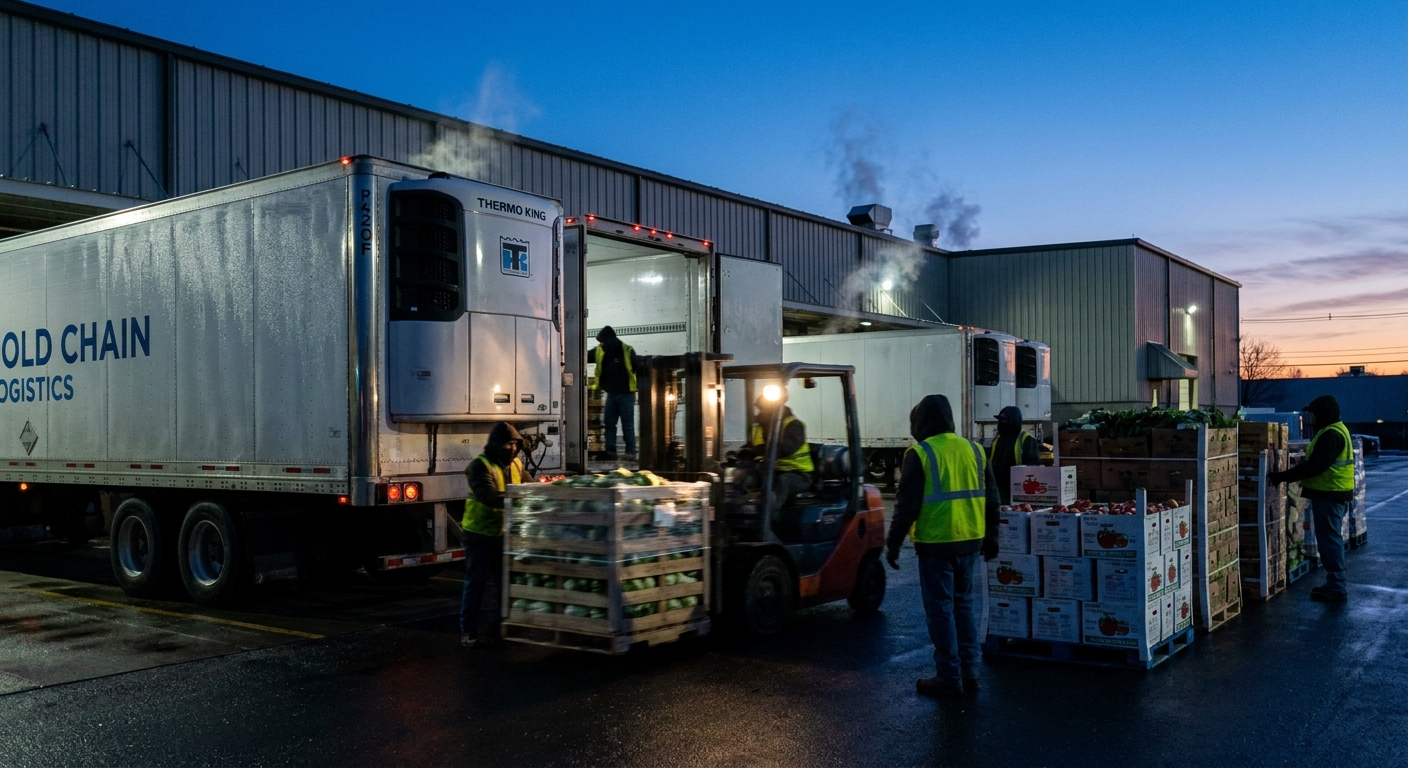
A Connecticut produce hauler runs Boston-to-Hartford three times a week. On a Tuesday in July, the reefer compressor fails somewhere around Sturbridge. By the time the driver notices the gauge climbing, it is 2:17 a.m. and 38,000 pounds of strawberries have been sitting at 52°F for ninety minutes. The receiver in Wallingford rejects the entire load. The replacement cost is $74,000. The carrier's standard Motor Truck Cargo policy — the one that paid the $185 a month premium — denies the claim. The exclusion is one sentence long: "Loss caused by mechanical breakdown of refrigeration or heating equipment."
This is the moment most refrigerated truckers learn that "cargo insurance" and "reefer breakdown coverage" are not the same product. They are sold separately, underwritten separately, and excluded from each other by default. If you haul anything that needs to stay cold — produce, dairy, frozen seafood, pharmaceuticals, meat, floral, ice cream — and you assumed your cargo policy had your back when the unit fails, this is the post.
The short answer: Standard Motor Truck Cargo insurance excludes spoilage caused by reefer breakdown. To cover it you need a Refrigeration Breakdown endorsement (or a Refrigerated Cargo policy), with the reefer unit serviced on a documented schedule, continuous temperature recording, and a pre-trip inspection log. Without all four, even the endorsed coverage will deny the claim.
At iConn Insurance Solutions we write a lot of CT-based refrigerated carriers — small fleets running into New England produce terminals, owner-operators on dedicated dairy lanes, and regional haulers moving frozen seafood out of New Bedford and Stonington. The denials we see are not exotic; they are almost always the same four issues. This post walks through what reefer breakdown coverage actually does, how the endorsement is priced and triggered in 2026, the four denial traps, and the documentation discipline that keeps your claim alive.
What does refrigerated cargo insurance actually cover?
Motor Truck Cargo (MTC) insurance — the baseline policy every for-hire trucker carries — pays for sudden, accidental physical damage to property you are hauling for someone else. It covers fire, collision, overturn, theft, and (in most modern forms) striking and falling objects. The default form does not cover loss caused by mechanical failure of the truck or trailer, including the reefer unit. That exclusion is standard ISO language; you will find a near-identical clause on policies from Great West, Progressive Commercial, Travelers, Nationwide, and the trucking-specialty MGAs.
To get spoilage from mechanical failure covered, you add one of three things:
- Refrigeration Breakdown endorsement — bolts onto your existing cargo policy. Cheapest path. Adds spoilage from compressor/condenser/evaporator failure to the named perils.
- Refrigerated Cargo policy — purpose-built form for reefer fleets; the breakdown coverage is built in rather than endorsed on, and the limits/sublimits are usually more generous.
- Spoilage / Temperature Variation endorsement — broader still; covers temperature deviation from any cause (mechanical failure, power loss, door left open, fuel exhaustion, driver error setting the wrong setpoint) subject to listed conditions.
The terminology is not standardized across carriers. One company's "Refrigeration Breakdown" is another's "Reefer Spoilage Endorsement" is another's "Temperature Variation Coverage." Read the form, not the marketing name. The four questions to ask any quote:
- Is mechanical breakdown of the refrigeration unit a covered cause of loss? (Yes / No)
- Is driver error covered? (Wrong setpoint, door left open, failed pre-trip.)
- Is fuel exhaustion covered? (Driver forgot to top off the reefer tank.)
- What is the breakdown sublimit, and is it shared with the cargo limit or separate?
How much does reefer breakdown coverage cost in 2026?
The Refrigeration Breakdown endorsement is priced as a multiplier on your base cargo premium, not a flat add-on. Three variables drive it: cargo limit, sublimit you want on breakdown specifically, and your servicing/maintenance documentation. CT and southern New England carriers in 2026 typically see ranges like these:
| Cargo Limit / Setup | Base Cargo Premium (annual) | Reefer Breakdown Add-On | Notes |
|---|---|---|---|
| $100,000 cargo · $50K breakdown sublimit · single tractor | $1,400–$2,200 | +$650–$1,100 | Owner-op produce; needs documented maintenance. |
| $150,000 cargo · $100K breakdown sublimit · 3–5 unit fleet | $4,800–$8,400 | +$1,800–$3,500 | Most common CT regional setup. |
| $250,000 cargo · $250K breakdown (matching) · 8–15 units | $14,000–$24,000 | +$5,200–$9,800 | Pharma & high-value frozen need matching limits. |
| Temperature Variation form · driver-error covered | — | +15–25% over breakdown-only | Worth it for any fleet without continuous training. |
For context: a single rejected load of strawberries, salmon, or vaccines can run $40,000–$120,000. The endorsement premium amortizes in a single avoided claim. The carriers that decline the endorsement to save $1,800 a year are the same carriers we see going out of business in October after a July spoilage loss.
Mid-article note: If you are running a refrigerated lane out of CT and your renewal is approaching, get a second opinion on your cargo + breakdown structure before you sign. iConn Insurance Solutions reviews these for free; we have seen too many policies where the breakdown sublimit was $25,000 against a $150,000 cargo limit — useless for a full trailer of high-value perishables.
Why do reefer spoilage claims get denied?
Even with the endorsement in place, denial rates on reefer spoilage claims run materially higher than on standard cargo claims. The Northland and Canal Insurance underwriting departments have publicly cited 30–40% denial rates on reefer claims as recently as 2024. Four issues drive almost all of them.
1. No documented pre-trip inspection
Every modern reefer endorsement contains a clause requiring the unit to be pre-tripped before loading: setpoint verified, return-air temperature confirmed, defrost cycle observed, fuel level checked. The pre-trip must be documented. A handwritten log on the dispatch board is acceptable; a verbal "I checked it" is not. When the adjuster shows up after a $60,000 spoilage claim, the first thing they ask for is the pre-trip log. No log, no payment.
2. Lapsed maintenance schedule on the reefer unit
Thermo King and Carrier Transicold publish service intervals — typically every 1,500 engine hours or 12 months, whichever comes first. Your endorsement requires you to follow them and keep receipts. If your compressor failed at 1,820 hours past the last service, the claim is "caused or contributed to by lack of required maintenance" and the carrier walks. Keep your reefer service receipts in the same folder you keep your DOT inspection records.
3. Missing continuous temperature recording
Most 2026 endorsements require a continuous temperature download or telematics record. Thermo King's TracKing, Carrier's Lynx Fleet, ORBCOMM trackers — any of them satisfies the requirement. What does not satisfy it: a driver writing down the trailer temp at fuel stops. If the only temperature evidence you can produce is "the driver thought it was running at 35°F," the adjuster cannot reconstruct when the failure happened. That ambiguity favors denial.
4. Setpoint did not match the bill of lading
The shipper hands the driver a bill of lading that says "transport at 34°F." The driver sets the reefer at 38°F because that is what their dispatch told them last week for a similar load. The cargo arrives technically cold but not within the BOL specification, and the receiver rejects it. This is not a "breakdown" — it is a driver-error claim, which is excluded from breakdown-only endorsements. You need a Temperature Variation or Spoilage form to cover it. If your fleet has any driver turnover, pay the extra 15–25%; the math works out the first time it saves a load.
What's different about reefer trucking in Connecticut?
CT has three structural features that make reefer claims more likely and more expensive than the national average:
- High-value cargo density. The Hartford-to-New Haven I-91 corridor and the Stamford-to-Bridgeport I-95 corridor both move significant pharmaceutical, biotech, and high-value perishable freight. Loss values per trailer skew higher than the national mean.
- Long shoreline distribution lanes. Fresh seafood out of Stonington and New London, into Boston, NYC, and Philadelphia markets — short lanes but extremely time-sensitive. A two-hour breakdown can total an entire load.
- Old industrial yards. Many CT trucking operations still pre-cool in shoreline yards with limited shore-power infrastructure. Reefer units running on diesel longer = more wear = more failures.
CT also has favorable case law for cargo claimants — meaning if you are the one filing against another carrier (a broker who lost a load because of your subcontractor's reefer failure), the CT courts are friendlier than NY or NJ. Cuts both ways.
Why an independent broker matters for refrigerated trucking
Reefer breakdown is one of the few trucking exposures where the wrong policy form is significantly worse than no policy at all — because carriers who hold a thin endorsement think they are covered and skip the maintenance discipline. An independent broker reads the form before you bind.
At iConn Insurance Solutions we are an independent multi-carrier shop covering Connecticut and the surrounding states. We compare reefer forms across Northland, Canal, Great West, Progressive, Nationwide, and the trucking MGAs side-by-side — and we tell you which of the four denial traps each form leaves you exposed to. Together with our sister agency Insure Connecticut LLC, we cover 12 states across the Northeast and into the Mid-Atlantic, so we see the same reefer endorsements priced and adjudicated by every major trucking carrier in the region. No captive broker — even one selling a strong product — can show you that comparison.
Key Takeaways
- Standard Motor Truck Cargo insurance excludes spoilage from reefer mechanical breakdown — you need an endorsement or a Refrigerated Cargo policy.
- Breakdown-only endorsements do not cover driver error (wrong setpoint, door left open). Pay the 15–25% for a Temperature Variation form if you have any driver turnover.
- Four denial traps cause 90% of declined reefer claims: missing pre-trip log, lapsed reefer service, no continuous temperature record, setpoint not matching the BOL.
- Breakdown sublimit should match your full cargo limit — not be a small carve-out like $25,000 against a $150,000 cargo limit.
- For a CT 3–5 unit reefer fleet, expect $1,800–$3,500/year added to base cargo for the breakdown endorsement. One avoided rejected load pays for ~30 years of premium.
Frequently Asked Questions About Reefer Breakdown Insurance
Does my regular cargo insurance cover reefer breakdown?
No. The standard Motor Truck Cargo form excludes loss caused by mechanical breakdown of refrigeration or heating equipment. You need a Refrigeration Breakdown endorsement, a Refrigerated Cargo policy, or a Temperature Variation endorsement added separately. Read the form — the marketing name varies but the exclusion language is nearly universal.
How much does a reefer breakdown endorsement cost in Connecticut?
For a typical CT 3–5 unit refrigerated fleet with $150,000 cargo limit and $100,000 breakdown sublimit, expect $1,800–$3,500 per year added to your base cargo premium. Owner-operators with $100,000 limits typically pay $650–$1,100. Larger fleets carrying pharma or high-value frozen pay $5,200–$9,800 for matching limits.
What's the difference between breakdown coverage and temperature variation coverage?
Breakdown coverage pays only when the reefer unit mechanically fails — compressor, condenser, evaporator. Temperature Variation coverage pays for spoilage from any cause: mechanical failure, fuel exhaustion, driver error setting the wrong setpoint, or doors left open. Temperature Variation costs 15–25% more but covers driver error, which is roughly half of all real-world spoilage losses.
What documentation do I need to keep to avoid a denial?
Four things, every load: a dated pre-trip inspection log showing setpoint, return-air temp, and fuel check; reefer unit service receipts on Thermo King or Carrier Transicold's recommended interval; continuous temperature recording from telematics (not handwritten); and a copy of the bill of lading showing the required setpoint matches what the driver actually ran.
Is reefer breakdown coverage required by law in CT?
No. CT and FMCSA regulations do not mandate breakdown coverage. Shippers and brokers, however, increasingly require it in their broker-carrier agreements — many will not tender a reefer load to a carrier whose certificate does not show the endorsement. Functionally it is becoming required by contract, not by law.
What's a reasonable breakdown sublimit relative to my cargo limit?
Match them. If your cargo limit is $150,000, your breakdown sublimit should be $150,000 — not $25,000 or $50,000. A small sublimit looks like coverage on paper but covers only a fraction of a full trailer's value. The premium difference between a $50,000 and $150,000 sublimit is typically $400–$900/year — trivial against a $90,000 uncovered loss.
Ready to review your reefer coverage?
If you are running refrigerated trucks out of Connecticut and your renewal is in the next 90 days, this is the moment to audit your cargo + breakdown structure — not the morning after a $74,000 strawberry loss. Send us your declarations page, your reefer service records, and your loss history. Request a free reefer coverage review from iConn Insurance Solutions and we will show you, line-by-line, which of the four denial traps your current form leaves open.
CT residents on our sister-site footprint can also work with Insure Connecticut LLC, which writes the same trucking markets and covers the same Northeast region.