
Your Insurer Wants a 4-Point Inspection and Roof Photos — Can They Drop You?
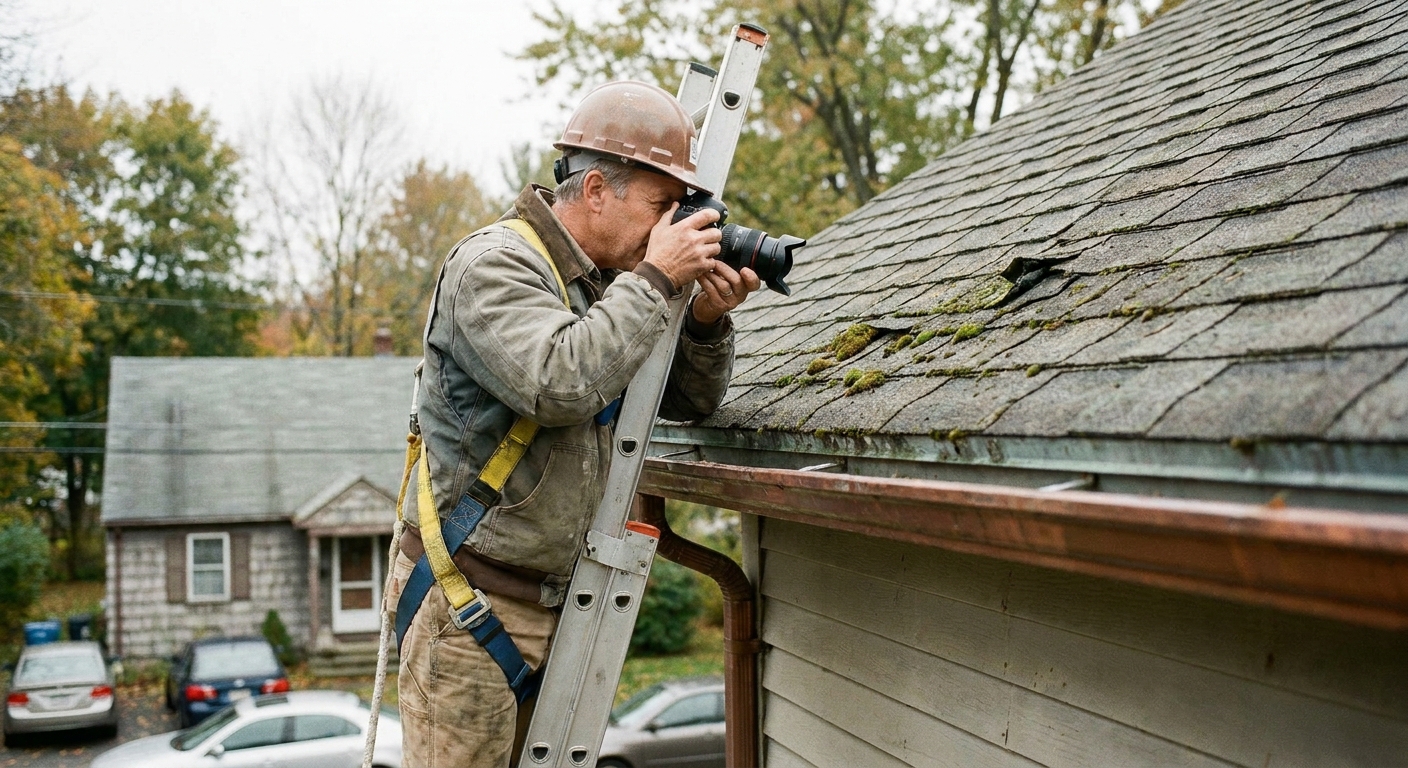
Your Insurer Wants a 4-Point Inspection and Roof Photos — Can They Drop You?
Connecticut insurers are inspecting more homes than they have in twenty years. Here is what a 4-point inspection actually covers, what triggers drone and aerial imagery review, your rights under CT law, and the practical playbook to pass without surprises.
Yes — a CT homeowners carrier can absolutely non-renew a policy based on inspection findings. But they must give written notice, cite specific deficiencies, and almost always offer a cure period (typically 30 to 60 days) to fix cited items. Refusing an inspection is itself grounds for non-renewal. Cooperation with the right preparation is almost always the winning play.
Five years ago, a Connecticut homeowner could go a decade without ever seeing an inspector from their insurance company. Today, between aerial imagery review, drone overflights, and on-site 4-point inspections, most CT policies are getting eyeballed within the first three years of coverage — and again every 5 to 7 years after that.
At Insure Connecticut LLC, we believe the inspection uptick is actually a good thing for well-maintained homes. Carriers that know their book is clean are able to hold rates down. The homeowners who get hurt are the ones who are surprised — and surprises are avoidable.
What Is a 4-Point Inspection?
A 4-point inspection is a focused review of the four systems most likely to drive a large insurance claim:
- Roof — age, material, visible damage, slope, remaining useful life.
- Electrical — panel age and amperage, brand (Federal Pacific, Zinsco, and Challenger panels are red flags), aluminum wiring, knob-and-tube remnants.
- Plumbing — supply lines (copper, PEX, or old polybutylene), drain lines, water heater age, visible leaks.
- HVAC — age and condition of heating system (especially oil tanks in older CT homes), central air unit age.
What Aerial and Drone Imagery Reviews Look For
Many CT carriers now use third-party aerial imagery providers — no ladder, no inspector on site. An algorithm reviews high-resolution aerial photos of your property and flags items including:
- Missing or visibly damaged shingles, tarps, or patch repairs
- Significant moss or debris accumulation
- Tree limbs overhanging the roof
- Unpermitted additions or structures (detached garages, pool houses, sheds)
- Trampolines, above-ground pools, or diving boards not disclosed on the application
- Discolored or staining roof sections indicating leaks or ventilation issues
Your Rights Under Connecticut Law
You are entitled to:
- Written notice of the inspection's intent and scope.
- Specific cited defects — vague language like "unfavorable findings" is not sufficient for non-renewal.
- A copy of the inspection report — request it in writing. Some carriers drag their feet; push back.
- A cure period — typically 30 to 60 days to address cited items before the carrier acts.
- 60 days written notice of non-renewal if that is the final outcome, per CT General Statutes.
The Pre-Inspection Walkthrough
The biggest predictor of a clean inspection is a 60-minute walkthrough before the inspector arrives. Approach your property the way an underwriter would:
- Roof: Look for missing shingles, curling edges, moss, and debris. Trim tree limbs back at least 6 feet from the roof.
- Gutters and downspouts: Clean and properly pitched. Standing water on the roof is a red flag.
- Siding and trim: Peeling paint exposing wood, cracked siding, rotted soffits — all fixable in a weekend.
- Walkways and steps: Cracked stairs, loose railings, and uneven walkways are premises-liability red flags.
- Deck: Railings, posts, and board condition. Missing or loose railings are almost always cited.
- Electrical panel: Photograph the brand and amperage. If it is Federal Pacific, Zinsco, or Challenger, you need a plan.
- Oil tank: Buried tanks, rusted above-ground tanks, and tanks past their useful life frequently trigger non-renewal.
Real Example: Litchfield County
A client's carrier flagged two issues on an aerial review: overhanging tree limbs and moss on the north-facing roof slope. The cited cure window was 45 days. The client had the limbs trimmed and the roof soft-washed for $780 total, submitted time-stamped photos to the carrier, and the file closed with no non-renewal and no premium change.
What Happens If the Report Comes Back With Issues
First: do not panic. Most cited items are curable. Common inspection-triggered actions and typical fixes:
- Roof age over 15 years with no defects: carrier may move to ACV; consider remarketing to a carrier that still offers RCV.
- Federal Pacific / Zinsco panel: a full panel replacement runs $2,000 to $3,500 in CT — frequently worth it to preserve coverage.
- Old oil tank: replacement and proper decommissioning of the old tank typically $3,500 to $6,000.
- Trampoline or above-ground pool: either remove, fence, or disclose and pay the surcharge. Undisclosed exposures are a policy void waiting to happen.
Key Takeaways
- Inspections are the new normal in the CT market — expect them.
- Refusing an inspection is itself grounds for non-renewal.
- Most cited defects have a 30 to 60 day cure window — use it.
- A pre-inspection walkthrough prevents 80% of the problems we see.
- You are entitled to the written report — request it and review it in detail.
Got an Inspection Notice?
Send it over. We will walk you through exactly what the inspector is looking for on your specific home, what is fixable, and what is worth remarketing over.
Schedule a Free Coverage ReviewRelated Content
AI Payment Fraud Incident Response: What to Do First
The first hour after a fraudulent wire can decide whether funds are frozen or lost. Follow this practical response guide for banks, insurers, evidence, law enforcement, and recovery.
Read post →
Hotel and Commercial Property Insurance: Where Should Renewal Savings Go?
A practical guide for hotel and commercial-property owners deciding whether to keep renewal savings, lower deductibles, increase limits or restore coverage.
Read post →AI Fraud Insurance Exclusions: Where Coverage Can Break
A large cyber limit can hide a small social engineering sublimit. Learn how voluntary-transfer language, verification conditions, and overlapping crime coverage can affect AI fraud claims.
Read post →
Connecticut Builders Risk Insurance: 2026 Buyer’s Guide
Connecticut builders risk buyers should update project values, timelines and controls. Learn what to prepare and compare for a 2026 placement.
Read post →