
Commercial Property Insurance Coverage Gaps: What a Lower Quote May Hide
What can a lower commercial property insurance quote hide?
A lower commercial property insurance quote may be a good deal—or it may shift more of the loss back to your business through higher deductibles, smaller sublimits, narrower valuation terms or new exclusions. Compare every material term beside the premium before deciding which Connecticut property proposal offers better value.
Two proposals can both say “commercial property” and still respond very differently after a fire, windstorm or prolonged shutdown. That is where owners get caught. A price comparison is easy; a coverage comparison takes work.
Risk Placement Services’ 2026 US Property Market Outlook says competition and capacity can create opportunities for buyers. It also recommends using favorable conditions to improve protection and program structure rather than focusing only on price. (RPS, pp. 5, 9 and 14–15.) This iConn Insurance Solutions guide explains what to review before accepting the lowest number.
Why is the cheapest property quote not always the best?
Insurance pricing reflects more than generosity. A cheaper option may use a larger deductible, offer less coverage for a specific cause of loss or calculate a covered loss differently. It may also be a genuinely competitive offer with strong terms. You cannot know from the premium alone.
Think of a quote as a blueprint. The total price appears on the cover, but the conditions inside determine what is actually built. Review the proposal, forms and outstanding requirements together. If a final form is not available, identify what is still subject to confirmation.
Which commercial property coverage gaps deserve attention?
Deductibles that apply differently
Do not stop at the familiar “all other perils” deductible. Wind, named storm, flood, earthquake or other causes may have separate deductibles. Some are stated as percentages. Ask what amount the percentage is applied to, which locations it affects and whether any minimum applies.
Sublimits below the main policy limit
A policy can display a large overall limit while restricting one category to a much smaller amount. Common areas to examine include water-related losses, debris removal, ordinance or law costs, equipment breakdown, valuable papers, outdoor property and service interruption. This list is illustrative; the actual proposal controls.
Valuation provisions
Replacement cost, actual cash value and agreed-value language are not interchangeable. Conditions may also affect how coinsurance applies. Ask your broker to explain the valuation method for the building, equipment, stock and improvements. Confirm whether your reported values support the method you expect.
Business-income assumptions
Property damage can stop revenue long after repairs begin. Review the period of restoration, waiting periods, limits and any extended income provision. A manufacturer waiting for specialized equipment and a professional office relocating nearby can face very different recovery timelines.
Protective-safeguard and maintenance conditions
Some coverage can depend on maintaining specified systems or notifying the insurer when protection is impaired. The real question is not merely whether the building has sprinklers or alarms; it is whether the application and policy accurately describe them and whether required procedures are followed.
Exclusions and restrictive endorsements
Endorsements can add, remove or redefine protection. Read named exclusions, property-not-covered provisions and limitations affecting your occupancy. A proposal summary should not be treated as a substitute for the issued policy.
How do you compare two commercial property quotes fairly?
| Compare | Questions to ask | Warning sign |
|---|---|---|
| Limits | Are building, contents and income limits equivalent? | One total is shown without components |
| Deductibles | Which deductible applies to each major peril and location? | A percentage is listed without a clear basis |
| Valuation | How will covered property be valued after a loss? | Quote uses a different valuation method |
| Sublimits | Which categories sit below the main limit? | Key sublimits are omitted from the comparison |
| Business income | What time and dollar restrictions apply? | Limit is copied without checking the exposure |
| Exclusions | What is newly excluded or restricted? | Lower price comes with unexplained endorsements |
| Conditions | What must be completed before or after binding? | Open requirements are treated as resolved |
Build the comparison from the risk outward. Start with what could seriously damage the business, then evaluate whether each option addresses it. A $5,000 premium difference deserves attention, but so does a deductible or sublimit that could change the owner’s out-of-pocket loss by much more.
Mid-article next step: Send iConn Insurance Solutions the expiring policy and complete renewal proposals—not just premium pages. We can organize the differences for discussion without promising that every desired term will be available.
Should you use market savings to buy broader coverage?
RPS says favorable conditions may give some buyers an opportunity to strengthen limits, deductibles or coverage breadth. (RPS, pp. 5 and 9.) That does not mean every business should spend every dollar of potential savings. The choice depends on cash flow, loss tolerance and the options underwriters actually offer.
Three approaches can all be rational:
- Keep the savings: appropriate when coverage is already strong and the business values liquidity.
- Reduce retained risk: consider a smaller deductible if the business would struggle to fund it after a loss.
- Repair a meaningful gap: use available budget for a limit or endorsement that addresses a credible exposure.
The key is intentionality. Do not accept a gap accidentally, and do not buy an enhancement merely because it sounds comprehensive.
What does a strong property insurance submission change?
A clean submission helps insurers evaluate the same facts. Include accurate property values, construction and occupancy details, protection information, loss history with explanations, photographs when useful, and documentation of completed improvements. RPS emphasizes preparation and program design when buyers approach the market. (RPS, pp. 14–15.)
Consistency matters. Conflicting values or incomplete answers can delay quotes and weaken confidence. For a multi-location account, use a current statement of values and identify occupancy, construction and protection by location.
Why independent brokers matter when comparing coverage
An independent broker can seek suitable options from more than one market and help explain why the proposals differ. The value is not simply collecting prices. It is presenting the risk clearly, testing alternatives and comparing coverage beyond the headline premium.
At iConn Insurance Solutions, we help businesses identify the assumptions behind each proposal. Our sister agency, Insure Connecticut LLC, provides additional Connecticut insurance resources. Availability, eligibility and final terms remain subject to insurer underwriting.
Frequently Asked Questions About Commercial Property Coverage Gaps
What is a commercial property insurance coverage gap?
A coverage gap is a meaningful exposure that is uninsured, underinsured or restricted compared with what the business expects. It can result from an exclusion, sublimit, deductible, valuation provision, inaccurate value or unmet condition. Whether a gap exists depends on the actual policy and the business’s risk.
How much does broader commercial property coverage cost?
There is no standard price. Cost depends on the requested limit or term, property characteristics, location, loss history and insurer appetite. Sometimes broader protection is unavailable; sometimes it is offered for additional premium; and sometimes a competitive market improves options. Obtain an account-specific quote.
Are percentage deductibles always bad?
No. A percentage deductible may be a workable way to retain risk, particularly when the amount is understood and affordable. Problems arise when an owner mistakes it for a flat dollar deductible or does not know the value to which it applies. Ask for a dollar illustration by location.
What should Connecticut property owners compare at renewal?
Compare limits, values, deductibles, valuation, sublimits, business-income terms, exclusions, protective-safeguard conditions and insurer structure. Coastal and catastrophe-exposed locations may require additional attention. Connecticut-specific availability and terms must be confirmed from actual proposals, not inferred from a national market report.
How can I tell whether a cheaper quote is better?
Normalize the proposals so that major terms are shown side by side. Then connect each difference to a realistic loss and your ability to absorb it. A cheaper quote can be better when protection is comparable; it can be worse when a material restriction explains the savings.
Review the policy before the loss tests it
A strong renewal decision explains both the price and the protection. Ask iConn Insurance Solutions to review your current policy and renewal options before binding. Bring the complete documents, current values and a list of operational changes.
Source: Risk Placement Services, 2026 US Property Market Outlook, pp. 5, 9 and 14–15. Read the 2026 Connecticut commercial property pillar guide. RPS observations are attributed to RPS. General educational information only; policy language, insurer underwriting and applicable law control.
Draft editorial package — remove before publication
Focus keyword: commercial property insurance coverage gaps. Secondary keywords: compare commercial property quotes; property insurance exclusions; commercial property sublimits; percentage deductible commercial property; Connecticut property insurance review; what can a lower insurance quote hide?
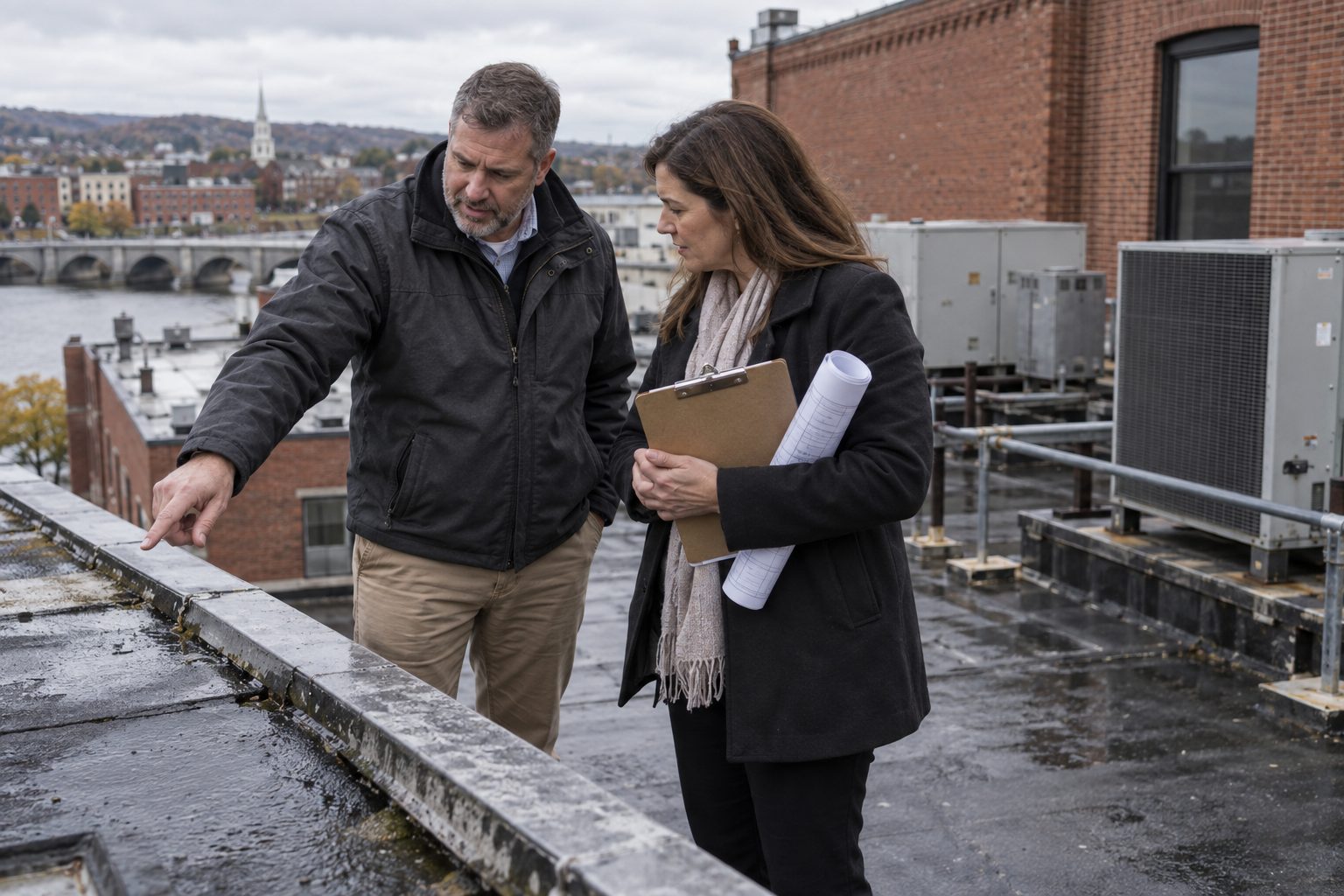
Feature image is placed with responsive sizes. Alternate alt text: Advisor inspecting a commercial building for insurance gaps; Connecticut owner reviewing property protection; Property risk review outside a commercial building.
Editorial notes: Verify CTA destination, author and final internal links. Expansion: add an approved anonymized quote comparison. Merge: shorten the submission section if repeated elsewhere. Follow-ups: business-income worksheet, valuation guide and percentage-deductible calculator.
Contenido relacionado
Commercial Property Insurance Coverage Gaps: What a Lower Quote May Hide
A lower commercial property quote may hide larger deductibles, smaller sublimits or narrower terms. Learn how Connecticut owners can compare coverage.
Leer artículo →
Will Your Commercial Property Insurance Cost Less in 2026?
A softer market does not guarantee a smaller bill. Learn how values, rates, deductibles and coverage changes shape your 2026 commercial property renewal.
Leer artículo →
2026 Commercial Property Insurance Outlook: A Connecticut Buyer’s Guide
A buyer-friendly market is an opportunity to improve protection, not just chase a lower premium. Our review of the RPS outlook explains the difference.
Leer artículo →
Connecticut Manufacturing Property Insurance: 2026 Outlook
Connecticut manufacturers can strengthen 2026 property renewals with accurate values, documented risk improvements and realistic recovery planning.
Leer artículo →