
Film Production General Liability Insurance in CT: 2026 Cost & Coverage Guide
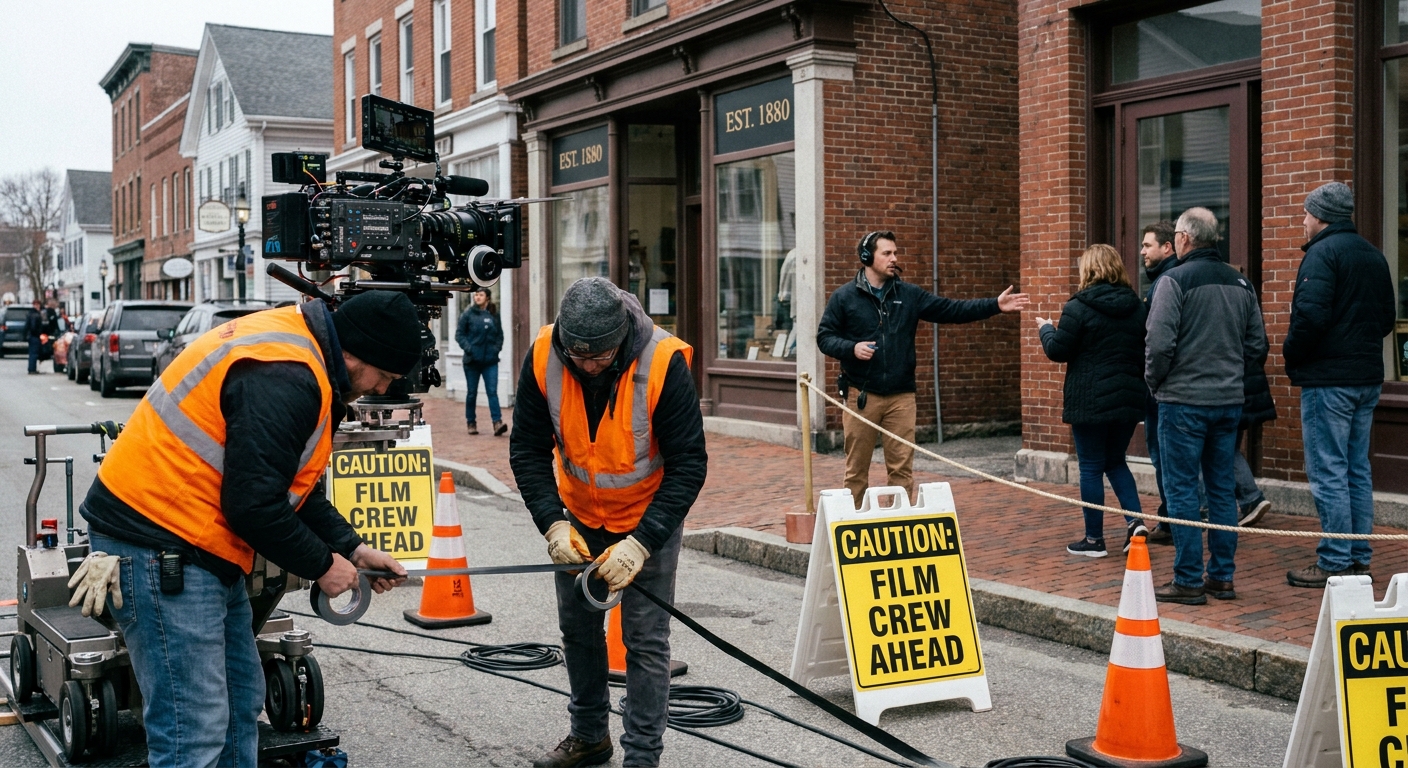
A boom mic operator backs into a parked car. A passerby trips over a cable run on a Hartford sidewalk. A homeowner whose driveway you used for a "quick" production day sues for property damage three months later. Every one of those is a general liability claim — and every one is exactly the kind of incident a productions GL policy is built to absorb. The problem is that most CT producers shopping for coverage don't know what limit they actually need, what the standard policy excludes, and where the gaps between GL and other production policies hide.
This is the second spoke in our CT Film & Production Insurance cluster — building on the main pillar guide to film production insurance in Connecticut. Here we drill into the GL policy specifically: what it pays, what triggers a claim, the four sublimits that catch producers off guard, and how 2026 premiums actually shake out.
What does film production general liability insurance actually cover?
Film production general liability (GL) insurance covers third-party bodily injury and property damage your production causes — bystanders tripping over cables, damage to a location property, vehicle damage from prop work, and crew injuring members of the public. Standard CT productions carry $1M per occurrence / $2M aggregate, with most permit-issuing jurisdictions requiring proof of GL before granting filming rights. Premiums in 2026 run $850 to $4,200 for a typical short-run CT shoot.
GL is the policy that lets your production exist in public. Without it, no town clerk in Connecticut will issue a film permit, no commercial landlord will sign a location agreement, and no equipment rental house will release gear. It's the foundational coverage every other production policy assumes you already have.
At iConn Insurance Solutions, we underwrite production GL on roughly 40 CT shoots a year — from solo documentary crews working out of a Volkswagen to multi-day commercial shoots in downtown Stamford. The same four traps show up across nearly every claim: contractual liability gaps, certificate-holder confusion, the "care, custody, and control" exclusion, and the personal-and-advertising-injury sublimit that producers rarely realize is a sublimit at all.
What does a production GL policy actually pay for?
Production GL is a third-party liability policy — meaning it covers harm your production causes to other people and their property, not your own crew or gear. The five coverage buckets:
| Coverage | What it pays | Typical limit |
|---|---|---|
| Bodily injury (BI) | Medical bills, lost wages, pain & suffering when a third party is hurt on or by your production | $1M per occurrence |
| Property damage (PD) | Damage to non-owned property — locations, vehicles, neighboring structures | $1M per occurrence (shared with BI) |
| Personal & advertising injury | Libel, slander, false advertising, invasion of privacy claims tied to the production | $1M (often sublimited — see below) |
| Medical payments | Small no-fault medical claims for minor injuries, no liability finding required | $5K–$10K per person |
| Damage to premises rented | Fire/water damage to rented locations only — a narrow sub-coverage | $100K–$300K sublimit |
The "$1M / $2M" you see on most CT production certificates means $1M per single claim, $2M total across all claims during the policy period. Once you hit the $2M aggregate, the policy is exhausted for the rest of the term unless you renew or buy reinstatement.
How much does production GL cost in Connecticut in 2026?
Premiums depend on production type, shoot length, stunt/risk content, crew size, and your loss history. Connecticut rates land in the middle of the national range — higher than rural film states like New Mexico, lower than NYC. 2026 ranges based on quotes we wrote across appointed carriers (Travelers, The Hartford, Chubb, Atain, Allianz, and Front Row):
| Production type | Duration | 2026 GL premium range |
|---|---|---|
| Documentary / interview shoot | 1–3 days | $850 – $1,400 |
| Commercial / branded content | 2–5 days | $1,200 – $2,800 |
| Short film (under 30 min) | 5–10 days | $1,600 – $3,400 |
| Feature film (low-budget) | 3–6 weeks | $3,800 – $11,500 |
| Annual GL policy (multi-shoot) | 12 months | $4,200 – $14,000 |
Annual policies make sense once you're running 4+ shoots per year — the per-shoot cost drops significantly and you avoid the procurement scramble before each new project. Compare carriers like Travelers, The Hartford, Chubb, and specialty entertainment markets like Atain and Front Row Insurance before binding — pricing varies widely on production risk.
The four GL traps that catch CT producers off guard
Trap 1: Contractual liability gaps
When you sign a location agreement, you almost always assume liability for the property owner on top of your own. Standard GL covers incidental contracts (premises leases, easements, common indemnity language) — but custom hold-harmless clauses with elevated indemnity obligations may exceed what the policy is willing to defend. Have the location agreement reviewed before signing — your broker can spot indemnity language that creates exposure beyond the policy's "insured contract" definition.
Trap 2: Certificate of insurance confusion
Every permit office, location owner, and equipment vendor will ask for a Certificate of Insurance (COI) — sometimes naming them as additional insureds. Adding an additional insured is NOT automatic. It requires an endorsement (CG 20 26, CG 20 10, or similar), which may cost $50–$250 per addition depending on the carrier. Some policies include blanket additional insured wording for entities you're contractually required to add; many don't. Confirm before you promise a permit office a 24-hour turnaround on a COI.
Trap 3: Care, Custody & Control (CCC) exclusion
GL excludes damage to property that's in your "care, custody, or control" — meaning the rented equipment, the rented location interior, and the props you've moved are NOT covered under your GL. That's what production equipment insurance and props/sets/wardrobe coverage exist for (covered in our equipment coverage spoke). If the only policy you carry is GL, a single dropped Arri Alexa is a $40,000 out-of-pocket loss.
Trap 4: Personal & advertising injury sublimits
Most GL policies share the personal-and-advertising-injury limit with the main BI/PD limit — but some carriers carve it out at $250K or $500K instead of the full $1M. For productions involving talent likeness, parody, or any commercial content, this is the limit you'd lean on for a defamation or right-of-publicity claim. Read the declarations page before you assume you have the full $1M for advertising injury.
This is exactly why working with an independent broker matters. We shop these traps for you across multiple appointed carriers, flag the policy language differences, and structure the program so the gaps line up — instead of leaving you with three policies that overlap in some places and leave holes in others. Get a personalized production GL quote from iConn Insurance Solutions — we'll walk through your specific shoot schedule, location list, and risk profile.
How GL stacks with the rest of the production insurance program
GL is one piece of a complete production insurance program. Here's how the pieces fit:
| Policy | What it covers | Required by |
|---|---|---|
| General Liability | Third-party BI/PD | Permits, locations, vendors |
| Production Package / DICE | Equipment, props, sets, wardrobe, negative film/data, faulty stock | Equipment rental houses |
| Workers Compensation | Crew injury & medical | CT statute (anyone with employees) |
| Hired & Non-Owned Auto | Production vehicles driven by crew | Vehicle rental agencies |
| Errors & Omissions (E&O) | Copyright, defamation, music clearance claims at distribution | Distributors, broadcasters |
| Cast Insurance | Lead-talent disability/illness causing production shutdown | Lender/financier (sometimes) |
GL and Production Package are the two policies you can't shoot without. Workers comp is statutory once you have a single CT employee. The others come into play based on your specific production needs.
Why working with an independent broker matters for production GL
Captive agents at a single carrier (or worse, online quote sites) will hand you whatever their company offers and walk away. Independent brokers like iConn shop across the entertainment markets — Travelers, The Hartford, Chubb, Atain, Front Row, Allianz, Markel, and the Lloyd's specialty markets — to match your specific production risk to a carrier that actually wants it.
For CT producers especially, the right broker also knows which carriers handle CT film permits efficiently (some require manual COI generation that takes 48 hours), which carriers offer same-day additional insured endorsements, and which ones will write a one-day shoot at a reasonable rate (most won't, but Atain and Front Row routinely will).
Together with our sister agency Insure Connecticut LLC, we cover production insurance for producers based in CT, MA, NY, NJ, and 8 other states — the same independent multi-carrier model with broader regional reach for productions shooting across state lines.
Key takeaways
- Production GL covers third-party bodily injury and property damage — typically $1M per occurrence / $2M aggregate.
- 2026 CT premiums: $850–$1,400 for short documentary shoots, $1,200–$2,800 for commercials, $3,800–$11,500 for low-budget features.
- The four traps: contractual liability gaps, certificate confusion, the care/custody/control exclusion, and personal-and-advertising-injury sublimits.
- GL is required by every CT film permit office and location owner — get the COI process buttoned up before you need it.
- Annual policies pay off once you're running 4+ shoots per year; one-off productions are fine with single-shoot policies.
Frequently Asked Questions About Film Production GL in Connecticut
How much does production GL insurance cost in Connecticut?
2026 CT production GL ranges from $850 for a one-day documentary to $11,500 for a low-budget feature, with most commercial shoots landing $1,200–$2,800. Annual multi-shoot policies for repeat producers run $4,200–$14,000 and pay off once you're running 4+ projects per year.
Do I need GL insurance to film in a Connecticut town?
Yes. Every CT municipality requires proof of GL insurance — typically $1M per occurrence / $2M aggregate — before issuing a film permit. Some towns also require the municipality named as an additional insured on the COI, which requires a specific endorsement from your carrier.
What does production GL NOT cover?
GL does not cover damage to equipment you've rented (care, custody, and control exclusion), crew injuries (that's workers comp), production vehicle damage (that's hired/non-owned auto), or copyright/clearance claims at distribution (that's E&O). Each gap requires its own dedicated policy.
Can I buy production GL for just one day?
Yes — specialty entertainment carriers like Atain and Front Row write single-day GL policies starting around $400–$650 for low-risk shoots. Most standard-market carriers (Travelers, The Hartford) write minimum three-day terms. Your broker can match the shoot length to a carrier that prices it efficiently.
What's the difference between GL and a production package?
GL covers harm your production causes to third parties (people, locations, neighboring property). A production package (sometimes called DICE) covers your own production assets — rented equipment, props, sets, wardrobe, and the film/data itself. Most productions need both; they're complementary, not overlapping.
Do I need additional insureds added to my GL policy?
Almost always — permit offices, location owners, and equipment vendors typically require you to name them as additional insureds via a CG 20 26 or CG 20 10 endorsement. Some policies include blanket additional-insured wording; many charge $50–$250 per endorsement. Confirm before promising a same-day COI.
Get your production GL coverage in place before the permit office asks
The producers who get great rates are the ones who shop early — not the ones calling for a COI the day before a shoot. Request a personalized production GL quote from iConn Insurance Solutions and we'll match your specific production schedule, risk profile, and location requirements against the carriers most likely to write it competitively. Producers shooting in multi-state runs can also tap our sister agency Insure Connecticut LLC for the broader regional reach.
Insure Connecticut LLC, iConn Insurance Solutions, and Wealth America, Inc. are independently operated companies under common ownership.
Contenido relacionado
AI Payment Fraud Incident Response: What to Do First
The first hour after a fraudulent wire can decide whether funds are frozen or lost. Follow this practical response guide for banks, insurers, evidence, law enforcement, and recovery.
Leer artículo →
Hotel and Commercial Property Insurance: Where Should Renewal Savings Go?
A practical guide for hotel and commercial-property owners deciding whether to keep renewal savings, lower deductibles, increase limits or restore coverage.
Leer artículo →AI Fraud Insurance Exclusions: Where Coverage Can Break
A large cyber limit can hide a small social engineering sublimit. Learn how voluntary-transfer language, verification conditions, and overlapping crime coverage can affect AI fraud claims.
Leer artículo →
Connecticut Builders Risk Insurance: 2026 Buyer’s Guide
Connecticut builders risk buyers should update project values, timelines and controls. Learn what to prepare and compare for a 2026 placement.
Leer artículo →