
Film Production General Liability in CT: Limits, Sublimits & 2026 Premiums
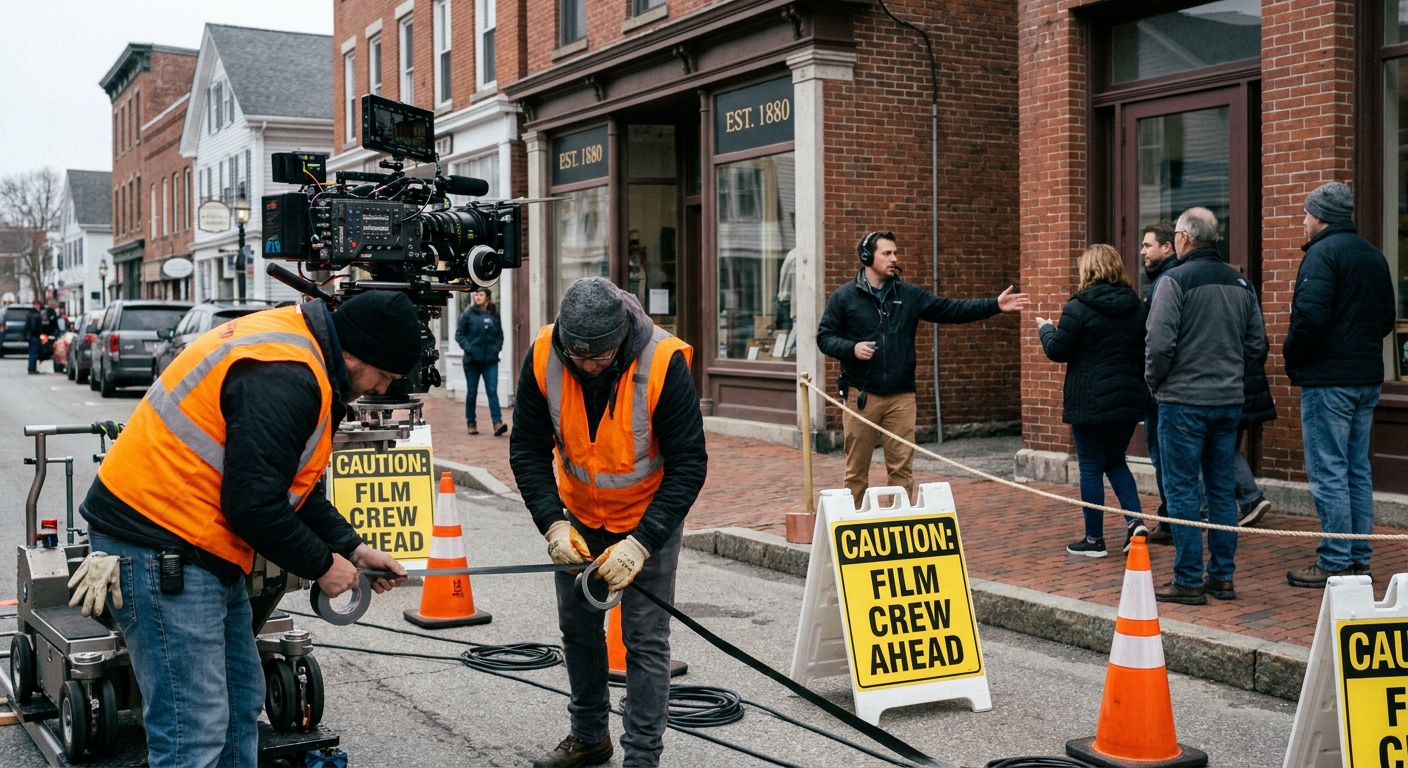
Picture this: you've locked the perfect shot — a Pratt Street streetscape at golden hour, hero actor in frame, drone hovering, your gaffer's set up two HMIs on the sidewalk. A delivery cyclist clips your light stand, the stand topples into a pedestrian, and suddenly your shoot day has turned into a personal-injury claim. The crew finishes the take. Your producer's phone starts ringing twelve hours later.
Here's the part most CT producers don't realize until the call comes: your short-term production policy is doing the lifting, but the section that actually pays this claim is the General Liability (CGL) coverage — not your equipment floater, not your E&O, not your cast insurance. CGL is the single most misunderstood line item on a Connecticut film production policy, and the one most likely to either save your project or expose you personally to a six-figure judgment.
At iConn Insurance Solutions, we write production GL alongside short-term production packages every week, and the same handful of misunderstandings show up across nearly every first-time producer's policy. Let's walk through what CGL actually covers on a Connecticut film shoot, what it doesn't, the four sublimit traps that cause denials, and the 2026 premium math.
What does general liability insurance cover on a film shoot?
Commercial General Liability (CGL) on a film policy covers three core exposures the production creates while operating on location, on a stage, or at a vendor facility:
- Third-party bodily injury — anyone who is not your employee, cast member, or volunteer crew. Pedestrians, venue staff, restaurant patrons in a take, delivery couriers, neighborhood residents.
- Third-party property damage — damage to property you don't own. A scorched hardwood floor from an open-face fixture, a wall scuffed by a dolly track, a parked Tesla scratched by a C-stand toppling in wind, broken glass at a restaurant.
- Personal & advertising injury — defamation, copyright in advertising, false arrest, invasion of privacy claims tied to how the production conducts itself on location (not the finished film — that's E&O).
CGL pays the medical bills, repair costs, settlements, AND your legal defense, even when the claim is groundless. The defense costs alone are why GL is non-optional — defending a single pedestrian-injury suit through discovery routinely runs $25,000 to $80,000 in attorney fees before anyone discusses settlement.
Where the line is drawn — what CGL does NOT cover
Producers blow through this fence constantly. CGL specifically excludes:
- Injury to your own crew or cast — that's Workers' Comp and Cast Insurance territory, separate policies.
- Damage to your rented equipment — that's Equipment Floater / Inland Marine.
- Auto-related injuries and damage — that's Hired & Non-Owned Auto liability.
- Errors in the finished film (copyright, libel, defamation in the story) — that's Producers E&O.
- Stunts, pyro, and firearms — almost always require a separate endorsement or a stunt rider; standard CGL excludes them by default.
What limits do Connecticut location permits require?
Every Connecticut municipality that issues film permits requires a Certificate of Insurance (COI) before a shoot can pull a permit, close a street, or use public property. The standard floor across CT towns in 2026:
| Location Type | Required GL Limit | Additional Insured |
|---|---|---|
| Hartford, New Haven, Bridgeport (major cities) | $2M per occurrence / $5M aggregate | City + property owner |
| Stamford, Norwalk, Greenwich (Gold Coast) | $2M per occurrence / $2M aggregate | Town + property owner |
| Most CT towns (population <50K) | $1M per occurrence / $2M aggregate | Town |
| State property (highways, parks, capitol) | $2M per occurrence / $5M aggregate | State of CT + DOT |
| Private venues (restaurants, shops, homes) | $1M per occurrence / $2M aggregate (typical) | Venue owner |
Most permit offices charge a small administrative fee to add themselves as Additional Insured — $25 to $200 — and require the COI 5–10 business days before shoot day. Plan ahead. We've seen permits denied 48 hours out because a producer assumed the COI could be issued same-day.
The 4 sublimit traps that cause GL denials on CT shoots
1. Damage to rented premises — usually capped at $50K-$300K
If you scorch a restaurant floor or break a chandelier at the wedding venue you rented for the day, the venue's claim falls under "damage to premises rented to you" — a CGL sublimit that's often only $50,000 or $100,000 by default. Production-grade policies should carry $300K-$1M here. Check yours.
2. Pyrotechnics, stunts, firearms — excluded unless endorsed
Even a prop gun with blanks triggers the firearms exclusion. Standard CGL forms exclude these by default. You need a specific pyrotechnics endorsement, stunt rider, or armorer warranty added — and the underwriter will want crew CVs, fire marshal sign-off, and (for CT) a permitted licensed pyrotechnician on set.
3. Minors / child performers — extra scrutiny and limits
CT has strict child-performer rules (CT Gen. Stat. §31-23, §31-12 entertainment work permits required). Carriers add tighter underwriting questions, often require a child welfare worker on set, and may sublimit injury to minors. Don't hide a kid actor from your underwriter to keep premium down — denied claim, every time.
4. Drone / UAV operations — separate policy or endorsement
Standard CGL excludes aircraft. Drones count. CT productions flying a Mavic 3 or Inspire 3 need either a UAV liability endorsement (added to GL) or a dedicated drone policy. We'll cover this in detail in the Drone Coverage spoke later this week.
2026 GL premium ranges for Connecticut productions
| Production Type | Duration | GL Premium ($1M/$2M) |
|---|---|---|
| Single-day commercial / corporate video | 1–3 days | $450–$850 |
| Short film, music video, indie short | 5–10 days | $650–$1,400 |
| Documentary feature | 2–4 weeks of shooting | $900–$2,100 |
| Indie narrative feature (no stunts) | 3–6 weeks | $1,400–$3,500 |
| Feature w/ stunts, firearms, or minors | 4–8 weeks | $3,500–$11,000+ |
| Annual DICE policy (production company) | 12 months | $3,800–$14,000 |
If you're prepping a CT shoot and the producer asked you for "production insurance" without specifying GL limits, that's the conversation worth having today, not the morning of the location lockup. The iConn Insurance Solutions team can run quotes from multiple production-specialty carriers — Allianz Entertainment, Front Row Insurance, Athos, Ascend — and structure a policy that satisfies the strictest CT municipal COI requirements without over-buying. Request a production GL quote with your shoot dates and locations.
Why an independent broker matters for film GL
Production insurance is a narrow specialty. The carriers that write it underwrite differently from general commercial GL — they ask questions about your line producer's experience, your stunt coordinator's credits, the specific firearms armorer, whether you're shooting in a "named occupancy" location. A captive agent at a general commercial carrier doesn't have those markets and can't translate the underwriting language. An independent broker who writes production policies regularly does.
Our colleagues at Insure Connecticut LLC handle the same production policy market across all twelve states they serve — useful if your CT shoot has a second-unit pickup in New York or a coverage day in Massachusetts. Together with iConn Insurance Solutions, you get one production policy that travels with your shoot.
Key takeaways
- CGL on a CT film policy covers third-party bodily injury, property damage, and personal/advertising injury — NOT crew injury, NOT equipment, NOT auto.
- CT municipalities require $1M/$2M limits at minimum; major cities and state property require $2M/$5M.
- Four sublimit traps cause most denials: rented-premises damage, special effects exclusions, minors, and drones.
- 2026 GL premium for a typical CT short-term production: $650–$2,400. Stunts and firearms push to $11K+.
- Get COIs issued 5–10 business days before shoot day — permits get denied at the wire all the time.
Frequently Asked Questions About Film Production General Liability in Connecticut
How much does general liability insurance cost for a Connecticut film shoot?
For a typical short-term Connecticut production (5-10 shoot days, no stunts or firearms, standard $1M/$2M limits), expect $650 to $1,400. Single-day commercial shoots run $450 to $850. Productions involving stunts, firearms, or minors can exceed $11,000. Annual DICE policies for active production companies run $3,800 to $14,000.
What limits do CT cities require for film permits?
Most Connecticut towns under 50,000 population require $1M per occurrence / $2M aggregate GL. Hartford, New Haven, Bridgeport, Stamford, Norwalk, and Greenwich require $2M per occurrence. State property (highways, parks, the capitol) requires $2M / $5M. All require additional-insured status for the municipality, often with a $25-$200 admin fee.
Does general liability cover damage to the location I rented?
Partially. Standard CGL forms include a "damage to premises rented to you" sublimit that's often only $50,000 or $100,000 by default — well below the cost of a damaged restaurant interior or scorched hardwood floor. Production-specialty policies should carry this sublimit at $300,000 to $1 million. Confirm the figure before signing your venue agreement.
Are drones covered under film production general liability?
No, not by default. Standard CGL excludes aircraft, and drones count. CT productions flying UAVs need either a drone liability endorsement added to the GL policy or a separate drone policy. Many municipal permits also require proof of FAA Part 107 pilot certification and a specific drone-liability COI before granting airspace clearance.
Do prop guns require a special endorsement on CGL?
Yes. Standard CGL forms exclude firearms — including prop guns with blanks. CT productions need a firearms endorsement, a licensed armorer on set, and (when blanks are fired) coordination with the local fire marshal. Underwriters will require the armorer's resume, safety protocols in writing, and often a credit check on the production company.
What's the difference between GL and producer's E&O insurance?
GL covers physical injuries and property damage during production — a pedestrian tripping over your cable. E&O (Errors & Omissions) covers legal claims arising from the finished film — copyright infringement, libel, defamation in the story, music clearance disputes. Distributors and broadcasters require E&O before they'll air the film; GL covers you while making it.
Ready to insure your next Connecticut production?
If you have a CT shoot on the calendar — even a one-day corporate spot — request a GL quote at least two weeks before the shoot date. The team at iConn Insurance Solutions runs quotes from multiple production-specialty carriers and turns most short-term policies around in 48–72 hours. For multi-state productions, our colleagues at Insure Connecticut LLC handle the same markets across 12 states.