
2026 Commercial Property Insurance Outlook: A Connecticut Buyer’s Guide
How can Connecticut businesses use the 2026 property insurance market to secure better coverage?
Connecticut commercial property insurance buyers may have more negotiating leverage in 2026, especially in the excess and surplus lines market. Use that leverage to compare limits, deductibles, exclusions and insurer strength—not just premiums. Your building, location, loss history and coverage structure still determine which opportunities are actually available.
A lower renewal quote can feel like the first good insurance news you have received in years. But before you celebrate, ask a less comfortable question: are you buying the same protection? A smaller bill can reflect genuine competition. It can also reflect a larger deductible, a narrower covered cause of loss or less insurance where your business needs it most.
Risk Placement Services’ 2026 US Property Market Outlook describes a market with abundant capacity and strong competition. That is useful context for a Hartford manufacturer, a Fairfield County building owner or a Connecticut shoreline hospitality business. It is not a promise that every renewal will become cheaper.
This guide is iConn Insurance Solutions’ buyer-focused interpretation of the report. We separate its national findings from the decisions an individual business must make. You will learn where negotiating opportunities may exist, why certain properties remain difficult, and how to compare proposals without mistaking a bargain for a coverage gap. The goal is a stronger renewal decision, not a prediction of your next premium.
Is 2026 really a buyer’s market for property insurance?
RPS says surplus capital and competition among insurers, reinsurers and managing general agents are strengthening buyers’ negotiating positions. Its report places total US E&S premiums at approximately $100 billion in 2024, close to 9% of the US property and casualty market. Those are historical figures for the overall E&S market—not property-only premiums, Connecticut results or a forecast of savings. (RPS, p. 2.)
Think of capacity as the amount of risk insurers are willing to take on. When more insurers compete for suitable business, buyers may gain alternatives. But a store with more inventory does not put every item on the same sale. Insurers still distinguish attractive risks from locations or operations that could generate severe losses.
The practical opportunity is to ask better questions: Can a previously restricted limit be restored? Is a lower deductible available at a reasonable additional cost? Does another insurer offer clearer terms? Can the current insurer improve its proposal? RPS describes pricing pressure and coverage opportunities, but its outlook is not a universal percentage reduction. (RPS, pp. 3–5.)
Why might your renewal look different from the headlines?
The real variable is your account, not the national headline. RPS emphasizes geography, concentration, construction quality, catastrophe exposure and risk management. Even a market with ample capital can be selective when several insured properties could suffer from the same event. (RPS, p. 6.)
Consider a hypothetical comparison. A well-maintained inland warehouse with documented improvements and clear valuation information may present differently from a coastal building with uncertain roof condition and incomplete records. That does not establish a quote for either property. It illustrates why two Connecticut owners can hear the same market news and receive different underwriting responses.
- Values: Insurers need an accurate picture of what is being insured. An old number can obscure the true exposure.
- Operations: Occupancy, processes and storage affect how a loss might develop.
- Protection: Documented inspections and completed improvements are more useful than vague assurances.
- Loss information: Explain what happened, what changed and which recommendations were completed.
- Location: A portfolio spread across states can still contain concentrated exposure to one event.
For businesses operating in Connecticut, New York, Rhode Island and Massachusetts, compare each location rather than assuming one state label explains the whole risk. Insurance requirements and placement rules also differ. The Connecticut Insurance Department is a starting point for Connecticut regulatory questions; actual coverage decisions require the policy and account details.
Should you keep the savings or buy stronger protection?
There is no universal best answer. Keeping savings can be sensible when protection is adequate and the business can comfortably retain its deductible. Buying more insurance can be sensible when the current structure leaves a material exposure. RPS specifically discusses opportunities to improve coverage breadth, limits and windstorm deductibles in suitable accounts. (RPS, pp. 5 and 9.)
| Option | Potential advantage | Question to resolve |
|---|---|---|
| Keep premium savings | Preserves cash for operations or mitigation | Can the business absorb its retained loss? |
| Reduce a deductible | May reduce cash needed after a covered event | What additional premium buys that reduction? |
| Increase or restore limits | May improve protection against a larger loss | Does the limit apply to the exposure that matters? |
| Broaden terms | May address a restriction in the existing policy | What exclusions and sublimits still remain? |

Here is a hypothetical decision, not market pricing. If an owner can save $8,000 by keeping a large deductible, compare that saving with available cash after a loss. The cheapest annual option may be uncomfortable when the business also faces interrupted revenue. Conversely, paying more to reduce a deductible the business could easily fund may not be the best use of money.
Ask for alternatives in writing. A clear comparison is more useful than a verbal assurance that one option is “better.” If you want help framing those choices, send your current policy and renewal proposal to iConn for a side-by-side review before deciding.
When should you consider E&S property coverage?
The report focuses heavily on excess and surplus lines. That market can help address risks that do not fit standard-market underwriting or need a tailored structure. It should not be treated as automatically superior, automatically inferior or automatically cheaper. Suitability depends on available terms, insurer security, regulatory requirements and the account itself. (RPS, pp. 2 and 14.)
A useful analogy is ready-made versus tailored clothing: a standard option can be entirely appropriate when it fits. A more specialized placement can solve a difficult fit, but the details require attention. Ask what problem the E&S proposal solves and how it compares with any suitable admitted alternative.
Do not confuse a lender’s insurance requirement with a complete risk assessment. Meeting a contract’s stated limit does not prove every important loss is covered. Likewise, a market minimum does not establish the amount your business can safely retain. Have the broker explain applicable placement requirements and material policy differences without relying on broad labels.
Why would several insurers cover one property program?
Shared and layered arrangements can assemble capacity when one insurer does not provide the whole placement. In shared participation, insurers may each take a stated share of the same layer. In a layered structure, different insurers may respond at different levels of loss. The exact contracts determine how the program works.
Think of building a bridge: more sections are not a problem if the connections are sound. Problems arise when attachment points, exclusions or conditions fail to align. Ask who responds first, what happens when a lower layer is exhausted, and whether all participating insurers use consistent terms. RPS stresses coordination of structure and wording. (RPS, pp. 8, 12 and 14.)
As one example, RPS describes its proprietary ADAPT facility as providing 20% participation, scalable up to $100 million on the property side for qualifying accounts. That is a capacity statement, not a premium discount. Page 12 does not establish a guaranteed limit for every account or explain every application of that ceiling. This article does not claim iConn has confirmed access or that your account qualifies.
Which property sectors may have opportunities?
Construction and builders risk
RPS describes competitive construction capacity and warns that early project estimates may be out of step with conditions by groundbreaking. Frame projects still bring fire, water and other underwriting concerns. Updated values, project details and timing matter more than simply reusing last year’s estimate. (RPS, p. 7.)
Manufacturing
Manufacturers may benefit from competition, especially when their submissions explain accurate values and risk improvements. The report discusses several manufacturing classes and growing use of multi-insurer structures. A hypothetical Connecticut manufacturer should document completed protection work, not assume an industry label alone will deliver favorable pricing. (RPS, p. 8.)
Hospitality and commercial real estate
Owners may be able to revisit deductibles, limits and coverage breadth. RPS discusses hotels, multifamily properties, retail and distribution exposures, while also noting the continuing importance of catastrophe concentration for public entities and schools. An available improvement at one building should not be assumed to apply across an entire portfolio. (RPS, p. 9.)
More difficult exposures
Data centers can involve very high values and concentrated exposures. Wildfire-exposed risks remain selective. Those examples show why abundant national capacity does not remove every underwriting constraint. The sensible response is a better submission and realistic alternatives—not a promise that a soft market solves everything. (RPS, p. 10.)
Does more capacity mean more dependable insurance?
Not necessarily. RPS cautions that some newly deployed capacity may be less tested and that aggressive pricing can become difficult to sustain after losses. It also emphasizes durable insurers and intentional coverage design. (RPS, pp. 11 and 15.)
Price is the admission ticket, not the whole performance. Ask which insurer ultimately backs each portion of coverage, how claims are handled, and what evidence supports confidence in the placement. Do not confuse an intermediary’s brand with the identity of the insurer taking the risk.
RPS expects broadly favorable conditions during 2026 but identifies uncertainty around losses and possible stabilization in 2027. Treat that as a forecast, not a deadline or guarantee. A multiyear arrangement or rate protection may deserve review where available, but compare restrictions and flexibility before exchanging future options for apparent certainty. (RPS, pp. 13–14.)
What should you prepare before renewal?
A strong submission is like a clear set of building plans: it reduces avoidable uncertainty. Start with accurate information and a written definition of what you want the policy to accomplish.
- Confirm locations, ownership interests, occupancy and current operations.
- Review insured values and the basis used to establish them.
- Collect current policy wording, endorsements and all deductible provisions.
- Obtain loss information and explain corrective action after prior incidents.
- Document completed roof, electrical, fire-protection or other relevant improvements.
- Identify revenue interruption concerns and discuss the assumptions behind requested protection.
- Gather lender, lease and customer insurance requirements without treating them as a complete coverage blueprint.
- Request comparisons showing both favorable changes and remaining restrictions.
Then prioritize. Tell the broker whether cash-flow stability, catastrophe protection, premium reduction or simpler administration matters most. Without priorities, a quote exercise can optimize the wrong thing. Keep unresolved questions visible until the proposed policy terms answer them.
Why independent brokers matter in a competitive market
Competition creates choices, but somebody still has to interpret them. An independent broker can evaluate suitable options across markets rather than treating one carrier’s offering as the only answer. The value is in accurate submissions, regional knowledge, coverage comparison and ongoing personal service—not a promise that every insurer will quote.
At iConn Insurance Solutions, our role in this discussion is to help buyers ask informed questions about protection and tradeoffs. For complementary Connecticut insurance resources, visit our sister site, Insure Connecticut LLC. The best placement is the one whose documented terms fit the business, even when it is not the lowest premium.
Frequently Asked Questions About Connecticut Commercial Property Insurance
How much does Connecticut commercial property insurance cost?
There is no reliable single price for every Connecticut building or business. Values, construction, occupancy, protection, losses, location, deductibles and policy terms all matter. The RPS report does not supply a Connecticut premium benchmark. Obtain comparable proposals using the same property information and requested protection before judging price.
Does the RPS outlook mean my premium will fall?
No. RPS describes a more competitive national E&S property environment, not a guaranteed result for each account. Rising insured values, different deductibles, changing operations or loss experience can offset a lower rate. Ask your broker to separate changes in price from changes in exposure and coverage.
Do Connecticut shoreline properties benefit from more capacity?
They may, but additional market capacity does not eliminate location-specific underwriting. Wind, flood, construction, protection and concentration remain relevant. Compare the actual deductible provisions, covered causes of loss and limits for each location. National market commentary is not evidence that a particular shoreline address qualifies for improved terms.
How should I choose a property insurance broker?
Choose a broker who can explain coverage differences, document your risk accurately and identify suitable markets rather than simply produce a low number. Ask how proposals will be compared, which limitations remain and who will help with changes or claims. Market access matters, but so does clear ongoing service.
Use this renewal to make a better decision
A competitive market is an opportunity to reconsider the whole program. Request a policy review through iConn Insurance Solutions and bring your current coverage, renewal documents and unanswered questions. Compare what you will pay, what you will retain and what the policy will actually address before choosing.
Source: Risk Placement Services, 2026 US Property Market Outlook, supplied 16-page report, cited by printed PDF page. Report listing. Forecasts are attributed to RPS; examples are hypothetical. General educational information, not client-specific insurance, legal, tax or financial advice. Actual policies control. RPS includes its limitations on page 16.
Draft editorial package — remove before publication
Focus keyword: Connecticut commercial property insurance. Supporting keywords: 2026 property insurance outlook; commercial property renewal; E&S property insurance; property insurance deductibles; Northeast business property insurance; how can Connecticut businesses improve property coverage?
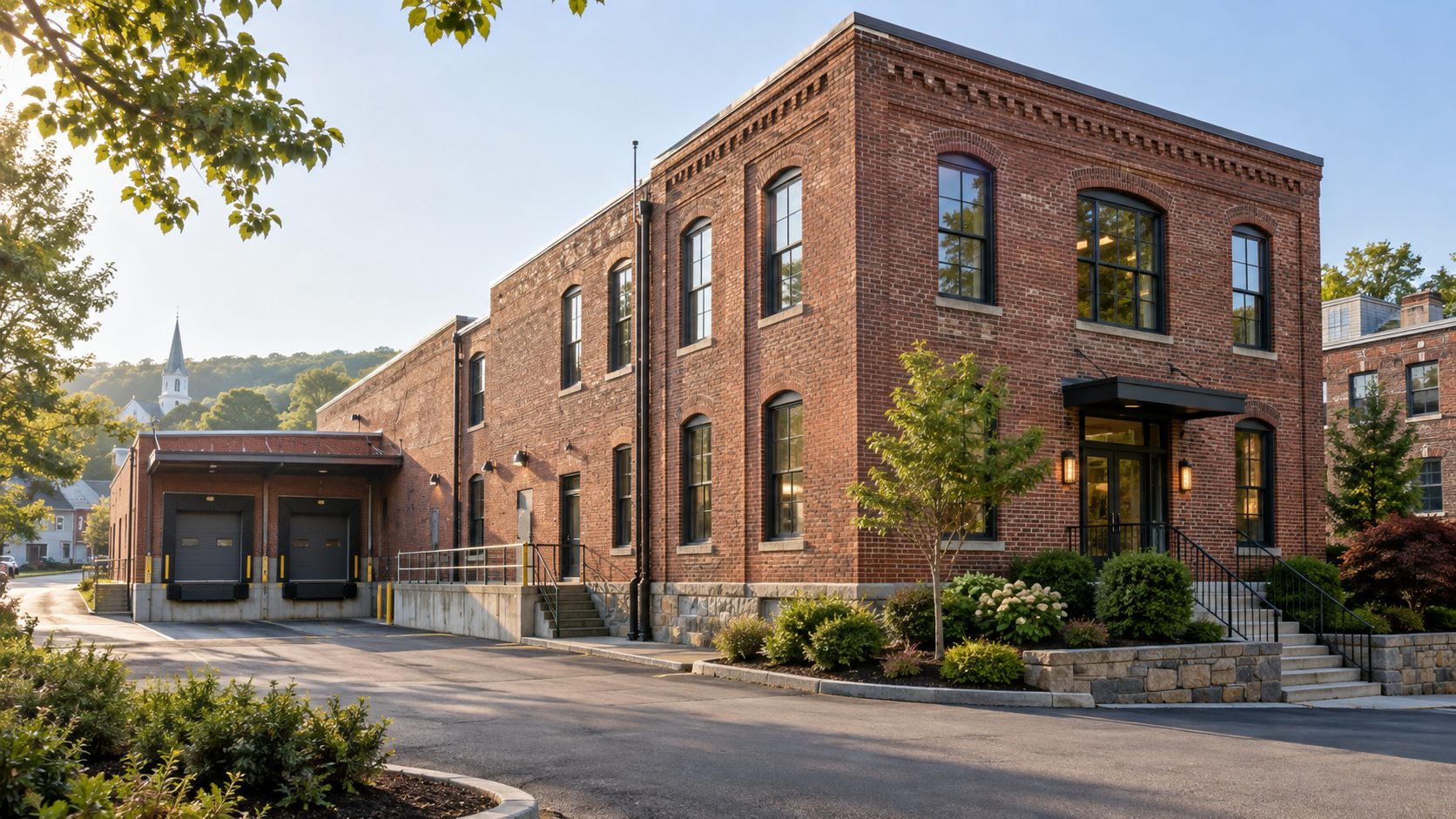
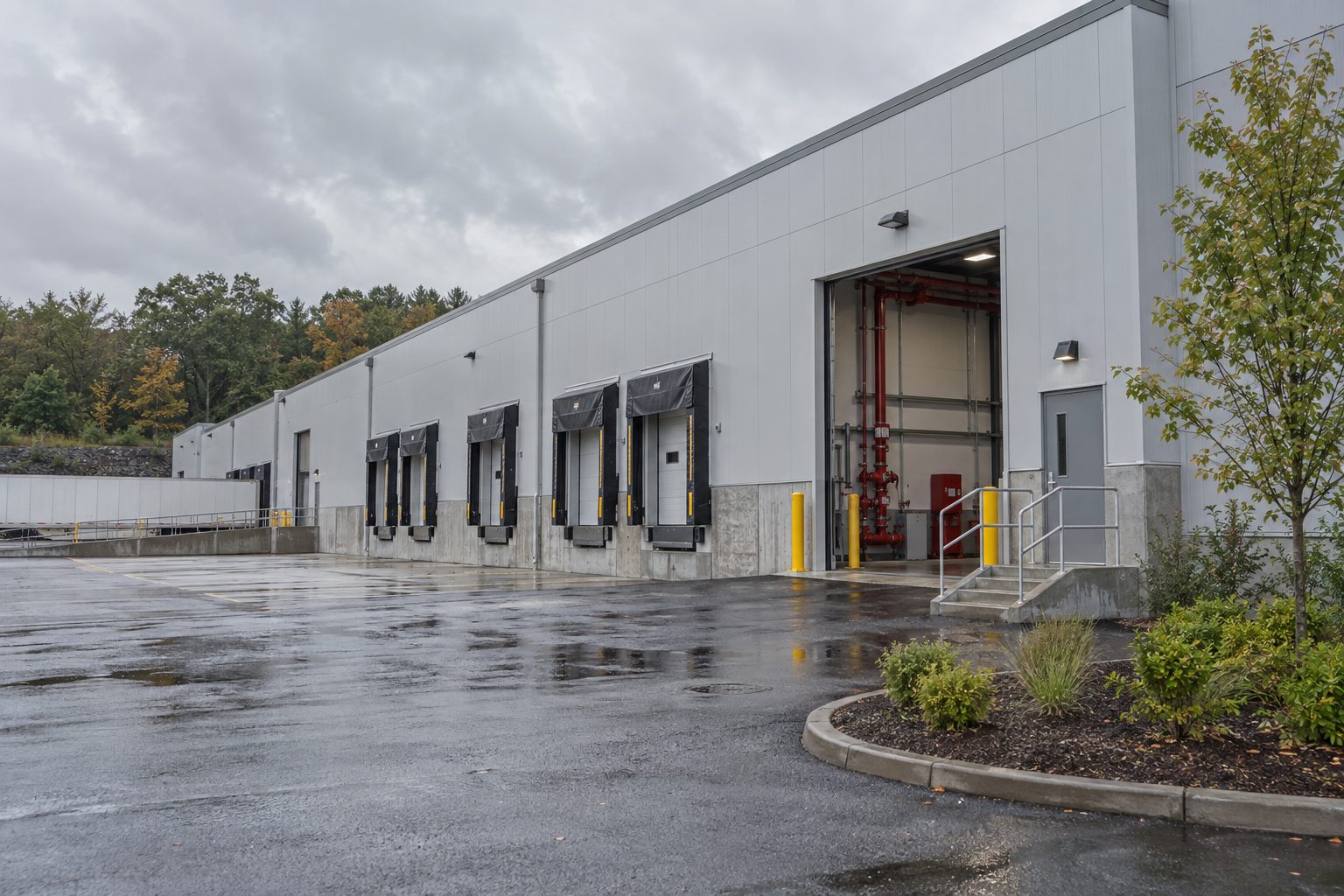
Three original editorial images are now placed: a Connecticut commercial building after the introduction, a buyer and advisor comparing coverage near the renewal decision table, and a maintained warehouse before the FAQs.
Expand only after review: a verified local coverage example or approved broker commentary. Remove or merge: trim sector summaries if they duplicate supporting articles. Follow-up cluster: pricing; quote coverage gaps; shared and layered programs; builders risk; manufacturing; hospitality and commercial real estate. Add live supporting-article links only after their destinations exist. Verify designated quote-review destination, article word count, structured-data rendering and author assignment before publication. Confirm permanent common-ownership disclosure separately; no website change has been made. No publication date has been invented.
Related Content
2026 Commercial Property Insurance Outlook: A Connecticut Buyer’s Guide
A buyer-friendly market is an opportunity to improve protection, not just chase a lower premium. Our review of the RPS outlook explains the difference.
Read post →
Connecticut Manufacturing Property Insurance: 2026 Outlook
Connecticut manufacturers can strengthen 2026 property renewals with accurate values, documented risk improvements and realistic recovery planning.
Read post →How to Prevent Deepfake and Voice-Cloning Payment Fraud
Deepfake video and voice cloning can make fraudulent payment requests feel real. Use this practical control framework to protect wires, ACH payments, payroll, and vendor changes.
Read post →AI Social Engineering Fraud: Is Your Cyber Insurance Ready?
AI voice cloning, deepfakes, and deceptive payment instructions can expose gaps between cyber, crime, and social engineering coverage. Learn how to test your protection before a loss.
Read post →