
When a Test Drive Goes Wrong: A Real-World Connecticut Dealer Plate Claim Walkthrough
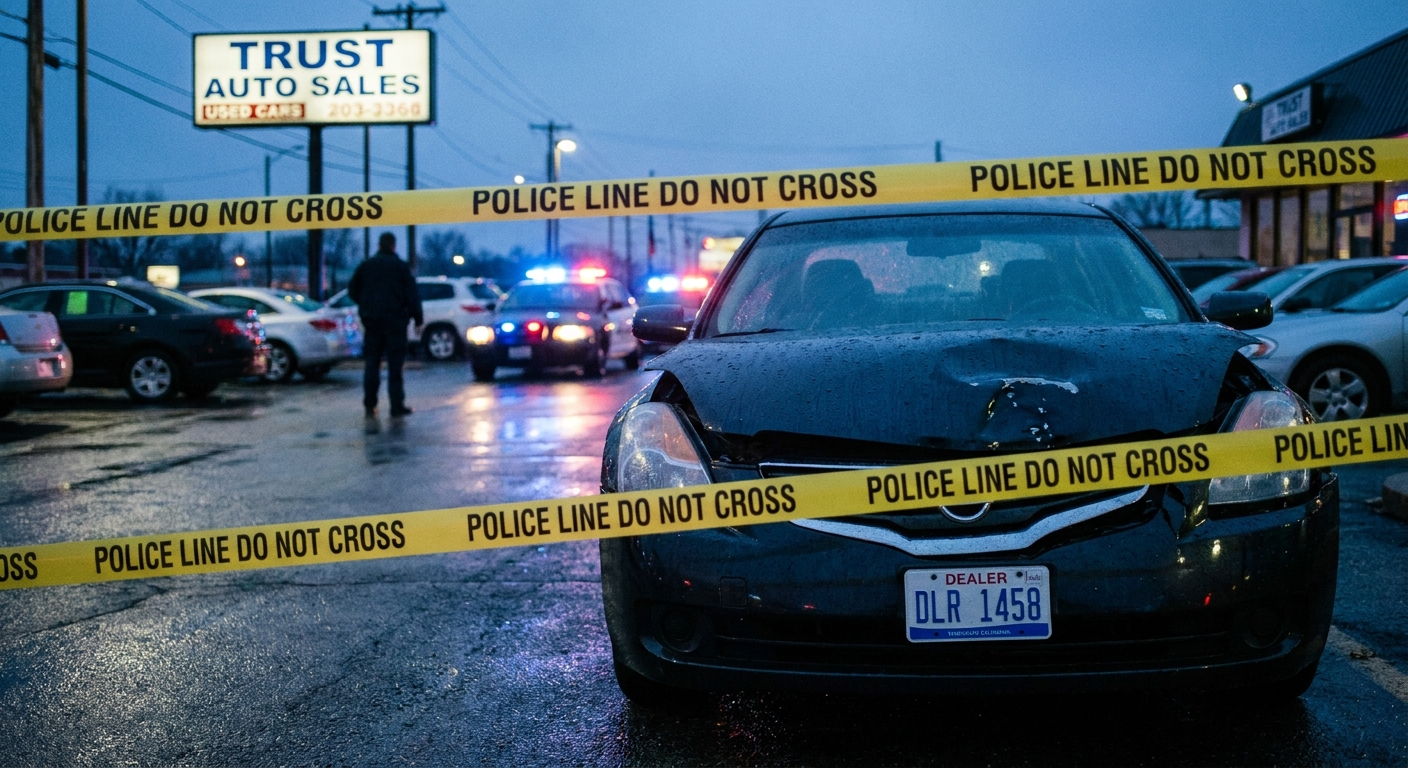
When a Test Drive Goes Wrong: A Real-World Connecticut Dealer Plate Claim Walkthrough
The setup: a normal Saturday at a normal Connecticut dealership
The dealership — call it Constitution Auto — is a 32-unit independent used car operation just outside Hartford. Two owners, four salespeople, an in-house finance manager. Inventory averages $850K. Floor plan financed through a regional bank. Licensed Connecticut dealer since 2014. Insured through a multi-line program we wrote: $1M garage liability, $1M dealer's open lot, $250K garagekeepers, $300K business income, scheduled drivers, $1,000 physical-damage deductible, $5,000 liability deductible.
Carrier: Lancer Insurance. Premium: about $14,200/year. Policy form: clean, comprehensive, no recent claims.
The incident — minute by minute
Walk-in customer (mid-30s, valid CT license) arrives interested in a 2022 mid-size SUV listed at $34,400. Sales rep pulls a copy of the license, runs a quick check, and the standard test-drive waiver is signed. Rep accompanies — Constitution requires a salesperson on every test drive.
Test drive begins. SUV is wearing one of Constitution's CT dealer plates. Customer drives, sales rep in the passenger seat.
On Route 6 heading east, traffic ahead slows for construction. Customer is distracted glancing at the infotainment screen, fails to brake in time, rear-ends a stopped sedan at approximately 28 mph. The sedan is pushed into the SUV ahead of it, which is pushed into a pickup truck. Four vehicles total. Bodily injury reported in two of them — soft-tissue and one suspected concussion.
911 called. Connecticut State Police and EMS respond.
Sales rep calls the dealership owner. Dealership owner calls our office (we cover Saturday claims). We open a claim with Lancer's after-hours line within 7 minutes.
Route 6 reopens. The SUV is totaled. Two of the four civilian vehicles are totaled. Two have moderate body damage.
Lancer assigns the claim to a senior adjuster. First touch by 11 AM Monday. Police report ordered. Recorded statements scheduled.
What the dealership owner did right (and one thing they almost got wrong)
- Sales rep was on the test drive — Constitution's policy makes this mandatory.
- Driver's license was photocopied and the test-drive waiver was signed BEFORE the keys changed hands.
- Sales rep was on the scheduled-drivers list (so any liability arguments about authorized operation were closed immediately).
- Customer was treated as a guest, not as an adversary — no statements made at the scene about fault.
- Dealership called us (the broker) immediately, not 4 days later.
How the claim paid out, line by line
| Loss category | Coverage that responded | Amount |
|---|---|---|
| 2022 SUV (Constitution inventory) — totaled | Dealer's open lot — comprehensive/collision | $34,400 |
| Sedan #1 — totaled | Garage liability — property damage | $28,900 |
| Sedan #2 — totaled | Garage liability — property damage | $31,200 |
| Pickup truck — moderate damage | Garage liability — property damage | $18,400 |
| Bodily injury — driver of Sedan #1 (soft tissue, medical + minor settlement) | Garage liability — bodily injury | $42,500 |
| Bodily injury — driver of Pickup (suspected concussion, medical + settlement, 14 months later) | Garage liability — bodily injury | $118,000 |
| Defense costs / legal (handled by Lancer panel counsel) | Garage liability — defense (outside limit) | $31,800 |
| Towing & storage of all four vehicles | Garage liability — supplementary | $7,200 |
| Total covered loss | $312,400 | |
| Dealership out-of-pocket | Two deductibles ($1K open lot + $5K liability) | $6,000 |
What the alternative scenarios would have looked like
Scenario A: Liability-only policy (no dealer's open lot)
The SUV was Constitution's inventory. Without dealer's open lot, the carrier would have paid the third-party damage and bodily injury but Constitution would have eaten the $34,400 SUV loss out of pocket. Total dealer cost: ~$40K instead of $6K.
Scenario B: Low garage liability limit ($300K combined)
Garage liability paid $238,800 here (property damage + bodily injury + defense). If Constitution had carried a $300K combined limit instead of $1M, the policy would have exhausted on the bodily-injury settlements alone — and the dealership would have been personally on the hook for the remaining ~$60K. Plus the defense costs may have come INSIDE the limit, eroding it further.
Scenario C: Sales rep not on driver schedule
Possible (though not guaranteed) coverage dispute. At minimum, a delayed claim and a reservation-of-rights letter. At worst — depending on policy form — a denial.
Scenario D: No physical damage on the lot at all (yes, it happens)
The SUV loss falls entirely on Constitution. Compound that across a real catastrophic event (hail wiping out 20 units) and you have a business-ending claim.

What this teaches every Connecticut dealer
- The headline limit isn't the only number that matters. Garage liability paid $238,800 here. A $1M limit was the right call. $300K would have blown up.
- Defense costs OUTSIDE the limit is a critical policy-form feature. Lancer's form (and most specialty dealer carriers) keep defense costs outside the liability limit. Generic commercial forms sometimes don't. Read your policy.
- The scheduled-drivers list is the first thing claims investigates. If your salesperson isn't on it, you have a problem before the claim even gets evaluated.
- Documentation at the test drive matters more than people realize. License photocopy, signed waiver, and a sales-rep escort — these three things prevented every coverage argument that could have happened.
- Calling the broker the same day saved the claim from getting worse. The 7-minute call to Lancer's after-hours line meant the adjuster had the file by Monday morning, which meant the recorded statements were taken before memories drifted.
The bigger picture — and why this case study matters for succession planning
A claim like this is recoverable if your insurance is built right. It is also a wake-up call. We've watched several dealers come out the other side of a serious claim and start asking a different question: "What happens to my business if I'm not here to call the broker on Saturday afternoon?"
That's where business continuity planning starts. If you own a Connecticut dealership and you don't have a documented succession plan — who runs the lot if you're hospitalized, who has check-signing authority, who owns the policy renewal relationship — you have a single point of failure that no insurance carrier can fix. Our financial-planning sister practice at Wealth America walks dealer-owners through this exact question: business continuation insurance, buy-sell funding, key-person life insurance, and estate-side planning. It's a separate conversation from the dealer policy — but the same dealers should be having both.
For dealers operating outside Connecticut but within our broader footprint, the Insure Connecticut commercial brokerage at myinsurect.com handles the same coverage analysis with the same carrier panel.
Key Takeaways
- A properly designed dealer policy turned a $312K catastrophe into a $6K out-of-pocket event.
- Headline limits ($1M garage liability) and form details (defense outside the limit) both matter.
- The scheduled-drivers list is the policy's gatekeeper — keep it current.
- Test-drive documentation (license + waiver + sales-rep escort) is what closes coverage arguments before they start.
- Claim response speed matters more than dealers realize — call your broker the same day, every time.
- Insurance solves the claim. Succession and continuity planning solve the rest.
Frequently Asked Questions
Was this a real claim?
It's a composite drawn from real claim files in our 2023–2025 dealer book. The pattern — Saturday test drive, multi-vehicle pileup, bodily injury, $250K–$350K total loss — repeats often enough that we've handled some version of it more than a dozen times. The coverage triggers, dollar figures, and timeline reflect actual outcomes we've seen.
What if the customer had been driving without a salesperson?
Coverage gets harder to argue. Lancer's policy form (and most specialty dealer forms) require either a scheduled driver in the vehicle OR explicit pre-authorization documented for an unaccompanied test drive. Without one of those, you're heading into a reservation-of-rights conversation.
How much would this same accident cost a dealer with no insurance?
Around $312,400 plus their own legal defense costs, plus likely personal-asset exposure if the dealership is structured without strong asset protection. For most independent dealers this is a business-ending event.
Why didn't the customer's personal auto policy pay?
Personal auto policies generally exclude operation of a vehicle being shopped or test-driven from a dealer. The dealership's garage liability is the primary coverage in this scenario, and the customer's personal insurance is typically excess and quiet.
What if the injured drivers sued for more than the $1M limit?
Dealerships running >$5M in sales should carry a commercial umbrella ($2M–$5M) sitting above the garage liability. Constitution did. The umbrella didn't get hit on this claim, but on a worse-fact pattern (severe injury, lifelong disability) it would have been the next layer.
Does this kind of claim raise renewal premiums?
Yes. A claim this size typically produces a 15–25% renewal surcharge at the first renewal post-claim, easing back over the following 2–3 years if loss experience returns to clean. Lancer's surcharging is proportional — some generalist commercial carriers will surcharge much more aggressively.
What's the single biggest lesson here for a new dealer?
Buy the policy you'd want to have if a Saturday afternoon went sideways. Not the cheapest one. The difference between the two is usually $2,000–$4,000 a year. The difference in protection can be $250,000+.
Continue the cluster
- Pillar: The Tri-State Operator's Guide to Dealer & Transporter Plates Insurance (2026)
- How Much Does Dealer Plate Insurance Cost? (2026 Tri-State Pricing)
- 7 Costly Mistakes Used Car Dealers Make With Their Plate Insurance
- Dealer Plates vs Transporter Plates vs Garage Liability
- Best Dealer & Transporter Plates Insurance Carriers (2026)
- Lancer Insurance Dealer & Transporter Plates Review
- How to Get Dealer Plates in Connecticut (2026 DMV & Insurance Walkthrough)
- Auto Transporter Insurance: Cargo, On-Hook & Liability Coverage Explained
Want us to stress-test your dealer policy?
Send us your dec page. We'll run it against three real-world catastrophe scenarios — including this one — and show you exactly where the gaps are.
Request a free policy stress test →Related Content
AI Payment Fraud Incident Response: What to Do First
The first hour after a fraudulent wire can decide whether funds are frozen or lost. Follow this practical response guide for banks, insurers, evidence, law enforcement, and recovery.
Read post →
Hotel and Commercial Property Insurance: Where Should Renewal Savings Go?
A practical guide for hotel and commercial-property owners deciding whether to keep renewal savings, lower deductibles, increase limits or restore coverage.
Read post →AI Fraud Insurance Exclusions: Where Coverage Can Break
A large cyber limit can hide a small social engineering sublimit. Learn how voluntary-transfer language, verification conditions, and overlapping crime coverage can affect AI fraud claims.
Read post →
Connecticut Builders Risk Insurance: 2026 Buyer’s Guide
Connecticut builders risk buyers should update project values, timelines and controls. Learn what to prepare and compare for a 2026 placement.
Read post →