
Hot-Shot Trucking Insurance in CT: Coverage for Class 3-5 Operators
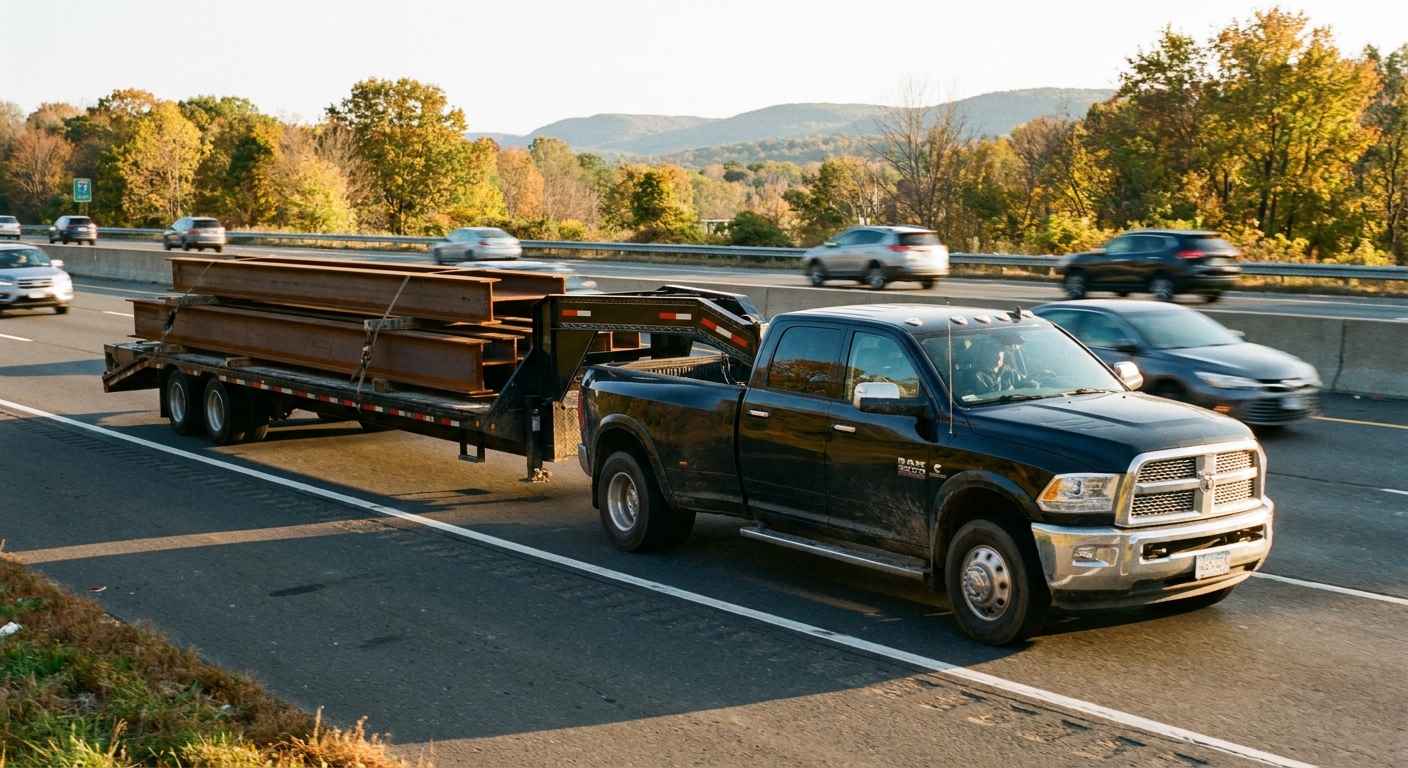
Hot-shot trucking — Class 3-5 trucks (Ford F-350/F-450, Ram 3500, Chevy 4500/5500) pulling goosenecks — runs under the same FMCSA rules as Class 8 but at 35-50% lower insurance cost. A typical Connecticut hot-shot owner-operator pays $4,500-$9,000 per year for a full $1M liability program, versus $9,000-$14,000 for a Class 8 operator. Hot-shot operators still need USDOT, MC authority, BMC-91 liability filing, and typically Class A CDL if GCWR exceeds 26,001 pounds. The segment is the fastest-growing in commercial trucking.
Yesterday we walked through CSA scores and how FMCSA data drives every insurance underwriting decision. Today we drop down a weight class to the fastest-growing segment in commercial trucking: hot-shot trucking. If you are running a Ford F-450 with a 40-foot gooseneck out of a Connecticut yard, the rules, pricing, and insurance carriers are not the same as a Class 8 fleet — and the wrong assumptions cost real money.
Insure Connecticut LLC writes hot-shot programs every week — owner-operators just getting their MC authority, established hot-shot fleets running 5-15 rigs, and the operators who started Class 8 and downsized to medium-duty for better margins. Here is the practical insurance map.
What Is Hot-Shot Trucking?
Hot-shot trucking is expedited freight hauling using Class 3-5 medium-duty trucks pulling gooseneck or bumper-pull trailers, typically running loads from 5,000 to 26,000 pounds. The classic hot-shot rig is a Ford F-450 or Ram 5500 with a 40-foot gooseneck flatbed. The model is built for speed, flexibility, and the freight that falls between LTL parcel and full-truckload TL.
The "hot" in hot-shot refers to time-critical urgency. A hot-shot load is typically dispatched and on the road within 2-4 hours of booking — too urgent for traditional LTL, too small or too odd-sized for Class 8 full-truckload.
What Class of Truck Qualifies as Hot-Shot?
| Truck Class | GVWR Range | Common Models | Hot-Shot Use |
|---|---|---|---|
| Class 3 | 10,001-14,000 lbs | Ford F-350, Ram 3500, Chevy 3500HD | Light hot-shot, smaller loads |
| Class 4 | 14,001-16,000 lbs | Ford F-450, Ram 4500 | Standard hot-shot, most common |
| Class 5 | 16,001-19,500 lbs | Ford F-550, Ram 5500, Chevy 5500HD | Heavy hot-shot, oilfield, machinery |
| Class 6 (less common) | 19,501-26,000 lbs | Freightliner M2 106, International CV | Heavy hot-shot bordering on Class 8 |
Class 4 and Class 5 dominate the hot-shot market. The combination of decent payload (up to 8,000 lbs in the truck bed plus 15,000+ on the trailer), strong towing capacity, and reasonable purchase price ($55,000-$95,000 for a new Class 5 dually) makes the math work.
Does a Hot-Shot Operator Need USDOT and MC Authority?
This is the question that catches most new hot-shot operators. Federal rules:
- USDOT number: required for interstate commerce in trucks over 10,001 lbs GVWR — applies to virtually all hot-shot rigs
- MC operating authority: required for interstate for-hire commerce in trucks over 10,001 lbs — required if you haul for compensation across state lines
- BMC-91 liability filing: required to maintain MC authority — minimum $750K, $1M typical
- UCR (Unified Carrier Registration): annual fee, required for interstate operators
- IFTA fuel tax license: required for interstate operation
- IRP apportioned plates: required for interstate operation
Connecticut intrastate-only hot-shot operators have a simpler regulatory footprint — no MC required for intrastate-only operation, though USDOT and Connecticut DOT registration still apply.
Do Hot-Shot Operators Need a CDL?
This is the second most common confusion. The CDL rule:
- CDL Class A required: when Gross Combination Weight Rating (GCWR) exceeds 26,001 pounds AND the trailer alone exceeds 10,001 pounds
- CDL Class B required: when the truck alone exceeds 26,001 pounds (rare in hot-shot)
- No CDL required: when GCWR is under 26,001 lbs
The math gets most hot-shot operators into CDL territory. An F-450 (14,000 GVWR) plus a 24-foot gooseneck (12,000 GVWR) hits 26,000 GCWR before any load is added — the moment you carry any cargo, you exceed the threshold and need Class A.
Some hot-shot operators run smaller bumper-pull setups under 26,001 GCWR specifically to avoid the CDL requirement. This works for lighter loads but caps your maximum cargo weight and reduces the available freight pool significantly.
What Insurance Does a Hot-Shot Operator Need?
The insurance package mirrors a Class 8 operation but at lower limits and lower premium. A standard Connecticut hot-shot owner-operator program:
| Coverage | Typical Limit | Annual Premium (CT) |
|---|---|---|
| Primary auto liability | $1,000,000 | $3,500-$6,500 |
| Motor truck cargo | $50,000-$100,000 | $600-$1,200 |
| Physical damage (truck) | Stated value $60K-$100K | $1,200-$2,400 |
| Physical damage (trailer) | Stated value $15K-$50K | $400-$900 |
| General liability | $1,000,000 | $400-$800 |
| Bobtail/NTL (if leased) | $1,000,000 | $500-$900 |
| Total — owner-operator | — | $4,500-$9,000 |
Compare to a typical Class 8 Connecticut owner-operator program at the same liability — $9,000-$14,000 per year — and the cost savings are real. The math behind the discount:
- Lower GVWR → smaller crash footprint, lower bodily injury exposure
- Lower cargo capacity → smaller cargo limits required
- Lower vehicle replacement value → lower physical damage premium
- Shorter average radius → typically more regional, less long-haul exposure
- Lower repair cost per accident → less expensive frame repair, body damage
What Freight Do Connecticut Hot-Shot Operators Haul?
Hot-shot freight tends to be time-sensitive and oddly sized. Common Connecticut hot-shot loads:
- Construction equipment — skid steers, mini excavators, generators, compressors
- Industrial machinery — manufacturing parts, pumps, motors, replacement parts to plants
- Agricultural equipment — tractor parts, hay, equipment between farms
- Vehicles — single-car hot-shot to dealerships and auctions
- Tradeshow logistics — booth setups to/from Mohegan Sun, Foxwoods, Hartford Convention Center
- Oilfield freight — less common in Connecticut, but operators with Northeast Pennsylvania reach
- Hot-shot LTL replacement — urgent industrial freight that LTL carriers cannot move on time
Top Insurance Carriers for Hot-Shot in Connecticut
Progressive Commercial Hot-Shot Owner-Op
Strongest market for hot-shot owner-operators getting their first MC authority. Quick turnaround on quotes, broad appetite for Class 3-5 operators, competitive pricing at $1M liability. Less competitive at $2M+ where umbrella stacking is needed.
Northland Insurance Travelers Subsidiary
Strong appetite for hot-shot operators with 1-3 years of authority. Slightly higher pricing than Progressive on owner-ops but better claims handling and broader policy form. Good fit for operators planning to grow into multi-unit fleets.
Canal Insurance Heavy & Specialty Hot-Shot
The specialty market for hot-shot operators hauling oilfield freight, oversized loads, or operating in high-litigation regions. Canal writes risks that Progressive and Northland decline. Pricing is higher but appetite is broader.
Great American Insurance Mid-Market Hot-Shot
Strong market for hot-shot fleets running 3-15 units. Competitive on layered liability, good for operators stacking umbrella, integrated CSA management resources. Less competitive on single-unit owner-ops.
Common Mistakes Hot-Shot Operators Make
1. Skipping MC Authority Because "It's Just a Pickup"
Class 3-5 trucks pulling for-hire freight across state lines absolutely require FMCSA authority. The "just a pickup" assumption gets operators caught at roadside with out-of-service orders and unpaid freight.
2. Carrying Personal Auto on a Commercial Tractor
Personal auto liability does not cover commercial-use vehicles. The moment you carry freight for compensation, your personal auto policy excludes the use. Operators who think a personal F-450 policy covers commercial hauling are uninsured.
3. Underestimating Cargo Limits
Hot-shot freight is often higher-value per cubic foot than Class 8 freight — machinery, electronics, specialty equipment. $25,000 cargo is rarely enough; $100,000 is the typical broker contract minimum and the right starting point.
4. Skipping Physical Damage on the Trailer
A 40-foot gooseneck flatbed costs $15,000-$45,000. Operators who insure the tractor but not the trailer end up replacing the trailer out of pocket after a roll-over or theft. $400-$900 per year is cheap protection.
5. Operating Without UCR Registration
Annual UCR is mandatory for interstate hot-shot operators. The fee is modest ($46-$59 for single-unit operators) but failure to register triggers $1,000+ fines and out-of-service orders at roadside.
Key Takeaways — Hot-Shot Trucking Insurance
- Hot-shot operators in trucks over 10,001 GVWR running interstate for-hire freight need USDOT and MC authority
- Class A CDL required when GCWR exceeds 26,001 lbs and trailer alone exceeds 10,001 lbs — most hot-shot rigs cross this threshold
- Hot-shot insurance runs $4,500-$9,000 per year for owner-ops at $1M liability — 35-50% cheaper than Class 8
- Cargo limits typically $50K-$100K, broker contracts often require $100K minimum
- Progressive, Northland, Canal, and Great American are the primary CT hot-shot markets
- Skipping MC authority, personal-auto-on-commercial, and trailer physical damage are the four most common rookie mistakes
Frequently Asked Questions
Can I start hot-shot with my personal F-350?
You can run it intrastate within Connecticut with state DOT registration, USDOT for any commercial use over 10,001 lbs, and commercial auto liability. For interstate for-hire freight, add MC authority, BMC-91 filing, UCR, IRP plates, and IFTA. Personal auto coverage will not cover commercial use.
What is the difference between hot-shot and expedited freight?
Expedited freight is a broader category — any urgent time-critical freight regardless of vehicle type. Hot-shot is a specific subset using Class 3-5 trucks with gooseneck trailers. Most hot-shot loads are expedited, but not all expedited freight is hot-shot (some uses Sprinter vans, cargo vans, or Class 8 expedite).
Do I need a hazmat endorsement for hot-shot?
Only if you haul placardable hazmat quantities, which is rare in standard hot-shot. Most hot-shot freight is industrial equipment, machinery, or oversized non-haz. Operators planning to haul hazmat need the hazmat endorsement on the CDL, BMC-91 at $1M-$5M depending on hazmat class, and TSA background check.
Is hot-shot insurance available for brand-new authority?
Yes — Progressive, Northland, and several specialty carriers write new-authority hot-shot. Pricing is higher in the first 12 months (no loss history, no CSA score) — typically 15-30% above the established-operator rate. After 12 months of clean operation, premiums normalize to standard pricing.
How does hot-shot insurance handle "deadhead" miles?
Deadhead miles (returning empty after a delivery) are covered under the primary auto liability as long as the operator is still under dispatch or operating in the business of the motor carrier. Empty miles to pick up a load count as in-service. Personal use outside of dispatch follows the bobtail/NTL rules from Day 6.
Tomorrow we cover the coverage that catches every Connecticut trucker with employees flat-footed — workers' compensation. CT requires comp for any motor carrier with even one employee, the class codes (7228 and 7229) drive significant rate variability, and "occupational accident" sold to leased owner-ops is not a comp substitute, no matter what the motor carrier tells you.
If you are starting a hot-shot operation in Connecticut, expanding from Class 8 to medium-duty, or growing a hot-shot fleet from owner-op to multi-unit — Insure Connecticut LLC handles the full placement. Call (860) 970-0977 or visit our trucking insurance page. We work with Progressive, Northland, Canal, Great American, and the specialty hot-shot markets.