Liquor Liability & Dram Shop Insurance for CT Restaurants: 2026 Cost & Coverage
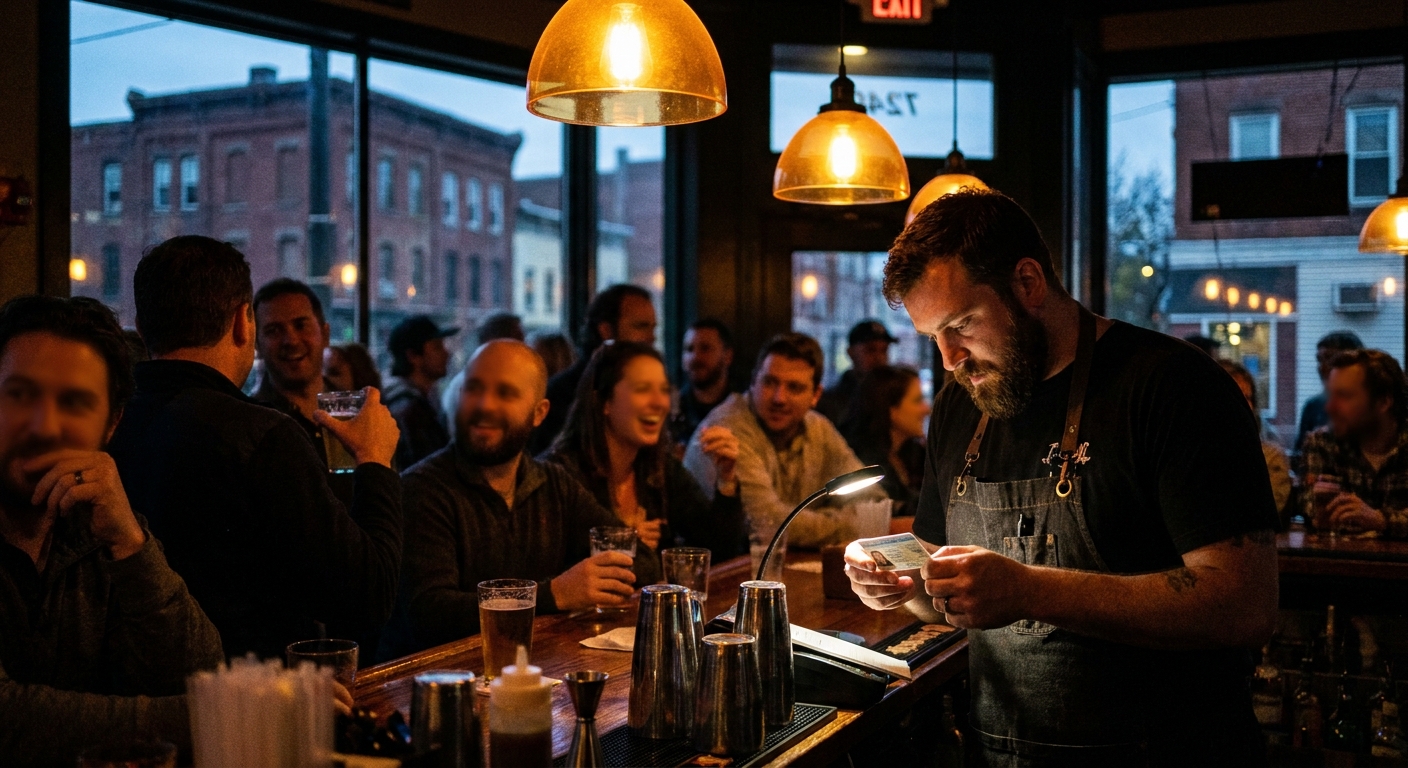
A Stamford restaurant served a customer four cocktails over two hours. The customer drove home, hit another car at 11:47 PM, and the injured driver sued the restaurant. Connecticut law gave the injured driver a direct cause of action against the establishment — and the restaurant's GL policy paid exactly zero of the settlement. That's because GL excludes liquor liability. Without a separate dram shop / liquor liability policy, the restaurant was personally on the hook for $1.2M.
This is the second spoke in our CT Restaurant Insurance cluster, building on the pillar guide to restaurant insurance in Connecticut. Liquor liability is the single most misunderstood coverage in restaurant insurance — and the most expensive to skip. Here's exactly what CT's dram shop law requires, how the coverage works, and what 2026 premiums look like.
What is liquor liability insurance and does Connecticut require it?
Liquor liability insurance — also called dram shop insurance — covers a restaurant or bar when an intoxicated patron causes injury or property damage after being served on the premises. Connecticut's Dram Shop Act (Conn. Gen. Stat. § 30-102) gives injured third parties a direct cause of action against the establishment that "sold or delivered" alcohol to the intoxicated person. While CT doesn't legally mandate the coverage, every commercial landlord, lender, and liquor permit holder treats it as required. 2026 CT premiums: $450–$3,800/year depending on alcohol sales mix.
Connecticut is one of 30+ states with an active Dram Shop Act on the books. The statute allows an injured third party (the driver hit by the drunk driver, the pedestrian struck on the sidewalk) to sue the establishment that served the alcohol — separately and on top of any suit against the intoxicated patron themselves. Damages under § 30-102 are capped at $250,000 statutorily, but separate negligence theories (negligent service, failure to recognize intoxication) routinely push real-world settlements well past the cap.
At iConn Insurance Solutions, the most frequent restaurant insurance gap we see is owners assuming their general liability policy covers liquor incidents. It doesn't. Every standard GL policy contains a liquor liability exclusion (ISO form CG 21 50) that wipes out coverage for any claim "arising out of" the serving of alcohol. Without a dedicated liquor liability policy or endorsement, the restaurant is uninsured for every dram shop claim that lands.
How Connecticut's Dram Shop Act works
Conn. Gen. Stat. § 30-102 creates statutory liability when three elements line up:
- The establishment sold or delivered alcohol to a person who was already intoxicated.
- That intoxicated person then caused injury or death to a third party (not themselves).
- The serving was a substantial factor in causing the harm.
The statute caps damages at $250,000 per claim — but the cap only applies to the strict statutory cause of action. Plaintiffs routinely plead common-law negligence theories alongside the dram shop claim, and CT courts have allowed those to proceed independently. Net effect: the practical exposure on a serious DUI claim runs $400K–$1.5M in settlement value, with the $250K statutory piece being the floor, not the ceiling.
The CT Department of Consumer Protection's Liquor Control Division enforces server-training requirements alongside the statute. Establishments serving on-premises alcohol must train staff in responsible service — and a documented training program is a meaningful underwriting factor that drops liquor liability premiums by 10–20% with most carriers.
2026 liquor liability premium ranges in Connecticut
Premiums depend on alcohol sales as a percentage of total revenue, hours of service (late-night service spikes rates), establishment type (a wine bar prices differently than a sports bar), training documentation, and prior claims. Ranges we wrote in 2026 across appointed carriers:
| Establishment type | Alcohol % of sales | 2026 liquor liability premium |
|---|---|---|
| Coffee shop with beer/wine license | 5–15% | $450 – $850 |
| Casual restaurant, full bar | 20–30% | $1,100 – $2,200 |
| Fine dining, wine focus | 25–40% | $1,400 – $2,800 |
| Sports bar / late-night bar | 50–70% | $2,400 – $3,800 |
| Nightclub / live music venue | 70%+ | $3,200 – $5,500+ |
Most CT carriers — Travelers, The Hartford, Liberty Mutual, CNA, and specialty markets like Kinsale — write liquor liability either as a stand-alone monoline or as an endorsement on the restaurant BOP. Stand-alone tends to price better for high-alcohol-percentage venues; BOP endorsements work for restaurants where alcohol is incidental to food service.
The three structural decisions that drive liquor liability cost
Decision 1: Limit selection
Standard liquor liability limits are $1M per occurrence / $1M or $2M aggregate. The aggregate matters because liquor liability claims tend to come in clusters (multi-vehicle DUI accidents involve multiple injured parties, each a separate claim). For sports bars and late-night venues, push the aggregate to $2M. Higher limits ($3M–$5M) are available via umbrella/excess and run $500–$1,500/year on top of the primary.
Decision 2: Assault & battery sublimit
Most liquor liability policies sublimit assault & battery claims (bar fights, ejection injuries) at $25K, $50K, or $100K — well below the main $1M limit. A bar fight with a serious injury easily exceeds those sublimits. If your venue has any history of late-night crowd issues, negotiate the A&B sublimit up to $250K minimum, or buy a separate A&B endorsement.
Decision 3: Deductible vs. self-insured retention (SIR)
Deductibles ($1K–$10K) reduce premium but the carrier still defends the claim. SIRs ($25K+) reduce premium more aggressively but require you to fund the defense yourself up to the retention. For most CT restaurants, a $2,500–$5,000 deductible balances premium savings against operational simplicity.
This is why working with an independent broker matters for liquor liability — the policy language varies dramatically across carriers, and the sublimits buried in the declarations can leave a restaurant uninsured for the exact incidents that happen most. Get a personalized liquor liability quote from iConn Insurance Solutions — we'll structure the program around your specific alcohol mix, hours, and venue type.
Server training: the cheapest way to lower your premium
Connecticut's TIPS (Training for Intervention ProcedureS) and ServSafe Alcohol are the two main certifications carriers recognize. Documented training across all serving staff typically yields 10–20% premium credits with most markets — and creates a critical defense element if a claim does land. The CT Liquor Control Division also looks favorably on documented training during license renewals.
A typical CT restaurant pays $25–$45 per server for an online TIPS certification. For a 10-server bar with a $2,200 liquor liability premium, the 15% credit (~$330/year) pays for the training every year with margin to spare. It's the single highest-ROI risk management investment in restaurant insurance.
How liquor liability fits with the rest of your restaurant insurance program
| Policy | What it covers | Why it matters |
|---|---|---|
| General Liability | Slip-and-fall, foodborne illness, customer injury (NON-alcohol) | Required by landlord; foundational |
| Liquor Liability | Alcohol-related third-party harm | CT Dram Shop exposure |
| Property & Business Interruption | Building, contents, lost income from closure | Fire/storm/equipment loss recovery |
| Workers Compensation | Kitchen/server injuries | CT statute (1+ employees) |
| Commercial Auto | Delivery vehicles, catering vans | Delivery service exposure |
| Cyber Liability | POS breach, customer card data | PCI-DSS requirement |
Why an independent broker matters for restaurant liquor liability
At iConn Insurance Solutions, we shop liquor liability across 8+ appointed carriers — not because we like making calls, but because the rate spread between markets on the same restaurant can be $1,500–$2,000 per year. A nightclub quoted at $5,500 by one carrier might come in at $3,800 with a market that specializes in late-night venues. Independent brokers find that spread; captive agents at a single carrier can't.
We also know which carriers handle CT-specific dram shop language correctly — some out-of-state carriers issue policies that exclude statutory dram shop claims in CT, which defeats the entire purpose of the coverage. Reading the policy form is what we do.
Our sister agency Insure Connecticut LLC covers restaurant insurance across 12 states for multi-location operators with venues in CT, NY, MA, and beyond — same independent multi-carrier approach.
Key takeaways
- CT's Dram Shop Act (§ 30-102) gives injured third parties a direct cause of action against the serving establishment — capped statutorily at $250K but practical exposure runs $400K–$1.5M.
- Standard GL policies EXCLUDE liquor liability (ISO form CG 21 50) — you need a dedicated policy or endorsement.
- 2026 CT premiums: $450 (coffee shop w/ beer-wine) to $5,500+ (nightclub).
- Watch the assault & battery sublimit ($25K–$100K standard) — push to $250K+ for any venue with crowd risk.
- Documented TIPS or ServSafe Alcohol training yields 10–20% premium credits and is the highest-ROI risk management investment.
Frequently Asked Questions About CT Restaurant Liquor Liability
Does Connecticut legally require liquor liability insurance?
No state statute mandates it directly, but Connecticut's Dram Shop Act (§ 30-102) creates exposure that makes the coverage practically essential. Every commercial landlord, lender, and liquor permit holder treats it as required, and most won't sign a lease or issue a permit without it.
How much does liquor liability insurance cost in Connecticut in 2026?
CT 2026 premiums range from $450/year (coffee shop with beer/wine license) to $5,500+ (nightclub). Most casual restaurants with a full bar pay $1,100–$2,200; fine dining with wine focus pays $1,400–$2,800; sports bars and late-night venues pay $2,400–$3,800.
What does the CT Dram Shop Act cover?
It allows third parties injured by an intoxicated patron to sue the establishment that "sold or delivered" the alcohol. Damages are capped statutorily at $250,000, but separate negligence theories regularly push total settlements well past the cap. It applies to any on-premises licensed establishment.
Does my restaurant's general liability policy cover liquor claims?
No. Every standard GL policy contains a liquor liability exclusion (ISO form CG 21 50) that excludes coverage for claims arising out of the serving of alcohol. You need a separate liquor liability policy or a specific endorsement to fill that gap.
Will server training reduce my liquor liability premium?
Yes. Documented TIPS or ServSafe Alcohol training across all serving staff typically yields 10–20% premium credits. The CT Liquor Control Division also views documented training favorably during permit renewals. Annual training cost is $25–$45 per server — usually paid back many times over in premium credits.
What's the difference between dram shop liability and host liquor liability?
Dram shop liability applies to commercial establishments licensed to serve alcohol. Host liquor liability applies to businesses serving alcohol at private events without a liquor license (corporate parties, etc.) — typically included in standard GL policies. They cover different exposures and shouldn't be confused.
Get your CT liquor liability coverage structured right — before the next late-night incident
Request a personalized liquor liability quote from iConn Insurance Solutions — we'll review your alcohol mix, hours of service, training documentation, and venue type, then shop across appointed carriers to find the right structure at the right price. Multi-location operators with venues outside CT can also tap our sister agency Insure Connecticut LLC for 12-state coverage.
Insure Connecticut LLC, iConn Insurance Solutions, and Wealth America, Inc. are independently operated companies under common ownership.