
Restaurant Insurance in Connecticut: The Complete 2026 Guide for Owners
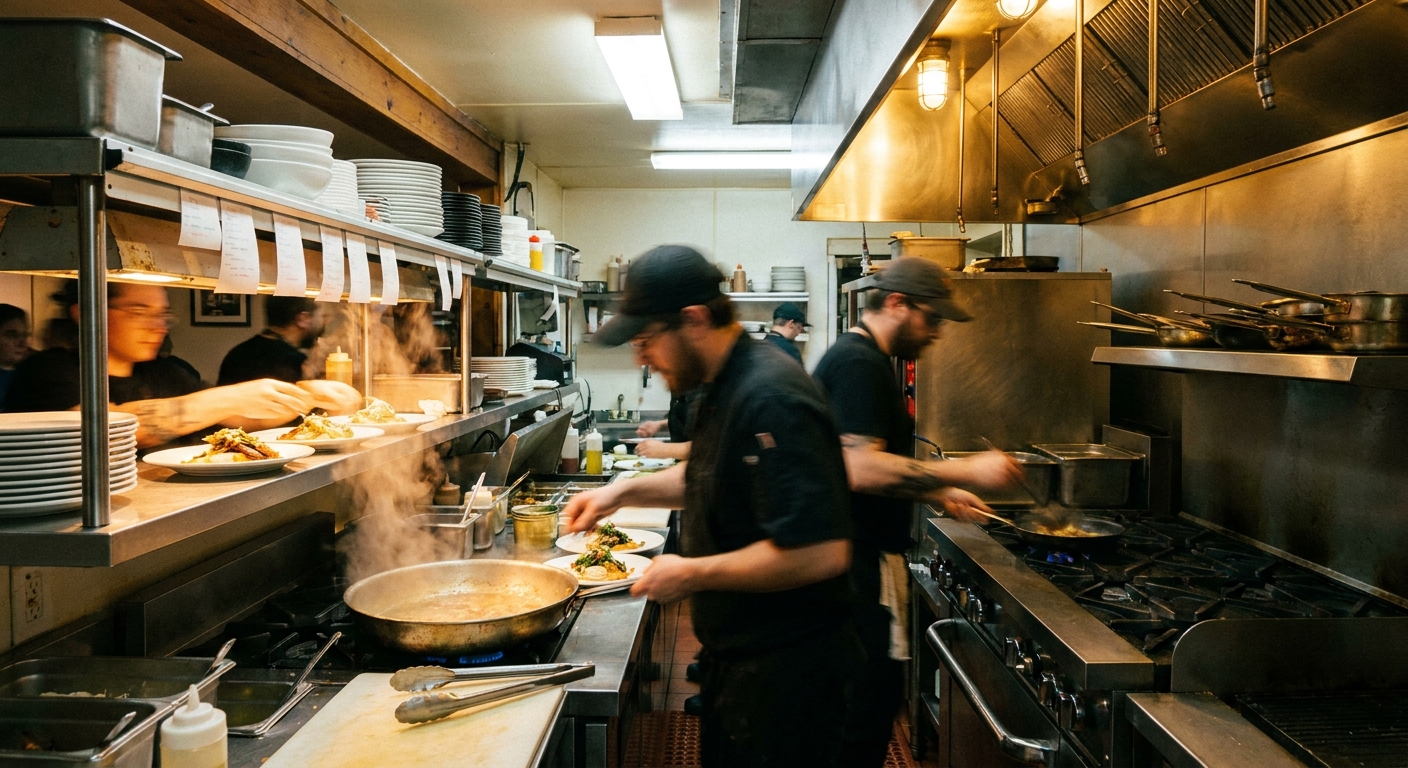
A West Hartford bistro served a $95 entrée with a hidden walnut crumble. The guest had a documented tree-nut allergy noted to the server. Two hours later she was in St. Francis Hospital with anaphylaxis. Six months later, the restaurant was named in a $1.4M lawsuit alleging negligence and inadequate allergen training. The owner's General Liability policy carried a $1M occurrence limit and a $2M aggregate — but the carrier denied defense, pointing to a "foodborne illness sublimit" of $250,000 buried on page 27 of the policy. The case settled for $680,000. The restaurant covered $430,000 out of pocket. They closed in March 2025.
This is the gap between "I have restaurant insurance" and "I have the right restaurant insurance." Connecticut runs more than 8,400 licensed food service establishments — and the National Restaurant Association puts the median small-restaurant profit margin at 3–5%. One uncovered claim ends careers. This guide is the pillar overview of what a CT restaurant actually needs, what it costs in 2026, and which sublimits buried in commercial Business Owner Policies (BOPs) cause the most denials.
The short answer: A CT restaurant's standard insurance package includes a Business Owner Policy (BOP — combines GL + Property), Workers' Compensation (mandatory by CT statute), Liquor Liability (if serving alcohol), Commercial Auto (delivery), Cyber Insurance (POS / payment data), Equipment Breakdown, and Food Spoilage. Total annual premium for a typical 50-seat full-service CT restaurant doing $1.2M in revenue runs $8,500–$22,000 in 2026 — driven mostly by alcohol service, payroll, and whether you deliver.
At iConn Insurance Solutions we underwrite restaurant insurance for full-service restaurants, fast-casual concepts, food trucks, ghost kitchens, breweries with food programs, and catering operations across CT. Together with sister agency Insure Connecticut LLC we cover the same hospitality categories across 12 states. This pillar walks through every coverage piece, what the 2026 CT premiums look like by restaurant type, the sublimit gotchas that drive denials, and where to focus during your annual renewal.
What insurance does a CT restaurant actually need?
| Coverage | Required By | Typical Limits | What It Covers |
|---|---|---|---|
| BOP (GL + Property) | Landlord lease; bank loan | $1M / $2M GL · property = replacement cost of buildout | Customer slips, foodborne illness, fire/water damage, business interruption. |
| Workers' Compensation | CT statute (any W-2 employee) | CT statutory | Burn injuries, slip and fall on wet kitchen floor, cuts. ~$3.50–$6.20 per $100 payroll. |
| Liquor Liability | CT Liquor Control Commission permit + lease + lawyers | $1M occurrence / $2M aggregate | Dram shop exposure — injury caused by an intoxicated patron after service. |
| Commercial Auto | CT statute on owned delivery vehicles | $1M CSL | Restaurant-owned delivery vehicles and food trucks. |
| Hired & Non-Owned Auto | Contract w/ third-party delivery; CT case law | $1M CSL | Driver using their own car to deliver for the restaurant. |
| Cyber Liability | PCI-DSS / card processor contracts | $250K–$1M | POS breach, customer payment data theft, ransomware on reservation system. |
| Equipment Breakdown | Often bundled in BOP — verify limits | $50K–$250K | Walk-in cooler compressor, hood fan, fryer, espresso machine. |
| Food Spoilage / Contamination | Highly recommended for inventory-heavy ops | $25K–$100K | Power outage spoils inventory; contamination event forces dump. |
How much does CT restaurant insurance cost in 2026?
| Restaurant Type | Annual Revenue | Total Annual Premium |
|---|---|---|
| QSR / Fast-Casual, no alcohol, 8 employees | $400K–$900K | $4,200–$8,500 |
| Full-service bistro, beer & wine only, 12–20 employees | $900K–$1.6M | $8,500–$15,000 |
| Full bar restaurant w/ full liquor, 25–40 employees | $1.5M–$3M | $15,000–$28,000 |
| Brewery + food program, on-site service | $1.2M–$3.5M | $18,000–$36,000 |
| Food truck (single unit), beer permit | $200K–$600K | $3,800–$7,200 |
| Catering operation, off-premise + occasional liquor | $500K–$1.5M | $5,500–$12,500 |
The four cost drivers, in order of magnitude: alcohol (adds 40–110% to base premium), delivery (adds Commercial + H&NO Auto), payroll (drives workers' comp), and history of claims (a single significant slip-and-fall in the last 3 years can double your renewal).
The 5 sublimit traps that cause CT restaurant claim denials
1. Foodborne illness sublimit
Most restaurant BOPs from The Hartford, Liberty Mutual, Travelers, and CNA contain a foodborne illness sublimit — sometimes $100K, sometimes $250K — that caps payouts even on otherwise covered GL claims. If a single anaphylaxis or norovirus event runs $700K, that sublimit is the only number that matters. Ask the underwriter to remove or raise it to match your GL limit.
2. Assault & battery exclusion (bars and late-night)
CT bars and any restaurant serving past 10 PM commonly find an Assault & Battery exclusion or a sublimit (often $50K) in their GL form. A fight between patrons that ends in a hospital visit and a lawsuit — extremely common in CT downtown nightlife districts — is then on the operator. Buy the buy-back to remove this exclusion if you serve alcohol past 9 PM.
3. Liquor Liability gap with the BOP
A standalone BOP excludes liquor liability entirely. If you serve alcohol you must buy Liquor Liability separately — and at $1M / $2M, not the $300K minimum CT statute permits. CT case law on dram shop ($300K minimum, can run far higher with negligence findings) makes the statutory floor functionally useless for any meaningful claim.
4. Delivery driver coverage gaps
Three configurations, three different policies needed: (1) restaurant-owned delivery vehicle → Commercial Auto; (2) employee using their own car → Hired & Non-Owned Auto; (3) DoorDash/Uber Eats third-party delivery → contractual indemnity (read your contract). Most CT restaurants think they are covered for #2 and discover at claim time they were not.
5. Cyber/POS breach not covered by BOP
Standard BOPs exclude data breach response costs almost entirely. A POS system compromise — extremely common, with multiple national chains hit annually — costs $80K–$400K in notification, forensics, and credit monitoring. Standalone Cyber Liability or an endorsement at $250K–$1M is now standard for any restaurant taking card payments.
The 7 restaurant insurance deep-dives (linked spokes)
- GL & Product Liability for CT Restaurants — foodborne illness sublimits, allergen exposure, slip-and-fall claim math.
- Liquor Liability / Dram Shop in CT — CT case law, $300K floor, why you need $1M minimum.
- Workers' Compensation for Restaurant Staff — class codes, burn/cut claim frequency, return-to-work programs.
- Property Insurance & Business Interruption — buildout valuation, BI period of restoration, dependent property.
- Food Spoilage & Equipment Breakdown — walk-in compressor failures, hood fans, the $40K spoilage event nobody plans for.
- Delivery Driver Coverage (H&NO) — the three configurations and which policy covers each.
- Cost Breakdown — CT Restaurant Premium 2026 — three real budgets line-by-line.
Why an independent broker matters for CT restaurants
Restaurant BOP forms vary enormously between carriers — foodborne illness sublimits range from $50K to "match GL limit," assault and battery exclusions appear or do not, equipment breakdown sublimits range from $25K to $250K. A captive agent gives you one form. An independent broker shops 6+ markets and identifies the form whose exclusions hurt your operation the least.
At iConn Insurance Solutions we are independent, multi-carrier, and CT-licensed. We compare restaurant BOPs from The Hartford, Liberty Mutual, Travelers, CNA, Society Insurance (a hospitality specialist), Westfield, and several MGAs side-by-side and call out the exclusions that matter for your specific concept. Together with sister agency Insure Connecticut LLC, we cover the same hospitality concepts across 12 states.
Key Takeaways
- CT restaurant insurance is a multi-policy package: BOP + Workers' Comp + Liquor + Auto + Cyber + Equipment Breakdown + Food Spoilage. No single policy covers everything.
- Total premium for a typical 50-seat CT full-service restaurant doing $1.2M revenue: $8,500–$22,000/year in 2026.
- Five sublimits drive most denials: foodborne illness cap, assault & battery exclusion, liquor liability gap, delivery driver coverage gaps, and missing cyber.
- Alcohol service is the single biggest premium driver — 40–110% increase over a dry restaurant. Worth it for the revenue, but plan the math accordingly.
- Read your renewal: BOPs change exclusion language at renewal annually. A policy that covered you last year may not cover the same loss this year.
Frequently Asked Questions About CT Restaurant Insurance
How much does insurance cost for a small CT restaurant?
For a CT QSR or fast-casual with no alcohol and 8 employees doing $400K-$900K revenue, total annual premium across BOP, workers' comp, and cyber runs $4,200-$8,500. Add beer & wine and a full bar and the number can triple. Delivery operations add another $1,500-$3,500 for commercial auto / H&NO.
Is restaurant insurance required by law in Connecticut?
Some pieces are: workers' compensation is mandatory by CT statute for any W-2 employee. Liquor Liability is required by your CT Liquor Control Commission permit and your lease. Commercial Auto is required by CT statute on any owned delivery vehicle. General Liability is functionally required by every landlord lease, bank loan, and many vendor contracts even though no statute mandates it.
What's the minimum Liquor Liability limit I need in CT?
CT statute permits $300K minimum, but that floor is functionally useless. A single dram shop case with negligent over-service findings can easily run $750K-$2M in settlement. Industry standard for any CT restaurant serving alcohol is $1M occurrence / $2M aggregate — premium typically runs $1,200-$4,800 depending on alcohol revenue share.
Does my BOP cover a food poisoning lawsuit?
Maybe — but watch the sublimit. Most restaurant BOPs cap foodborne illness payouts at $100K-$250K, not the full GL limit. A serious case can easily exceed the sublimit. Ask your broker to confirm the foodborne illness sublimit matches your full GL limit ($1M occurrence) before binding.
Do I need cyber insurance for my restaurant?
Yes if you take card payments. Standard BOPs exclude data breach response costs almost entirely. A POS system compromise can cost $80K-$400K in notification, forensics, and credit monitoring. Standalone Cyber Liability at $250K-$1M runs $750-$2,400 per year for a typical CT restaurant.
What does workers' comp cost for a CT restaurant?
CT restaurant workers' comp typically runs $3.50-$6.20 per $100 of payroll. For a 12-employee restaurant with $360,000 annual payroll, expect $12,600-$22,000 per year. Class codes matter — kitchen staff are higher rated than front-of-house. Restaurants with documented training programs and clean claims history see lower experience modifiers.
Get a free CT restaurant insurance review
If your restaurant policy is more than 18 months old, this is the moment to audit it — exclusions change at renewal annually and the foodborne illness sublimit that was $250K last year may have dropped to $100K this year without notification. Send iConn Insurance Solutions your declarations page for a free 30-minute audit. We will line-by-line compare your current policy to four competing markets and tell you exactly which exclusions are hurting you.
Restaurants outside CT but inside the Northeast/Mid-Atlantic can work with our sister agency Insure Connecticut LLC — same independent multi-carrier markets across 12 states.