
Property & Business Interruption Insurance for CT Restaurants: 2026 Coverage & Cost
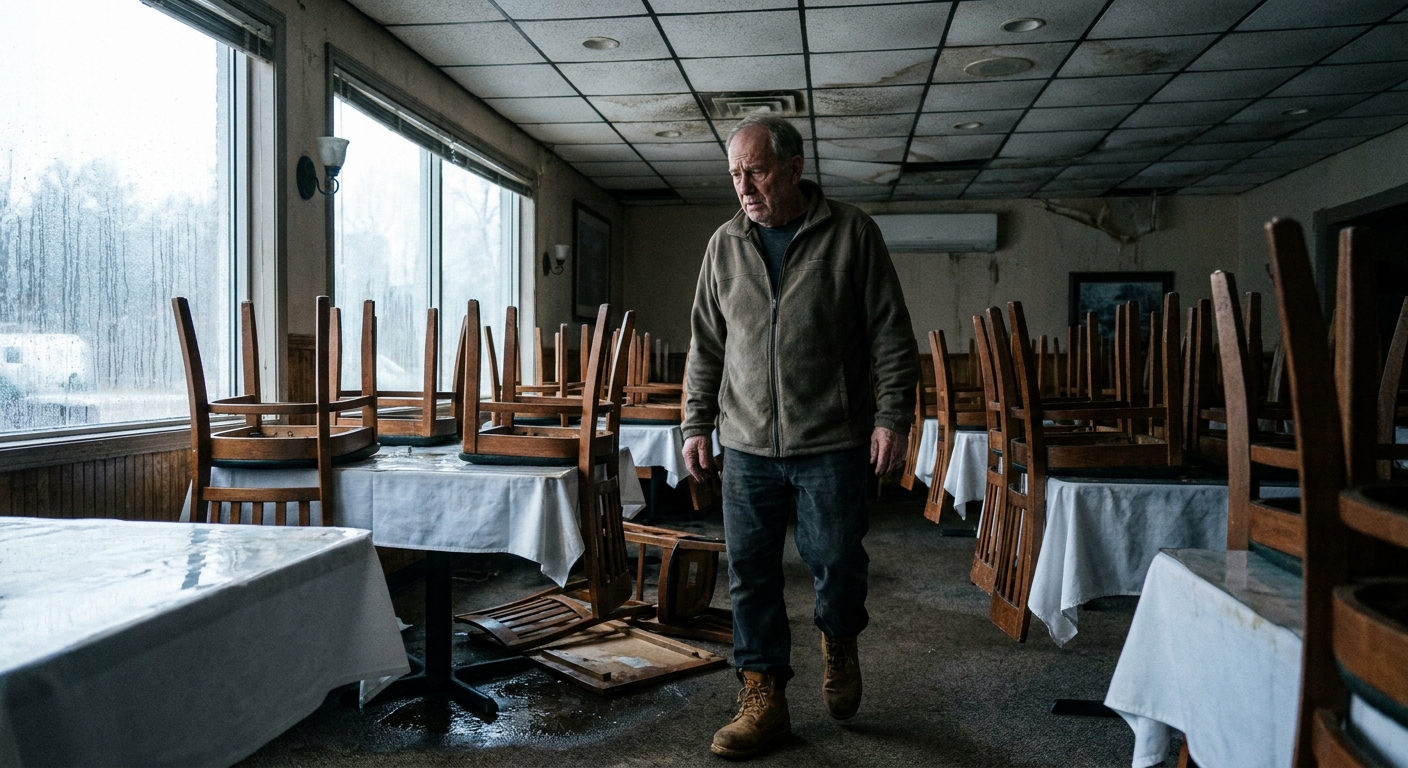
A burst pipe behind the dishwasher line at a busy West Hartford bistro flooded the dining room overnight in February 2025. Direct water damage to floors, walls, electrical, and equipment: $96,000. Cost to be closed for the 19 days it took to dry the building, replace damaged equipment, and pass health inspection: $148,000 in lost net income, $34,000 in continuing payroll, $7,800 in spoiled inventory. Total restaurant impact: $285,800. The property policy paid the $96K of direct damage. Whether the business interruption portion of the claim got paid — and at what amount — depended entirely on how the BI coverage was structured at policy inception.
This is the fourth spoke in our CT Restaurant Insurance cluster, building on the pillar guide to restaurant insurance and the GL, liquor liability, and workers comp spokes. Property and Business Interruption (BI) coverage is the largest single line item in the restaurant insurance budget — and the most consequential to structure correctly because the BI payout is what keeps the restaurant solvent during a closure.
What does restaurant property and business interruption insurance cover?
Restaurant property insurance covers the building (if owned), fixtures, equipment, inventory, and contents against named perils — fire, water damage, storm, theft, vandalism. Business interruption (BI) coverage pays the restaurant's lost net income and continuing expenses during the time the restaurant cannot operate due to a covered property loss. 2026 CT restaurant property + BI combined premiums run $3,200/year (small cafe, leased space) to $28,000+/year (large full-service restaurant, owned building). BI coverage is sized in months — typical CT structure: 12 months, with 18-month extensions available.
Most CT restaurants lease their space rather than own — so the building itself is the landlord's coverage problem. The restaurant's property coverage focuses on contents: kitchen equipment (the largest exposure, often $80K–$300K to replace), POS systems, fixtures and finishes the tenant installed, dining room furniture, walk-in coolers, and inventory. The lease typically also requires the tenant to carry "improvements and betterments" coverage for the build-out improvements that revert to the landlord at lease end.
At iConn Insurance Solutions, the most expensive restaurant claim mistakes we see aren't on the direct damage side — they're on Business Interruption. Underestimating the BI limit, choosing the wrong waiting period, and missing extended period of indemnity coverage routinely turn six-figure losses into restaurants that don't reopen.
The four restaurant property loss categories driving CT claims
| Loss type | % of restaurant claims | Average severity |
|---|---|---|
| Water damage (burst pipes, sprinkler, flooding) | 34% | $22K – $185K |
| Fire (kitchen, electrical, equipment) | 28% | $45K – $850K |
| Equipment breakdown | 14% | $8K – $65K |
| Theft and vandalism | 12% | $4K – $35K |
| Storm, wind, other | 12% | $5K – $120K |
Water damage is more frequent than fire but lower severity on average. Fire claims are less frequent but the catastrophic outliers — kitchen hood fires, electrical fires that spread to the building structure — are the claims that close restaurants permanently. Both are why BI coverage matters so much: 80%+ of restaurant claims involve some closure period, and the lost-income piece typically exceeds the direct property damage piece.
How business interruption coverage actually works
BI coverage pays three things during a covered closure period:
- Lost net income — what the restaurant would have earned during the closure, calculated against historical financial data (typically the prior 12 months with seasonal adjustments).
- Continuing operating expenses — rent, utilities, fixed payroll (key employees you don't lay off), insurance, debt service that continue even while closed.
- Extra expense — costs to minimize the closure period (temporary equipment rental, accelerated repairs, temporary alternate location).
The waiting period
BI doesn't kick in immediately — a "waiting period" (typically 48–72 hours) acts like a deductible. Short closures (a 36-hour cleanup) don't trigger BI payment. Longer closures pay from the end of the waiting period forward.
The maximum period of indemnity
Most restaurant BI policies cap payment at 12 months. For most water damage and equipment claims, that's plenty. For severe fire claims requiring full rebuild — which in CT often runs 14–22 months for a restaurant gut renovation — the 12-month cap leaves a 2–10 month gap with continuing rent obligations and no revenue. Buy the 18-month extension.
Extended period of indemnity
Even after the restaurant reopens, customer counts don't snap back to pre-loss levels for 3–6 months. Extended Period of Indemnity (EPI) coverage pays the gap between reopening and full revenue recovery — typically 30, 60, 90, or 180 days post-reopening. For CT restaurants with established neighborhood clientele, 90 days of EPI is the right floor; tourist-dependent restaurants in shoreline towns often need 180 days.
2026 CT restaurant property + BI premium ranges
| Restaurant type | Contents value | BI limit | 2026 combined premium |
|---|---|---|---|
| Small cafe / coffee shop | $80K – $200K | $200K – $400K | $3,200 – $5,500 |
| Casual restaurant | $200K – $500K | $400K – $900K | $5,800 – $11,000 |
| Full-service w/ bar | $400K – $800K | $700K – $1.5M | $9,500 – $16,500 |
| Fine dining / large venue | $700K – $1.5M | $1.2M – $2.4M | $14,000 – $24,000 |
| Owned building (any size) | + building value | (same) | + $3,800 – $8,500 |
Most CT restaurants pay property + BI combined as a single line in the restaurant BOP (Business Owner's Policy) bundle. Standalone monoline pricing is similar at the small end but often more competitive at the upper end where carrier-specific underwriting matters. Carriers actively writing CT restaurant property include Travelers, The Hartford, Liberty Mutual, CNA, Philadelphia Insurance, and specialty restaurant programs like Western World.
The five structural decisions that drive restaurant property/BI cost and adequacy
1. Replacement cost vs. actual cash value
Always buy replacement cost on contents. Actual cash value (ACV) depreciates the equipment — a 7-year-old commercial range with a $12,000 replacement cost might pay $4,500 on ACV. The premium difference is small; the claims difference is enormous.
2. Blanket vs. scheduled limits
Blanket coverage pools all contents under a single limit (more flexible, slight premium). Scheduled coverage assigns specific values to specific categories (tighter, more potential for under-coverage on individual items). For most CT restaurants, blanket is the right structure.
3. BI calculation methodology
"Gross earnings" vs. "business income" calculations differ in how continuing expenses are treated. Business income is generally more favorable in modern policies. Confirm which method your carrier uses.
4. Coinsurance clause
Many property policies have an 80% or 90% coinsurance requirement — if you insure to less than that percentage of replacement value, claims are reduced proportionally. Underinsurance is the second most common cause of unrecovered restaurant losses (after BI underestimation).
5. Specific equipment endorsements
Refrigeration breakdown, computer/electronic data coverage, and signs are often sublimited or excluded under standard property forms. Add the relevant endorsements rather than discovering the gap at claim time.
This is exactly the structural review an independent broker performs at policy renewal — auditing coverage adequacy against current contents value, BI methodology, and CT-specific exposures (wind/water in shoreline towns, ice/snow in Litchfield Hills). Get a property and BI program review from iConn Insurance Solutions.
Why independent brokers matter for restaurant property and BI
Property and BI underwriting varies dramatically across carriers — particularly on the BI calculation methodology, EPI endorsements, and replacement-cost provisions. Independent brokers shop the same contents and revenue profile across 6+ carriers, and the spread between best and worst quotes on identical restaurant operations regularly runs $2,000–$5,000/year for mid-sized operations. We also handle the BI worksheet — the financial reconstruction that proves up the lost-income claim — which is where most underprepared owners lose money during a real claim.
Our sister agency Insure Connecticut LLC writes restaurant property/BI across 12 states for multi-location operators with venues outside CT.
Key takeaways
- Property coverage protects contents, equipment, fixtures, and inventory; BI pays lost income and continuing expenses during covered closure.
- Water damage drives 34% of CT restaurant claims; fire 28%. Both involve closure periods, making BI as important as direct damage coverage.
- 2026 CT premium ranges: $3,200 (small cafe) to $24,000+ (fine dining).
- Standard BI maxes at 12 months — buy the 18-month extension to cover full rebuild scenarios after severe fires.
- Always carry Extended Period of Indemnity (90–180 days) to cover the post-reopening revenue recovery gap.
Frequently Asked Questions About CT Restaurant Property and BI Insurance
How much does restaurant property and business interruption insurance cost in Connecticut?
CT 2026 property + BI combined premiums run $3,200/year (small cafe, $80K-$200K contents) to $24,000+/year (fine dining, $700K-$1.5M contents). Add $3,800-$8,500 if the building is owned. Most full-service CT restaurants pay $9,500-$16,500 combined.
How is the business interruption (BI) limit calculated for a restaurant?
BI is sized as the restaurant's net income + continuing expenses for the maximum closure period covered (typically 12 months). Use historical financial data with seasonal adjustments. For a $1.5M revenue restaurant with $300K net income and $600K continuing expenses, the BI limit should be $900K+ for full 12-month coverage.
What's the difference between replacement cost and actual cash value?
Replacement cost pays what it costs to buy new equivalent equipment today. Actual cash value (ACV) depreciates the equipment — a 7-year-old $12,000 commercial range might pay $4,500 on ACV vs. $12,000 on replacement cost. Always buy replacement cost; the premium difference is small.
What is Extended Period of Indemnity (EPI) and do I need it?
EPI pays the gap between reopening and full revenue recovery — typically 30, 60, 90, or 180 days post-reopening. Customer counts don't snap back to pre-loss levels for 3–6 months after a major closure. For CT restaurants, 90 days minimum; tourist-dependent shoreline restaurants need 180 days.
Does my restaurant property policy cover equipment breakdown?
Not under standard property forms — equipment breakdown (boiler/machinery coverage) requires a specific endorsement or separate policy. A commercial refrigerator or HVAC failure causing food spoilage and closure is the kind of loss this coverage exists for. We cover this in detail in our food spoilage and equipment breakdown spoke.
How is the BI claim actually calculated when something happens?
The adjuster reviews historical revenue (prior 12 months with seasonal adjustments), subtracts variable expenses that don't continue during closure (food cost, hourly labor), and adds back continuing expenses. The result is the daily/monthly BI value. Proper bookkeeping and a clear chart of accounts make this process dramatically smoother and faster.
Get your CT restaurant property and BI structured right before the next loss
Request a property and BI program review from iConn Insurance Solutions — we'll audit your contents valuation, BI limit adequacy, EPI coverage, and shop across 6+ appointed carriers. Multi-location operators can also tap our sister agency Insure Connecticut LLC for 12-state coverage.
Insure Connecticut LLC, iConn Insurance Solutions, and Wealth America, Inc. are independently operated companies under common ownership.