
Auto Transporter Insurance: Cargo, On-Hook & Liability Coverage Explained (2026 Guide)
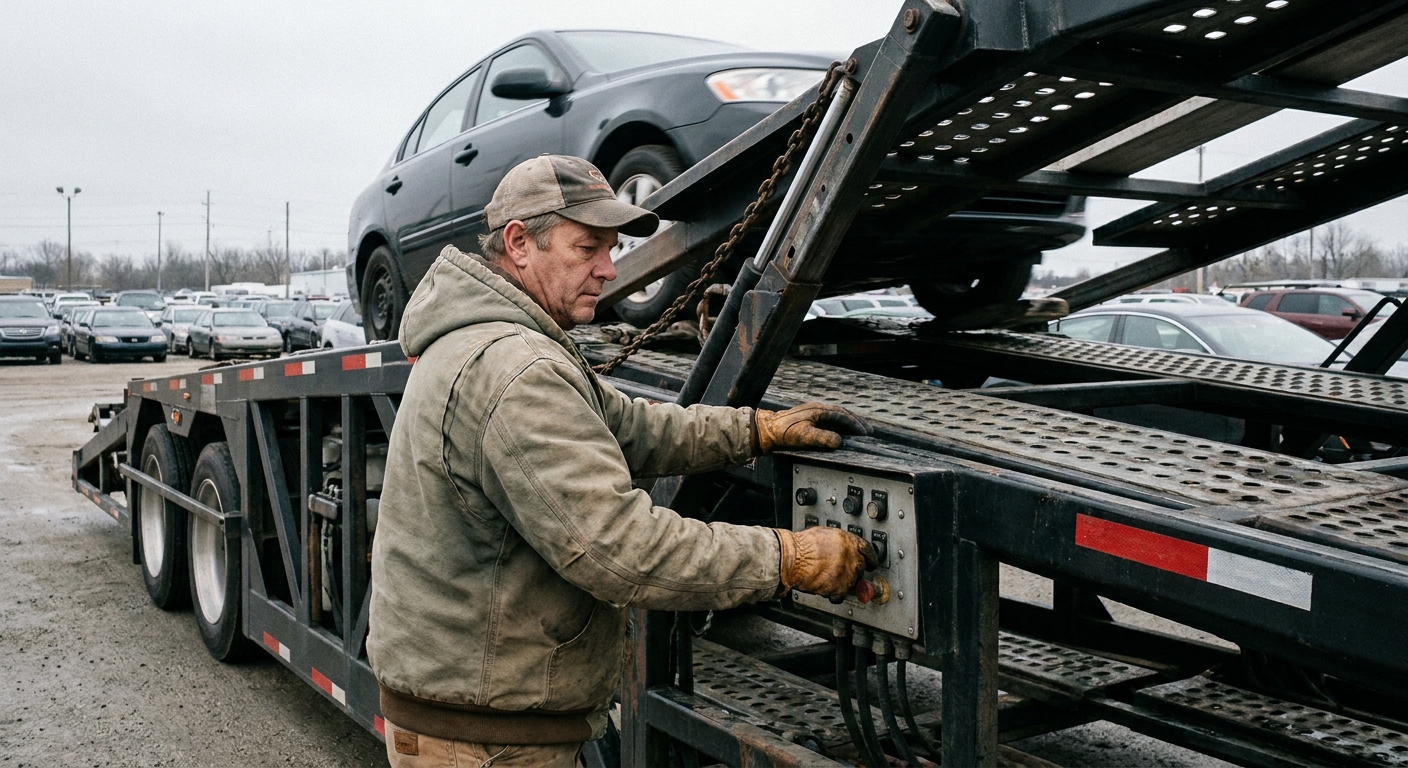
Auto Transporter Insurance: Cargo, On-Hook & Liability Coverage Explained (2026 Guide)
What makes auto transporter insurance different from dealer insurance
The two operations share DMV-issued plates and overlap on a few endorsements — but they're underwritten as different risks. A dealer's primary exposure is inventory sitting on a lot. A transporter's primary exposure is other people's vehicles moving on a public road.
This changes which coverages matter most. A dealer can survive without on-hook coverage. A transporter cannot. A transporter rarely needs a $1M dealer's open lot endorsement. A dealer almost always does. Buying the wrong type of policy for your operation is the #1 underwriting mistake in this segment (we cover it in detail in the Dealer vs Transporter vs Garage Liability comparison).
Below: the six coverages every transporter needs, what the limits should be, and what most policies are quietly missing.
The 6 coverages every auto transporter needs
1. Commercial auto liability
What it covers: Bodily injury and property damage to third parties when your truck or trailer is involved in an accident. This is the legal-defense and settlement-payment layer.
Recommended limit: $1M combined single limit minimum. For multi-truck operations or interstate transporters, $2M+ is the new floor. Federal MCS-90 endorsement is required for any interstate hauling — it's the FMCSA's financial-responsibility filing.
Best carriers: Lancer, Sentry, Universal Underwriters / Zurich.
2. Motor truck cargo (MTC)
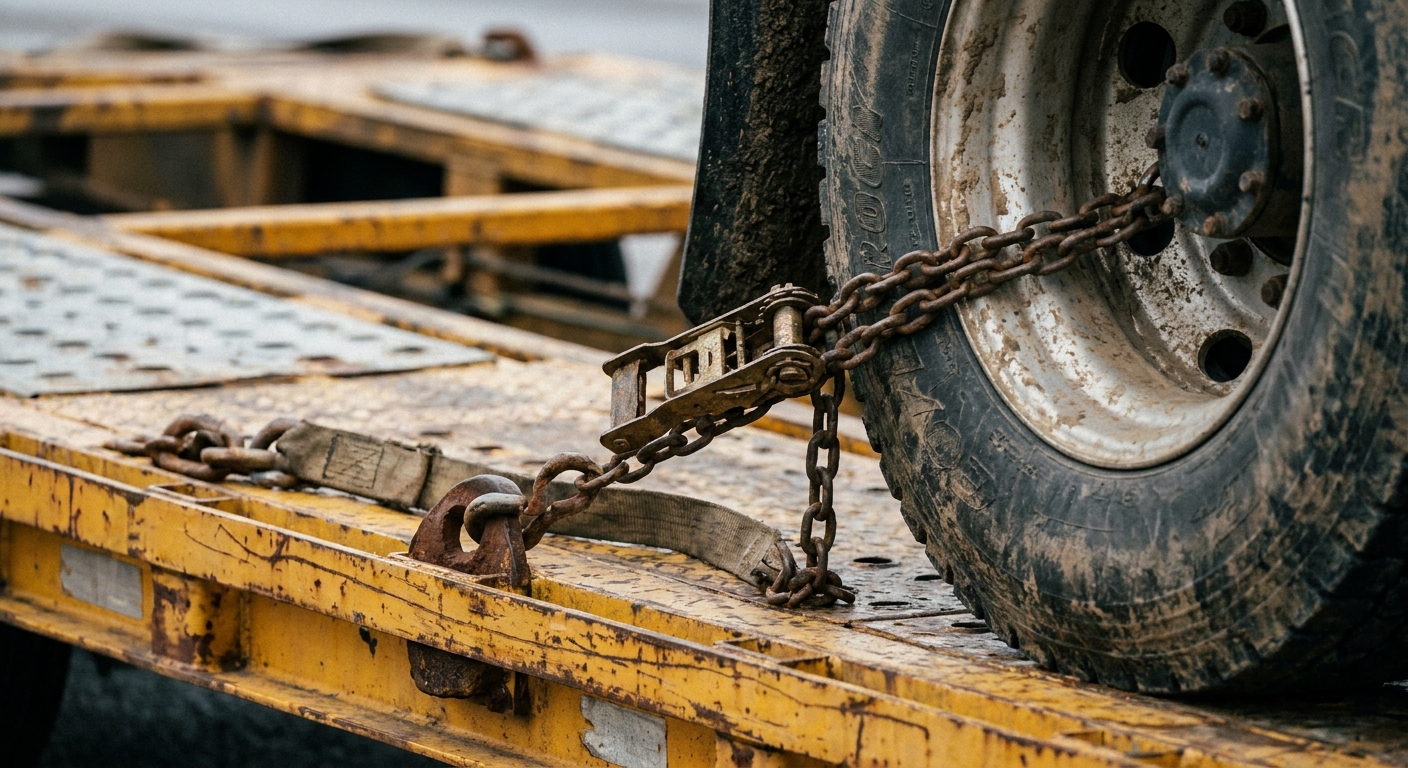
What it covers: The vehicles you're hauling when something happens — fire, theft, collision, overturned trailer, water damage from a sudden storm. This is the cargo your customers entrusted to you.
Recommended limit: $250,000 per load minimum for standard 7–9 car carriers. Exotic, classic, or luxury haulers should carry $500K–$1M+ per load. Watch for sub-limits — many policies cap a single vehicle at $75K even with a $250K policy limit.
What most policies are missing: "Refrigerated breakdown" and "rain & flood" extensions, plus tarp coverage if you haul open trailers. Ask explicitly.
Best carriers: Lancer, Sentry, Berkshire Hathaway GUARD.
3. On-hook coverage
What it covers: Vehicles that are physically connected to your tow truck or wrecker — typically used by transporters who do roadside recovery or short-haul pickup work in addition to multi-car hauling.
Recommended limit: $100,000 per vehicle minimum. Higher if you handle luxury or exotic recoveries.
Distinction from MTC: Motor truck cargo covers vehicles loaded ON a trailer. On-hook covers vehicles being TOWED behind a wrecker. Different physical setups, different coverages — you may need both.
Best carriers: Lancer, Progressive Commercial, Wesco.
4. Garage liability
What it covers: Liability arising from your business premises — the yard where you park, load, and stage trucks. Slip-and-fall, employee-injures-customer, customer's car damaged on your lot.
Recommended limit: $1M per occurrence, $2M aggregate.
Best carriers: Same as auto liability — most carriers bundle the two.
5. Garagekeepers legal liability
What it covers: Customers' vehicles parked at your facility before pickup or after delivery — a step in nearly every transport job that policies often miss. If a tree falls on a customer's car the night before pickup, this is the coverage that pays.
Recommended limit: $250K minimum. Aggregate to cover your busiest weekend.
Best carriers: Bundled into garage policies from Lancer, Zurich, Federated.
6. General liability (CGL)
What it covers: The catch-all — non-vehicle-related premises liability, advertising injury, product liability for any parts/accessories you sell, contractual liability for hauling agreements.
Recommended limit: $1M / $2M minimum.
Best carriers: Hartford, Travelers, Lancer, GUARD, Federated.
Limit benchmarks for 2026 tri-state transporters
| Operation size | Auto liability | Motor truck cargo | On-hook | GL |
|---|---|---|---|---|
| Single truck owner-op | $1M CSL | $250K / load | $100K / veh | $1M / $2M |
| 2–5 truck operation | $1M–$2M CSL | $250K–$500K / load | $100K / veh | $1M / $2M |
| 6–15 truck fleet | $2M CSL | $500K–$750K / load | $150K / veh | $2M / $4M |
| Exotic / luxury hauler | $2M+ CSL | $1M–$2M / load | $250K+ / veh | $2M / $4M |
What most transporter policies are missing
- Loading & unloading coverage — extends MTC to the moment vehicles are coming on or off the trailer (a high-loss moment).
- Storage extension — covers vehicles staged at your yard for more than 48–72 hours awaiting pickup.
- Hired & non-owned auto — covers situations where you rent a backup truck or a contractor uses their own vehicle for your operation.
- Pollution liability sub-limit — fuel and fluid spills from a damaged hauled vehicle.
- Earned freight charges — if a load is destroyed mid-haul, this covers the freight you can no longer invoice.
Federal & state filings you also need
Insurance is half the picture. Auto transporters operating interstate also need:
- USDOT number — issued by the FMCSA.
- MC number (Motor Carrier authority) — required for for-hire transport.
- BOC-3 filing — designation of process agents in each state you operate in.
- UCR registration — Unified Carrier Registration, renewed annually.
- State-level transporter plates — separate from federal authority; CT, NY, and PA each issue their own.
Your insurance carrier files the MCS-90 endorsement directly with FMCSA when you bind interstate authority. They also file Form E (or its electronic equivalent) for state-level transporter plates. Both filings must be active at all times — if your insurance lapses, your authority lapses, and you cannot legally operate.
What this costs in 2026
A single-truck auto transporter with $1M auto liability + $250K cargo + $100K on-hook + GL typically pays $8,500–$14,000/year in 2026. A 5-truck operation lands around $32,000–$48,000/year. Exotic-car haulers running $1M+ cargo limits can easily clear $25K per truck.
For the full cost breakdown, see our 2026 tri-state pricing analysis.
Key Takeaways
- Auto transporter insurance is not dealer insurance with bigger limits — the underwriting is fundamentally different.
- The 6 core coverages are auto liability, motor truck cargo, on-hook, garage liability, garagekeepers, and CGL.
- Sub-limits matter more than headline limits — check per-vehicle caps inside your MTC policy.
- Interstate transporters need MCS-90, USDOT, MC, BOC-3, and UCR filings active at all times.
- Lancer, Sentry, and Zurich/UUIG are the top tri-state markets for transporter business.
Frequently Asked Questions
Do I need both motor truck cargo and on-hook coverage?
If you run multi-car haulers AND do any roadside towing or recovery work, yes. If you only do trailer-based hauling, MTC alone is sufficient. The two cover different physical setups.
What's the difference between Form E filing and MCS-90?
Form E is a state-level filing (used by CT, NY, PA, and others) certifying that your insurance meets the state's transporter-plate requirements. MCS-90 is the federal FMCSA endorsement certifying you meet interstate financial-responsibility minimums. Most transporters need both.
Can I haul without a USDOT number if I stay in-state?
It depends on the state. Connecticut, New York, and Pennsylvania all require intrastate carriers to have a state-level operating authority even without a federal DOT number. Your insurance must be filed accordingly. We strongly recommend any commercial transporter pull a DOT number regardless — it's free and it expands your market.
Does my MTC cover the customer's personal items inside the car?
Standard MTC excludes personal contents. Most transporters bake a "no personal items" clause into their bill of lading. If you want contents coverage, you'll need a separate contingent cargo endorsement — and most carriers will write it for an additional premium.
I tow exotic cars — what limits should I carry?
Exotic and luxury haulers should carry $1M–$2M per load on MTC and $250K+ on-hook. Several carriers (Lancer, Wesco) write enhanced policies for exotic transporters with appraisal-based valuation.
Does dealer plate insurance cover transport runs?
Generally no — and this is the most common confusion. A dealer plate policy covers dealer-owned vehicles being moved between auctions, the lot, and customers. It does NOT cover for-hire transport of customer-owned vehicles. If you are transporting cars for third parties, you need transporter insurance, not dealer insurance.
Continue the cluster
Need transporter insurance that actually fits?
We write multi-car haulers, exotic transporters, and owner-ops across CT, NY, and PA. Send us your DOT number and we'll structure a program with all 6 core coverages.
Get a transporter quote →