
Connecticut Builders Risk Insurance: 2026 Buyer’s Guide
What should Connecticut builders review before buying builders risk insurance in 2026?
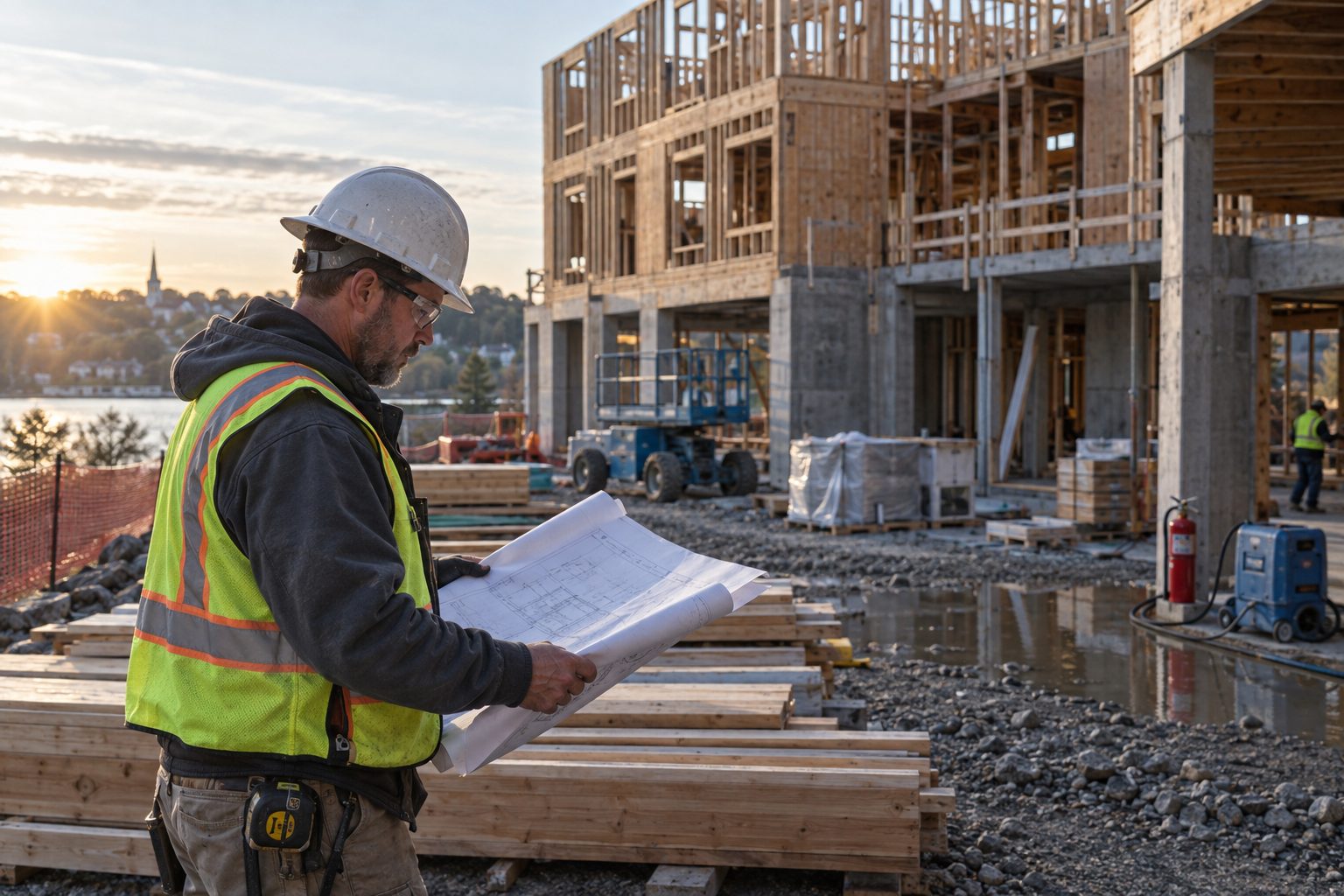
Connecticut contractors, developers and property owners should update project values, construction timelines, site protections and loss-control details before seeking builders risk coverage in 2026. A more competitive property market may improve options, but wood-frame construction, fire exposure, water damage, delayed completion and inaccurate values can still limit capacity or change terms.
A builders risk estimate can go stale long before the first shovel hits the ground. Material costs change. Completion dates move. Plans add square footage, equipment or temporary structures. If the insurance submission still reflects an early budget, the coverage may no longer match the project that is actually being built.
Risk Placement Services’ 2026 US Property Market Outlook describes active competition in builders risk while noting that construction type and risk quality still matter. The report specifically distinguishes frame construction from better-protected projects and emphasizes disciplined underwriting and reliable capacity. (RPS, pp. 7, 11 and 14–15.) This iConn Insurance Solutions guide turns those observations into a practical Connecticut buyer checklist.
What does builders risk insurance cover?
Builders risk is property coverage designed for a building or project while construction is underway. Depending on the policy, covered property may include the work in progress, materials at the site, some materials in transit or temporary storage, and certain related costs. The exact scope varies substantially by form and endorsement.
Builders risk is not a substitute for general liability, workers compensation, professional liability, equipment coverage, environmental protection or a contractor’s other policies. It also does not automatically cover every cause of loss or delay. The contract should identify who is insured, what property is included, when coverage starts, when it ends and which exclusions apply.
Why can an old builders risk estimate create trouble?
The project value is the financial foundation of the placement. An outdated estimate may omit escalation, change orders, owner-supplied property, architect and engineering costs, demolition expenses or other items that belong in the completed value under the chosen form.
Suppose a Hartford-area redevelopment was budgeted at $12 million eighteen months ago. After design changes and material increases, the actual completed value is expected to reach $15 million. If the insurance submission still shows $12 million, the owner may be evaluating limits and pricing against the wrong project. Whether and how the policy responds depends on its terms, but the mismatch should be corrected before binding.
What do builders risk underwriters look for?
| Underwriting area | Information to prepare | Why it matters |
|---|---|---|
| Construction | Frame, masonry, steel, fire-resistive elements and project type | Changes fire spread and loss severity |
| Completed value | Current hard and soft costs, change orders and property included | Supports an accurate limit |
| Timeline | Start date, milestones, completion date and contingency | Defines the period of exposure |
| Protection | Fencing, lighting, alarms, cameras, guards and fire controls | Shows how theft, vandalism and fire are managed |
| Water controls | Testing, shutoff procedures, sensors and response plans | Addresses a frequent source of construction loss |
| Experience | General contractor history, similar projects and losses | Helps demonstrate execution quality |
| Location | Coastal, flood, wind, wildfire and neighboring hazards | Identifies catastrophe and site-specific exposure |
A polished narrative cannot replace missing facts. Underwriters want a coherent project story supported by plans, schedules and controls. Conflicting dates or values invite questions and can delay the placement.
Why is wood-frame construction treated differently?
RPS identifies frame construction as an area where underwriting can remain more selective even when overall builders risk competition increases. (RPS, p. 7.) During construction, combustible materials may be exposed before permanent fire protection is operational. Open access, hot work, temporary heating and incomplete compartmentation can compound the risk.
That does not mean every frame project is uninsurable. It means the submission should explain fire prevention, site security, housekeeping, hot-work controls, temporary heating, hydrant access and the schedule for activating sprinklers. Dense urban surroundings or limited fire-department access may add another layer of concern.
How do water damage and theft affect the submission?
Water losses can begin with a small fitting or temporary connection and grow while a site is unattended. A useful plan identifies who performs pressure testing, how systems are isolated, whether automatic shutoff or sensors are used and who responds after hours.
Theft and vandalism controls should match the project phase. Fencing and lighting may be enough for one site, while another needs cameras, controlled access, inventory procedures or guards. Describe the actual controls rather than promising measures that are not in place.
Mid-article next step: Send iConn Insurance Solutions the current project budget, construction schedule and site-safety plan before requesting indications. We can help organize the underwriting package, but insurer appetite and final terms remain subject to review.
Which builders risk terms should buyers compare?
Policy period and extensions
Confirm the anticipated start and completion dates, what triggers inception and termination, and whether an extension is available if the work runs late. Do not assume an extension will be automatic or priced the same way.
Deductibles
Review the base deductible and any separate wind, named-storm, flood, earthquake, water-damage or theft deductibles. Translate percentage deductibles into estimated dollars for the project.
Soft costs and delay
Soft costs and delay-in-completion protection require careful definitions, limits, waiting periods and documentation. Determine which expenses or income are being protected and how long recovery could realistically take after a covered loss.
Testing and commissioning
Projects involving mechanical, electrical or production equipment may need specific testing coverage. Identify the equipment, testing period and hazards instead of assuming the standard form includes them.
Existing structures and renovation work
Renovations create a boundary between new work and existing property. Confirm whether the existing structure is included, excluded or insured elsewhere, and coordinate the builders risk policy with the owner’s permanent property coverage.
Occupancy and handoff
Coverage often ends when the project is accepted, occupied or put to its intended use, subject to policy wording. Coordinate permanent insurance before tenants move in or operations begin.
Is a cheaper builders risk quote automatically better?
No. A lower premium can reflect genuine competition, but it can also reflect different values, deductibles, covered property, exclusions or delay terms. Normalize the quotes before comparing them.
- Use the same completed value and construction description.
- Show every deductible by cause of loss.
- Compare flood, wind and earthquake treatment where relevant.
- List soft-cost and delay limits separately.
- Identify requirements that must be completed before binding.
- Confirm insurer participation if the placement is shared or layered.
RPS recommends approaching the market with a prepared submission and evaluating durable capacity, not just the lowest initial price. (RPS, pp. 11 and 14–15.)
When should you start the builders risk placement?
Begin before the expected construction start, especially for a large, frame, coastal, flood-exposed or technically complex project. Early work gives the team time to resolve value questions, obtain engineering details and compare structures. Starting early does not guarantee broader terms, but it reduces avoidable last-minute pressure.
The owner, general contractor, lender and broker should also clarify responsibility. Contract language may require specific limits or insured parties, but contract compliance alone does not prove the project’s financial exposure is fully addressed.
Why independent brokers matter for builders risk
Builders risk combines property underwriting, project information and contract requirements. An independent broker can help organize the submission, compare available insurers and explain differences beyond price. Better strategy cannot eliminate every restriction, but it can make the risk easier to understand.
At iConn Insurance Solutions, we help Connecticut and Northeast project teams review construction details, values and program options. Our sister agency, Insure Connecticut LLC, provides additional Connecticut insurance resources.
Frequently Asked Questions About Connecticut Builders Risk Insurance
How much does builders risk insurance cost in Connecticut?
There is no universal rate. Pricing depends on completed value, construction type, location, project length, protection, contractor experience, requested coverage and insurer appetite. Frame, coastal or complex projects may be treated differently. A current project submission is required for a meaningful estimate.
Who should buy the builders risk policy?
The owner, developer or general contractor may be responsible, depending on the construction contract and financing requirements. The parties should decide who buys coverage and who must be included before work begins. An attorney should address contractual interpretation; the broker should coordinate the insurance placement.
Does builders risk cover delays?
Not automatically. Some policies can include defined soft costs or delay-in-completion protection following covered physical damage. Limits, waiting periods, covered expenses and measurement methods vary. Ordinary scheduling delays, financing problems or uncovered causes of loss may not qualify.
Does builders risk cover an existing building during renovation?
Sometimes, but it should never be assumed. The existing structure may be included by endorsement, insured under a separate property policy or excluded. The owner should confirm how the old structure, new work and temporary relocation exposures fit together.
What should a Connecticut contractor prepare for underwriting?
Prepare the current budget, schedule, plans, completed value, contractor experience, loss history, site-security measures, fire and water controls, catastrophe information and requested coverage. Coastal wind and flood considerations may require additional detail depending on the exact location.
When does builders risk coverage end?
Termination can be triggered by the policy expiration, occupancy, acceptance, completion, abandonment or another event stated in the contract. Because wording varies, arrange permanent property coverage before the project crosses any termination point.
Build the insurance plan alongside the project plan
The best time to fix a stale value or missing extension is before construction begins—not after a claim or deadline. Ask iConn Insurance Solutions to review the project budget, timeline and proposed builders risk terms.
Source: Risk Placement Services, 2026 US Property Market Outlook, pp. 7, 11 and 14–15. Read the 2026 Connecticut commercial property pillar guide. RPS market observations are attributed to RPS. General educational information only; policy language, contracts, insurer underwriting and applicable law control.
Draft editorial package — remove before publication
Focus keyword: Connecticut builders risk insurance. Secondary keywords: builders risk insurance cost Connecticut; construction insurance 2026; wood-frame builders risk; builders risk project value; delay in completion coverage; what do builders risk underwriters look for?
Feature image placed with responsive sizes. Alternate alt text: Connecticut commercial construction project under review; Wood-frame building site during insurance planning; Contractor reviewing builders risk controls at a jobsite.
Editorial notes: Verify CTA destination, author, and any approved construction client example. Expansion: add a downloadable submission checklist. Merge: shorten general coverage definitions if linked to an existing builders risk guide. Follow-ups: delay-in-completion coverage, renovation insurance, and construction water-loss controls.
Related Content
AI Fraud Insurance Exclusions: Where Coverage Can Break
A large cyber limit can hide a small social engineering sublimit. Learn how voluntary-transfer language, verification conditions, and overlapping crime coverage can affect AI fraud claims.
Read post →
Connecticut Builders Risk Insurance: 2026 Buyer’s Guide
Connecticut builders risk buyers should update project values, timelines and controls. Learn what to prepare and compare for a 2026 placement.
Read post →
How Shared and Layered Property Insurance Programs Work
Learn how shared and layered commercial property programs assemble capacity, where each insurer participates, and what RPS says about ADAPT capacity.
Read post →
Commercial Property Insurance Coverage Gaps: What a Lower Quote May Hide
A lower commercial property quote may hide larger deductibles, smaller sublimits or narrower terms. Learn how Connecticut owners can compare coverage.
Read post →