
Connecticut Manufacturing Property Insurance: 2026 Outlook
What should Connecticut manufacturers review in the 2026 property insurance market?
Connecticut manufacturers should use the 2026 renewal to verify property values, document fire protection and risk improvements, test business-income limits, and explain equipment or process concentrations. More insurer competition may create options, but underwriters still focus on combustible operations, critical machinery, supply-chain dependencies, loss history and the quality of the submission.
A manufacturing property policy is not just insurance on four walls. The real exposure may sit in a single production line, a custom machine with a long replacement time, raw materials vulnerable to temperature change or a supplier that cannot be replaced quickly. A building can be repaired while the business remains unable to produce.
Risk Placement Services’ 2026 US Property Market Outlook describes manufacturing as an area where capacity and alternative program structures can benefit well-presented risks. It also stresses differentiation by risk quality and the importance of disciplined preparation. (RPS, pp. 6, 8 and 15.) This iConn Insurance Solutions guide explains how a Northeast manufacturer can turn those market observations into a stronger renewal process.
Why does manufacturing property insurance require more than a building value?
Manufacturing losses can spread through several financial layers. Physical damage may affect the structure, machinery, stock and utilities. The resulting shutdown can reduce revenue, create extra expenses and delay customer orders. If a critical supplier or customer is affected, the manufacturer may suffer even when its own premises are unharmed.
The property schedule should therefore connect assets to operations. Which machine is the bottleneck? Which location makes the only version of a key component? How long would replacement equipment take to manufacture, ship, install and test? These questions help determine whether reported values and time-element limits reflect the real recovery path.
What do property underwriters look for in a manufacturing risk?
| Area | Information to provide | Why it matters |
|---|---|---|
| Construction and occupancy | Building materials, age, renovations and processes by area | Shows how a loss could start and spread |
| Fire protection | Sprinkler design, inspections, alarms, hydrants and water supply | Demonstrates detection and suppression capability |
| Processes | Heat, dust, flammables, chemicals and automated systems | Identifies special hazards and controls |
| Equipment | Replacement values, lead times, spares and maintenance | Connects physical damage to downtime |
| Business continuity | Alternate sites, suppliers, inventory and recovery procedures | Supports time-element analysis |
| Loss history | Cause, amount, corrective action and current status | Shows whether past problems were addressed |
| Catastrophe exposure | Flood, wind, earthquake and site-specific protections | Helps underwriters model severity |
“No changes” is rarely a complete renewal update. Even when the operation looks the same, equipment values, inventory, sales, payroll, utility dependence and replacement lead times may have changed.
How should a manufacturer update property values?
Separate building, machinery, stock and other property so each category can be reviewed. Accounting values are not automatically insurance replacement values. A fully depreciated machine can still be essential and expensive to replace. Imported equipment may require freight, duties, installation, calibration and testing.
For a hypothetical New Haven County manufacturer, a $2 million production line may require another $400,000 for removal, shipping, electrical work and commissioning. Whether those costs belong in the insured value depends on the policy and valuation approach, but excluding them without analysis can create a shortfall.
Also ask whether inflation-guard provisions, margin clauses, coinsurance or reporting forms affect recovery. Those terms can change how inaccurate values are treated after a loss.
What fire and process controls should be documented?
Underwriters need more than a statement that the plant is “fully protected.” Provide current inspection records and explain impairments. If sprinkler recommendations were completed, show when and how. If an impairment remains open, describe the interim control and completion plan honestly.
- Automatic sprinklers appropriate for the occupancy and storage arrangement
- Alarm monitoring and documented testing
- Hot-work permits and fire watch procedures
- Flammable-liquid handling and storage
- Dust collection and housekeeping where combustible dust may exist
- Preventive maintenance and infrared electrical inspection
- Emergency shutoffs and employee response training
This is not a universal compliance checklist. The correct controls depend on the operation, applicable standards and professional engineering guidance.
How do risk improvements affect the renewal?
RPS says insurers are differentiating more sharply between well-managed risks and accounts with unresolved hazards. (RPS, p. 6.) A completed recommendation can improve the story, but only if the submission documents it. Include invoices, photographs, inspection reports or a concise engineering update where appropriate.
Do not overstate the effect. A new sprinkler system or roof improvement may help underwriters evaluate the risk, but it does not guarantee lower pricing, broader coverage or acceptance. Catastrophe exposure, loss history and capacity can still dominate the result.
Mid-article next step: Give iConn Insurance Solutions a list of completed improvements at least several weeks before renewal. Pair each improvement with evidence and the exposure it was designed to reduce.
How should manufacturers calculate business-income exposure?
Business-income insurance is a time problem as much as a dollar problem. Estimate how long it would take to investigate damage, order equipment, obtain permits, rebuild, install machinery, test production and regain customers. The longest step—not the average step—may determine the realistic recovery period.
Work with financial and insurance professionals to estimate continuing expenses, lost earnings and extra expenses under the policy’s definitions. Consider seasonality, backlogs, outsourcing costs and the time needed after physical restoration to return sales to normal.
What about dependent properties?
A key supplier, customer, contract manufacturer or utility can interrupt production. Contingent business-income or dependent-property provisions may address certain covered situations, subject to named locations, limits, causes of loss and policy wording. Identify the dependencies before trying to insure them.
What about equipment breakdown?
Property and equipment-breakdown coverage can interact but are not identical. Boilers, pressure vessels, electrical systems, refrigeration, production machinery and control systems may create mechanical or electrical breakdown exposure. Confirm how the proposed policies coordinate and whether resulting spoilage or business income is addressed.
Would one insurer or a layered program work better?
RPS notes that manufacturing accounts may benefit from available capacity and creative structures. (RPS, p. 8.) One insurer can offer simplicity when it is willing to provide the needed limit. Shared or layered placements can assemble larger limits or spread participation when no single insurer wants the full exposure.
Complexity is not automatically better. If several insurers participate, ask for a clear program tower and compare wording, attachment points, deductibles and claims coordination. The goal is a coherent program, not the largest number of logos.
What coverage terms deserve special attention?
- Valuation: replacement cost, actual cash value and any special machinery valuation provisions.
- Ordinance or law: costs created by code requirements after covered damage.
- Business income: limits, period of restoration, waiting period and extended recovery.
- Equipment breakdown: covered equipment, causes, spoilage and time-element effects.
- Flood and earthquake: availability, sublimits, zones and deductibles.
- Service interruption: covered utilities, distance requirements and waiting periods.
- Property off premises: goods in transit, at processors or in temporary storage.
- Protective safeguards: conditions tied to sprinklers, alarms or other systems.
The cheap answer fails when an excluded machine, restricted peril or insufficient restoration period is the very thing that stops production.
What should a manufacturing renewal submission include?
- A current statement of values by location and property category.
- Building, occupancy, protection and exposure details.
- Five years of loss information when available, with corrective actions.
- Descriptions of critical machinery and replacement lead times.
- Fire-protection inspection status and completed improvements.
- Business-continuity and disaster-recovery information.
- Requested limits, deductibles and coverage priorities.
- A narrative explaining what has changed since the prior renewal.
RPS emphasizes approaching the market with clear objectives and a high-quality submission. (RPS, p. 15.) Giving insurers consistent information makes competing options easier to compare.
Why independent brokers matter for manufacturers
Manufacturing property programs combine technical underwriting, financial analysis and market strategy. An independent broker can help package the risk, approach suitable insurers and compare restrictions as well as price. The broker should also explain when a requested enhancement is unavailable or uneconomical.
iConn Insurance Solutions works with Northeast businesses to review property schedules, risk improvements and renewal structures. Our sister agency, Insure Connecticut LLC, provides additional Connecticut insurance resources. All quotes remain subject to insurer underwriting.
Frequently Asked Questions About Manufacturing Property Insurance
How much does manufacturing property insurance cost in Connecticut?
There is no standard price. Premium depends on property values, construction, processes, protection, catastrophe exposure, loss history, limits, deductibles and insurer appetite. Two plants with similar square footage can price differently because their equipment, hazards and recovery plans are different.
Does a new sprinkler system guarantee a lower premium?
No. Improved fire protection can strengthen the risk and may affect insurer interest, but it does not guarantee a specific price or term. Document the design, inspection and completion. Underwriters will still consider occupancy, values, losses, catastrophe exposure and the rest of the program.
How do I insure a machine with a long replacement time?
Report an accurate replacement value and lead time, then review property, equipment-breakdown and business-income options. Consider installation, testing and commissioning—not just purchase price. Coverage availability and valuation depend on the policy, so identify the machine as a critical bottleneck during underwriting.
What is contingent business-income coverage?
It can cover certain income losses caused by covered damage at a dependent supplier, customer or other qualifying property, subject to policy terms. Limits may be smaller than the main business-income limit, and locations or causes may need to be scheduled. Map critical dependencies before renewal.
Should a Connecticut manufacturer use several property insurers?
It depends on the required limit, risk characteristics and available capacity. A single insurer may be simpler, while shared or layered participation may help assemble capacity for a larger schedule. Compare wording, attachment points, insurer quality and claims coordination before choosing.
What should I send my broker before renewal?
Send updated values, equipment and inventory changes, current loss information, completed risk improvements, fire-protection reports, business-interruption estimates and a description of operational changes. Early, consistent information gives the broker time to address questions and compare suitable options.
Make the plant’s recovery plan part of the insurance plan
The strongest property program reflects how the facility actually produces, depends on equipment and recovers after a loss. Ask iConn Insurance Solutions to review your current policy, statement of values and renewal submission.
Source: Risk Placement Services, 2026 US Property Market Outlook, pp. 6, 8 and 15. Read the 2026 Connecticut commercial property pillar guide. RPS observations are attributed to RPS. General educational information only; insurer underwriting, engineering guidance and policy language control.
Draft editorial package — remove before publication
Focus keyword: Connecticut manufacturing property insurance. Secondary keywords: manufacturing insurance 2026; factory property insurance; manufacturing business income coverage; property insurance risk improvements; equipment replacement value; what do manufacturing underwriters look for?
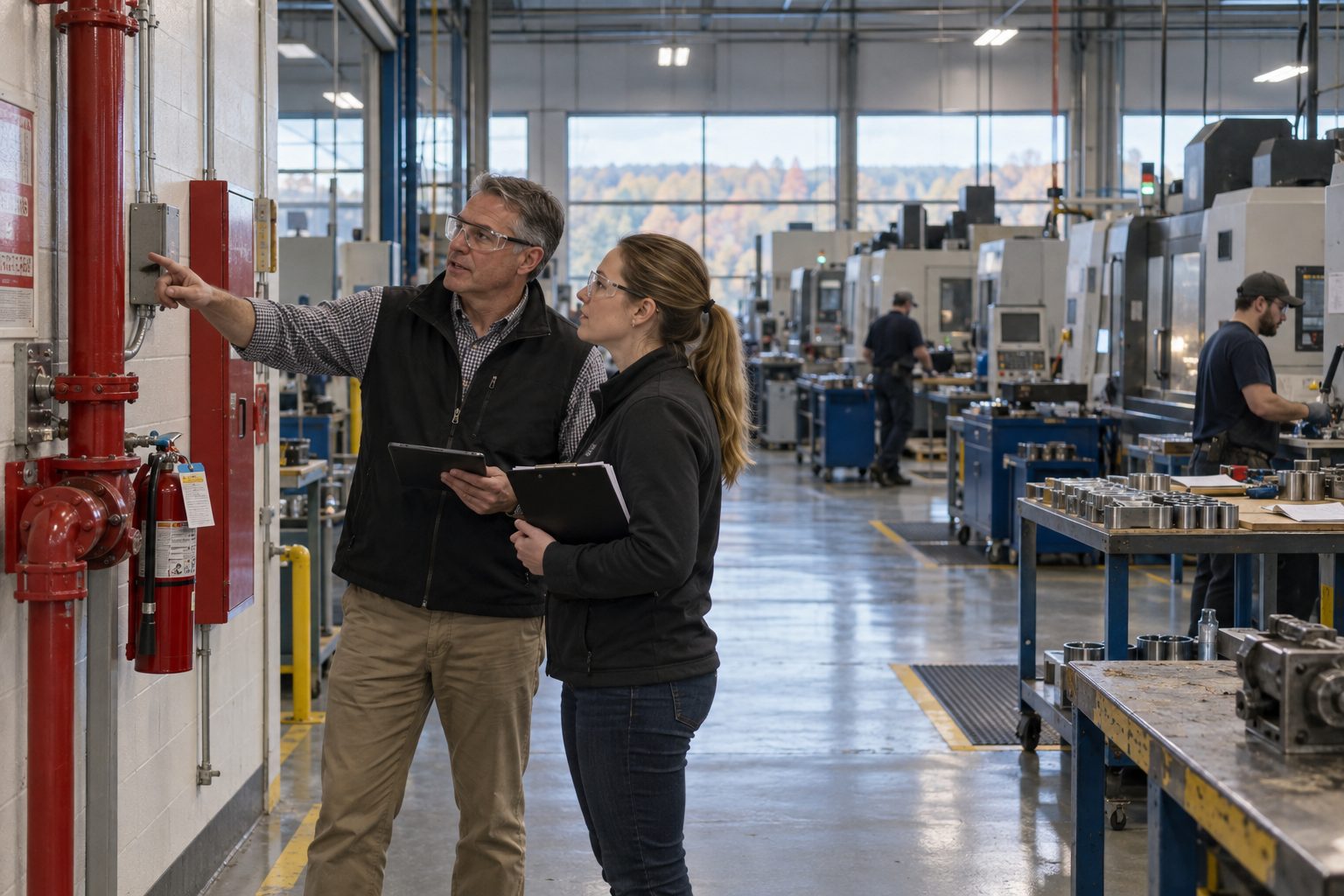
Feature image placed with responsive sizes. Alternate alt text: Connecticut factory illustrating property insurance planning; Manufacturing floor prepared for a property risk review; Industrial facility used for manufacturing insurance guidance.
Editorial notes: Verify CTA destination, author and any approved engineering sources. Expansion: add a business-income worksheet and anonymized risk-improvement example. Merge: shorten equipment breakdown if a dedicated article exists. Follow-ups: contingent business income, combustible dust risk, and machinery valuation.
Related Content
Connecticut Manufacturing Property Insurance: 2026 Outlook
Connecticut manufacturers can strengthen 2026 property renewals with accurate values, documented risk improvements and realistic recovery planning.
Read post →How to Prevent Deepfake and Voice-Cloning Payment Fraud
Deepfake video and voice cloning can make fraudulent payment requests feel real. Use this practical control framework to protect wires, ACH payments, payroll, and vendor changes.
Read post →AI Social Engineering Fraud: Is Your Cyber Insurance Ready?
AI voice cloning, deepfakes, and deceptive payment instructions can expose gaps between cyber, crime, and social engineering coverage. Learn how to test your protection before a loss.
Read post →
Employee Benefits for Food & Beverage Companies: Retention, Cost, and Risk
Food and beverage employers face rising benefit costs and retention pressure. Learn how benefits strategy connects to workforce and business risk.
Read post →