
NFIP vs. Private Flood Insurance: Which One Is Better for Connecticut Homeowners in 2026?

NFIP flood insurance is a government-backed program offering standardized coverage up to $250,000 for your home's structure. Private flood insurance is offered by independent carriers with higher coverage limits, shorter waiting periods, and more flexible policy options. In 2026, choosing between them depends on your property's risk level, coverage needs, and budget — and in many cases, private insurers are now offering better value for Connecticut homeowners.

Choosing the right flood insurance in 2026 could save you thousands — and protect everything you've built.
You've been told your whole life that flood insurance is flood insurance. One option, one provider, take it or leave it. For decades, that was basically true — the National Flood Insurance Program (NFIP) was the only game in town.
But here's what's changed: private flood insurance has exploded onto the market. And in 2026, Connecticut homeowners have more choices — and more confusion — than ever before.
The stakes couldn't be higher. Flood damage is the most common and costly natural disaster in the United States, and your standard homeowner's policy won't cover a single dollar of it. Whether you live on the Connecticut shoreline, near a river in Hartford, or in a neighborhood that "never floods" — until it does — the question isn't whether you need flood insurance. It's which kind.
This guide breaks down NFIP vs. private flood insurance in plain language, with Connecticut-specific insights to help you make the smartest choice for your home and your wallet.
What Is NFIP Flood Insurance?
The National Flood Insurance Program (NFIP) is a federal program managed by FEMA that was created in 1968 to provide flood insurance to homeowners in communities that adopt floodplain management standards. For decades, it was essentially the only option available to most Americans.
The NFIP is available through most insurance agents and is backed by the full faith of the federal government. Your policy terms are standardized nationwide — meaning a homeowner in Mystic, Connecticut gets the same coverage structure as someone in Houston, Texas.
Key Features of NFIP Coverage
- Building coverage — Up to $250,000 for the structure of your home
- Contents coverage — Up to $100,000 for personal property inside the home
- 30-day waiting period — Your coverage doesn't start until 30 days after purchase
- Standardized pricing — Rates are set by FEMA using Risk Rating 2.0 methodology
- Government-backed — Claims are paid through the federal treasury
Important for CT homeowners: Under FEMA's Risk Rating 2.0 (implemented in 2021), NFIP premiums are now based on individual property risk factors like distance to water, flood frequency, and replacement cost — rather than just flood zone maps. This means some Connecticut homeowners have seen significant premium increases, while others have seen decreases.
What Is Private Flood Insurance?
Private flood insurance is coverage offered by independent insurance companies — not the federal government. These carriers use their own advanced risk modeling technology to assess your property and set premiums, often resulting in more competitive pricing and significantly more flexible coverage options.
The private flood insurance market has grown rapidly in the last several years. In 2026, there are dozens of carriers writing private flood policies in Connecticut, and the competition has driven innovation in coverage, pricing, and policy features that the NFIP simply can't match.
Key Features of Private Flood Insurance
- Higher coverage limits — Often $500,000 to $1 million+ for the structure (far exceeding NFIP's $250K cap)
- Shorter waiting periods — Some carriers offer coverage in as little as 0 to 15 days
- Loss of use coverage — Pays for temporary housing if your home is uninhabitable after a flood
- Broader coverage — May include pools, detached structures, landscaping, and basement contents
- Customizable policies — Tailor deductibles, limits, and endorsements to your specific needs
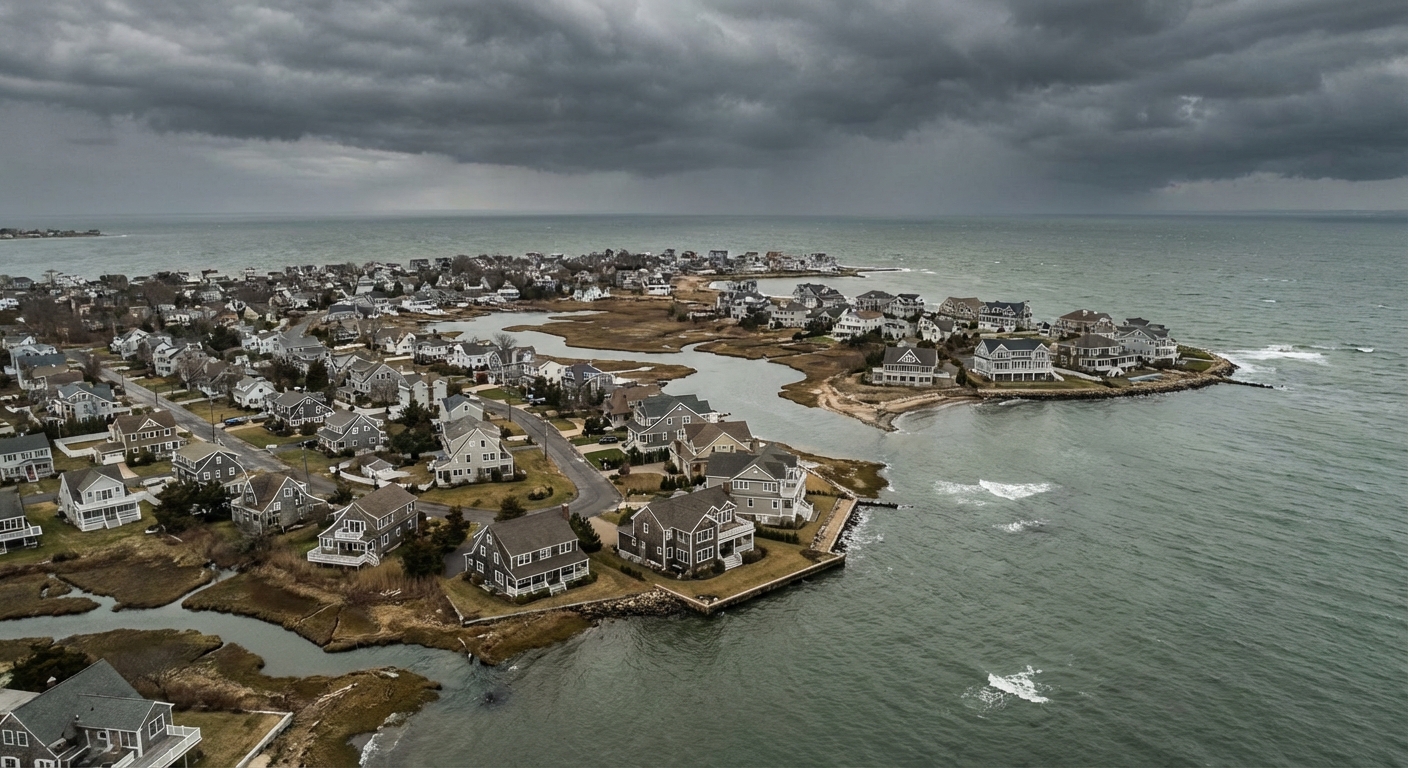
Connecticut's coastline and river systems put thousands of homes at flood risk — even those outside designated flood zones.
NFIP vs. Private Flood Insurance: Side-by-Side Comparison
The differences between these two options matter more than most homeowners realize. Here's how they stack up across the features that impact your wallet and your protection:
| Feature | NFIP | Private Flood Insurance |
|---|---|---|
| Backing | Federal government (FEMA) | Private insurance carriers |
| Max Building Coverage | $250,000 | $500K–$1M+ (varies by carrier) |
| Max Contents Coverage | $100,000 | Higher limits available |
| Waiting Period | 30 days | 0–15 days (varies by carrier) |
| Loss of Use / ALE | Not included | Often included |
| Pricing Model | Standardized (Risk Rating 2.0) | Competitive, risk-based modeling |
| Policy Customization | Limited — one-size-fits-all | Highly flexible and customizable |
| Basement Coverage | Very limited | Often more comprehensive |
Which Is More Affordable in 2026?
This is the question everyone asks first — and the honest answer is: it depends on your specific property. But here are the general trends we're seeing in Connecticut:
NFIP Tends to Be Cheaper For
Older homes in high-risk flood zones with repetitive flood claims, properties in FEMA Special Flood Hazard Areas (SFHAs), and homes where private insurers have declined coverage due to extreme risk.
Private Tends to Be Cheaper For
Low-to-moderate risk homes, higher-value properties needing coverage above $250K, homes outside FEMA high-risk zones, and newer construction with modern flood mitigation features.
Thanks to advances in risk modeling technology, private insurers can now assess individual property risk with far more precision than FEMA's broader methodology. This means they can often offer lower premiums with better coverage for homes that aren't at the highest risk levels.
Pro tip: Don't assume one is always cheaper. We've seen cases where private flood insurance saves Connecticut homeowners 30-50% compared to NFIP — and other cases where NFIP remains the better deal. The only way to know is to compare both, side by side, for your specific property.
Which One Should You Choose?
The right flood insurance depends on your situation. Here's a decision framework that our team at Insure Connecticut uses every day with clients:
Choose NFIP If:
- Your property is in a high-risk flood zone (Zone A or V)
- You've had multiple flood claims in the past
- Private insurers have declined your application
- You value government-backed stability and guaranteed renewal
- Your home value is under $250,000
Choose Private Flood Insurance If:
- You need coverage above $250,000 for your home
- You want loss of use / temporary housing coverage
- You need faster policy activation (less than 30 days)
- You're looking for more competitive pricing
- You want customizable coverage (basement, pools, landscaping)
The 30-Day Waiting Period: The Mistake Most Homeowners Make
This is one of the biggest — and most expensive — mistakes we see Connecticut homeowners make.
Most NFIP policies have a 30-day waiting period before coverage kicks in. That means if you see a storm in the forecast and rush to buy a policy, you won't be covered. By the time your policy activates, the damage is already done.
Private flood insurance can offer a significant advantage here. Some carriers activate policies in as few as 10 to 15 days, and in certain situations, coverage can begin even sooner. However, availability can tighten quickly during active storm seasons — so waiting until the last minute is never a good strategy with either option.
Bottom line: The best time to buy flood insurance is before you need it. Whether you go NFIP or private, purchase your policy well in advance of storm season. In Connecticut, that means having coverage in place by late spring — not scrambling in August when a hurricane is tracking up the coast.
Flood Insurance in Connecticut: What Makes It Different?
Connecticut faces a unique combination of flood risks that many homeowners underestimate:
- Coastal storms and hurricanes — The Long Island Sound coastline from Greenwich to Stonington is vulnerable to storm surge, especially during nor'easters and tropical systems
- Heavy rainfall and flash flooding — Intense rainstorms can overwhelm drainage systems in towns like Westport, Milford, and East Haven in a matter of hours
- River overflow — The Connecticut River, Housatonic River, and their tributaries can flood surrounding communities during prolonged rain events
- Aging infrastructure — Many Connecticut towns have stormwater systems built decades ago that weren't designed for today's rainfall intensity
Did you know? According to FEMA, more than 40% of all flood insurance claims come from properties located outside of designated high-risk flood zones. In Connecticut, this is especially true for inland communities that experience flash flooding from heavy rain events. Just because you're not in a flood zone doesn't mean you're not at risk.
Comparing NFIP and private flood insurance side by side is the smartest move a Connecticut homeowner can make.
Why Comparing Your Options Matters More Than Ever in 2026
Flood insurance is no longer a one-size-fits-all product. The market has fundamentally changed, and homeowners who don't shop around are almost certainly leaving money on the table — or worse, leaving dangerous coverage gaps unaddressed.
Here's what's different in 2026:
- More private carriers are writing flood policies in Connecticut than ever before, driving competition and innovation
- Risk Rating 2.0 has changed NFIP pricing — some homeowners are paying significantly more, making private options comparatively attractive
- Climate patterns are shifting — flood risk is increasing in areas that historically weren't considered high-risk, making coverage essential even outside traditional flood zones
- Mortgage requirements have expanded — more lenders are requiring flood insurance even for properties outside SFHAs, giving homeowners an incentive to find the best value
The smartest move? Compare both NFIP and private flood insurance quotes side by side for your specific property. The right choice depends entirely on your home's risk profile, your coverage needs, and your budget.
How Insure Connecticut LLC Helps You Choose
Choosing the right flood insurance isn't just about finding the cheapest premium — it's about making sure you have the right protection when it matters most. A policy with gaps is worse than no policy at all, because it gives you a false sense of security.
At Insure Connecticut LLC, here's exactly what we do:
- Compare NFIP and private flood insurance from multiple carriers — we're not locked into one provider
- Analyze your property's specific risk profile — flood zone, elevation, distance to water, construction type, and more
- Find the best coverage at the most competitive rate — not just the cheapest policy, but the one that actually protects you
- Identify dangerous coverage gaps — things like missing loss-of-use coverage, inadequate contents limits, or basement exclusions you didn't know about
- Handle the entire process — from quoting to binding to claims support, we're with you every step
Key Takeaways
- NFIP is government-backed with standardized coverage up to $250K (building) and $100K (contents), but has a 30-day waiting period and limited flexibility
- Private flood insurance offers higher limits, shorter waiting periods, loss-of-use coverage, and often more competitive pricing
- Neither option is universally "better" — the right choice depends on your property risk, home value, and coverage needs
- Over 40% of flood claims come from outside high-risk flood zones — don't assume you're safe just because you're not in a FEMA-designated area
- The 30-day NFIP waiting period catches thousands of homeowners off guard every storm season — buy coverage well before you need it
- Always compare both NFIP and private quotes side by side — the savings and coverage differences can be significant
Frequently Asked Questions
Is private flood insurance better than NFIP?
It depends on your situation. Private flood insurance often offers higher coverage limits, shorter waiting periods, and more flexibility — which makes it a better fit for many Connecticut homeowners. However, NFIP provides reliable, government-backed coverage that's guaranteed to renew, making it the stronger choice for very high-risk properties or those with a history of flood claims.
Can I switch from NFIP to private flood insurance?
Yes. In most cases, you can switch from NFIP to a private carrier if they offer better coverage or pricing for your property. Your independent insurance agent can help you compare options and manage the transition so there's no gap in coverage. If you have a federally backed mortgage, make sure the private policy meets your lender's requirements.
Is flood insurance required in Connecticut?
Flood insurance is required if your home is in a FEMA-designated Special Flood Hazard Area (SFHA) and you have a federally backed mortgage. However, even if it's not required, flood insurance is strongly recommended for all Connecticut homeowners — especially given that a significant percentage of claims come from properties outside of high-risk zones.
Does flood insurance cover temporary housing if my home is flooded?
NFIP policies do not include loss of use or additional living expense (ALE) coverage. This is one of the biggest advantages of private flood insurance — many private policies include coverage for temporary housing, meals, and other living expenses if your home becomes uninhabitable due to flood damage.
How much does flood insurance cost in Connecticut in 2026?
Flood insurance costs vary widely based on your property's location, elevation, construction type, and risk factors. NFIP premiums in Connecticut can range from a few hundred dollars to several thousand per year. Private flood insurance may be more or less expensive depending on your risk profile. The only way to get an accurate price is to request quotes for your specific property.
What does flood insurance typically cover?
Both NFIP and private flood insurance generally cover direct physical damage to your home's structure and contents caused by flooding — including storm surge, overflowing rivers, heavy rainfall, and mudflow. Private policies may also cover additional items like detached structures, landscaping, pools, and temporary living expenses. Basement coverage varies significantly between NFIP (very limited) and private carriers (often more comprehensive).
Can I have both NFIP and private flood insurance?
Generally, you wouldn't carry both simultaneously for the same property. However, some homeowners use a private excess flood policy on top of their NFIP coverage to get higher limits. This can be a smart strategy if your home value exceeds the NFIP's $250,000 building coverage cap but you want to keep the government-backed base policy.
Get the Right Flood Insurance for Your Connecticut Home
Don't wait until storm season to figure this out. Our team at Insure Connecticut LLC will compare NFIP and private flood options for your property — at no cost — so you get the best protection at the best price.
Get Your Free Flood Insurance QuoteThis article was written by the team at Insure Connecticut LLC. For more insurance guides tailored to Connecticut homeowners and business owners, visit our blog.
Related Content
AI Payment Fraud Incident Response: What to Do First
The first hour after a fraudulent wire can decide whether funds are frozen or lost. Follow this practical response guide for banks, insurers, evidence, law enforcement, and recovery.
Read post →
Hotel and Commercial Property Insurance: Where Should Renewal Savings Go?
A practical guide for hotel and commercial-property owners deciding whether to keep renewal savings, lower deductibles, increase limits or restore coverage.
Read post →AI Fraud Insurance Exclusions: Where Coverage Can Break
A large cyber limit can hide a small social engineering sublimit. Learn how voluntary-transfer language, verification conditions, and overlapping crime coverage can affect AI fraud claims.
Read post →
Connecticut Builders Risk Insurance: 2026 Buyer’s Guide
Connecticut builders risk buyers should update project values, timelines and controls. Learn what to prepare and compare for a 2026 placement.
Read post →