
Ransomware Coverage Specifics: Sublimits, OFAC & What CT Mid-Market Policies Actually Pay
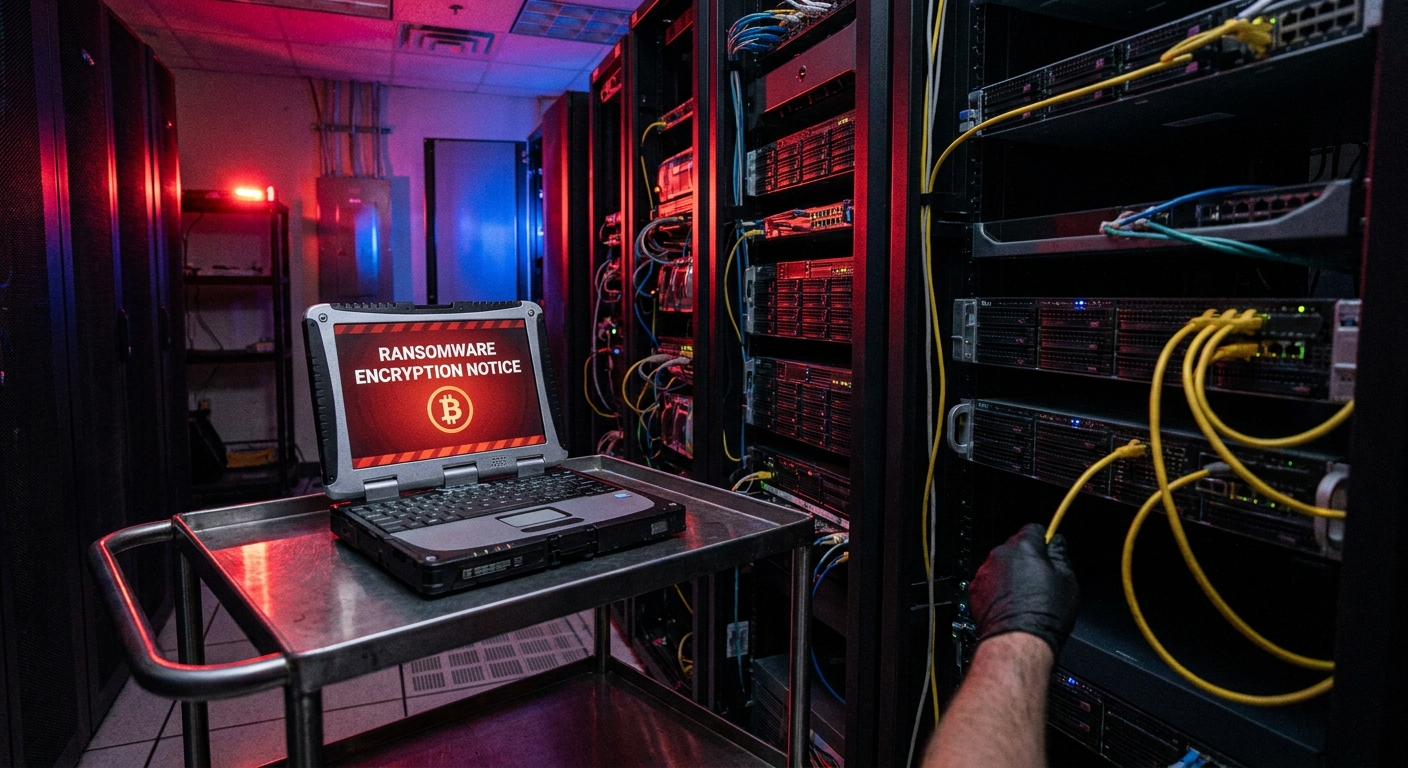
A 240-employee architectural firm headquartered in Hartford, CT, opened a Wednesday morning to find every workstation, every drawing server, and every backup server encrypted by a LockBit affiliate. The ransom demand: $4.2 million. The firm's cyber policy carried a $5 million aggregate but a $1 million ransomware sublimit. The breach coach negotiated the ransom down to $1.8M. The cyber carrier paid the first $1M of ransom, plus $620K in forensics and restoration. The firm paid the remaining $800K of ransom out of pocket. Eight months later, when the renewal came due, the carrier non-renewed at the request of their reinsurer — because LockBit had landed despite documented MFA.
Ransomware is the headline-grabbing cyber claim, and it is also the cyber coverage most likely to be misconfigured on a mid-market policy. This is the first spoke in our CT Mid-Market Cyber Insurance pillar guide, walking through how ransomware coverage actually responds, where the sublimits hide, the OFAC legal landscape on paying ransoms, and what mid-market policies are quoting in 2026.
The short answer: Ransomware coverage on a mid-market cyber policy covers ransom payment, negotiation, forensics, restoration, and business interruption — but is commonly sublimited below the policy aggregate. For a CT mid-market business with $5M aggregate, the ransomware sublimit should be at least $3M, ideally matched to aggregate. Sublimit pricing differential is typically 15–30% of base premium and prevents the most common mid-market coverage shortfall.
At iConn Insurance Solutions we underwrite cyber for CT mid-market businesses — manufacturers, professional services, healthcare-adjacent firms, fintech subs, family offices. Ransomware is the line item we spend the most time getting right on every quote because the sublimit math gets buried and the carrier defaults are often unfit for mid-market exposure. This post walks through what ransomware coverage actually pays for, the legal context, and what mid-market policies are doing in 2026.
What does ransomware coverage actually pay for?
| Coverage Component | What It Pays | Typical Sublimit Range |
|---|---|---|
| Ransom Payment | Actual cryptocurrency paid to threat actor for decryption keys. | $1M–$10M (often less than aggregate) |
| Ransom Negotiation | Specialist firm (Coveware, GroupSense, Kivu) negotiating with threat actor. | Inside ransom sublimit usually |
| Forensic IR | Incident response firm — scope, contain, eradicate, recover. | $500K–$5M |
| Digital Asset Restoration | Rebuilding corrupted data, restoring from backups, system reconfiguration. | $1M–$5M |
| Business Interruption | Lost income during outage. Subject to waiting period (8–24 hours). | Often matches aggregate; some carriers sublimit |
| Extra Expense | Rented servers, overtime, temporary fixes during recovery. | Inside BI usually |
| Breach Coach / Counsel | Privileged breach counsel orchestrating the response. | Inside forensics sublimit |
Should I pay the ransom? The legal landscape.
The question of whether to pay a ransom is genuinely complicated and the answer depends on facts we cannot predict. Three layers matter:
1. OFAC sanctions compliance (legal requirement)
The U.S. Treasury's Office of Foreign Assets Control (OFAC) publishes a Specially Designated Nationals list and ransomware-actor advisories. Paying a ransom to a sanctioned threat actor — Conti, certain LockBit variants, Russian state-aligned groups — is a federal crime even if you are an unwilling victim. OFAC has aggressive enforcement against ransomware payments to sanctioned actors. Your cyber carrier's negotiation panel runs OFAC checks before any payment moves.
2. Does paying actually restore your data?
CISA publishes statistics showing that paying does not guarantee recovery. Roughly 8% of ransom-paying victims never receive working decryption keys. Of those who do, decryption tools fail to fully restore data in another 15–20% of cases. Most modern ransomware variants also exfiltrate data before encryption — meaning even successful decryption does not prevent later data-leak extortion.
3. Restoration vs. payment cost-benefit
For most CT mid-market businesses with documented immutable backups, the math favors restoration over payment. Restoration from clean backups takes 5–14 days and costs $200K–$1.5M in IR + lost productivity. Paying ransom + IR + post-incident hardening often runs $1.5M–$5M with no guarantee of clean recovery. Backups are the cheapest insurance there is.
2026 CT mid-market ransomware premium examples
| Revenue / Setup | Aggregate / Ransomware Sublimit | Annual Premium |
|---|---|---|
| $25M CT manufacturer, MFA + EDR + backups | $5M / $3M ransomware | $18,000–$32,000 |
| $25M CT professional services, full controls | $5M / $5M matched | $24,000–$42,000 |
| $50M CT healthcare-adjacent, full controls | $10M / $10M matched | $58,000–$95,000 |
| $75M CT financial services subsidiary | $15M / $10M ransomware | $95,000–$165,000 |
| Same risks WITHOUT documented MFA | — | Decline or 2.5–4x premium |
The math: matching the ransomware sublimit to aggregate adds 15–30% to base premium. The dollars are small relative to the protection.
Mid-article note: If your cyber policy is more than 12 months old, the ransomware sublimit may be quietly below your aggregate. Send iConn Insurance Solutions your declarations page for a ransomware-sublimit audit.
Which mid-market carriers write strong ransomware coverage?
Form quality varies dramatically. Active CT mid-market markets in 2026:
- Coalition — strong ransomware sublimits, integrated security scanning, mid-market focus.
- Beazley — broadest historical cyber underwriting; rigorous controls requirements.
- Chubb — high-limit excess capacity; competitive on $10M+ programs.
- AIG — global capacity for $25M+ programs.
- Travelers — primary-market cyber with strong CT distribution.
- Axis — excess-layer specialist for mid-market towers.
For mid-market towers above $10M aggregate, programs typically combine a primary $5M with $5M–$15M excess layers from different carriers. An independent broker structures the layers; a captive cannot.
Why an independent broker matters for ransomware coverage
Ransomware sublimits, panel-vendor requirements, BI waiting periods, and the OFAC-payment workflow all vary between carriers — and the differences are material. A captive agent cannot show you a tower stacking primary + excess across multiple markets. An independent broker structures the tower to give you matched ransomware sublimits, broad IR vendor choice, and acceptable BI waiting periods all the way up.
At iConn Insurance Solutions we are independent, multi-carrier, and CT-licensed. We hold appointments with Coalition, Beazley, Chubb, AIG, Travelers, Axis, and Lloyd's MGAs. We structure cyber programs for CT mid-market businesses with primary + excess layering, matched ransomware sublimits, and panel choice that fits your IR relationships. Together with sister agency Insure Connecticut LLC, we cover mid-market risks across 12 Northeast and Mid-Atlantic states. For business owners pairing cyber risk management with succession planning or key-person coverage, our cousin firm Wealth America handles the financial-planning side.
Key Takeaways
- Ransomware coverage on a mid-market cyber policy is commonly sublimited below the aggregate — match the sublimit to aggregate for 15–30% extra premium.
- Paying ransom is legally restricted under OFAC sanctions; carrier's panel runs sanctions checks before any payment.
- Restoration from clean backups is almost always cheaper and more reliable than paying ransom. Backups are the cheapest insurance available.
- 2026 CT mid-market ransomware-inclusive cyber premiums run $18,000–$165,000 depending on revenue and industry, assuming full controls (MFA, EDR, immutable backups).
- Programs above $10M aggregate require primary + excess layering across multiple carriers — only an independent broker can structure that.
Frequently Asked Questions About Ransomware Coverage
Does cyber insurance pay the ransom?
Usually yes, subject to the ransomware sublimit, OFAC sanctions compliance, and breach-counsel approval. The carrier's panel includes ransom-negotiation specialists who handle the actual payment. Paying a sanctioned threat actor is illegal regardless of insurance, and the panel will not move payment to a sanctioned wallet.
What's the difference between the policy aggregate and the ransomware sublimit?
Aggregate is the total maximum the policy will pay across all claims in the policy period. Ransomware sublimit is a separate, lower cap specifically on ransomware-related losses. A $5M aggregate with a $1M ransomware sublimit means a $4M ransomware event leaves you exposed for $3M even though your policy "covers" $5M.
How much does it cost to match my ransomware sublimit to my aggregate?
Typically 15-30% extra premium over the base policy. For a $5M aggregate / $1M sublimit policy at $24,000 premium, upgrading to $5M matched sublimit usually adds $3,600-$7,200. This is the single highest-value coverage upgrade available on a mid-market cyber program.
What happens if I pay a ransom without my carrier's approval?
The carrier will likely deny reimbursement and may void the policy. Always involve your breach coach and the carrier's IR panel before any payment moves. Self-directed payment also exposes you to OFAC sanctions risk that the panel would have caught.
What if my data was exfiltrated before encryption? Is leak extortion covered?
Most modern cyber policies cover both encryption ransom AND post-encryption data-leak extortion under the same ransomware sublimit. Verify the form explicitly mentions "data exfiltration" or "double extortion." Older policies sometimes exclude exfiltration-only extortion.
What security controls do carriers require to bind ransomware coverage in 2026?
Non-negotiable: Multi-Factor Authentication on email, VPN, and admin accounts; Endpoint Detection and Response (CrowdStrike, SentinelOne, or equivalent); immutable or air-gapped backups tested quarterly; security awareness training with simulated phishing; documented patch management; email gateway filtering; and a written incident response plan. Missing any will decline or quote at 2-4x normal premium.
Audit your ransomware sublimit
If your CT business is in the $10M–$100M revenue range and your cyber policy is more than 12 months old, the ransomware sublimit is the single most important number to audit. Send iConn Insurance Solutions your declarations page and we will tell you in 30 minutes whether your ransomware sublimit matches your aggregate, whether your BI waiting period is reasonable, and which carriers will quote a stronger program at your next renewal.
Mid-market businesses outside CT but in the Northeast or Mid-Atlantic can work with sister agency Insure Connecticut LLC.
Related Content
AI Payment Fraud Incident Response: What to Do First
The first hour after a fraudulent wire can decide whether funds are frozen or lost. Follow this practical response guide for banks, insurers, evidence, law enforcement, and recovery.
Read post →
Hotel and Commercial Property Insurance: Where Should Renewal Savings Go?
A practical guide for hotel and commercial-property owners deciding whether to keep renewal savings, lower deductibles, increase limits or restore coverage.
Read post →AI Fraud Insurance Exclusions: Where Coverage Can Break
A large cyber limit can hide a small social engineering sublimit. Learn how voluntary-transfer language, verification conditions, and overlapping crime coverage can affect AI fraud claims.
Read post →
Connecticut Builders Risk Insurance: 2026 Buyer’s Guide
Connecticut builders risk buyers should update project values, timelines and controls. Learn what to prepare and compare for a 2026 placement.
Read post →