
Trailer Interchange and Drop-Trailer Coverage: The CT Trucking Gap Most Operators Miss
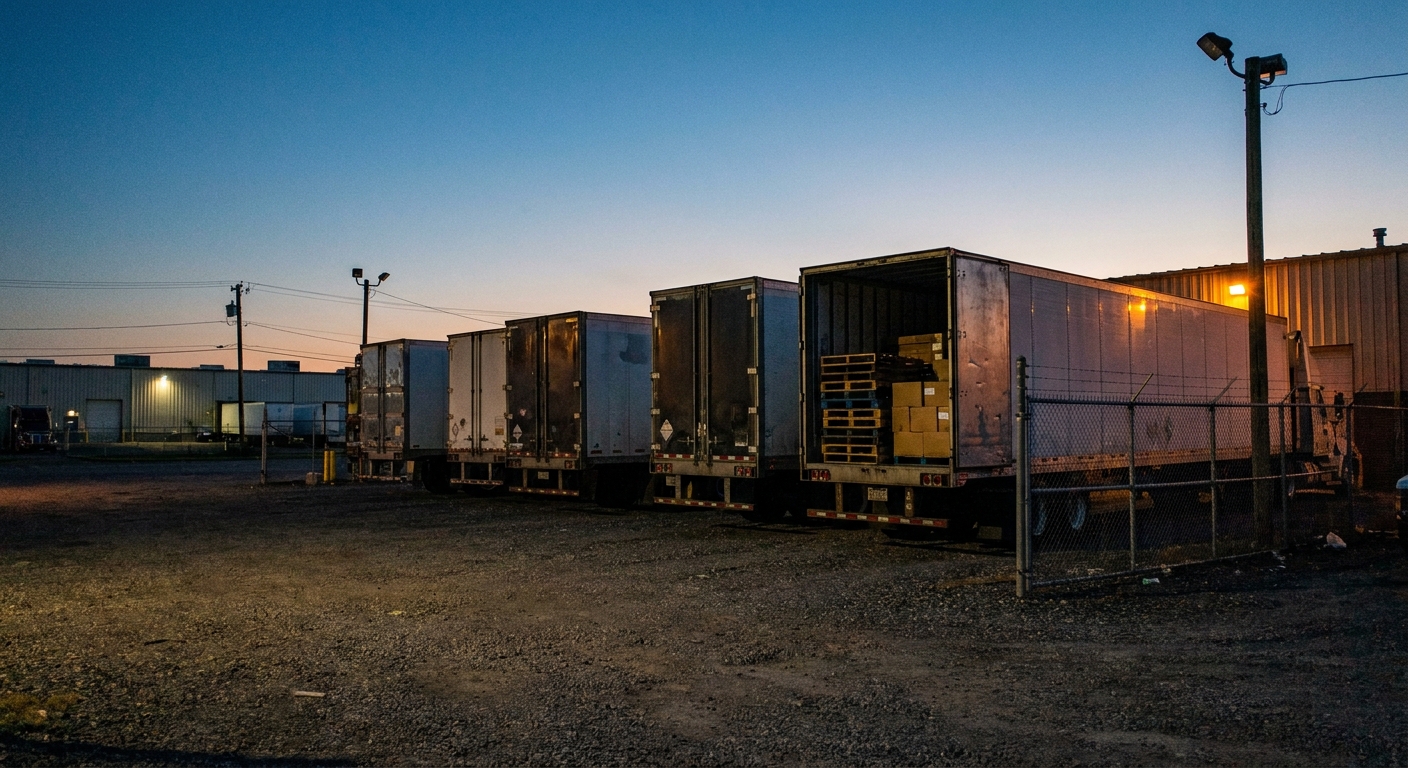
The coverage gap that quietly closes claims on drop-trailer operations: when a CT motor carrier drops a trailer at a consignee's yard for unloading at their convenience — or picks up a pre-loaded trailer left there by another carrier — the standard cargo and physical damage policies often don't cover the trailer or its contents during the "drop" period. Trailer Interchange Insurance and the right contractual liability endorsements close those gaps. Without them, the moment your power unit disconnects, your insurance may disconnect too.
Drop-and-hook freight is one of the fastest-growing operational models in CT trucking. Instead of waiting at the dock while shippers load or consignees unload, drivers drop a loaded trailer and pick up an empty (or another loaded trailer) and move on. The model dramatically improves productivity — drivers run more miles per day, equipment moves more freight per week, and customer relationships are stickier. But every drop-and-hook operation hides an insurance question most CT trucking owners have never asked: who insures the trailer (and the cargo inside) while my tractor is somewhere else?
At iConn Insurance Solutions, this is one of the most common coverage gaps we find when auditing CT motor carriers. The trailer interchange and drop-trailer story splits into three operational variants — each with a different coverage answer. This guide walks through them, identifies the endorsements that fill the gaps, and shows how a UIIA-style intermodal interchange differs from a standard drop-trailer operation at a private shipper.
What Is Trailer Interchange Insurance and When Do CT Truckers Need It?
Trailer Interchange Insurance covers physical damage to non-owned trailers — typically owned by a shipper, intermodal pool, or another motor carrier — that you are responsible for under a written trailer interchange agreement. It covers the trailer itself, not the cargo inside. CT motor carriers running drop-and-hook, intermodal, or any operation where they hook to trailers they don't own need this coverage. The most common trigger is the Uniform Intermodal Interchange and Facilities Access Agreement, which makes you contractually liable for the trailer while it's in your possession.
Without trailer interchange coverage, a non-owned trailer damaged in your possession — fire, rollover, collision, vandalism — becomes a business expense paid out of pocket. A modern dry van costs $35,000 to $55,000; a refrigerated trailer runs $65,000 to $95,000; an intermodal chassis with container is $25,000 to $45,000. Trailer interchange typically writes at $20,000 to $75,000 per trailer with a $1,000 to $2,500 deductible. Annual premium for a single-truck operation is usually $300-$700.
The Three Drop-Trailer Coverage Variants
| Scenario | Who Owns Trailer | Who Owns Cargo | Coverage Required |
|---|---|---|---|
| Drop at consignee (your trailer) | You | Shipper | Cargo policy (broad form, includes drop period); physical damage on your trailer continues to apply. |
| Pick up shipper-owned trailer | Shipper | Shipper | Trailer Interchange Insurance for the trailer; cargo policy for the freight; possibly broker/shipper contract terms. |
| Intermodal chassis/container (UIIA) | Equipment provider (pool) | Beneficial cargo owner | Trailer Interchange Insurance (or equivalent under UIIA); cargo policy; UIIA endorsements may be required. |
Variant 1: Drop Your Own Trailer at Consignee Site
The trailer is yours, the cargo is the shipper's, and you're dropping the unit for the consignee to unload at their convenience. Your standard commercial auto physical damage policy continues to cover the trailer — typically it doesn't matter whether your tractor is attached. Your cargo policy needs to be written on a "broad form" that covers cargo during the entire transit, including periods when the trailer is parked, dropped, or unattended pending unloading.
Watch for the "unattended vehicle" exclusion. If the drop site is a secured yard with controlled access, most cargo policies will cover dropped cargo. If the drop site is an unsecured public lot, an unattended-vehicle exclusion may apply unless specifically endorsed away.
Variant 2: Pick Up Shipper-Owned Trailer
The shipper owns the trailer and has loaded it. You hook up, haul, and drop somewhere downstream. From the moment you connect, you're contractually liable for the trailer — both physical damage to the trailer and damage to the cargo it carries. Trailer Interchange Insurance covers the trailer. Your motor truck cargo policy covers the freight. Without trailer interchange, the shipper-owned trailer is uninsured under your policies.
Variant 3: Intermodal Containers and Chassis (UIIA)
If you pull containers from CT rail terminals — New Haven, Bridgeport, Beacon Falls — you signed the UIIA. The UIIA makes you responsible for the chassis (and the container if applicable) while in your possession. UIIA-compliant trailer interchange coverage is typically required at $50,000 minimum and must list the equipment providers as additional insureds. Without UIIA-compliant coverage, you cannot legally interchange equipment at any UIIA terminal.
The "your trailer is at their dock" reality: when you drop your own trailer at a consignee's yard, your trailer can sit there for hours or days. During that period your trailer is exposed to theft, vandalism, and damage from forklifts. Your physical damage policy generally covers this — but check for "loaded for hire" definitions and ensure your policy doesn't have a "while attached to tractor" limitation. Some older policies do.
The 5 Drop-Trailer Habits That Keep CT Trucking Claims Insurable
1. Document Trailer Condition at Pickup
Every time you hook to a non-owned trailer, document the trailer's condition with timestamped photos: tires, lights, brake lines, rear doors, interior. Three minutes at pickup eliminates 90% of "this damage existed before pickup" disputes. Most trailer interchange claims that get denied are denied because the carrier couldn't prove the trailer was undamaged at pickup.
2. Use Trailer Tracking on Drop Operations
GPS trackers ($25-50/month per unit from Samsara, Spireon, or BlackBerry Radar) confirm trailer location during drop periods. They prove the trailer was where it was supposed to be — critical for theft investigations and cargo claim defenses.
3. Seal Every Drop Trailer With Numbered Bolt Seals
Bolt seals (not plastic indicative seals) prevent tampering and provide hard evidence of unauthorized access. Log the seal number on the bill of lading at every drop and at every hook. If the seal is intact at destination, the carrier has near-bulletproof defense against cargo loss claims.
4. Confirm UIIA Coverage Before Every Rail Terminal Visit
UIIA equipment providers verify motor carrier coverage in real time at the terminal gate. An expired or non-UIIA-compliant trailer interchange policy means turn-around at the gate with the trailer unloaded — wasted miles, missed appointment, demurrage charges.
5. Match Your Trailer Interchange Limit to the Most Expensive Equipment You'll Ever Pull
A $20,000 trailer interchange limit is fine for general dry vans. The moment you hook to a $90,000 reefer or a $45,000 chassis-plus-container, that limit becomes a $70,000+ shortfall. Cheapest premium increase in trucking insurance: raising trailer interchange from $20K to $75K. Typically adds $50-150/year.
Why Independent Brokers Matter for Drop-Trailer Operators
Trailer interchange is one of the lines where market appetite varies wildly between carriers. Great West Casualty, Progressive Commercial, Northland Insurance, and Travelers all write CT trailer interchange — but each carrier has different sub-limits, UIIA endorsement availability, and pricing for intermodal versus drop-trailer accounts.
At iConn Insurance Solutions, we match CT motor carrier drop-trailer programs to the carrier whose appetite fits the operation — UIIA carriers for intermodal accounts, standard drop-trailer programs for shipper-owned trailer operations. Together with our sister agency Insure Connecticut LLC, we cover motor carrier accounts across the Northeast with trailer interchange limits up to $250,000 per trailer.
Key Takeaways
- Trailer Interchange Insurance covers non-owned trailers in your possession under a written interchange agreement. It does NOT cover cargo.
- Three drop-trailer variants: drop-your-own (your physical damage covers), pick-up-shipper-trailer (need interchange), intermodal (UIIA-compliant interchange required).
- UIIA equipment providers verify coverage at terminal gates. Non-compliant policies = turn-around at the gate.
- Document trailer condition at pickup with photos. Use bolt seals and trailer GPS tracking on every drop operation.
- $20K trailer interchange limit is fine for dry vans; raise to $75K minimum for reefer or chassis-plus-container operations.
Frequently Asked Questions About Trailer Interchange and Drop-Trailer Coverage
Does my motor truck cargo policy cover dropped cargo at a consignee site?
It depends on the policy wording. "Broad form" cargo policies cover the entire transit including drop periods at consignee sites with secured access. "Trip basis" or older policies may have unattended-vehicle exclusions that deny coverage once the tractor disconnects. Read the Insuring Agreement and Exclusions sections — and have your broker confirm in writing that dropped cargo is covered.
What's the difference between trailer interchange and physical damage on my own trailer?
Physical damage covers your own trailers; trailer interchange covers non-owned trailers you're contractually responsible for. They're separate lines on the policy and have different limits and deductibles. A CT motor carrier running its own trailers needs physical damage; running shipper-owned or intermodal pool trailers requires trailer interchange.
Do I need UIIA endorsements if I never pull rail containers?
Not if you don't pull containers or chassis from rail terminals. UIIA endorsements are specific to intermodal interchange — the trailer-interchange equivalent for chassis and containers. If your operation is shipper-yard drop-and-hook only (no rail terminals), standard trailer interchange covers it; UIIA endorsements aren't required.
How much trailer interchange coverage should a CT trucking operation carry?
$50,000 per trailer is the typical UIIA minimum and a good baseline for general operations. $75,000-$100,000 is recommended if you pull reefer trailers (replacement value $65,000-$95,000). $150,000+ for specialty trailers — flatbeds with deck equipment, low-boys, or chassis-plus-container combinations.
Who pays if my driver damages a shipper-owned trailer at the loading dock?
Generally you do, via your trailer interchange policy. Most interchange agreements (and the UIIA) place the motor carrier in possession and control of the trailer from the moment of hook-up. The shipper's property insurance is excess — and they will subrogate against you for the deductible and any uncovered loss.
Can I add trailer interchange coverage mid-policy term?
Yes — trailer interchange can be endorsed onto a commercial auto policy at any time during the term. Premium is pro-rated for the remaining months. For UIIA-required coverage, the endorsement and equipment provider list typically takes 24-72 hours to activate at terminal gates after binding.
Running drop-and-hook or intermodal in CT and not sure your trailer interchange is bulletproof? A 15-minute coverage review identifies the gaps — interchange limits, UIIA endorsements, dropped-cargo coverage — that could turn a routine drop into an uninsured loss. Request a free CT drop-trailer coverage review from iConn Insurance Solutions, or visit our sister agency Insure Connecticut LLC for Northeast motor carrier placement.
Related Content
AI Payment Fraud Incident Response: What to Do First
The first hour after a fraudulent wire can decide whether funds are frozen or lost. Follow this practical response guide for banks, insurers, evidence, law enforcement, and recovery.
Read post →
Hotel and Commercial Property Insurance: Where Should Renewal Savings Go?
A practical guide for hotel and commercial-property owners deciding whether to keep renewal savings, lower deductibles, increase limits or restore coverage.
Read post →AI Fraud Insurance Exclusions: Where Coverage Can Break
A large cyber limit can hide a small social engineering sublimit. Learn how voluntary-transfer language, verification conditions, and overlapping crime coverage can affect AI fraud claims.
Read post →
Connecticut Builders Risk Insurance: 2026 Buyer’s Guide
Connecticut builders risk buyers should update project values, timelines and controls. Learn what to prepare and compare for a 2026 placement.
Read post →