
Cannabis Property & Real Estate Insurance in Connecticut: A Landlord & Owner's Guide
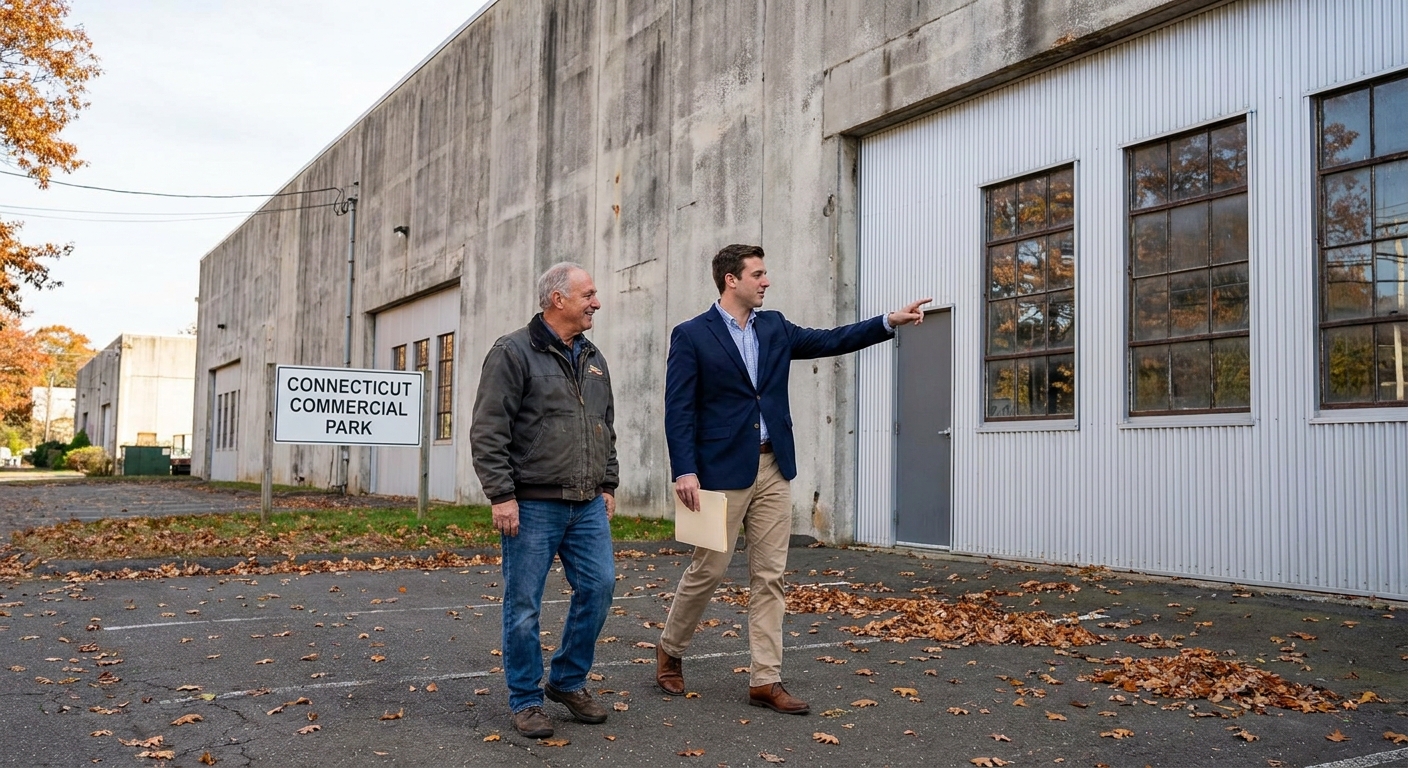
A Connecticut landlord called us last summer with a question we now hear every month: "My commercial tenant just got a cannabis license. Does my building insurance still work?" The honest answer was that it almost certainly did not, in any of the ways the landlord assumed it did. The standard commercial property policy excluded controlled substances. The mortgage on the building carried a clause that allowed the lender to call the loan if any tenant operated in violation of federal law. The lessors-risk endorsement that supposedly protected against tenant-caused damage explicitly carved out cannabis grow operations. Three problems the landlord didn't know existed, all surfaced by one license arriving in the mail.
Cannabis real estate in Connecticut is one of the most underserved corners of the entire commercial insurance market. Most of the editorial attention goes to the cannabis operators themselves — cultivators, dispensaries, manufacturers — while the people who own the buildings those operators occupy are left to figure out coverage with a captive agent who has never written cannabis-adjacent property. This guide is for landlords, owners, and real estate investors holding (or considering acquiring) property leased to a CT-licensed cannabis operator.
What Does Cannabis Property Insurance for CT Landlords Actually Cover?
Why Standard Lessors-Risk Coverage Fails Cannabis Landlords
Lessors-Risk Only (LRO) policies are designed for the landlord-tenant model: the landlord owns the building, the tenant operates the business, and the LRO endorsement covers the landlord's liability exposure from the tenant's activities. It's the standard product for strip-mall owners, office-park investors, and warehouse landlords. The product works beautifully for almost any tenant type — restaurants, retail, light manufacturing, professional offices — and it fails almost universally for cannabis.
The failure happens through three exclusions baked into nearly every standard LRO form:
- Controlled substances exclusion. Standard ISO commercial property forms exclude losses arising from controlled substances. The exclusion's intent was to keep insurers out of illegal-drug fact patterns; the unintended effect is that state-licensed cannabis tenants are excluded too, since cannabis remains Schedule I federally.
- Pollution exclusion. Indoor cannabis cultivation pumps a complex mix of fertilizers, pesticides, fungicides, and CO2 into a building. Manufacturing operations use butane, ethanol, supercritical CO2, and various solvents to extract concentrate. Standard property forms exclude pollution losses except for narrow specified events; a fertilizer/pesticide release in a grow room is not one of them.
- Vacancy and occupancy clauses. Many LRO policies require that the landlord disclose the tenant's specific use. If the policy was bound based on "warehouse / light industrial" and the tenant converts to cannabis cultivation, the carrier may treat the change as a material misrepresentation and deny a claim — even if no specific cannabis exclusion was written.
A landlord who keeps a standard LRO in place while leasing to a cannabis tenant is paying full premium for coverage that the carrier intends to deny if a cannabis-related claim ever surfaces. That's not a hypothetical; it's how the controlled-substances exclusion has historically been applied.
What a Cannabis-Endorsed Landlord Policy Looks Like
A properly structured cannabis landlord policy is built around a property + LRO base, placed with an E&S carrier that explicitly endorses cannabis tenancy. The core lines:
- Building property coverage on the structure, sized to replacement cost — NOT actual cash value — because cannabis-endorsed buildouts (HVAC, electrical capacity, security infrastructure) push replacement cost well above market value.
- Lessors-Risk Liability explicitly endorsed for cannabis tenants, with limits proportional to the building's exposure profile (typically $1M / $2M minimum).
- Site Pollution Liability covering pollutant release from grow-room operations, extraction operations, or storage. This is a separate policy line for most carriers; do not assume it's bundled.
- Loss of Rents with cannabis-occupancy endorsement — covers lost rental income if a covered loss makes the building uninhabitable. Particularly important because re-tenanting a cannabis-built building is harder than re-tenanting a generic warehouse.
- Equipment Breakdown on landlord-owned mechanical systems (HVAC chillers, electrical service) that support cannabis operations.
Premium for a cannabis-endorsed LRO program runs roughly 2-4x what an equivalent non-cannabis LRO would cost on the same building. The premium uplift reflects the carrier appetite scarcity, the pollution exposure, and the inherently higher replacement cost of a cannabis-buildout structure.
The Risks Cannabis Property Insurance Will NOT Cover
Honest advisor disclosure: there are real risks every CT cannabis landlord carries that no insurance product addresses. Understanding the gap is the first step in mitigating the risk through other means (lease structure, entity formation, financing).
Federal Civil Asset Forfeiture
Under the Controlled Substances Act, real property used to facilitate a controlled-substance violation can be subject to federal civil forfeiture. State-licensed cannabis operations are technically violations under federal law, even when fully compliant with CT regulation. The Cole Memo and successive guidance have largely held back enforcement against state-compliant operators since 2014, but the legal exposure has never been removed. A future administration could shift enforcement priorities, and a landlord renting to a cannabis tenant could find the property targeted. No insurance product covers federal civil forfeiture. Mitigation lives in entity structure, lease provisions (innocent-owner defenses), and the political risk assessment each landlord makes individually.
Mortgage Default From Cannabis Use Clauses
Most commercial mortgages contain clauses prohibiting the use of mortgaged property for activities that violate federal law. Federally regulated lenders (banks, GSEs, insurance companies) routinely enforce these clauses for cannabis tenancy — either by calling the loan or by refusing to refinance at maturity. No insurance product covers mortgage default. A landlord considering a cannabis tenant should review the mortgage carefully and, ideally, refinance to a cannabis-tolerant lender BEFORE the cannabis tenant signs the lease. Several private and non-bank lenders in CT will finance properties with cannabis tenants, but the rates are higher than conventional commercial lending.
Tenant Insolvency Without Bankruptcy Protection
Federal bankruptcy court does not accept filings from cannabis-touching businesses. If a cannabis tenant becomes insolvent, the orderly wind-down available under Chapter 7 or Chapter 11 is not available. The landlord faces an out-of-court workout with creditors who can't be bound by a bankruptcy judge. No insurance product solves this. Mitigation lives in larger security deposits, personal guarantees from the tenant's principals, and lease provisions that allow the landlord to take possession quickly if rent stops.
Reduced Re-Tenanting Pool
A building heavily configured for cannabis cultivation (extensive HVAC, electrical capacity, security infrastructure, odor control) has a smaller pool of replacement tenants if the cannabis tenant departs. Insurance Loss of Rents addresses temporary income loss from a covered event but does not address the longer-term tenant-pool contraction. Mitigation lives in lease terms that require the tenant to demolish or convert cannabis-specific infrastructure on lease end, or in pricing the rent to reflect the building's reduced future flexibility.
CT Cannabis Property Insurance Cost Quick-Reference
| Building Profile | Typical Annual Premium | Top Coverage Concern |
|---|---|---|
| Retail strip mall, one cannabis tenant among many | $8,000 – $20,000 | LRO + tenant mix disclosure |
| Standalone retail building, single cannabis tenant | $12,000 – $25,000 | LRO + crime + premises liability |
| Warehouse leased to single cultivator | $20,000 – $50,000 | Property + pollution + LRO |
| Multi-tenant industrial w/ cannabis manufacturer | $25,000 – $55,000 | Pollution + segregation between tenants |
| Greenhouse / outdoor cultivation site | $15,000 – $40,000 | Weather + theft + pollution |
These ranges assume the landlord's primary mortgage allows cannabis use. Landlords still working with a non-cannabis-tolerant lender face additional insurance constraints (the lender's mortgagee clause may dictate coverage terms) and should resolve that lending question first.
Editorial note: This guide focuses on Connecticut. Other states differ — Massachusetts and Rhode Island treat tenant-mix disclosure differently than CT, and New York's cannabis property landscape is in much earlier underwriting development. Our colleagues at Insure Connecticut LLC place cannabis property coverage across 12 states for multi-state portfolios.
How to Place Cannabis Property Coverage Correctly
A landlord starting from scratch on a cannabis property program should expect this sequence:
- Disclose the tenancy fully. The standard LRO carrier will likely non-renew. Better to surface that early than to discover it mid-claim.
- Resolve the mortgage question. If the current lender does not tolerate cannabis tenancy, identify a refinance path BEFORE binding any new policy.
- Engage a cannabis-experienced broker. Independent brokers like iConn Insurance Solutions place cannabis property programs through cannabis-appointed E&S carriers; captive agents and most generic commercial brokers cannot access these markets.
- Document tenant operations and controls. The carrier will want square footage, plant count, security infrastructure, fire-suppression specifications, and a copy of the tenant's DCP license. The more complete the submission, the better the terms.
- Layer site pollution coverage separately. Don't assume the property policy includes it; most don't.
- Review annually. Carrier appetite shifts every 18-24 months in the cannabis market. The right carrier today may not be the right carrier next renewal.
Frequently Asked Questions
Can I keep my standard property insurance if I rent to a cannabis tenant?
Almost never safely. Standard policies exclude controlled substances; even if the carrier writes the policy, they will likely deny a claim that touches the cannabis tenancy. Most landlords need to move to an E&S carrier with explicit cannabis-tenant endorsement.
Does the cannabis tenant's policy protect me as the landlord?
Only partially. Most cannabis tenant policies name the landlord as an additional insured for the tenant's operations — but that does not cover the landlord's own property, lessors-risk liability, or pollution exposure. The landlord needs a separate cannabis-endorsed program.
How much extra will I pay to insure a building with a cannabis tenant?
Typically 2-4x what an equivalent non-cannabis LRO program would cost. The premium reflects carrier appetite scarcity, pollution exposure, and the higher replacement cost of a cannabis-built structure. Many landlords pass a portion of the cost to the tenant via lease terms.
Can I get a mortgage on a property with a cannabis tenant?
Not from most federally regulated banks. A growing number of private lenders, credit unions chartered in cannabis-tolerant states, and non-bank commercial lenders will finance cannabis-tenant properties, but rates are higher and terms are tighter than conventional commercial lending.
What happens to my coverage if the cannabis tenant leaves?
The carrier may offer to convert back to a standard LRO program at lower premium, depending on the replacement tenant. If the building still has cannabis-specific infrastructure (security, HVAC, electrical), expect the carrier to keep a higher base rate even without a current cannabis tenant.
Closing the Loop
Cannabis real estate is one of the highest-yielding niches in CT commercial property today — and one of the most under-insured. Landlords who walk into the conversation prepared (lender resolved, tenant operations documented, broker engaged) come out of placement with terms that protect the asset; landlords who treat it as a routine LRO renewal come out exposed. For a quote on CT cannabis landlord coverage, request a quote from iConn Insurance Solutions or call (860) 970-0977. The cluster's follow-up spokes go deeper on each piece — premium economics, lessors-risk comparison, federal forfeiture mitigation, environmental coverage, and a real CT landlord case study.
For the financial-planning side of holding cannabis-tenant property — entity structuring, asset protection, tax treatment of cannabis rental income — our cousin firm at Wealth America works alongside cannabis-property landlords on the wealth-management half of the picture.
Related Content
AI Payment Fraud Incident Response: What to Do First
The first hour after a fraudulent wire can decide whether funds are frozen or lost. Follow this practical response guide for banks, insurers, evidence, law enforcement, and recovery.
Read post →
Hotel and Commercial Property Insurance: Where Should Renewal Savings Go?
A practical guide for hotel and commercial-property owners deciding whether to keep renewal savings, lower deductibles, increase limits or restore coverage.
Read post →AI Fraud Insurance Exclusions: Where Coverage Can Break
A large cyber limit can hide a small social engineering sublimit. Learn how voluntary-transfer language, verification conditions, and overlapping crime coverage can affect AI fraud claims.
Read post →
Connecticut Builders Risk Insurance: 2026 Buyer’s Guide
Connecticut builders risk buyers should update project values, timelines and controls. Learn what to prepare and compare for a 2026 placement.
Read post →