How Much Does Insurance Cost for Caterers, Food Trucks and Vendors in Connecticut?
How much does insurance cost for caterers, food trucks and vendors in Connecticut?
Insurance cost for Connecticut caterers, food trucks and event vendors can range from low four figures for a small low-risk vendor to much higher premiums for food trucks, alcohol service, employees, vehicles, large events, claims history or higher certificate limits. Cost is driven by operations, not just annual revenue.
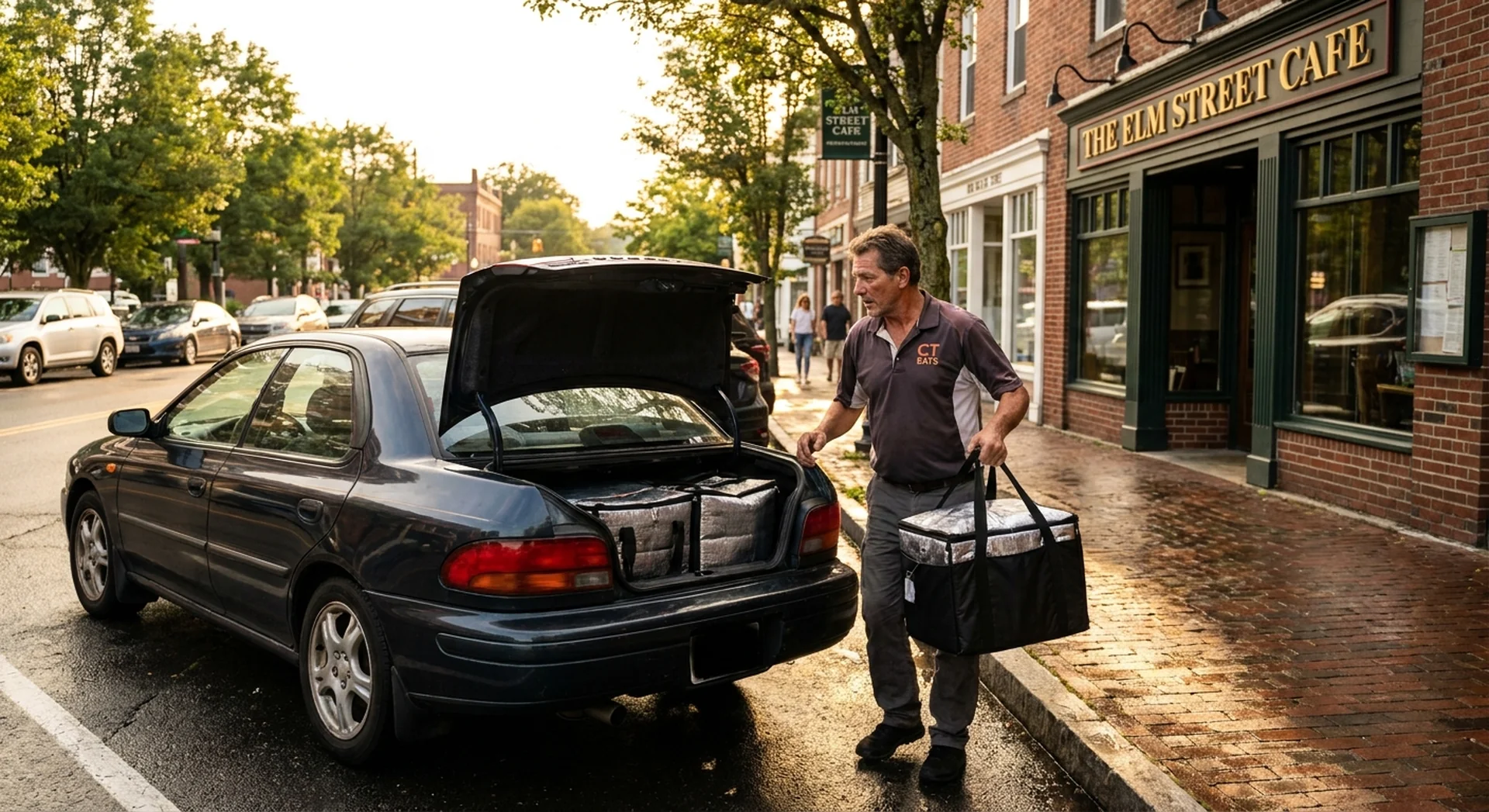
Mobile food and beverage work looks simple from the customer side. A truck pulls up, a bartender sets a portable bar, a caterer unloads trays, a vendor opens a tent, and the event moves on. Behind the scenes, the insurance file is much more complicated because catering companies, food trucks, pop-up vendors, mobile bartenders and festival vendors trying to budget insurance rarely stay inside one building, one contract or one operating routine.
This is why this series is separate from our broader restaurant insurance guide. Restaurants have fixed premises and recurring operations. Event food businesses move between weddings, festivals, breweries, farmers markets, corporate campuses, private homes, school events, shoreline venues, Hartford-area offices and Fairfield County estates. The claim can follow the business wherever the food, alcohol, staff, vehicle or equipment goes.
The goal is not to scare a small vendor into buying every policy available. The goal is to identify which coverage belongs to the exposure. A baker selling packaged goods at a market, a food truck with a fryer and generator, a mobile bartender at a wedding and a caterer staffing a corporate event need different answers.
Why catering food truck vendor insurance cost Connecticut is different from ordinary restaurant insurance
A restaurant can be complex, but it usually has a stable address, lease, seating area, kitchen, liquor permit, staff schedule and point-of-sale flow. A vendor account is more fluid. The same business may use a commissary kitchen, rented venue, personal vehicle, owned truck, temporary booth, third-party delivery driver, borrowed generator, seasonal employees, subcontracted bartenders and an online payment platform.
The Connecticut Department of Public Health food service licensing guidance directs food-service operators to local health departments and notes that requirements can vary by town. That is a practical reminder for insurance too: the venue, municipality, market manager, health department and carrier may each ask different questions.
For vendors that move between towns, the Connecticut DPH itinerant food vendor guidance is especially relevant because it addresses reciprocal licensing for itinerant food vendors between participating local health jurisdictions. Insurance does not replace licensing, but licensing details often shape how a carrier understands the operation.
Local reality: a New Haven food truck, a West Hartford wedding caterer, a Stamford mobile bar, a shoreline raw-bar vendor and a Litchfield County farmers market seller may all be “food vendors,” but their insurance needs are not interchangeable.
Which coverages should be reviewed first?
The coverage stack starts with the work. Who owns the food? Who prepares it? Who transports it? Who serves it? Who hires the staff? Who owns the truck or trailer? Is alcohol included? Does the venue require specific wording? Is the vendor taking card payments? Is the business responsible for cleanup, equipment setup or rental property?
| Coverage or issue | What it addresses | Why it matters |
|---|---|---|
| Small vendor table | Lower relative cost | No cooking, no alcohol, low equipment values |
| Caterer | Moderate cost pressure | Off-premise work, staff, hot food, venue contracts |
| Food truck | Higher auto and equipment pressure | Vehicle, cooking systems, generator, property values |
| Mobile bartender | Liquor liability pressure | Alcohol service, permits, training, event controls |
| Festival vendor | Certificate and event pressure | Additional insured wording, temporary setup, crowds |
| Employer operation | Payroll pressure | Workers comp, staff injuries, experience rating |
The table shows why single-policy shopping is dangerous. A general liability policy may help with a guest injury, but it does not automatically insure the truck, the food product allegation, the employee burn, the alcohol service, the stolen generator, the card-payment issue or the certificate wording required by a venue.
What Connecticut alcohol, tax and licensing issues can affect the insurance review?
Alcohol is the first major pivot point. The Connecticut Department of Consumer Protection liquor-control licensing page explains that temporary permits are valid only for a few days and are not renewable, and it also lists permit categories such as temporary permits and transporter permits. A mobile bartender or caterer should not assume a private event is automatically simple.
Connecticut dram shop exposure is another reason liquor liability deserves its own review. Connecticut General Statutes section 30-102 is commonly referred to as the Dram Shop Act. The insurance takeaway is practical: if alcohol is served, sold or controlled, do not rely on a standard business policy without checking liquor liability wording, exclusions, limits, training expectations and contract requirements.
Food sales also have tax and classification context. The Connecticut Department of Revenue Services policy statement on meals explains that, as of October 1, 2019, meals and certain beverages are subject to the standard 6.35% sales tax plus an additional 1%, for a total effective meals tax rate of 7.35%. That is not an insurance rule, but it shows why prepared food, caterers, food trucks and immediate-consumption sales are treated as a distinct business category.
Where do claims usually start?
Claims usually start in ordinary moments. A guest trips over a cord. A chafing dish scorches a table. A generator fails and refrigerated food warms. A customer says a shellfish allergy was missed. A bartender is accused of overserving a guest. A food truck backs into a parked vehicle. An employee slips while unloading. A venue asks for additional insured wording two days before the event and the policy cannot provide it.
Foodborne illness and allergy allegations are especially sensitive because the facts can be hard to reconstruct. Temperature logs, ingredient lists, prep notes, invoices, staff instructions, photos, cleaning records and event timelines matter. So does prompt reporting. A carrier cannot defend what the business cannot document.
Auto is another common blind spot. A personal vehicle used for a supply run is not the same as a scheduled commercial auto. A food truck is not only a truck; it is also a mobile kitchen. A rented van used for a catering job may need hired auto review. A staff member delivering trays in their own car can create non-owned auto exposure.
How should vendors prepare before quoting or renewal?
A good submission makes the business easier to insure. Carriers want to understand the true operation, not the polished social-media version. Clear facts can improve market access, reduce back-and-forth and help avoid exclusions that surprise the owner later.
- List every service: food prep, drop-off catering, staffed service, bartending, food truck sales, farmers markets, festivals, private homes and corporate events.
- Separate owned vehicles, personal vehicles, rented vans, trailers, carts, tents, generators, cooking equipment and refrigeration equipment.
- Gather sample contracts from venues, planners, municipalities, schools, breweries, wineries, farmers markets and corporate clients.
- Document food-safety controls, allergen communication, staff training, alcohol-service procedures and incident-reporting steps.
- Confirm who is an employee, temporary worker, subcontractor, volunteer, driver, bartender, cook, server or event captain.
- Review payment systems, online ordering, customer lists, saved cards, email tools and any cyber or privacy exposure.
If your current policies cannot answer those questions cleanly, iConn Insurance Solutions can review the vendor insurance file before a venue, market, festival or private client forces the issue.

Why independent brokers matter for mobile food, bar and vendor risks
Food-service vendor insurance is market-specific. Some carriers like caterers but not food trucks. Some write food trucks but dislike alcohol. Some can handle a small farmers market vendor but not a festival operator. Some exclude products claims, mobile equipment, hired auto, liquor, temporary events or subcontracted workers in ways that are easy to miss.
iConn Insurance Solutions works as an independent, multi-carrier agency, which matters when the account does not fit a standard restaurant box. The goal is to compare carrier appetite, forms, exclusions, certificate wording, liquor requirements, auto coverage, workers compensation and umbrella limits as one program.
Together with our sister agency Insure Connecticut LLC, we help Connecticut businesses compare coverage across the broader market. For owners building a food truck fleet, catering company, mobile bar brand or multi-location event business, our cousin firm Wealth America, Inc. can support planning topics such as succession, key-person planning and owner retirement. Insure Connecticut LLC, iConn Insurance Solutions, and Wealth America, Inc. are independently operated companies under common ownership.
How to avoid buying coverage that looks right but fails at the event
The most expensive insurance mistake for a food-service vendor is not always buying too little. Sometimes it is buying coverage that sounds right but does not match the contract, permit, vehicle use, alcohol exposure or actual event setup. A certificate that says “general liability” may still leave a venue unhappy if liquor liability is missing, the venue is not added correctly, the policy excludes the activity, or the auto exposure sits somewhere else entirely.
Before accepting an event, compare the contract against the real workflow. Who delivers equipment? Who plugs into power? Who serves alcohol? Who owns the tent, cart, truck, smoker, trailer, bar setup, POS device or refrigeration unit? Who hires the staff? Who is responsible for cleanup? Who handles an allergic reaction, intoxicated guest, damaged floor, failed generator or card-payment problem? Those answers point to different policies and different exclusions.
A practical pre-event review should include the venue agreement, certificate wording, menu, alcohol plan, vehicle list, staffing plan, equipment values, setup diagram and incident-response process. If any of those pieces changed since renewal, the insurance file should be updated before the event, not after a claim. That is where many vendor accounts drift out of alignment.
Key takeaways for Connecticut vendors
- Mobile food and beverage businesses need coverage built around events, vehicles, products, staff, contracts and equipment.
- Liquor liability should be reviewed whenever alcohol is served, sold or controlled.
- Food trucks need coordination between auto, liability, property, equipment and business interruption concepts.
- Venue certificates must match the contract wording, not just show that a policy exists.
- Food-safety, allergen, alcohol-service and incident records can matter as much as the policy after a claim.
Frequently Asked Questions About Caterer, Food Truck and Vendor Insurance Costs
How much does caterer, food truck and vendor insurance costs cost in Connecticut?
Cost depends on food type, alcohol service, vehicles, payroll, annual revenue, event size, equipment values, claims history and required limits. A small low-risk vendor may be modest, while food trucks, mobile bars, caterers with staff and large-event vendors need broader coverage and higher premiums.
Do Connecticut food trucks and caterers need product liability?
Yes, food and beverage businesses should review product liability because injury allegations often come from what was served, not just where the customer stood. Foodborne illness, allergens, contamination, hot beverages and packaging issues can all point back to product liability and documentation.
Is liquor liability required for mobile bartenders?
Mobile bartenders and caterers should review liquor liability whenever alcohol is sold, served or controlled. General liability is not the same thing. Connecticut permit status, host responsibilities, ID checks, staff training, private-event contracts and dram shop exposure all affect the insurance conversation.
What Connecticut agencies matter for mobile food and alcohol vendors?
Food vendors should start with Connecticut DPH food-service guidance and local health departments. Alcohol vendors should review Connecticut DCP liquor-control rules. Employers should watch workers compensation requirements, and insurance questions can also involve the Connecticut Insurance Department and carrier-specific underwriting rules.
Do event vendors need certificates of insurance?
Often yes. Venues, wedding planners, festivals, farmers markets, municipalities, schools and corporate clients commonly require proof of coverage. The certificate may need additional insured wording, liquor liability, workers compensation, auto coverage, umbrella limits or waiver language, depending on the contract.
Why use an independent broker for food-service vendor insurance?
Independent brokers can compare multiple carriers because food-service vendor risks vary sharply. A carrier that likes restaurants may not like mobile bars. A food truck may need auto, property and liability coordination. An independent review helps catch exclusions, certificate issues and missing coverage before the event.
What should you do next?
Pull your current policies, event contracts, sample certificate requests, vehicle list, equipment schedule, alcohol-service process, food-safety documentation, worker roster and claims history. Then compare that file with how the business actually operates today. Most gaps appear quickly: missing liquor liability, weak auto coverage, no equipment protection, incomplete certificate wording, unclear workers compensation or cyber exposure nobody discussed.
For a Connecticut-specific review, contact iConn Insurance Solutions. We can help determine where the existing restaurant insurance series already answers the question, where mobile vendor coverage needs a separate approach and where the next event contract could expose a gap.
The best time to resolve those details is before the certificate request lands. A clear insurance review gives the owner more leverage with venues, planners and event organizers because the business can explain what it can provide, what needs endorsement approval and what contract language should be revised before anyone loads a van or opens a service window.