
Why Cannabis Landlord Property Claims Get Denied in Connecticut (And the 5 Lease Clauses That Prevent It)
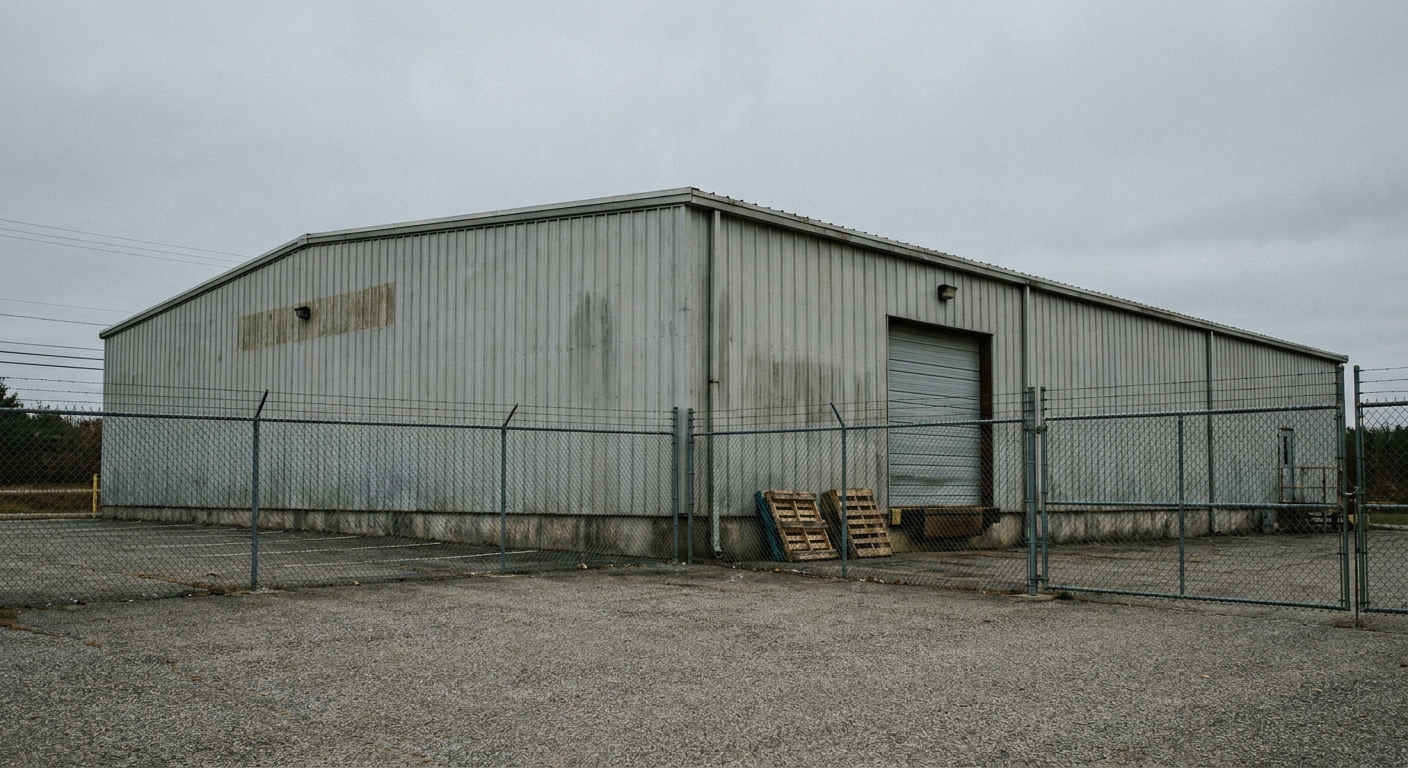
Cannabis lessors risk claims in Connecticut don't get denied because carriers are looking for excuses. They get denied because the policy form was placed against one set of assumptions about how the property would be used, and the actual operation drifted, or the lease was written in a way that didn't align with what the insurance application represented. By the time the loss occurs, the gap between coverage and reality is already there. The claim simply makes it visible.
For Connecticut landlords renting commercial space to a cannabis tenant, this post walks through the five most common claim-denial reasons we see — and, more importantly, the five lease clauses that prevent each one. The lease is where landlord-side insurance protection actually gets built. The policy form just executes whatever the lease structure left in place.
Why Do Cannabis Lessors Risk Claims Get Denied in CT?
The 5 Most Common CT Cannabis Lessors Risk Claim Denials
Denial 1: Controlled-Substances Exclusion
This is the single most common denial we see when a landlord places coverage with a standard commercial property carrier rather than a specialty cannabis E&S market. Most standard property forms include a "controlled substances" or "illegal use" exclusion that the underwriter may not have flagged at binding — and when a loss connects in any way to the cannabis operation (a fire originating from grow equipment, a theft of cannabis-related inventory, a security incident at the tenant's loading dock), the exclusion is invoked. The fix is placement-level: cannabis lessors risk belongs in a specialty market that does not carry the exclusion, not in a standard property form with a "cannabis endorsement" bolted on.
Denial 2: Undisclosed Tenant Operational Changes
The tenant signed the lease as a retailer and three months later started doing extraction in the back-of-house. Or the cultivator expanded from 8,000 sq ft of flowering canopy to 18,000 sq ft without telling anyone. Or the tenant sublet 3,000 sq ft to a second cannabis operator. The underwriting file at the carrier still reflects the original use. When a loss occurs, the carrier reviews the file, identifies the discrepancy, and denies the claim on material misrepresentation grounds. The landlord didn't lie — they simply weren't notified by the tenant of the change.
Denial 3: Lease–Policy Misalignment
The insurance application says the landlord is responsible for maintaining fire suppression. The lease says the tenant is. Or the application says the building has full sprinkler coverage of the cultivation area; the lease leaves it ambiguous and the tenant disabled a section of sprinkler heads near grow lights. The lease and the policy have to align. When they don't, the carrier defaults to the lease language and finds the landlord responsible for things the policy form didn't anticipate.
Denial 4: Security and Monitoring Warranty Failures
Most cannabis lessors risk forms carry a warranty that the building's monitored alarm system was active and operational at the time of loss. If the tenant let the monitoring contract lapse — even administratively, even for a few weeks — the warranty is technically broken. Carriers can and do invoke this on theft and vandalism claims, even when the lapse didn't cause the loss. Lease clauses requiring the tenant to maintain monitoring at the landlord's standard and to produce monitoring records on demand close this gap.
Denial 5: Federal Forfeiture or "Illegal Acts" Invocation
Even though cannabis is state-licensed and DCP-compliant in Connecticut, it remains federally Schedule I. Some lessors risk forms contain "illegal acts" language broad enough that a federal enforcement event — a DEA action, an asset forfeiture proceeding, a federal investigation touching the property — can be cited as grounds for non-coverage of related losses. This denial is rare in practice but very expensive when it lands, and it's primarily addressed at the policy form level (choosing a specialty cannabis market that explicitly accepts state-licensed cannabis as a covered operation).

The 5 Lease Clauses That Close Every Common Gap
Clause 1
Tenant Insurance and Additional Insured Requirement
The lease must require the tenant to maintain specific minimum insurance limits (General Liability, Product Liability, Property, Crime, Workers' Comp) and to name the landlord as an Additional Insured on each applicable policy. The clause should specify the minimum limits, the carrier rating threshold (A.M. Best A-VIII or better is the working standard), and a 30-day notice-of-cancellation requirement. Without this, a tenant-side loss flows up to the landlord's policy and exhausts limits the landlord needed for separate exposures.
Clause 2
Material Change Notice and Approval
The lease must require the tenant to give the landlord at least 30 days written notice — and obtain landlord approval — before making any material change to operations, including: adding new license activities (extraction, manufacturing, delivery), expanding square footage of cultivation or processing, subletting any portion of the premises, or installing equipment that materially increases electrical, fire, or moisture load. The landlord then has the obligation to update the insurance carrier promptly. This single clause resolves most "undisclosed change" denials.
Clause 3
Fire Suppression and Security Maintenance Standards
The lease must explicitly assign responsibility for fire suppression, security system, alarm monitoring, and CCTV maintenance — and set documented standards. The clause should require annual NFPA-13 sprinkler inspection (with certificate of compliance provided to the landlord), continuous monitored alarm service through a UL-listed Central Station, monthly self-test records, and the tenant's obligation to produce monitoring records and inspection certificates within 5 business days of request. This aligns the lease with the policy warranties.
Clause 4
Compliance with Insurance Conditions and Recommendations
The lease must obligate the tenant to comply with all conditions, warranties, and loss-control recommendations made by the landlord's insurance carrier — and to bear the cost of compliance. If the carrier requires a new vault, an upgraded alarm panel, a particular monitoring service, or remediation of a sprinkler deficiency, the tenant pays. This protects the landlord from having to choose between losing the insurance and absorbing the upgrade cost themselves.
Clause 5
Indemnification for State and Federal Compliance Events
The lease must require the tenant to indemnify and hold the landlord harmless for any loss, expense, or damage arising from the tenant's failure to comply with Connecticut DCP cannabis regulations or applicable federal law, including any forfeiture, enforcement, or related proceeding. This won't make the property uninsurable in a federal enforcement event — but it preserves the landlord's recovery against the tenant for losses the policy doesn't cover.
How Carriers Actually Evaluate Denial Decisions
A common misconception: that carriers look for reasons to deny claims. In practice, claim adjusters work from a fairly mechanical sequence — reviewing the policy form, the loss facts, the underwriting file, and any warranties or exclusions that may apply. Denials happen when the adjuster identifies a structural mismatch (a covered cause but an excluded type of loss, an excluded covered cause that produced the loss, a warranty that wasn't met, a representation in the underwriting file that doesn't match the actual operation). Landlords reduce denial risk by making sure those structural elements are aligned at binding and stay aligned through operational changes.
For more on the operator-side equivalent of this discussion — why tenants get their cannabis claims denied — see our spoke on why cannabis insurance claims get denied in CT.
What the Broker Should Be Doing Between Renewals
A working broker — not a quote-shopper — provides specific ongoing services that reduce denial risk:
- Annual lease review. Compare the active lease against the underwriting file. Flag any provisions that have drifted out of alignment.
- Mid-year operational check-in. Confirm with the tenant and landlord that no material operational changes have occurred since renewal. If any have, update the carrier immediately.
- Insurance compliance audit. Verify the tenant is actually maintaining the insurance the lease requires, with correct limits, additional-insured endorsements, and current COIs on file.
- Loss-control follow-through. If the carrier issued recommendations after binding, confirm those were completed and documented.
- Renewal pre-shop. Begin renewal market shopping 90 days before expiration — not at renewal day — so the placement isn't forced.
Real-World CT Denial Scenarios — What They Look Like
| Scenario | Denial reason | Lease clause that would have prevented it |
|---|---|---|
| Fire in tenant's flowering room destroys $280K of building damage | Sprinkler heads in flowering room were disabled by tenant; warranty broken | Clause 3: Fire suppression maintenance standards |
| Burglary loss — tenant's monitoring contract had lapsed 11 days prior | Monitoring warranty failure | Clause 3 + insurance compliance audit |
| Mold damage from cultivation HVAC failure | Tenant added 4,000 sq ft cultivation without notifying landlord | Clause 2: Material change notice and approval |
| Vandalism damage during federal enforcement action | "Illegal acts" exclusion on standard property form | Place coverage in specialty cannabis market, not standard form with endorsement |
| Water damage from extraction equipment leak | Tenant began extraction operation 6 months into lease; carrier file didn't reflect it | Clause 2: Material change notice and approval |
| Theft claim — tenant didn't have required additional-insured endorsement | Tenant's policy didn't list landlord; landlord coverage exhausted on related liability | Clause 1: Tenant insurance and AI requirement, plus enforcement |
Frequently Asked Questions
If my tenant's claim is denied, does that affect my landlord coverage?
It depends on the loss type. Tenant denials on their own General Liability or Product Liability policy generally don't affect the landlord's lessors risk coverage directly — but they do put the tenant in a worse financial position to honor lease obligations, which is a separate landlord risk. If the same loss event involves the building (fire, water damage, vandalism), the landlord's policy responds independently.
Can I sue my tenant if the claim is denied because of something they did?
Yes, subject to the lease terms. Most properly-drafted cannabis leases include an indemnification clause that obligates the tenant to make the landlord whole for losses caused by tenant breach. Recovery depends on the tenant's financial capacity and any indemnification insurance they carry.
Can the carrier non-renew my policy just because I rent to a cannabis tenant?
In Connecticut, non-renewal must follow regulatory notice requirements. Specialty cannabis markets generally won't non-renew without a specific underwriting reason (claim history, material change in risk, regulatory issue). Standard carriers, on the other hand, frequently non-renew or refuse to bind when a cannabis tenant is added — which is why placement should be in a specialty market from the outset.
What's the average claim payment delay on a CT cannabis lessors risk claim?
For straightforward losses with clean documentation, 45–75 days from First Notice of Loss to settlement. For losses where any of the five denial reasons above are in play, the timeline can stretch to 120–180 days while reservation of rights letters, additional documentation requests, and coverage position negotiation play out.
Should I require my cannabis tenant's broker to coordinate with mine?
Yes. The single biggest gap-reducer beyond the lease clauses themselves is direct coordination between the landlord's and tenant's brokers — at binding, at each tenant operational change, and at renewal. This is unusual in standard commercial leases but should be the working standard in CT cannabis.
Key Takeaways
- Cannabis lessors risk claim denials in CT are predictable — five categories cover almost every case
- The controlled-substances exclusion on standard property forms is the most common denial; placement in a specialty market avoids it
- Undisclosed tenant operational changes are the second most common denial — Clause 2 prevents it
- Fire suppression and monitoring warranty failures account for most theft, vandalism, and fire denials — Clause 3 closes the gap
- Lease drafting at signing matters more than policy shopping at renewal — the lease decides what the policy can defend
- Annual broker coordination between landlord and tenant sides is the practical mechanism that keeps the underwriting file aligned with reality
Working With a CT Cannabis Lessors Risk Broker
At iConn Insurance Solutions we place cannabis lessors risk programs for Connecticut commercial property owners, coordinate annually with the tenant's broker to keep underwriting files aligned, and review lease language against policy form before binding so the structural gaps that produce denials are closed at signing — not discovered at claim time.
For more on cannabis real estate in CT, see the landlord guide pillar, lessors risk premium ranges, and our companion cluster on cannabis insurance by tenant license type.
For non-cannabis Connecticut lessors risk and commercial property coverage, see our sister site MyInsureCT.
Related Content
AI Payment Fraud Incident Response: What to Do First
The first hour after a fraudulent wire can decide whether funds are frozen or lost. Follow this practical response guide for banks, insurers, evidence, law enforcement, and recovery.
Read post →
Hotel and Commercial Property Insurance: Where Should Renewal Savings Go?
A practical guide for hotel and commercial-property owners deciding whether to keep renewal savings, lower deductibles, increase limits or restore coverage.
Read post →AI Fraud Insurance Exclusions: Where Coverage Can Break
A large cyber limit can hide a small social engineering sublimit. Learn how voluntary-transfer language, verification conditions, and overlapping crime coverage can affect AI fraud claims.
Read post →
Connecticut Builders Risk Insurance: 2026 Buyer’s Guide
Connecticut builders risk buyers should update project values, timelines and controls. Learn what to prepare and compare for a 2026 placement.
Read post →