
Product Liability for CT Cannabis Manufacturers: The Coverage Gap That Could End the Business

Most Connecticut cannabis manufacturers carry a Product Liability sub-limit they don't actually understand and have never tested against a real claim scenario. The premium feels reasonable. The certificate looks fine on the wall. And then a contamination event, a mislabeling incident, or a downstream injury claim arrives — and the operator discovers that the $1M limit on the binder is gated by a claims-made trigger, a $250,000 sub-limit on bodily injury from ingested product, and an exclusion for any product not tested by a Connecticut-licensed laboratory.
Product Liability is the single most expensive misunderstanding in the CT cannabis insurance market. It's also the most fixable. This post walks through what the standard cannabis Product Liability form actually covers, where the traps are, and which endorsements every Connecticut cannabis manufacturer should insist on at binding.
What Is Cannabis Product Liability Insurance Actually Covering?
Why Product Liability Is the Single Most Underestimated Cannabis Line in CT
Three reasons it hides. First, claims are infrequent — most operators go years between Product Liability incidents, so the gap between what the policy actually covers and what the operator thinks it covers never gets tested. Second, the premium looks small compared to General Liability and Property — typically $4,000–$15,000 annually for a CT manufacturer at a $1M limit — so the line gets treated as commodity coverage. Third, the policy language is dense, full of cannabis-specific exclusions and triggers that don't appear on the certificate or summary.
The first time a Connecticut manufacturer discovers what their Product Liability policy actually does is when a downstream retailer's customer alleges adverse reaction, contamination, or mislabeling — and the carrier responds with a coverage position letter rather than a defense. By then, the policy form is what it is.
The 6 Coverage Traps in Standard Cannabis Product Liability Forms
Trap 1: Claims-Made Triggers Without Tail Coverage
Many specialty cannabis Product Liability policies are written on a claims-made basis, not an occurrence basis. The difference matters: claims-made only responds if the claim is reported during the policy period. If a CT manufacturer cancels or non-renews and a claim arrives six months later for product manufactured during the prior policy, there's no coverage unless the operator purchased extended reporting period (tail) coverage at expiration. Tail can cost 100–200% of the annual premium and most operators don't know to buy it. Demand occurrence-form Product Liability where available, or budget for tail coverage at every renewal.
Trap 2: Sub-Limits on Bodily Injury from Ingestion
The $1M aggregate on the certificate frequently has an internal sub-limit — sometimes $250,000, sometimes $500,000 — for bodily injury arising from ingestion of cannabis products. That's the most common claim type. A Connecticut manufacturer producing edibles or beverages should specifically ask: "What's the sub-limit for bodily injury caused by ingestion?" If the answer is anything less than the full Product Liability limit, the policy is structurally underinsured for the manufacturer's actual exposure.
Trap 3: Mislabeling and Mispackaging Exclusions
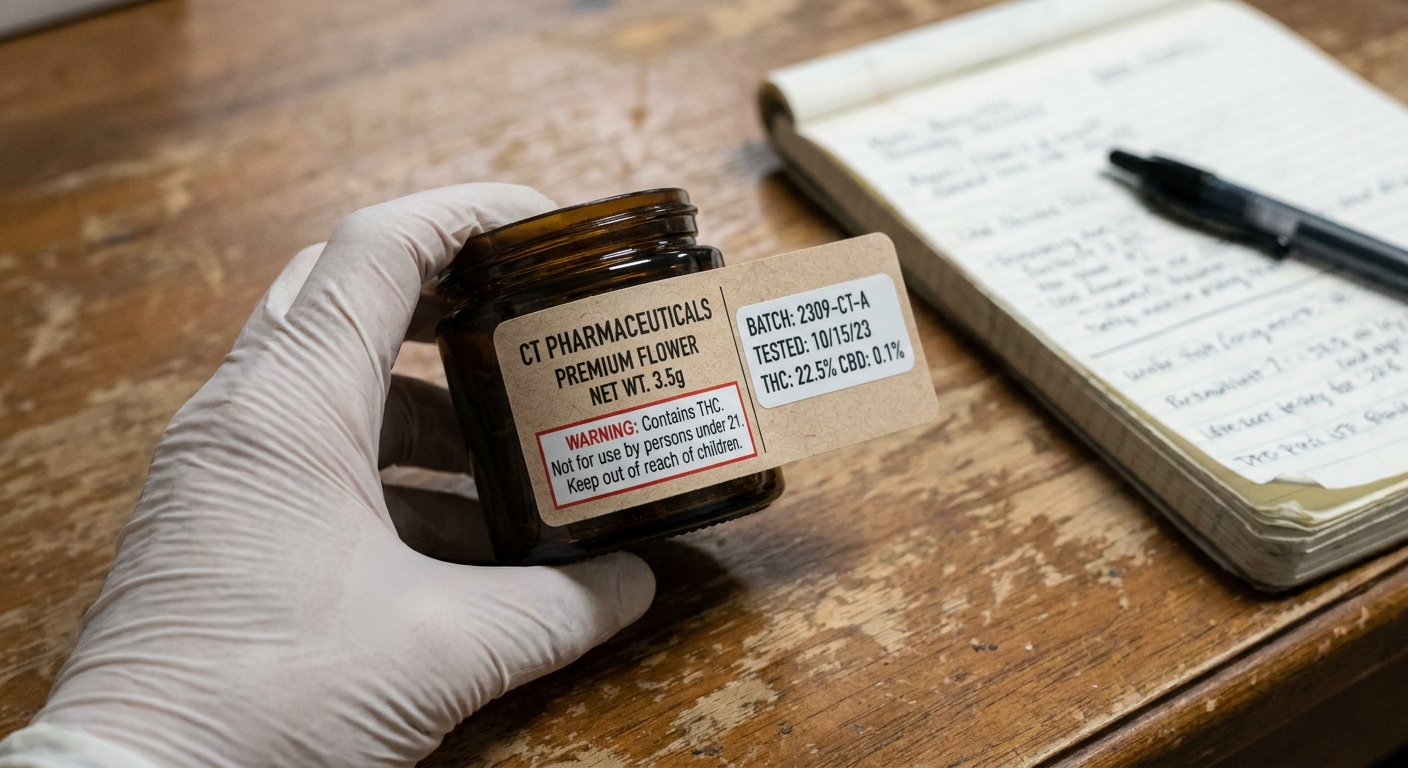
Cannabis is the most labeling-regulated consumer product in Connecticut — THC content, allergen disclosure, child-resistant packaging requirements, warning statements, batch identification. A labeling error that leads to consumer harm is one of the most likely Product Liability scenarios. Yet many cannabis Product Liability forms exclude or sub-limit claims arising from labeling, packaging, or marketing errors. Get the mislabeling/mispackaging exclusion endorsed off, or accept that the most likely claim type is uninsured.
Trap 4: Failure to Warn and Adverse Reaction Exclusions
Several CT-available cannabis Product Liability forms specifically exclude claims alleging "failure to warn" or "adverse psychological or physiological reaction" — language broad enough to capture most realistic ingestion claims. A consumer alleging anxiety, panic, or impaired judgment after consuming product is exactly the failure-to-warn fact pattern. If the policy has this exclusion, the manufacturer is largely uninsured against the most common claim type. Endorse the exclusion off or change carriers.
Trap 5: Independent Lab Testing Warranties
Connecticut requires DCP-licensed laboratory testing on cannabis products before retail sale. Most cannabis Product Liability policies include a warranty that all covered products were tested at a state-licensed lab, with results retained for the policy period. If the manufacturer can't produce testing documentation at claim time — even for batches that were tested but where records were lost — coverage can be denied on warranty grounds. The fix: a documented testing-record retention SOP, audited annually, with copies stored off-site.
Trap 6: Recall Expense Sub-Limits
A voluntary or DCP-mandated product recall is one of the most expensive events a CT cannabis manufacturer can face — testing, communication to retailers, return logistics, destruction, lost product cost. Recall Expense coverage is usually offered as a sub-limit of Product Liability, typically $50,000–$250,000. That's often a fraction of what a real recall costs. Increase the recall sub-limit at binding or buy it as a standalone Product Recall policy.
Side-by-Side: What "$1M Product Liability" Actually Means at 4 CT Carriers
| Carrier | Headline limit | Trigger | Ingestion BI sub-limit | Mislabeling | Recall sub-limit |
|---|---|---|---|---|---|
| Lancer | $1M / $2M | Occurrence | Full limit | Covered (with endorsement) | $100K |
| Continental Heritage | $1M / $2M | Occurrence | Full limit | Covered (standard) | $250K |
| Admiral | $1M / $2M | Occurrence | Full limit | Covered (standard) | $250K |
| Golden Bear | $1M / $2M | Claims-made (most placements) | $500K standard | Excluded (endorsable) | $50K |
The point of this table isn't to rank carriers — we did that in our carrier-by-carrier review — it's to show that "$1M Product Liability" describes wildly different protection depending on which carrier and which form is behind the certificate. A CT manufacturer should never accept a quote without seeing this comparison line-by-line.
The Endorsements Every CT Cannabis Manufacturer Should Insist On
Five endorsements that turn a default cannabis Product Liability policy into one that actually responds to the most likely CT claim scenarios:
- Occurrence-form trigger. Reject claims-made unless the carrier won't write occurrence — and if they won't, budget for tail at every cancellation or non-renewal.
- Full-limit ingestion bodily injury. Get the ingestion sub-limit endorsed up to match the full Product Liability aggregate. This is the single most important coverage on the policy for any edibles or beverage manufacturer.
- Mislabeling/mispackaging coverage included. Demand that the labeling and packaging exclusion be endorsed off, or move to a carrier whose standard form includes the coverage.
- Failure-to-warn coverage included. Specifically check this exclusion is not on the policy. If it is, endorse off or change markets.
- Increased Recall Expense sub-limit. Push the recall sub-limit to at least $250,000, ideally $500,000 for any operator with annual revenue above $2M.
What Triggers a CT Cannabis Product Liability Claim?
The most common Connecticut Product Liability claim scenarios we see — in rough order of frequency:
- Adverse psychological reaction. A consumer alleges panic, anxiety, or impairment beyond expected effect — particularly with edibles where onset timing leads to over-consumption.
- Mislabeling or THC content error. A product is tested and the THC content materially exceeds the label — a regulatory violation and a consumer-protection claim.
- Contamination. A batch contains pesticide residue, heavy metals, mold, or microbial contamination above DCP limits, leading to recall and downstream claims.
- Allergen failure. An edible product fails to disclose an allergen (commonly nuts, dairy, soy) and a consumer experiences an allergic reaction.
- Child-resistant packaging failure. Packaging fails the child-resistant requirement and a minor accesses product, triggering an injury claim.
- Failure to warn. Consumer claims the label did not adequately warn against driving, machinery operation, or interaction with prescription medication.
- Downstream retailer claim. A retailer (or the retailer's customer) alleges the product caused injury and joins the manufacturer in the suit.
How Product Liability Premium Is Priced for CT Manufacturers
Premium is driven by three primary factors:
- Product mix. Edibles and beverages are the highest-rated product category — typically 2–4x the rate of flower or pre-rolls. Concentrates and vape products fall in the middle. Topicals are usually the lowest-rated.
- Annual revenue. Most CT cannabis Product Liability is rated on a gross sales basis. Doubling revenue typically increases Product Liability premium 50–80% (not 100%, because rates often tier down at higher revenue).
- Loss history and operations. Carriers credit operators with documented HACCP plans, formal testing programs with state-licensed labs, robust SOPs, and clean loss runs. Operators without these often pay 30–50% more for the same form.
Typical CT cannabis manufacturer Product Liability premium ranges in 2026:
| Operator profile | Annual revenue | Product Liability premium range |
|---|---|---|
| Small flower / pre-roll only | Under $1M | $2,500 – $5,500 |
| Mid-size flower + concentrates | $1M – $3M | $5,500 – $12,000 |
| Edibles or beverages, mid-size | $1M – $3M | $10,000 – $22,000 |
| Large multi-category manufacturer | $3M – $8M | $18,000 – $40,000 |
| Edibles / beverages, large | $5M+ | $30,000 – $75,000+ |
For broader premium ranges across cannabis lines and license types, see our spoke on how much cannabis insurance costs in Connecticut.
Frequently Asked Questions
Is Product Liability included in a standard cannabis BOP?
No. Cannabis-specific policies separate Product Liability from General Liability as a distinct coverage part with its own limits, sub-limits, and exclusions. Operators who think their "$1M General Liability" includes Product Liability are mistaken — and that misunderstanding is the most common reason CT cannabis manufacturers are underinsured.
What's the difference between occurrence and claims-made?
Occurrence covers a claim if the incident happened during the policy period, no matter when the claim is reported. Claims-made only covers if the claim is reported during the policy period (or a purchased extended reporting period). For cannabis manufacturers — where injuries often surface months or years after consumption — occurrence is materially better protection.
How much Product Liability should a CT cannabis manufacturer carry?
$1M per occurrence / $2M aggregate is the minimum for any operating CT cannabis manufacturer. Operators with revenue above $2M should look at $2M / $4M, and any operator producing edibles or beverages at meaningful volume should consider an excess or umbrella layer above that. The right number depends on revenue, product mix, and contractual requirements from retailer partners.
Does Product Liability cover product recalls?
Usually only a small sub-limit — $50,000 to $250,000 — for first-party recall expense (testing, retrieval, destruction). For larger operations, a standalone Product Recall insurance policy or a much higher recall sub-limit endorsement is appropriate.
Are retailers covered by my Product Liability policy?
A standard cannabis Product Liability policy covers the named insured (the manufacturer) for products it manufactured. Retailers can be added as Additional Insureds by endorsement — many large retail accounts require this. The additional insured endorsement does not extend the policy's limits; it shares them.
Key Takeaways
- Product Liability is structurally the highest-stakes line for CT cannabis manufacturers — and the most commonly underinsured
- "$1M Product Liability" describes very different protection depending on trigger (occurrence vs. claims-made), sub-limits, and exclusions
- The six most common traps are claims-made triggers without tail, ingestion sub-limits, mislabeling exclusions, failure-to-warn exclusions, testing warranties, and low recall sub-limits
- Five must-have endorsements: occurrence trigger, full-limit ingestion BI, mislabeling included, failure-to-warn included, increased recall sub-limit
- Manufacturers producing edibles or beverages need higher limits than flower-only operators — the rate basis and claim severity both materially differ
- Compare quotes form-by-form, not premium against premium — the cheapest policy is often the one with the most exclusions
Working With a CT Cannabis Broker on Product Liability
At iConn Insurance Solutions we run every CT cannabis manufacturer placement through a Product Liability form audit at submission and at renewal — comparing trigger, sub-limits, exclusions, and endorsements line-by-line across Lancer, Continental Heritage, Admiral, Golden Bear, and the other carriers writing Connecticut. The objective is never the cheapest quote; it's the policy that will actually respond when the first Product Liability claim arrives.
For more on cannabis insurance in Connecticut, our pillar covers coverage by CT license type, our other spokes cover why claims get denied, cannabis vs. standard BOP, and the step-by-step underwriting walkthrough.
For non-cannabis Connecticut commercial Product Liability — food and beverage, manufacturing, professional services — see our sister site MyInsureCT.
Related Content
AI Payment Fraud Incident Response: What to Do First
The first hour after a fraudulent wire can decide whether funds are frozen or lost. Follow this practical response guide for banks, insurers, evidence, law enforcement, and recovery.
Read post →
Hotel and Commercial Property Insurance: Where Should Renewal Savings Go?
A practical guide for hotel and commercial-property owners deciding whether to keep renewal savings, lower deductibles, increase limits or restore coverage.
Read post →AI Fraud Insurance Exclusions: Where Coverage Can Break
A large cyber limit can hide a small social engineering sublimit. Learn how voluntary-transfer language, verification conditions, and overlapping crime coverage can affect AI fraud claims.
Read post →
Connecticut Builders Risk Insurance: 2026 Buyer’s Guide
Connecticut builders risk buyers should update project values, timelines and controls. Learn what to prepare and compare for a 2026 placement.
Read post →